
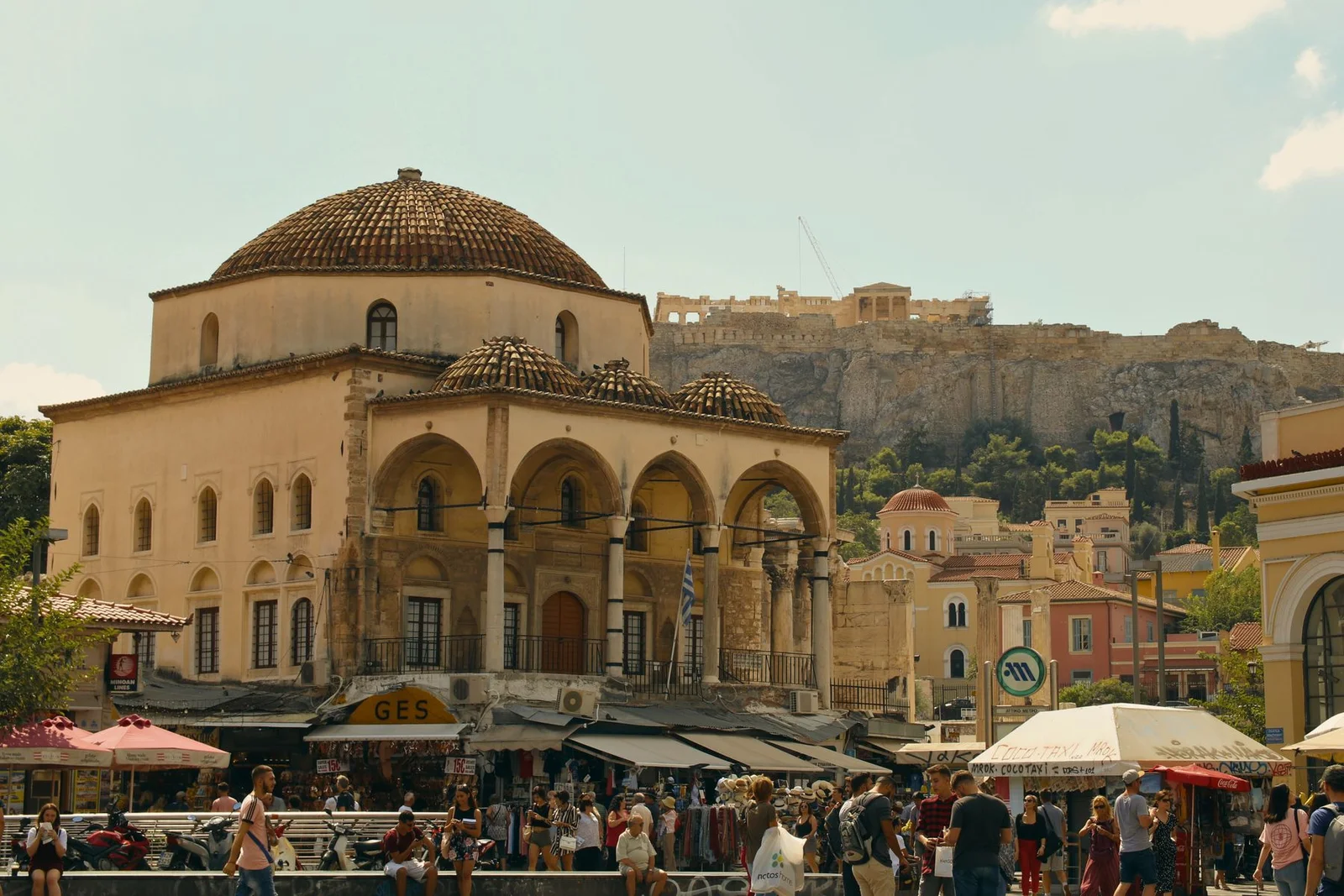
One useful way to plan a food day in Athens is to understand the difference between a brief street-food meal and a longer table experience. A handheld pita and several shared plates can answer similar curiosity in different ways. The Tatilmerkezi Stork draws a small route between skewers, wraps and market shopping. The aim is not to reach every famous business, but to find meals that suit your walk, party and appetite. Instead of repeating an archaeological sightseeing list, this guide focuses on menu terms and neighbourhood decisions.
This is Athens sources on street food, the central market and public transport were checked on 3 October 2026. We provide no business ranking, invented tasting memories or fixed prices. Photographs retain separate contexts: the market image is from August 2014. The souvlaki photograph has no verified capture place or date and is used as a food example. Although the salad description names Athens, its coordinate record points elsewhere; it is therefore labelled a food example without verified location. City images do not guarantee current businesses or table arrangements.
Kalamaki, pita and gyros: choose the serving format first
The official Athens guide distinguishes kalamaki as meat grilled on a wooden skewer, kalamaki tylichto as skewered meat wrapped in pita, and gyros as meat cooked on a rotating spit. Learning those three terms is more useful than guessing from a photograph. State the format you want before ordering: a skewer, pita wrap or seated plate? Establish meat, sauce and additions at the actual business. Different options on one menu need not have identical serving sizes.
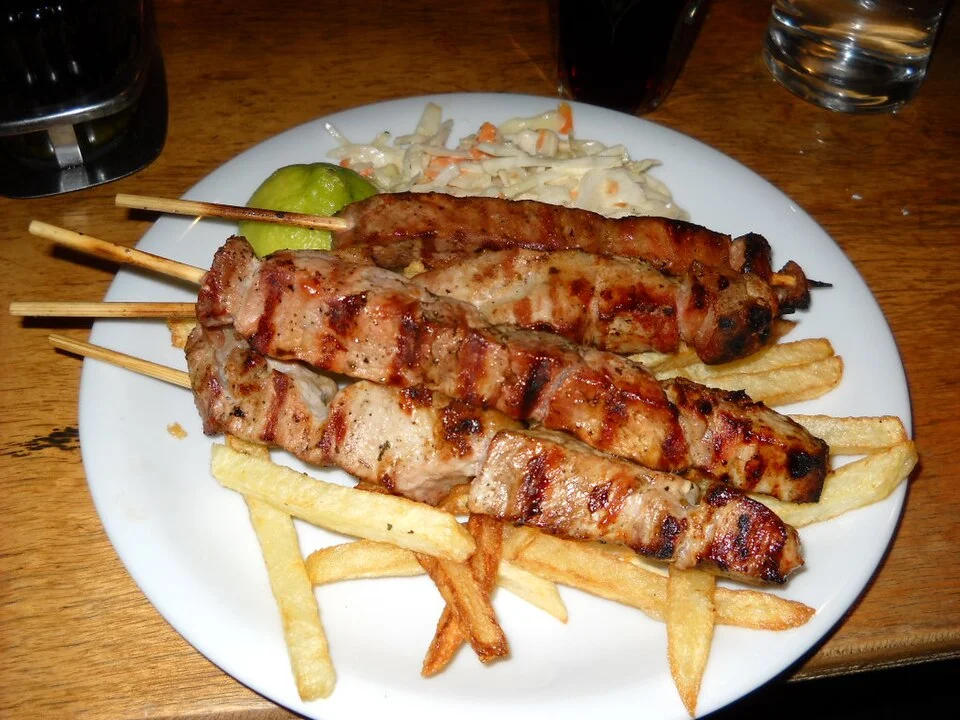

For food during a short walking interval, consider service and seating together. Handheld food does not always suit a group; a table may be easier with children, bags or a tired companion. The image shows a souvlaki food example rather than today's product at a specified Athens address. Ask about portions instead of estimating them from the picture. A lighter lunch may suit a longer dinner later. Knowing your appetite is a more useful travel skill than completing the largest number of names on a list.
Leave space for salad and shared smaller plates
A Greek-salad image can suggest a vegetable-and-cheese table, but the actual menu must establish ingredients and portion size. Location data for our October 2017 example is contradictory, so it is not labelled an Athens restaurant photograph. Thinking of salad as a main lunch, starter or shared accompaniment leads to different orders. Before ordering one large salad for everyone, find out how many diners actually want it. Leave room for other smaller plates or a single main dish afterwards.
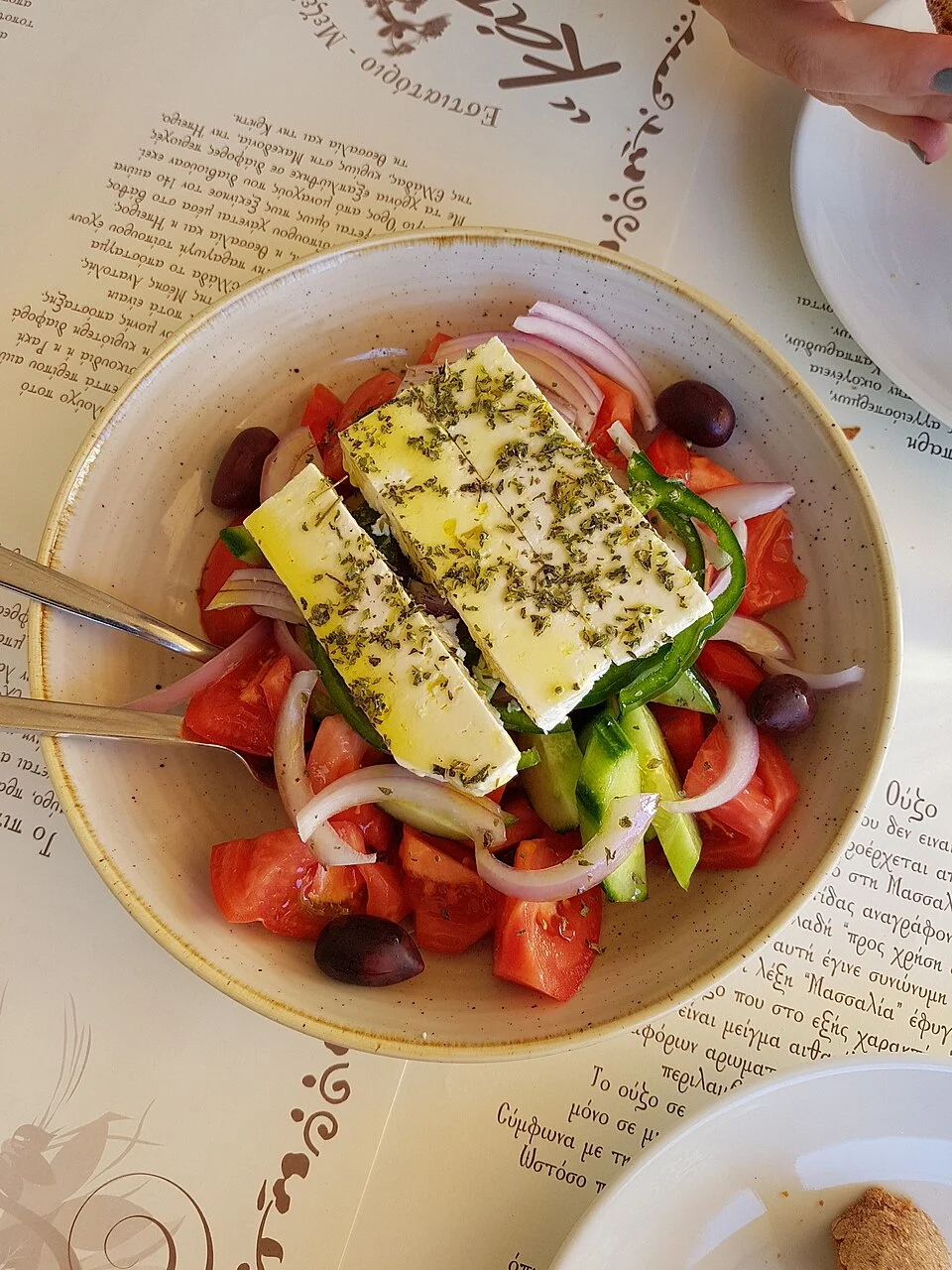

Ask how easily a serving can be shared and how large it is. One joint order may fail to suit diners seeking meat-free and dairy-free choices. Speaking clearly with the kitchen is more practical than guessing ingredients. A brief lunchtime table followed by a separate evening interest is possible. If you would like cheese or sauce separately, establish whether that can be done. Let a table photograph encourage curiosity without treating it as a description of today's kitchen recipe. The Stork leaves room for individual choices alongside shared dishes.
Varvakios and Evripidou: separate shopping from a meal
The official city guide discusses Varvakios Central Market and Evripidou as a food-and-spice shopping area. The 2014 market image records historic meat-hall context rather than current stalls or stock. Shopping and sitting down to eat are different activities. Decide which product interests you, then whether it is for immediate consumption or packaging. Giving one or two purchases attention can be easier in a short trip than adding every visible product to your bag.
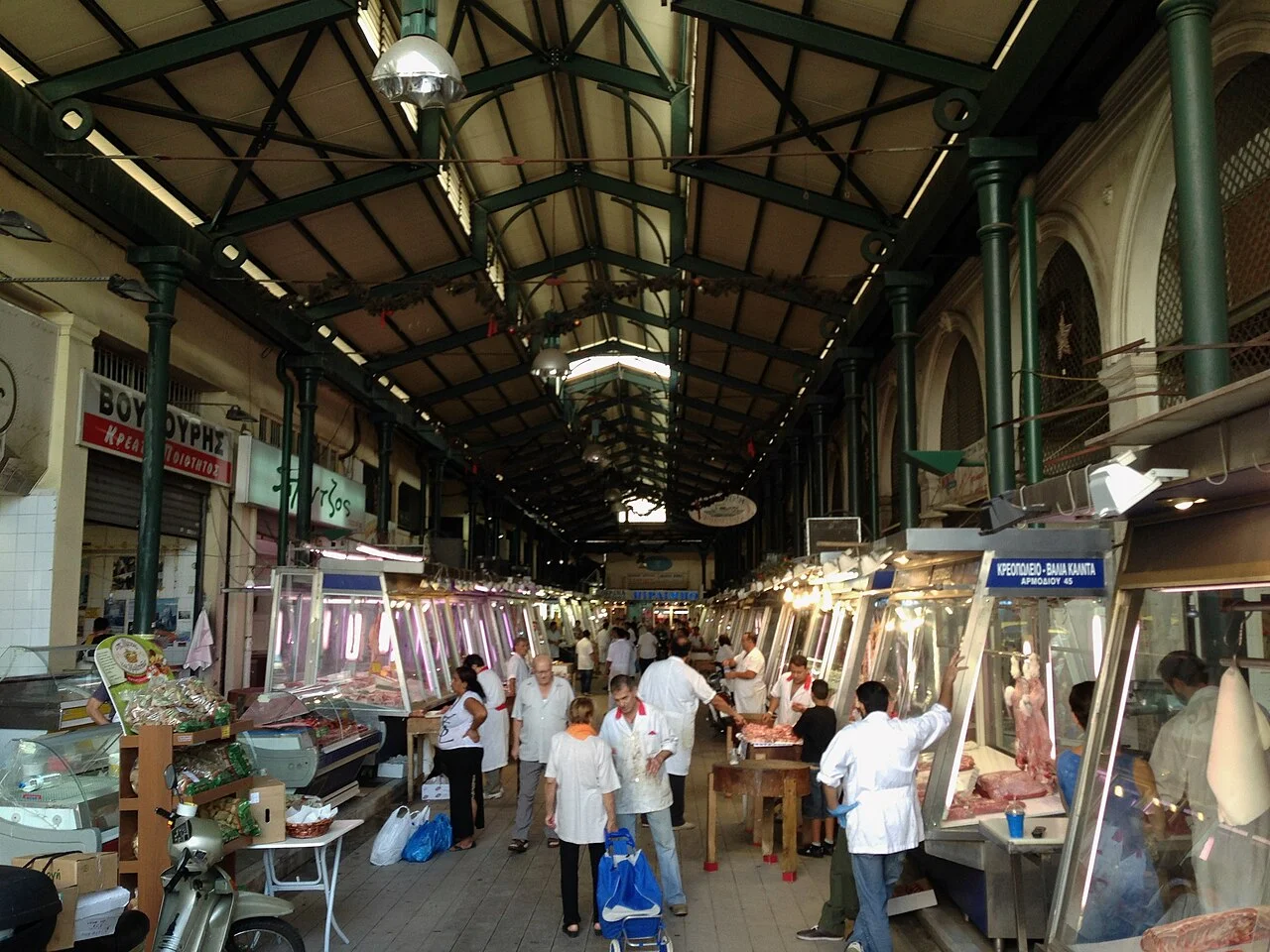

When considering cheese, olives or spices, ask the seller about ingredients, packaging and transport needs. Match the quantity to the length of your stay. Do not infer a product's regional origin from its appearance: aromas and decoration do not document provenance. Check relevant carrying rules separately for departure-day purchases. Establish current market opening and select a time that fits your walk. Reserving a lunch address in your own plan helps avoid becoming hungry while shopping and leaving the whole decision to the first table you encounter.
Two meal ideas between Monastiraki and Plaka
The Monastiraki cover image provides square and city context; visible tables and signs are not current business recommendations. If planning a short lunch around this area, save a clear meeting point and selected address. Remembering only a restaurant name may not be enough in a busy square. A brief pita meal before a longer walk followed by a seated drink pause is one possible arrangement. Ask about service timing on the day; we do not claim that a particular business currently works quickly.
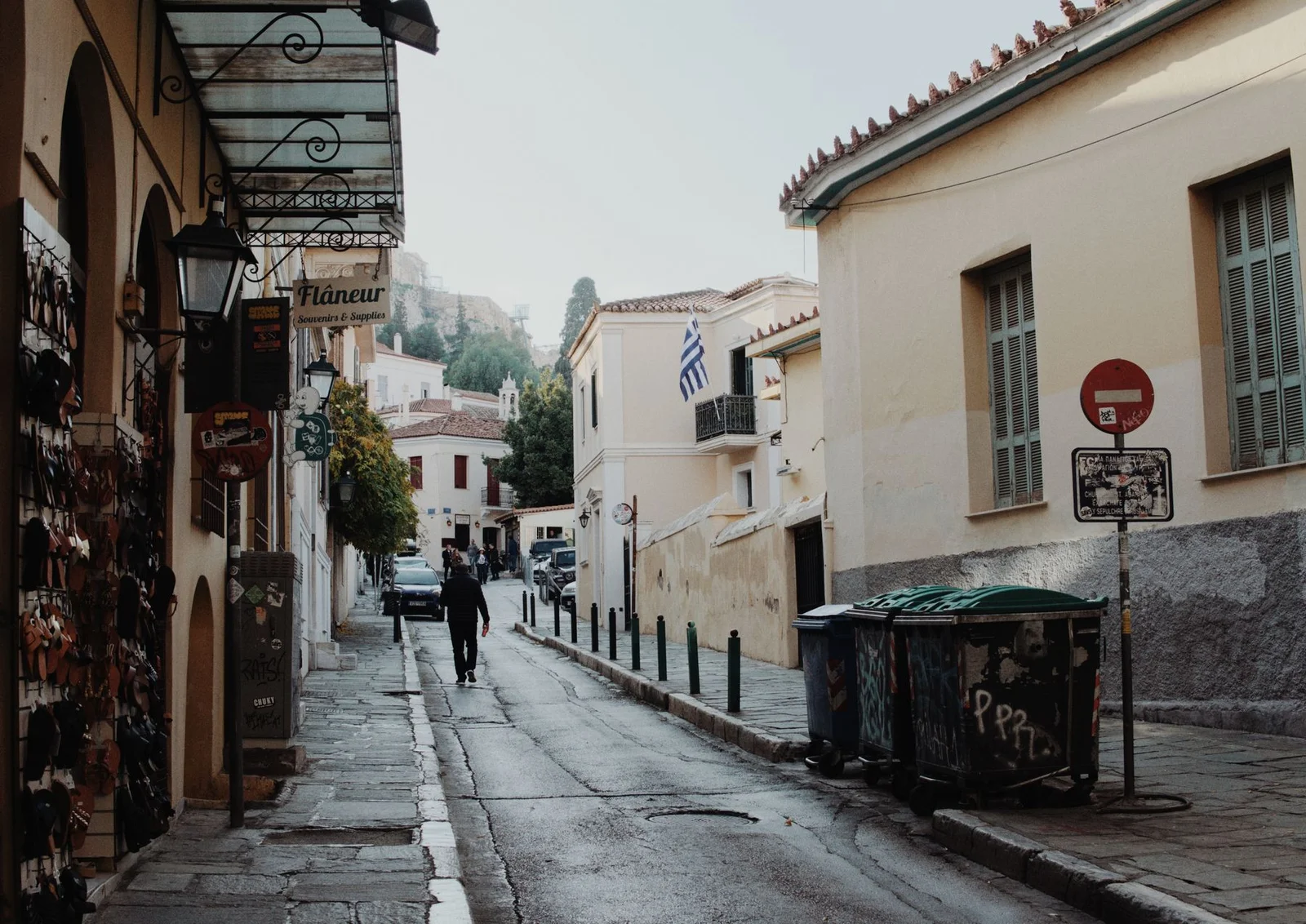
The Plaka street image adds neighbourhood context to a food journey rather than showing today's menu. If choosing an evening here, leave separate time for walking and dining. Two addresses that look close on a map may take different effort depending on the party's pace. A view-facing table and the address of an interesting dish need not coincide. Decide which experience you want first. If fatigue builds at the end of sightseeing, staying longer at your selected table instead of pursuing a second dining stop can also make a good Athens evening.
Connect accommodation, the return and budget to meals
Central accommodation may simplify a walk to a dining address; with farther options, inspect evening return connections. The official transport source describes metro, bus and tram networks; check service and ticket arrangements for the travel day with the operator. Do not link a late dinner to a remembered last-departure time. On movement days, allow for bags and airport or port connections before deciding on a meal. Establishing the current transport arrangement helps avoid rushing the final mouthful.
Divide spending into a street-food meal, longer table and smaller drink pauses. Read portions, additions and service according to their presentation on the actual menu; past-visit prices are not transferred into current amounts. A possible two-day arrangement is a brief kalamaki or pita lunch followed by shared evening plates on the first day, then market research and a different main dish on the second. None is compulsory. The Stork's invitation is to bring your own rhythm to an Athens table: returning to a flavour you liked is as natural a part of travel as discovering a new menu name.