
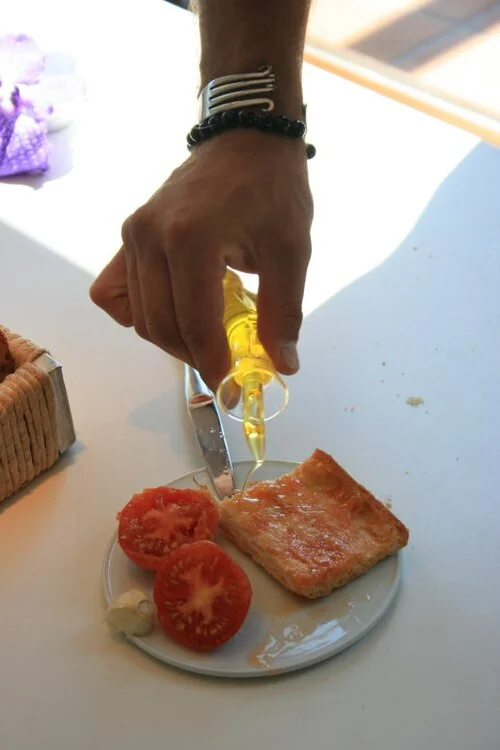
Approach Barcelona through a few shared plates
The Tatilmerkezi Stork turns towards the table before the museum door this time. A satisfying answer to what to eat in Barcelona does not require fitting every celebrated dish into one day. Consider a simple meal beginning with tomato bread, a vegetable plate to share and a dessert you still have room to enjoy. This route into Catalan cooking makes space for time as well as appetite. Visiting a market, sitting down for a meal and choosing something to take home are three different experiences, rather than one interchangeable stop.
This is a planning guide, not a restaurant ranking or an invented tasting diary. Basic dishes checked against official tourism sources are combined with suggestions for structuring your own day. The photographs are real and licensed: three illustrate Catalan food and two depict Barcelona's La Boqueria market. A food photograph whose shooting city cannot be verified is clearly labelled as a regional illustration. An old market image cannot establish today's business, stock, prices or service arrangements. Check current menus and visiting conditions before setting out. Leave room to change your mind instead of treating the city as a checklist of things that must be eaten.
Pa amb tomàquet: a simple opening to the meal
Barcelona tourism's explanation of Catalan cooking describes pa amb tomàquet through bread, tomato, olive oil and salt. This modest preparation is a useful reminder that beginning a meal does not require a complicated ordering strategy. Accompaniments may vary. Ask whether the bread comes on its own or with other products; a menu photograph is not proof of the portion size or everything included.
If two people are travelling together, you could begin with this bread and one shared plate before choosing a main course. That leaves a chance to judge appetite, rather than filling up on starters and feeling obliged to order another large meal. The cover photograph is a tomato-bread illustration dated August 2007. Its shooting city has not been verified, so it does not represent a particular Barcelona address. The Stork suggests starting with a small bite and leaving some space for curiosity. Explain any ingredient requirements to the business and ask about both the bread and the accompanying items. We make no claim that a photographed preparation will match every version served today.
Escalivada: make space for vegetables
The official Catalan cuisine page describes escalivada through vegetables cooked over fire and olive oil. An option involving aubergines and peppers is worth investigating if you do not want to build every food choice around meat or seafood. However, the basic idea of a recipe does not prove the serving details in an individual restaurant. Read the menu and ask whether fish, another topping or a different sauce accompanies the vegetables.
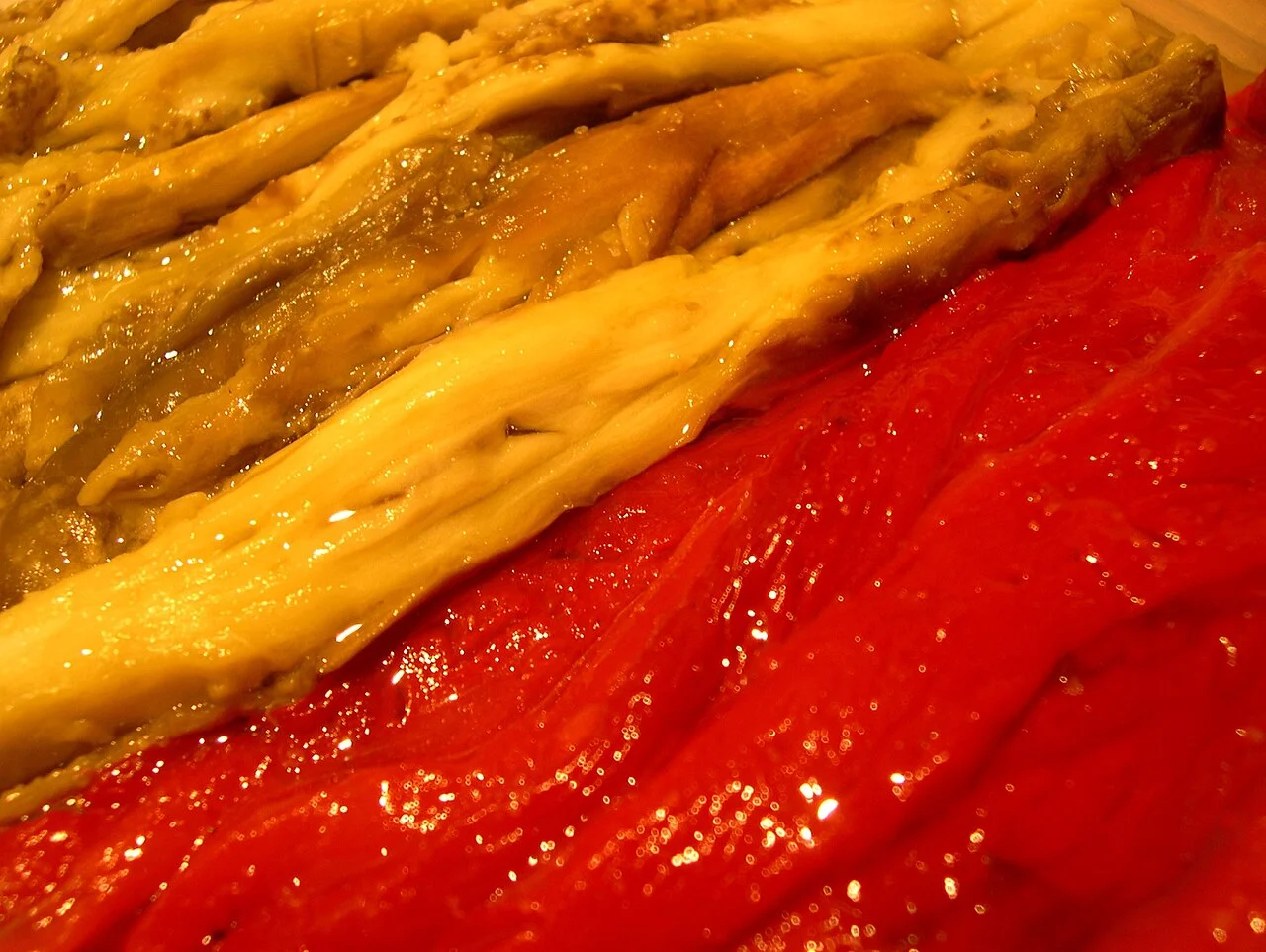

When selecting shared plates, think about contrasting textures rather than ordering several nearly identical options. Bread and vegetables followed by a main course suited to your needs can provide a manageable framework. The photograph dated September 2006 is a regional food illustration. Its frame was removed in the source version, and we resized the image for publication. It is not evidence for a current restaurant recommendation. Even a simple-looking plate can require an ingredient question. With a larger group, identifying a shared choice that everyone can eat helps the order flow more comfortably. The aim is a meal chosen deliberately, with room to adjust, rather than a race through every dish on the menu.
Crema catalana: a little space for dessert
Barcelona's official tourism material includes crema catalana among Catalan desserts. Our photograph shows an example taken in Cervera in December 2019. We do not present it as a dessert served in Barcelona. It illustrates the connection between regional cooking and food encounters in the city, while keeping the photographic location accurate. Portion sizes, preparation and presentation today may differ.
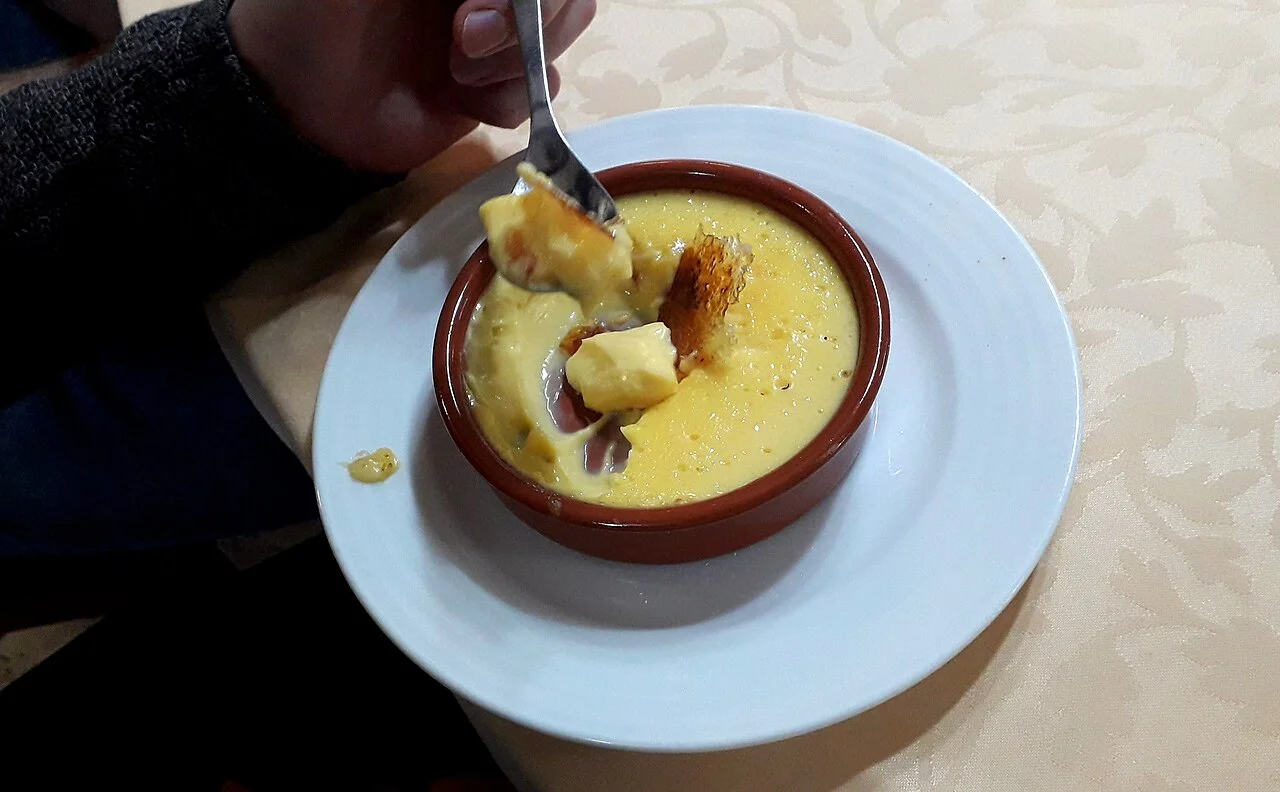

Rather than turning dessert into a compulsory goal at the start of the meal, look at the menu and decide according to your appetite at the end. Ask if sharing is possible when that is your preference; everyone at the table need not choose the same finish. If milk, eggs or another ingredient matter to you, verify the preparation of the specific product. Appearance alone is not a sufficient basis for that decision. Choosing between a brief pause with coffee and the end of a longer evening meal also helps organise the rest of the day. The Stork favours a dessert genuinely wanted, rather than the final step in an eating contest. A licensed archive photograph remains an illustration, not a promise of what a business will serve.
La Boqueria: distinguish a market from a meal
The charcuterie photograph at La Boqueria is an archival Barcelona market image dated March 2007. It cannot establish which stall stands in the same place today or what it currently sells. Use the market as part of your food research: observe products and, when you decide to buy, ask the present seller about quantity, cost and consumption conditions. Avoid blocking a working counter for photographs. Requesting permission before photographing people closely is a considerate approach.
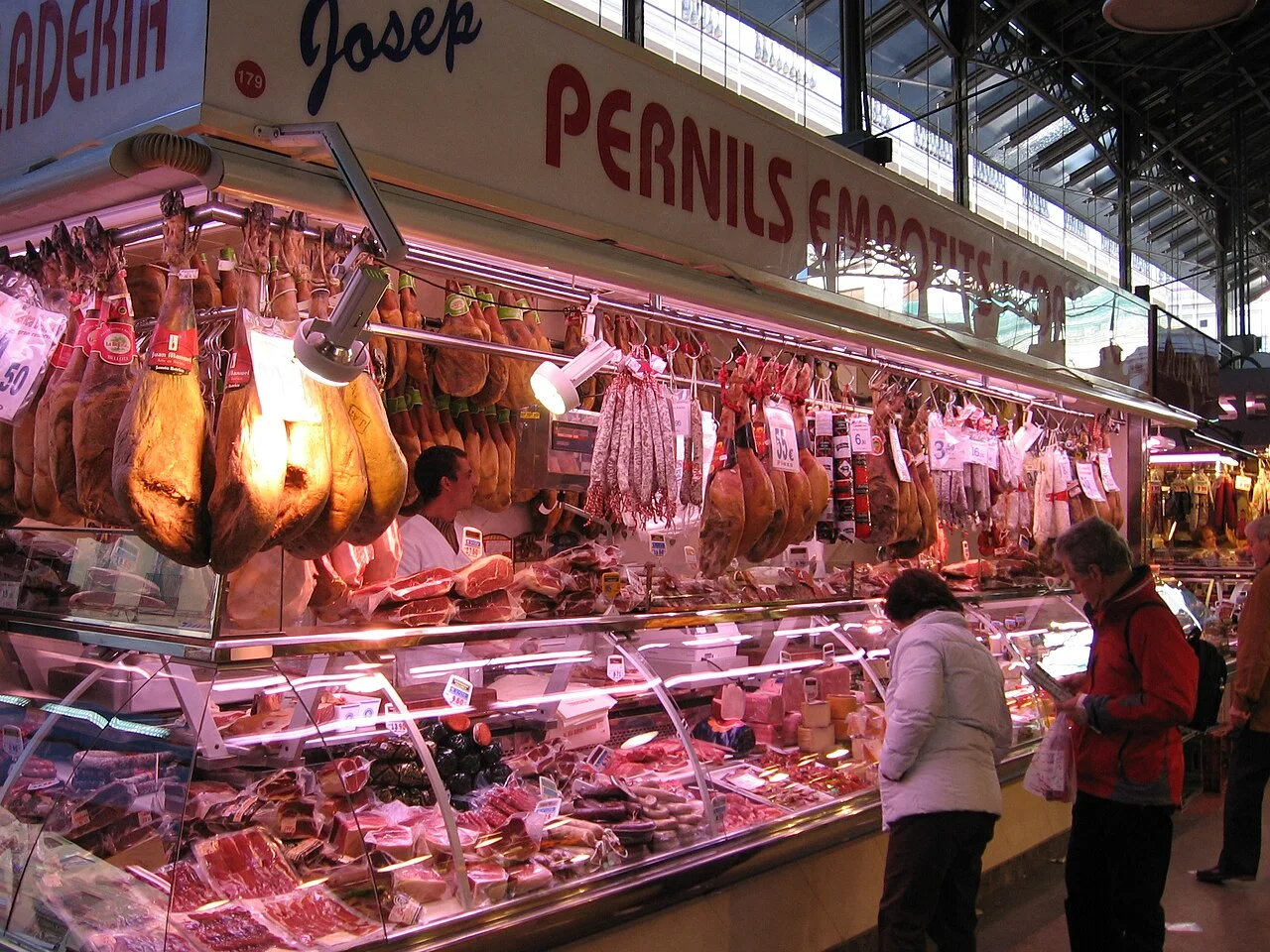

Planning market browsing separately from your seated meal removes some unnecessary hurry. You can examine products that interest you and then choose a restaurant or another suitable food stop. Heat, the time spent carrying purchases and storage at your accommodation affect buying decisions. An open or packaged product is not automatically suitable for the rest of your journey. Ask the seller, buy according to your needs and consult the official market website for current visiting information. We do not reuse readable labels in an old photograph as current prices. This guide is about useful decisions, rather than claiming that an archive market scene is a live view of today's stalls.
Candied fruit and products to take home
The second market photograph depicts candied fruit at La Boqueria. The source description and camera information differ about the exact day, so it is labelled as an archival January 2008 photograph. This is a separate scene, not a crop of the charcuterie image. Bright colours can make shopping appealing, but the image cannot determine freshness, ingredients or present sale conditions.
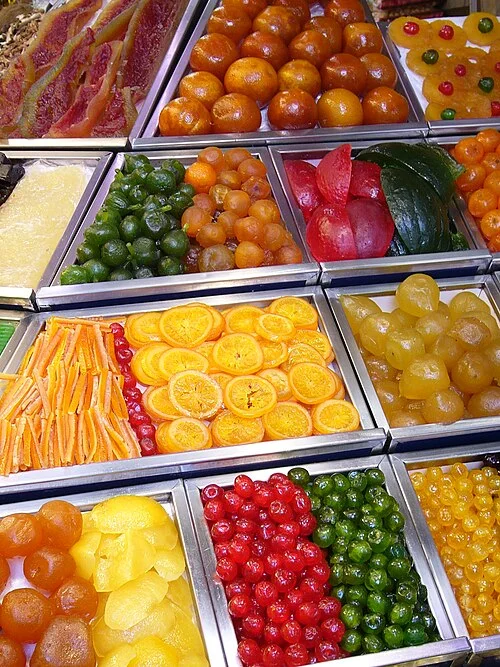

For a product to take home, concentrate on practical questions such as sealed packaging, clear ingredient information and ease of carrying it. Thinking about what a gift recipient likes is more helpful than choosing only the most colourful display. Check baggage and food-carrying rules for your particular itinerary. Do not assume every item may enter every country. Shopping early in the day may mean carrying bags for hours; leaving a modest stop closer to your return can be more comfortable. Tasting, a substantial meal and gift shopping need not all be solved through one lengthy market visit. Ask how a product should be kept, decide what you can realistically transport and avoid allowing an appealing photograph to replace those checks.
A meal route, transport and accommodation
A day of food exploration can be built around three decisions: a short look around the market, a seated meal beginning with bread and shared vegetables, then a dessert pause if you want one. Check actual distances between stops on a map rather than chasing many addresses in the same day. Leave travel time before a meal reservation. Opening times, menus and public transport arrangements can change; this guide makes no fixed route-number, fare or service-time claim.
When choosing accommodation, consider the return after dinner as well as proximity to a restaurant name. You could weigh walking around the old town, different food stops around Eixample or a quieter stay in another area. Compare the real address, transport connections and your expectations about noise before deciding. Drink choices are entirely personal; an alcoholic option is not a compulsory stop. Keep enough flexibility to postpone a meal or shorten a visit. Official sources were checked on 4 October 2026, while individual business conditions should still be verified before your own trip. The Stork enjoys a full table, but also likes leaving breathing space in the day. A good food itinerary supports your visit rather than controlling every minute of it.