
When choosing what to eat in Bergen, bring the harbour view a little closer to the table. A bowl of fish soup, a cinnamon skillingsbolle and, if it interests you, persetorsk offer three different entrances into the city's food story. The Tatilmerkezi Stork suggests a day that helps you choose rather than a long restaurant ranking: breakfast, a lunch near the market, a gentle neighbourhood walk and dinner with enough time to enjoy it. Your appetite and schedule should decide how many stops you make.
Do not turn this food guide into a day that also has to contain every Bergen attraction. If you select Fløyen or a lengthy boat excursion, arrange the central meal around that programme. Businesses mentioned through official tourism sources are starting points for research. Ask them directly about current menus, reservations and kitchen hours. This guide does not quote a fixed price. The photographs are real archive scenes with their dates disclosed, not promises about today's plate or stock.
Bergen fish soup: a possible lunch anchor
Visit Bergen presents fish soup among the city's local dishes. Look beyond its name and ask about the ingredients: fish, dairy, shellfish and accompanying bread may all matter to you. Two bowls served under the same heading do not have to follow an identical recipe. If you want a small lunch, ask about the portion and whether bread is included. Before a long walk, consider whether soup will be enough for your own needs or whether another dish makes more sense.


The official seafood page names Bryggeloftet & Stuene as one example to investigate. That is not a guarantee of an available table or a particular dish at every hour. The soup photograph in this guide was taken at that business in 2006; it is not presented as today's serving style. The Stork suggests making lunch a real pause where you can sit and enjoy your surroundings. In the middle of a wet day, a warm meal can be part of the visit itself rather than an interruption to the schedule.
Persetorsk: a different heading on the fish menu
Persetorsk is a traditional cod dish described by Visit Bergen. The source explains a preparation involving salt and sugar, with the fish held under pressure for an extended period. Its name is not simply another word for every grilled fish dish on a menu. If you are curious, ask about the actual preparation being served, the accompaniments and whether it is available that day. Discovering a traditional name does not oblige you to order something outside your own preferences.
The official guide includes seasonal serving information for some businesses, which is worth noticing. Persetorsk should not be portrayed as a product found in every restaurant throughout the year. Check for your own visit date rather than spending an evening moving from door to door. If your first choice does not serve it, another local dish or a fish preparation you already enjoy can still make a satisfying meal. Egg-based or dairy accompaniments need separate consideration when you have dietary requirements.
Skillingsbolle: a cinnamon pause with coffee
Visit Bergen highlights skillingsbolle as the city's cinnamon pastry. You do not need to memorise a lengthy history to make it part of your visit. Think of a small pause with coffee or another drink you like. If the portion is generous, you might share or leave another sweet stop for the following day. Giving yourself time to sit and observe the surroundings may feel more satisfying than continually buying snacks while walking between attractions.

The official article offers several bakery and café examples, useful as a starting list. Cinnamon does not mean a pastry contains no milk, eggs or gluten; ask about its ingredients and preparation. If heading towards Fløyen, distinguish a central café break from the hill programme. Do not assume that every business above the city will be open when you arrive. Leaving a small gap for a pastry in town makes the day more flexible when weather or transport changes your plans.
The Fish Market: season before the order
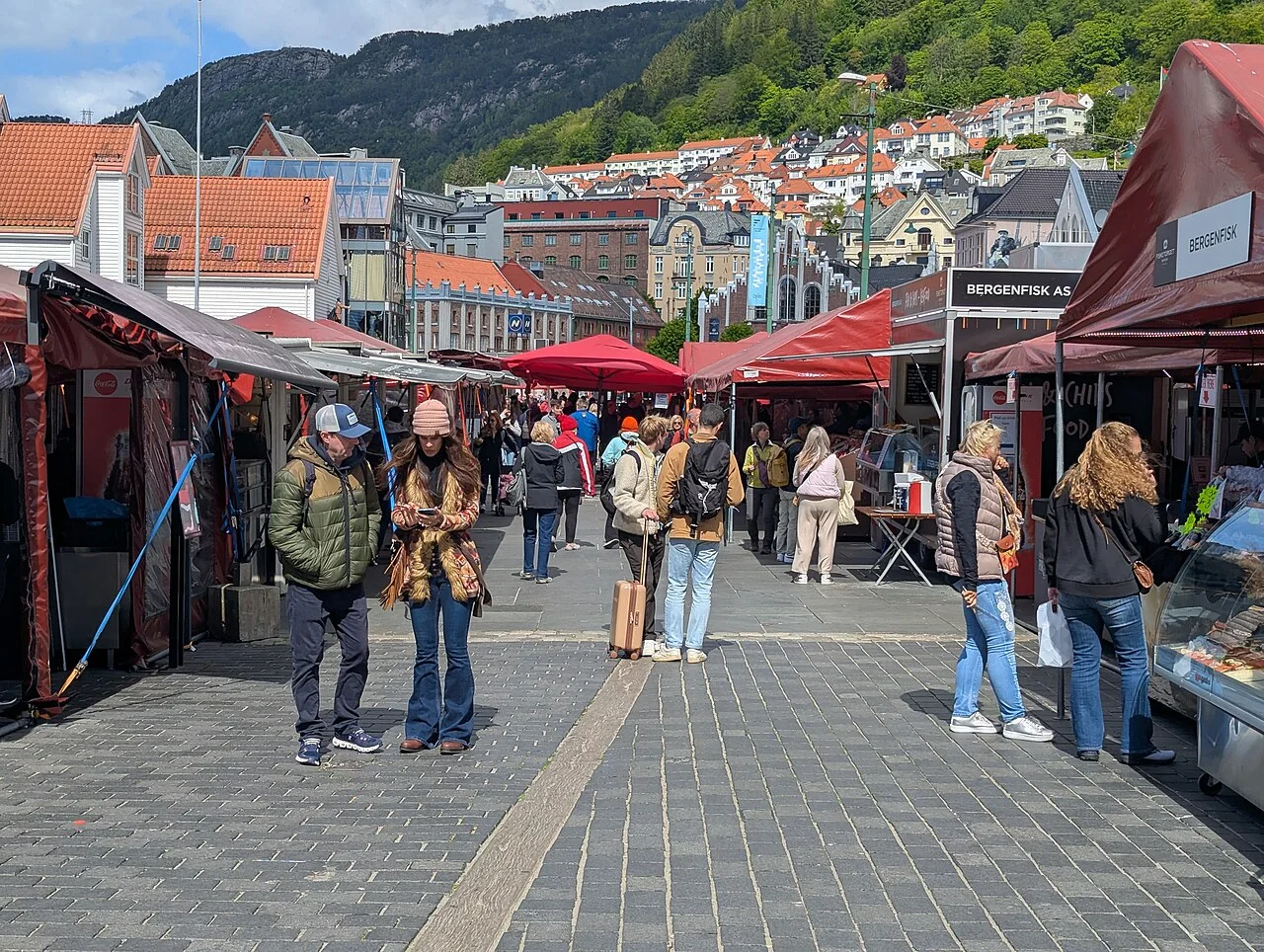
The Fish Market around Torget is a useful place to understand the setting of a food outing. Visit Bergen's current page distinguishes the indoor Mathallen, operating throughout the year, from the outdoor market's summer season. Do not expect winter to reproduce every stall visible in a summer photograph. Individual vendors and restaurants may also keep different hours. Look at what is actually being offered that day before deciding between an indoor meal and an outdoor pause.
For seafood, clarify portion size, cooking style, accompanying items and the total charge. Seeing a product at a counter does not automatically mean seated dining is offered there. Ask about storage requirements for something you intend to take away. Old price labels in photographs should not be used to estimate a current bill. If the open stalls are crowded, continuing your walk and returning to a suitable meal later is an option. You do not need to stop in front of every display to understand the market.
Bryggen and Nordnes: space between meals
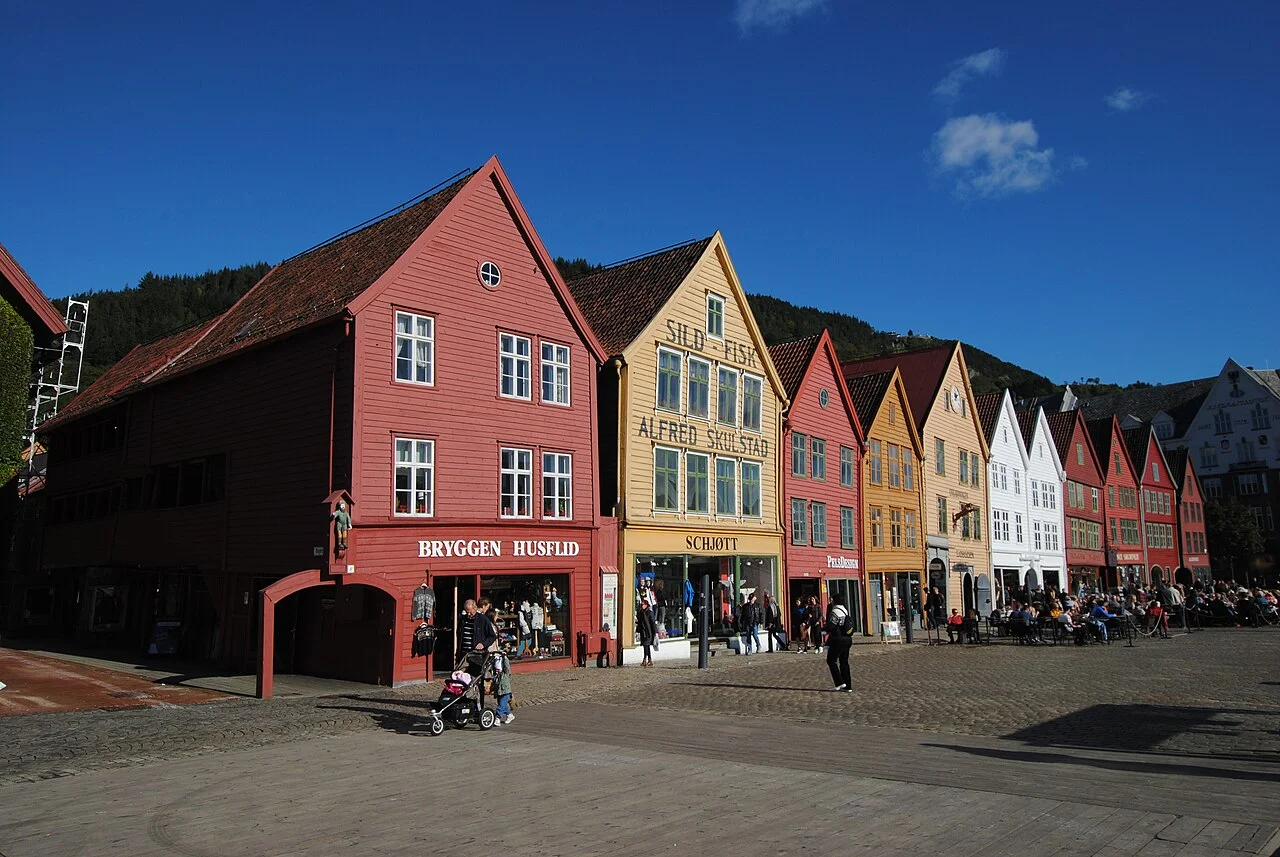
Bryggen gives the food route its central harbour setting. Viewing the wooden façades and choosing a particular restaurant are separate decisions. A business inside a historic building is not automatically suitable for your diet or open at every hour. You can choose lunch and dinner around the same waterside area, but leave room for a quiet walk through open public passages rather than spending the day only moving between restaurant entrances.

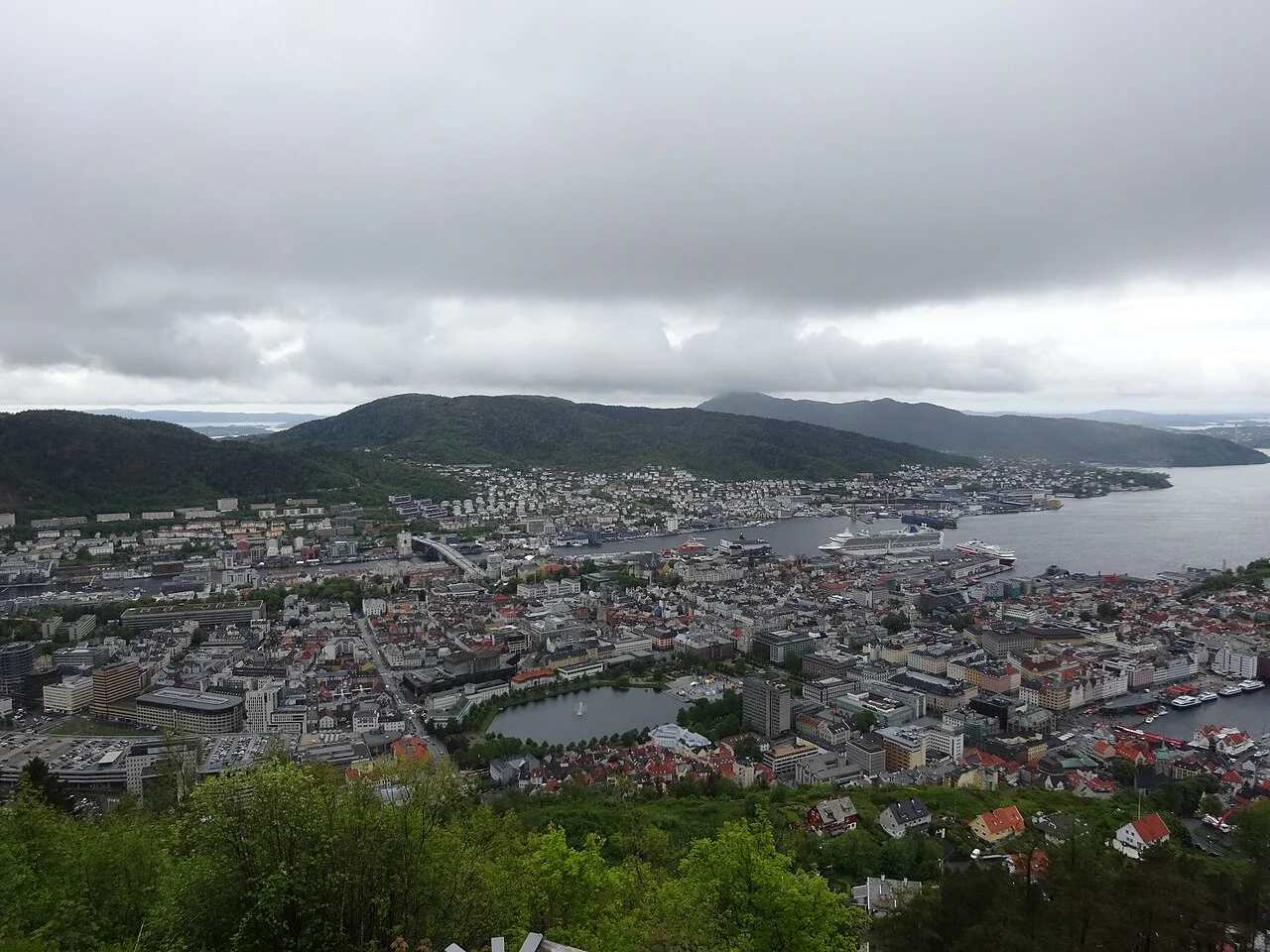
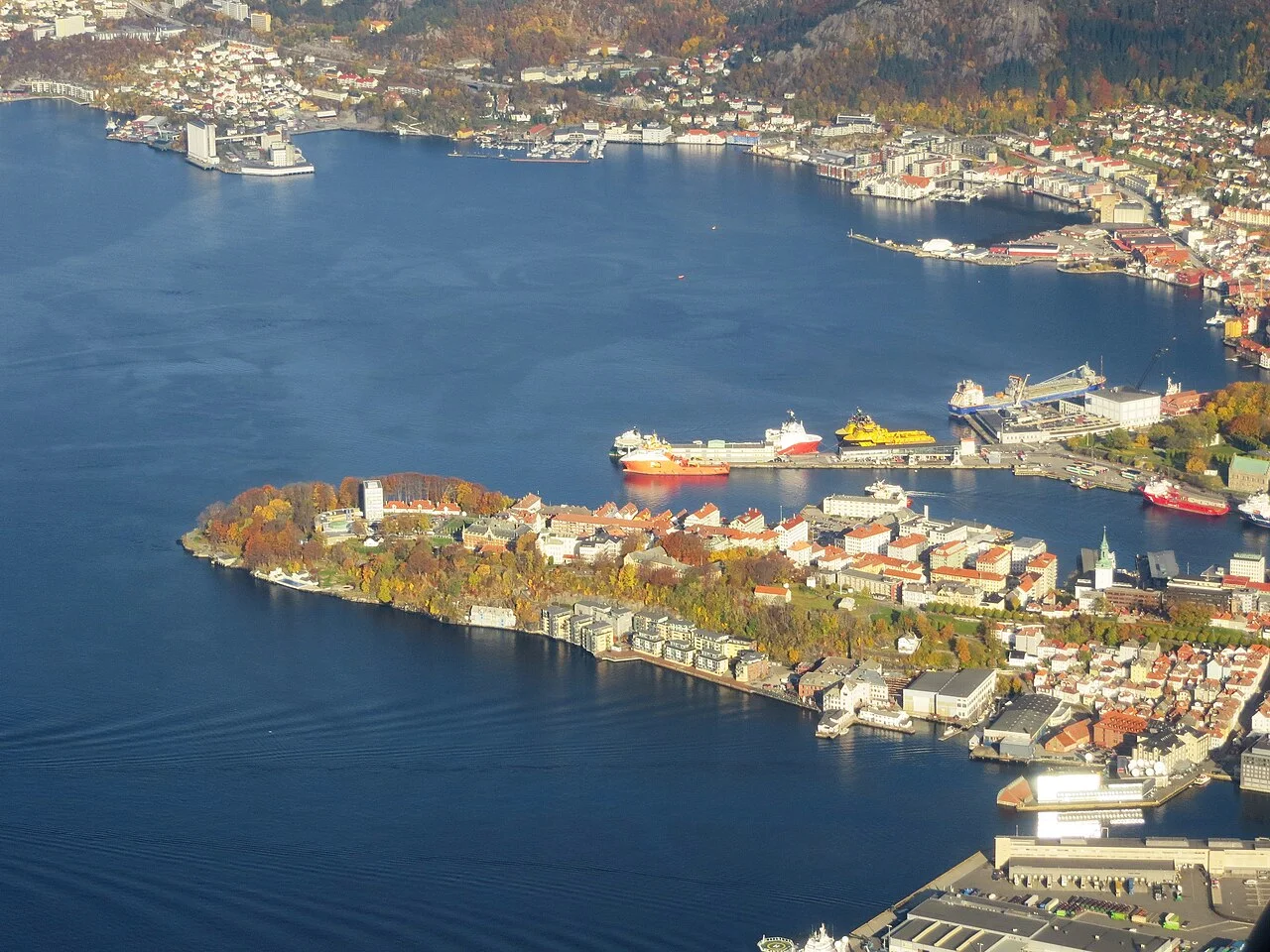
Nordnes offers another street rhythm if you want to step beyond the main waterfront between meals. Do not mistake every door for a café; respect residential entrances and everyday life. Carry water and suitable clothing if the walk grows longer. There is no need to reach a steep hill immediately after eating. The Nordnes and viewpoint photographs here show the surroundings of the walk. They are not being presented as restaurant tables or illustrations of a particular dish. Clear captions preserve that distinction.
Accommodation, transport and a sample food day
Consider the meal programme when selecting accommodation. A central stay may allow a simple walk home from a chosen dinner; somewhere farther away requires checking the real public-transport return. Straight-line distance alone is not enough. After a late flight or boat journey, do not build the final meal around an assumption that kitchens will still be open. Arrange the first or last meal with your actual arrival time in mind. For a reservation, understand the rules for a delay or cancellation.

A sample day could begin with a skillingsbolle pause, followed by fish soup or another suitable lunch near the market and a Bryggen or Nordnes walk. If persetorsk interests you, reserve dinner after checking the menu; otherwise choose a local or international option that suits the group. This is our suggestion, not a list of dishes that must all be eaten in one day. Spreading Bergen's flavours across different chapters of a visit is equally worthwhile and may leave more room for enjoying each meal.
Beyond seafood and a few final questions
You do not have to enjoy seafood to explore food in Bergen. Use the official restaurant directory to investigate other cuisines and choices suited to your preferences. If seeking vegetarian food or another particular option, ask about stock, sauces and shared cooking areas as well as the main ingredient. A single word in a menu heading cannot settle every question. People in the same group can select different dishes and still share a relaxed break at one table.
The final check is straightforward: which meal are you planning, is the business operating that day, what exactly will you order and where will you go afterwards? Ask before taking photographs inside and avoid disturbing other diners. At Bergen's table, the Tatilmerkezi Stork wants you to connect the harbour, neighbourhoods and food culture through a few thoughtful choices. The most useful food route is the one that genuinely fits your own day, leaving space to enjoy both the meal and the city around it.