
Dortmund at the table: a Salzkuchen pause and warm Pfefferpotthast
The Tatilmerkezi Stork separates two Dortmund meal ideas: a short Salzkuchen pause and a seated Pfefferpotthast dish. One approaches the city's table through bread, the other through a warm meat-based main. They do not need to be eaten immediately after one another; placing one at the first lunch and the other on another day makes a calmer beginning. Football and brewing are visible in Dortmund's identity, but a food day need not depend on a match or an alcoholic drink. A central snack, a walk and an unhurried table can already make a full programme.
Rather than list the same sightseeing monuments again, this guide considers the names encountered on menus, the order of meals and pauses while browsing the centre. The official city account presents traditional Westphalian food alongside today's varied cuisines; everyone does not have to choose the same product. Establishing a shared pause point lets each traveller choose an individual plate. The photographs are genuine examples whose dates and shooting locations are retained in captions. The Stork suggests finding the type of meal that suits you instead of treating Dortmund as a race through a fixed list of local tastes.
Salzkuchen: a discovery beginning with bread
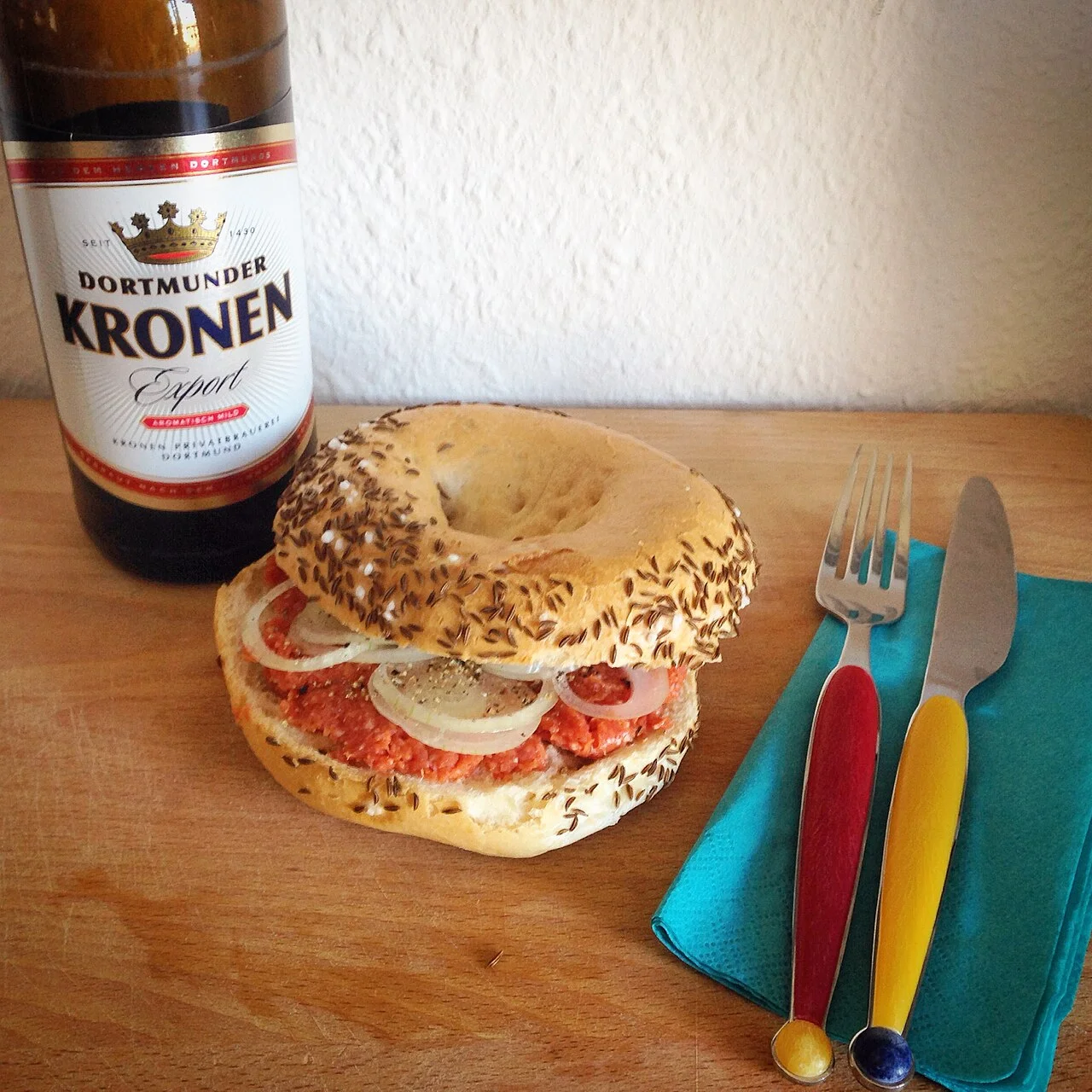
The city describes Salzkuchen as a yeast roll sprinkled with caraway and often served with Mett and onions. The cover is a 2014 example of Salzkuchen with Exportbier; because the source does not specify where it was photographed, it is not presented as a named Dortmund venue. Think about the bread and the topping separately when exploring a regional form. Someone avoiding meat does not have to want that presentation, and the selected product's description should inform the choice. A bread-based stop and a longer seated lunch answer different needs, even when they are part of the same local-food interest.
After a full breakfast, considering Salzkuchen as a smaller lunch option may give the day a better balance. The drink is a personal choice: a beer appearing in the photograph does not make alcohol necessary to try the bread. Sitting together before continuing the walk is easier than spreading companions among several counters and then searching for one another. Filling and portion details may vary between products. Build the food day without feeling obliged to purchase every accompaniment visible in a single photograph. That leaves attention for the roll itself, and room in the afternoon for a different meal or a simple seated pause.
Pfefferpotthast: a main shaped by onions and seasoning
The recipe shared by Dortmund's Adlerturm children's museum uses beef and onions as a foundation, with accompaniments including pepper, bay, cloves and lemon. Measurements and cooking times are not reproduced here. Those ingredients help explain the menu name: unlike a short bread pause, this suggests a warm main to enjoy seated at a table. The onion photograph is an honest general ingredient illustration, rather than a finished Dortmund dish. Without treating it as a picture of the exact plate, consider why the meal deserves a separate place in the day. Understanding a culinary word can already make ordering feel less hurried.


On a day when you want Pfefferpotthast, avoiding a large Currywurst meal beforehand may distribute appetite more comfortably. A main at lunch followed by a small afternoon coffee, or a simpler lunch ahead of dinner, are two possible arrangements. Consider whether the onion-and-spice idea appeals to you rather than order automatically because it carries a local association. A companion choosing a different main can still share the same exploration at the table. Read the relationship between the dish, its sides and its serving format. Let the allocated meal time actually take place seated, which can soften the pace of the afternoon rather than add another rushed stop.
Currywurst: a street pause separate from the main table
Dortmund's official culinary account lists Currywurst among the snack options. The illustrated plate was photographed in Berlin in 2013, and is not a recommendation for a Dortmund seller. A snack of this kind can suit a short interval, a meal before the train or hunger in the middle of a walk. A serving with fries and sauces may become a larger meal than expected. If Pfefferpotthast already has a place in the day's table plan, remember that both do not have to appear in substantial portions together. Trying different choices on separate days can make the comparison easier to notice.
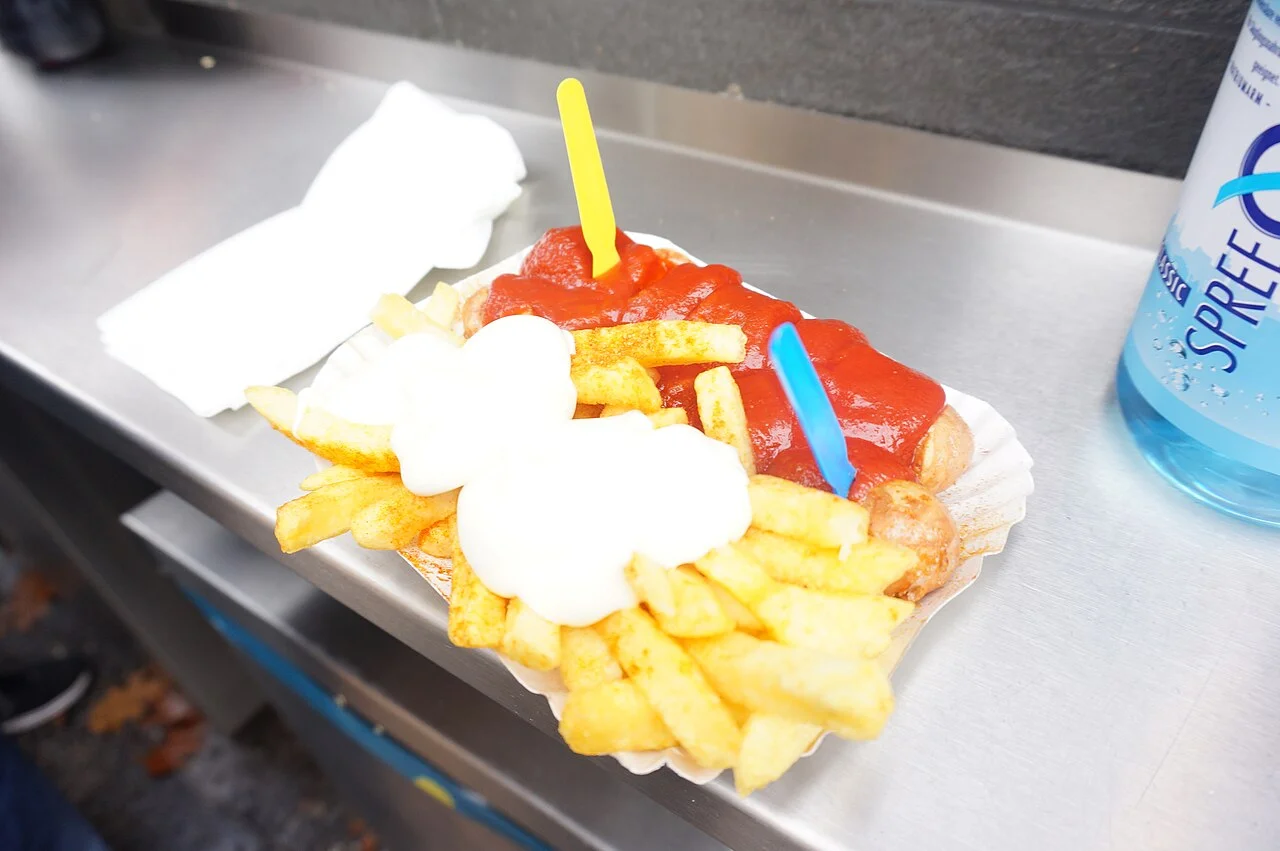

Place the snack within the area where the outing actually takes you. Rather than continually cross the centre for one food name, consider a suitable service and seating arrangement nearby. In wet weather, think about a place to pause, whether companions can eat at the same time and the eventual departure. Popularity does not require travellers with different meat or sauce preferences to order an identical dish. A shared stop can work with different choices. In the Stork's route, street food is one option that fits a day's rhythm, rather than an obligation that accidentally removes the appetite and time set aside for dinner.
Coffee, Alter Markt and staying around the centre
The city's district account describes Alter Markt as a central square with dining and seating options. It can be an orientation point for a food day, with a walk into another part of the centre after the main meal. Empty intervals in the plan help make room for a real conversation over coffee. The pictured cup is a general Berlin cafe illustration, while the square photograph records a genuine Dortmund view from 2016. Neither tells you which tables are open or available today. The pleasure of sitting in a city can be enjoyed without replacing every free minute with another purchase or another tasting target.


Evaluate a market outing around Hansaplatz separately against the relevant day's information; special dates and relocation notices in older sources have not been transferred into the present programme. Central accommodation is one option for a short visit that combines meal pauses with walking. Those staying in another area can make the return after the final meal part of the itinerary. Büdchen and brewing culture may offer a separate adult research interest, but joining a tasting event is not required here. Choosing coffee, tea or water is another way to enjoy the same city's table and the conversation that comes with it.
A meal order for two days
For the first day, consider breakfast followed by a central walk and a smaller lunch such as Salzkuchen. Leave a coffee pause for the afternoon and enough time for an ordinary evening main. On the second day, give Pfefferpotthast a seated meal of its own and keep Currywurst for another moment or a later visit. When planning around a football match, relate the meal time to the actual fixture separately; tickets or transport arrangements have not been promised. Understanding the city's culinary vocabulary does not depend on consuming every named product during one outing. A flexible order can make each pause more enjoyable.


Sources were reviewed on 4 October 2026. Changeable prices, reservations and service hours have not been invented; this guide helps choices through food names and the order of meals. A small bread pause, an onion-based warm dish and coffee time reserved for conversation open three different doors into Dortmund's food culture. The Stork invites you to approach a few products at your own pace, genuinely sit down to a central table and leave some appetite for the next day. Your route can remain shaped by company, interests and the trip's actual rhythm rather than a claim that all visitors should follow one meal programme.