
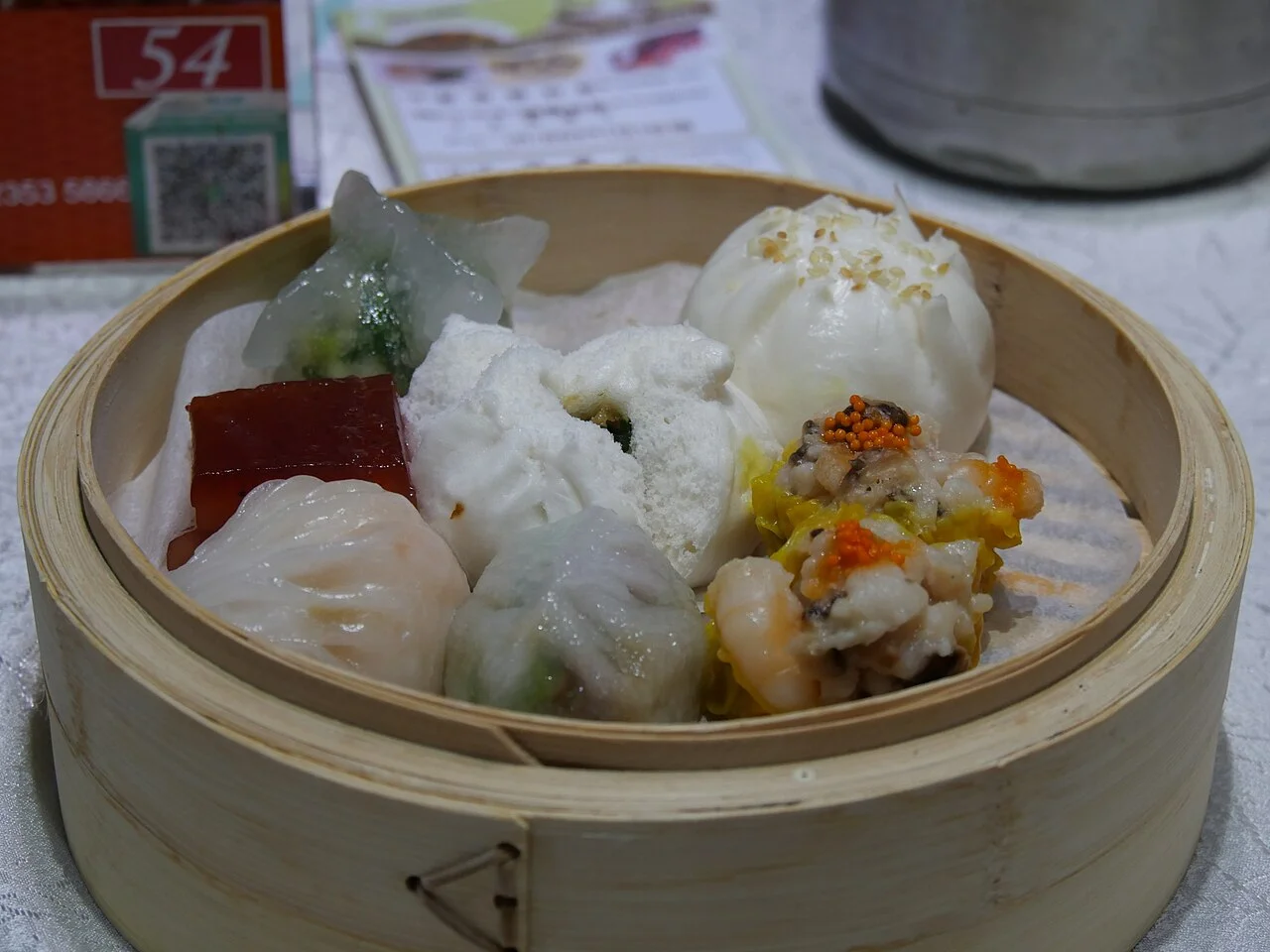
What to eat in Hong Kong should become more than a restaurant ranking. Sharing a dim sum basket, giving milk tea time in a cha chaan teng and choosing an egg tart during a street walk create different experiences. The Tatilmerkezi Stork brings three food rhythms together: a leisurely shared meal, a brief pause and a simpler bowl. You do not have to try all of them in large portions on one day. Dim sum with companions, a later snack and space for the return journey can make a busy sightseeing day more comfortable. This guide is a practical companion to first choices rather than a promise that a famous name always provides the same meal.
Three authentic food photographs show dim sum in Tsim Sha Tsui, egg tarts in Hong Kong and milk tea in Sheung Wan. A business name from the source identifies where a picture was taken; it is not a current quality ranking or menu guarantee. Two different city scenes provide context for food planning. Dates and licences are retained; official tourism and MTR sources were reviewed on 4 October 2026. Establish current service, booking and payment arrangements with the chosen business. No fixed price or uniform travel duration between all districts is given here. Start by deciding what interests you today rather than trying to reproduce a table shown in an old picture.
Dim sum: build a meal by sharing baskets
Dim sum places sweet and savoury small plates alongside tea in a Cantonese tradition. Official tourism information introduces names such as har gow and siu mai for first choices; clarify the actual preparation and ingredients on the menu too. Knowing how many pieces arrive in a basket makes sharing easier. For two diners, beginning with several different dishes and adding more according to appetite may be more comfortable than ordering every option immediately. Consider companions who wish to start eating before photographing every steaming plate. Warm food and conversation need not become competing priorities. A shared meal can let everyone express a preference rather than expecting identical tastes.
The cover photograph records an authentic dim sum plate at Fulam Palace Tsim Sha Tsui on 30 December 2021. It does not establish an unchanged menu today or disclose the ingredients of every visible piece. If seafood, meat or another component matters, obtain the business's explanation. Understand how tea, extras and service items are charged before ordering. A meal requiring a booking should not be planned as a guaranteed spontaneous street stop; check availability. The Stork suggests giving space to one dish each person is curious about. Sharing then means acknowledging different preferences as well as dividing portions. A short discussion before ordering can improve the whole table's experience.
Leave space after the main meal for an egg tart
A Hong Kong egg tart combines a pastry base with a creamy egg filling. Preparations can vary, so a similar appearance does not establish identical taste or texture at every bakery. The authentic tarts photographed here were served at Mott 32 in the Standard Chartered Building on 13 January 2018. They are not labelled as a street-bakery plate and do not prove current availability. For a dessert pause, first see what a nearby business offers. If seeking a recently prepared item, ask; a photograph's yellow filling does not reveal production time. Choose the serving according to the appetite remaining after lunch rather than the size of a food checklist.


Connecting a tart pause with a walk may prevent another long journey for every food stop. A companion choosing a different dessert need not order the same thing. When pastry, egg or dairy ingredients matter, request more than a product name. For takeaway, consider how long it will travel and the business's storage advice. This guide does not suggest every bakery item can be carried in identical conditions. Photograph your own plate rather than leaning closely across a counter or obstructing a shopping queue. A brief break can produce a good dessert memory without a special viewpoint table. The useful question is whether the pause suits your day, not whether it appears on every recommendation list.
Cha chaan teng and milk tea: another city rhythm
Cha chaan tengs offer a way to explore Hong Kong's everyday food culture with Eastern and Western influences side by side. Milk tea and a small bite can give a long sightseeing day a pause. Clearly state whether you prefer the drink hot or cold and sweeter or less sweet. The source photograph records milk tea in Sheung Wan on 7 August 2012; it is not a particular establishment's present menu. Ask when milk ingredients or an alternative matter. A tea name does not make milk and sugar arrangements uniform across businesses. Even a place featured in official visitor material may operate differently on your own date.
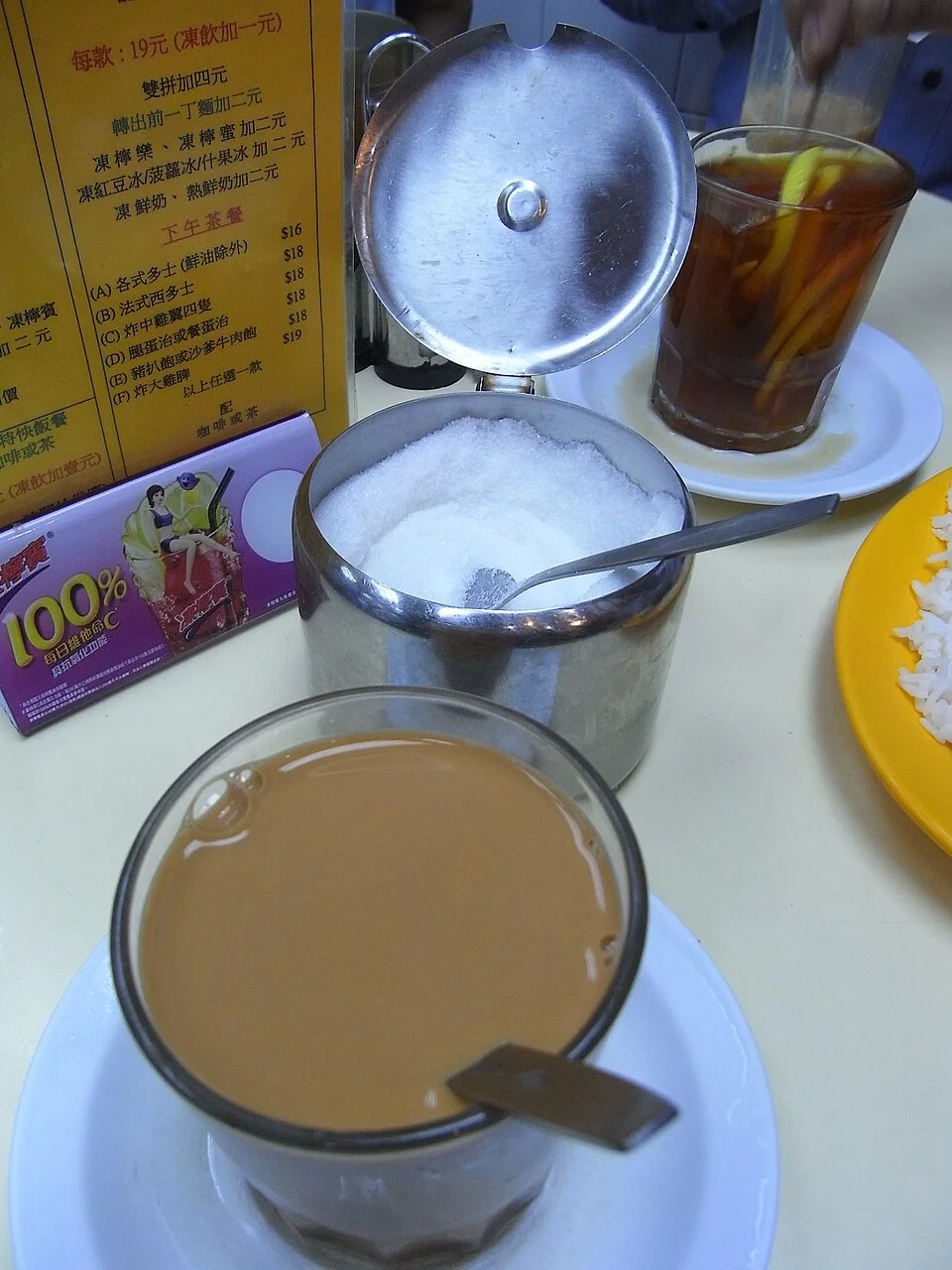

Official tourism information presents Sham Shui Po as a setting where food and local shops can be explored together. Fit a pause there around other interests; not every hour needs a meal. In an everyday business, observe seating, where to order and how to pay. Understanding the actual arrangement makes a short visit easier than expecting a formal restaurant routine everywhere. Today's table or service system cannot be inferred from an older photograph. The travel writer's curiosity includes the daily rhythm as well as a menu: what do people choose, and at what pace? A simple drink may be enough time to notice that without turning the observation into a rushed tour.
Wonton noodles and the surrounding streets
Wonton noodles provide another main-meal idea. Official tourism material about Mak's Noodle introduces one associated option. A wonton name, however, does not reveal every filling or broth ingredient. Ask about the preparation and portion at the selected establishment. An evening bowl can provide a different experience from a shared dim sum lunch. No photograph here is falsely labelled as a wonton plate: the street-market scene provides urban walking context only. It does not claim the pictured stalls sell this dish or operate on the same evening. Keeping that distinction lets real photographs support the story without pretending to document a specific meal they do not show.
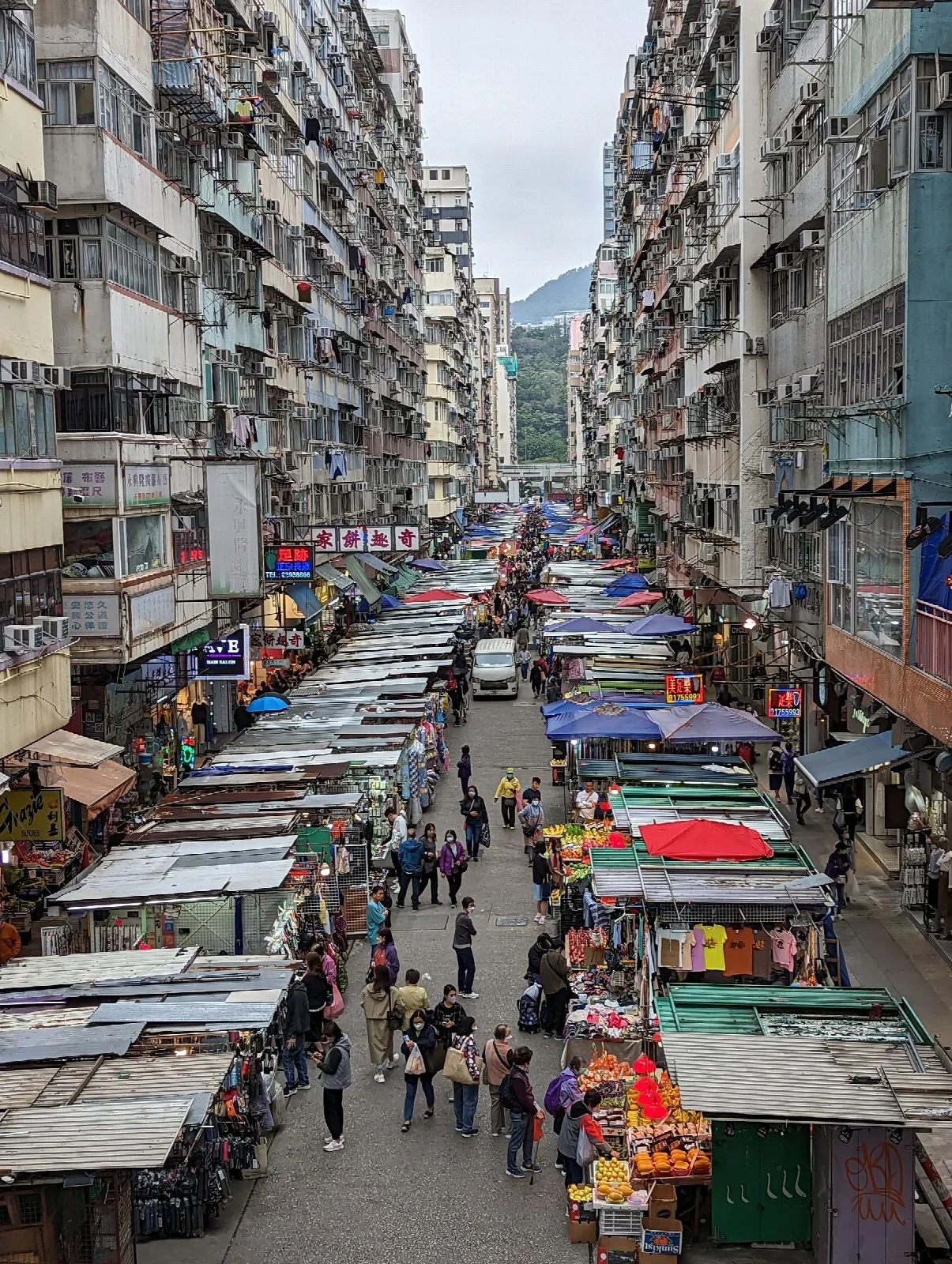
After selecting the food stop, choose a short nearby walk. Travelling widely simply to collect famous names may reduce time spent enjoying the actual plate. Check accepted payment methods and compare the bill with the current menu. A crowd outside a business does not establish suitable ingredients or comfortable seating for you. If companions have different preferences, investigate two main choices and decide together. MTR's official trip planner can help with district connections; also examine the real entrance, exit and walking leg. A station name and a restaurant doorway are not the same destination. Planning the last part of the journey can matter as much as choosing a well-known meal.
Accommodation, a harbour pause and a food-day outline
Consider actual food stops when choosing between accommodation in Kowloon and on Hong Kong Island. A Tsim Sha Tsui meal, Sham Shui Po pause and Sheung Wan option are not one immediate walking setting. Instead of connecting every district solely for food on a single day, plan one main meal and a nearby pause. Compare the hotel's entrance, selected restaurant and journey back at night. The harbour and ferry photograph provides city context; it is not claimed as a particular restaurant's table view. Planning a waterfront walk separately from eating can remove pressure to find a business with a perfect view. A satisfying meal does not require a skyline outside every window.

A sample day combines a shared dim sum meal around lunchtime, an unhurried local walk and a later egg-tart and tea pause. Save wonton noodles or another main dish for a different experience the next day. This outline is not a fixed service calendar; adapt to bookings, availability and appetite. On flight day, do not leave the airport connection to the last minute for a distant dining address. The Stork suggests remembering a table rhythm as well as food names: a shared basket, a short tea interval and a bowl selected for yourself can tell different parts of Hong Kong's story. Let those experiences shape the route rather than asking every meal to meet the same expectation.