
If you think of Kathmandu only as a stop before a Himalayan journey, you may miss the city's own story. The Tatilmerkezi Stork invites you to look first at rooftops, then at the everyday movement through a square, and finally at quiet details around a stupa. Giving the historic centre, Swayambhu and Boudhanath separate time on a first visit can be more meaningful than compressing the whole valley into one day. Thamel can supply the accommodation and break-planning side of the trip, while momo introduces a flavour. This guide retains the capture dates of authentic photographs rather than presenting historical views as today's access or restoration conditions. Choose the interests that matter to you and leave room for the next detail.
Durbar Square: choose a courtyard and look closely
Nepal Tourism Board introduces historic stops around Kathmandu Durbar Square including Hanuman Dhoka Palace, Kasthamandap and Kumari Ghar. UNESCO explains the valley's heritage through groups of squares and religious monuments across several places. Do not mistake Kathmandu's square for the ones in Patan or Bhaktapur. Giving just one square proper attention on a first visit can make the woodwork and courtyard arrangements easier to notice. Ask which parts are open that day rather than assuming every building permits entry. A walk around a square and a museum visit need not share the same ticket or operating arrangements. Decide what you want to see before attaching a long list of interiors to the route.


Subhayabaal's Kasthamandap photograph in this article is an archive image dated 16 November 2011, taken before the 2015 earthquake. It does not claim to show the city as it stands today. A historical photograph can help introduce a building's past; it should not become evidence of current visitor access. Follow the maintenance, restoration and visitor directions in force when you arrive at heritage areas. Verify operating information separately with the institution if selecting a museum inside the palace complex. Spending time with a few details in a courtyard reminds you that there is no requirement to collect every building name in a hurry.
Swayambhu: reserve an unhurried part of the day for the hill
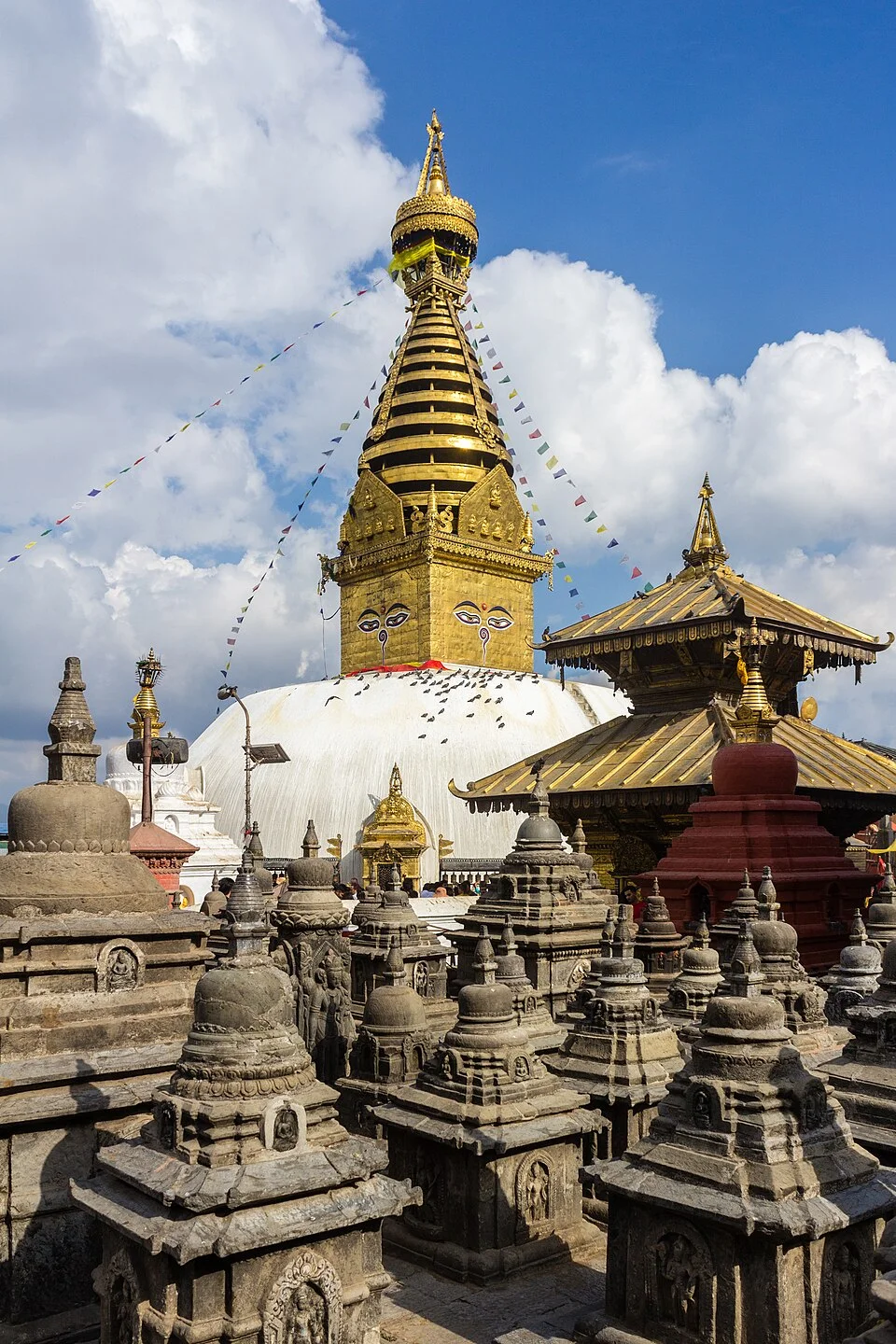
Nepal Tourism Board introduces Swayambhunath on a hill to the west of central Kathmandu. Give it its own part of the programme rather than adding it continuously to a long walk through the old centre. The approach and steps may require a different pace from a level-square visit. Research actual entrances and access conditions in advance if you have particular mobility requirements. The cover photograph by Bijay Chaurasia is an authentic Swayambhu image dated 18 June 2017. It does not explain today's entrance arrangements or the condition of every step. Use it to introduce the setting while planning the visit with current information.
At a religious place, a visitor's photograph is not the principal purpose of the setting. Leave space for worship, follow directions before approaching, and ask permission before making someone's portrait. Look at the relationship between structures, surface details and the surroundings instead of searching only for one general view. The valley may look different in clear weather, but this guide promises no particular mountain panorama. The Stork recommends fewer targets and more attention here. A break between arrival, visiting and returning may create a more comfortable experience than completing the whole hill visit in a rush. Let the place set part of the pace.
Boudhanath: get to know a separate neighbourhood
Nepal Tourism Board describes Boudhanath as an important Buddhist centre on the eastern side of Kathmandu. It is a separate destination from Swayambhu; calculate the actual transfer if visiting both. Bijay Chaurasia's authentic Boudhanath photograph dated 20 July 2020 shows the white dome, upper structure and surroundings. The principal subject is the historic stupa, not a contemporary artwork presented as ancient heritage. Nevertheless, an older photograph does not establish today's layout or which areas are open. Treat the setting as a place to understand rather than as an image you simply need to reproduce.


Spend the first few minutes noticing how the surrounding space is used. Worshippers and sightseeing visitors may move through the same area, and recognising that helps you choose where to stand and how to proceed. Observe the local arrangements and walk where permitted; do not obstruct passage or worship for a picture. Afterwards, choose somewhere nearby to sit for a drink or meal if you wish. This general photograph guarantees neither a particular terrace view nor that any establishment is open today. Consider Boudhanath a part of the day with its own atmosphere, not a stop squeezed in while hurrying somewhere else. Leaving time to pause can be the most valuable addition to the plan.
Thamel: make accommodation decisions at street level
The official valley introduction connects Thamel with visitor accommodation, food and shopping options. It can therefore be one of the areas you compare for a first trip. However, a neighbourhood name alone does not promise a quiet room, easy vehicle access or a short journey to every destination. Research the actual street address and how to reach the entrance. Learn reception and final-transfer arrangements in advance if arriving late. Understanding which direction you will head in the morning can be a more useful criterion than choosing solely from the room photographs. A comfortable plan begins with the practical relationship between your accommodation and your day.


Saddam Hussain Ansari's photograph dated 26 August 2026 records a real section of a Thamel street. It does not establish that the whole district has identical activity at every hour. Do not rely on that single image when deciding where to stay. Consider the street walk, a possible break point and the return separately. If shopping or a bookshop stop interests you, allow a small amount of time without loading every errand into one excursion. Knowing the purpose of your trip makes the balance between central location and evening rest easier to assess. The Stork's favourite choice is the address that fits your day, rather than automatically the most popular one.
A momo break, transport and a three-day beginning
Nepal Tourism Board's heritage cuisine book includes dishes such as momo and dal bhat. One of them might interest you at a first meal stop; ask about filling, sauces and portions on the actual menu. Viktor Pinchuk's source, credited under his own name, provides an authentic momo photograph dated 26 February 2026. We draw no conclusion about the exact filling, price or a named current business recommendation from the plate. Leaving a proper break to explore a flavour may be more enjoyable than ordering hurriedly while racing between religious sites. The food stop can be part of the visit rather than merely fuel for the next transfer.


Build day one around Durbar Square and its surroundings, day two around Swayambhu with room to rest, and day three around Boudhanath. Add Thamel breaks at the beginning or end of those days. If Patan and Bhaktapur interest you, consider allocating another day rather than treating their inclusion in the same heritage valley as proof that everything forms one walk. Nepal Tourism Board introduces bus and taxi options. If using a bus, establish the actual stop and connection operating that day. This guide promises neither direct services to every place nor fixed taxi fares or journey durations. Base the final choice on your starting address and the visitor arrangements you have confirmed.
The official heritage-entry table distinguishes visitor categories, so a single amount should not be presented as a universal price. Check your own category and the arrangements applicable to your travel dates. Plan the airport transfer, luggage and final-day return margin separately. Sources were checked on 4 October 2026; museum, entry and transport information should be revisited close to travel. Seeing Kathmandu fully does not mean filling every day to its final minute. The Stork asks you to find your own rhythm between a square, a hill, a stupa neighbourhood and an enjoyable food break.