
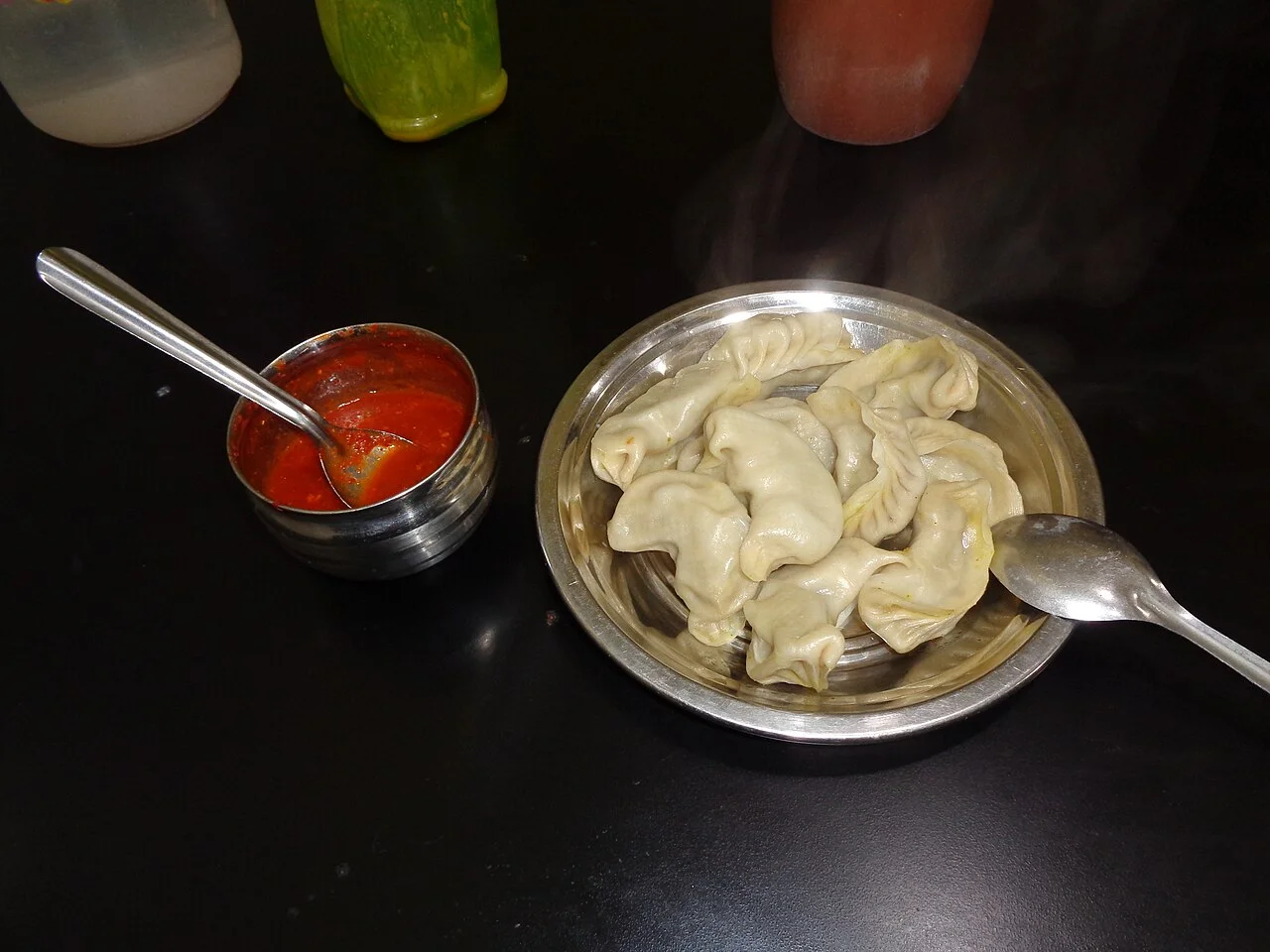
You can begin the question of what to eat in Kathmandu with a plate of momo, but the city's flavour story need not end there. The Tatilmerkezi Stork invites you to add comfortable meal breaks to a sightseeing day without reducing Nepal's food to a single recipe. A substantial dal bhat, a Newari khaja plate introducing different small tastes, and a quiet drink break offer choices rather than obligations. The first aim is to understand what you are ordering, not to memorise every name. This guide guarantees no specific establishment's current price or menu. Authentic photographs retain their sources and capture dates; your actual order should be decided with the kitchen serving it today.
Momo: learn about filling and sauce separately
Nepal Tourism Board's heritage cuisine book describes momo as dumplings that can be prepared with meat or vegetables. It discusses different preparation methods, so do not read a menu name as the promise of one universal plate. Ask what the filling contains, how the dumplings are cooked and how sauces are served. Heat may come from more than the filling itself. Learning whether you can try a sauce separately helps you make a first order according to your own tastes. A menu with many choices can be appealing without requiring you to try them all at once. Start with the variation you genuinely want to understand.
The authentic cover photograph is a Kathmandu source record dated 26 February 2026, credited under the photographer's name Виктор Пинчук. We draw no conclusion about its exact filling or the current establishment that served it. This is a plate example, not a present-day menu recommendation. If placing a momo break midway through a museum day, leave time to sit and rest too. Food that may be served quickly does not have to be eaten hurriedly. Ask the establishment about ordering different fillings or sharing if companions have different preferences. Understanding portions and how the price is calculated beforehand makes the break easier and leaves more attention for the taste.
Dal bhat: a meal arrangement rather than one identical plate
The official cuisine book introduces dal bhat as a Nepali meal combining rice and pulses with vegetables and accompaniments. The name provides a starting idea, not a guarantee that every serving contains identical quantities and extras. Ask which components are included, whether the version is with or without meat, and how additions are supplied. If making it the principal break in a sightseeing day, choose a time that does not immediately require hurrying to a long stair climb. A large meal on the menu does not mean you must combine every food interest into that same sitting. Let it be the meal that suits the day you are actually having.
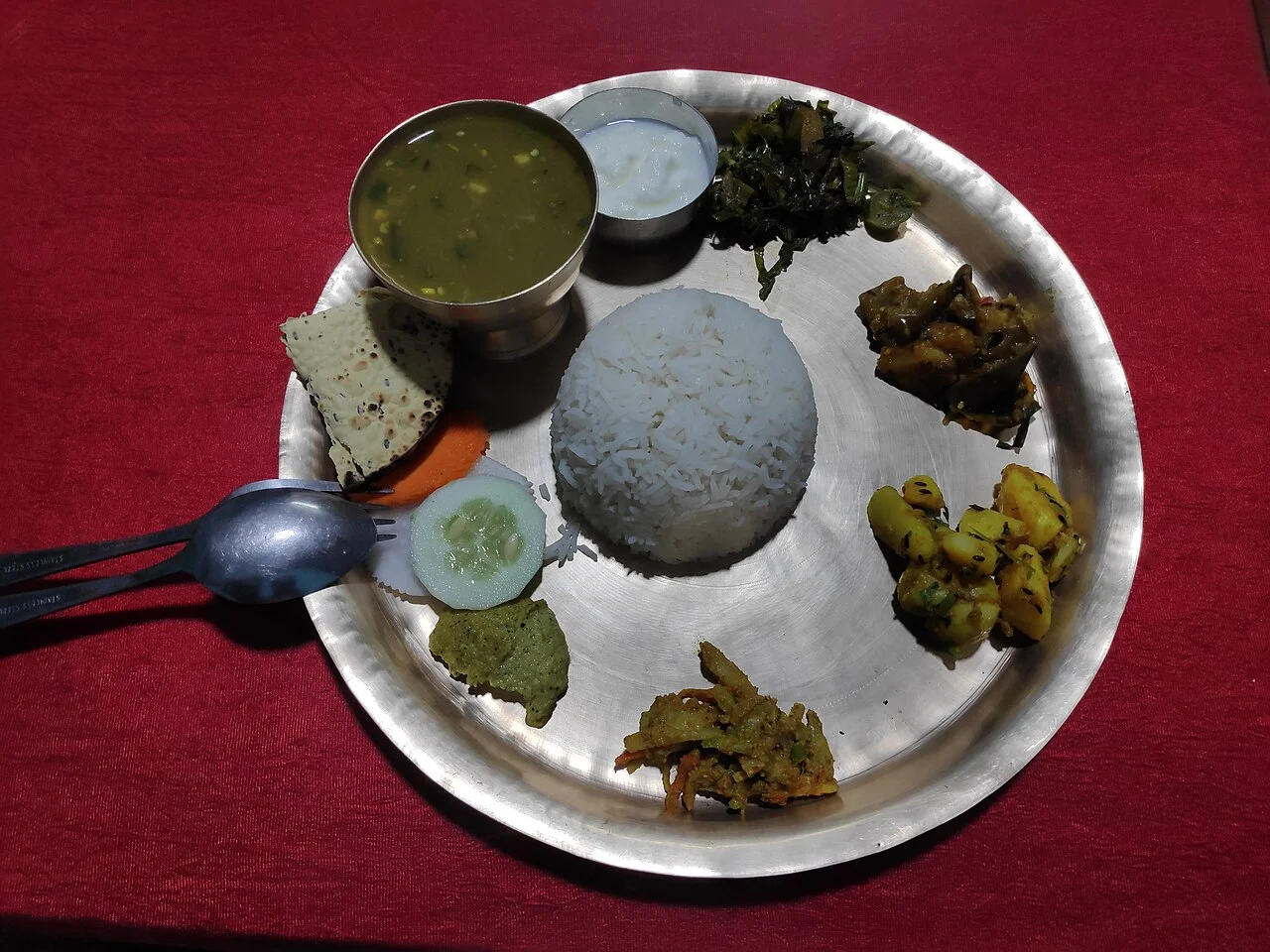

Gaurav Dhwaj Khadka's authentic dal bhat tarkari photograph dated 10 April 2019 has source coordinates within Kathmandu. It records one day's presentation, not proof that a restaurant today will supply identical sides. Look at the sections of the plate and consider which ones you recognise and which you would like explained. Do not assume additional servings are free or unlimited. Learn any such service arrangement from your own menu. Knowing how extra bread, rice, sauces or other products affect the bill allows you to concentrate on the meal without later surprises. An unhurried principal meal does not interrupt sightseeing; it helps establish the day's rhythm and makes the next part easier to enjoy.
Newari khaja and different small tastes
Nepal Tourism Board's cuisine publication treats the Kathmandu Valley's Newari food tradition as a distinct cultural subject. If choosing a Newari khaja set, learn about its components instead of trying to memorise the plate as one uniform object. Which parts contain meat, which are pulses or vegetables, and which are more strongly seasoned? The establishment's own explanation matters more than a general photograph. Gaurav Dhwaj Khadka's authentic Newari khaja set photograph dated 20 September 2022 documents the Kathmandu area through its source coordinates. We do not guess every small component's exact recipe from appearance alone. A real image introduces variety without solving all ingredient questions.
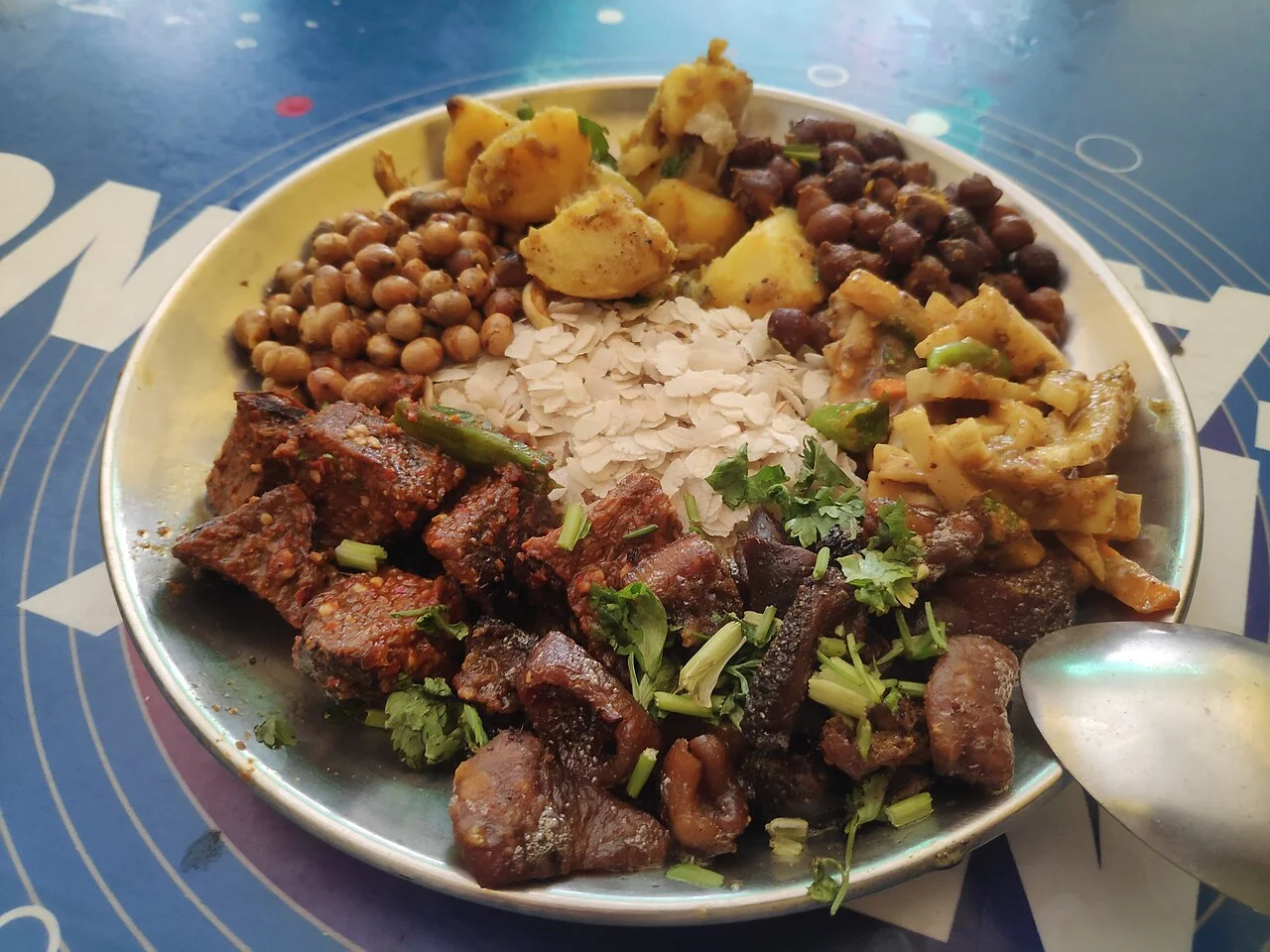

The official book introduces chatamari as a rice-flour base and ow or bara as a pulse-based option. If you find one on a menu, ask how it is served and about any toppings. The names may encourage curiosity without requiring you to order each one in the same evening. For a dessert, check what the actual menu offers rather than assuming a festival dish is available in every kitchen throughout the year. The Stork does not claim that a few plates represent an entire culture. Instead, notice that different foods open onto further stories. A break beginning with a good question can give the trip a welcome sense of depth.
Thamel breaks and accommodation choices
Nepal Tourism Board introduces Thamel as a visitor area with accommodation and dining options. It can be one place to research for a first food plan, but a neighbourhood name establishes neither identical menu quality nor round-the-clock opening. Check the actual address, operating information and menu for a place you want to visit. Viewing the menu beforehand may reduce decision-making pressure when a group has different preferences. Everyone need not choose the same dish in order to share a comfortable break. The time spent together can be the common experience, while each person explores the flavour that interests them most.
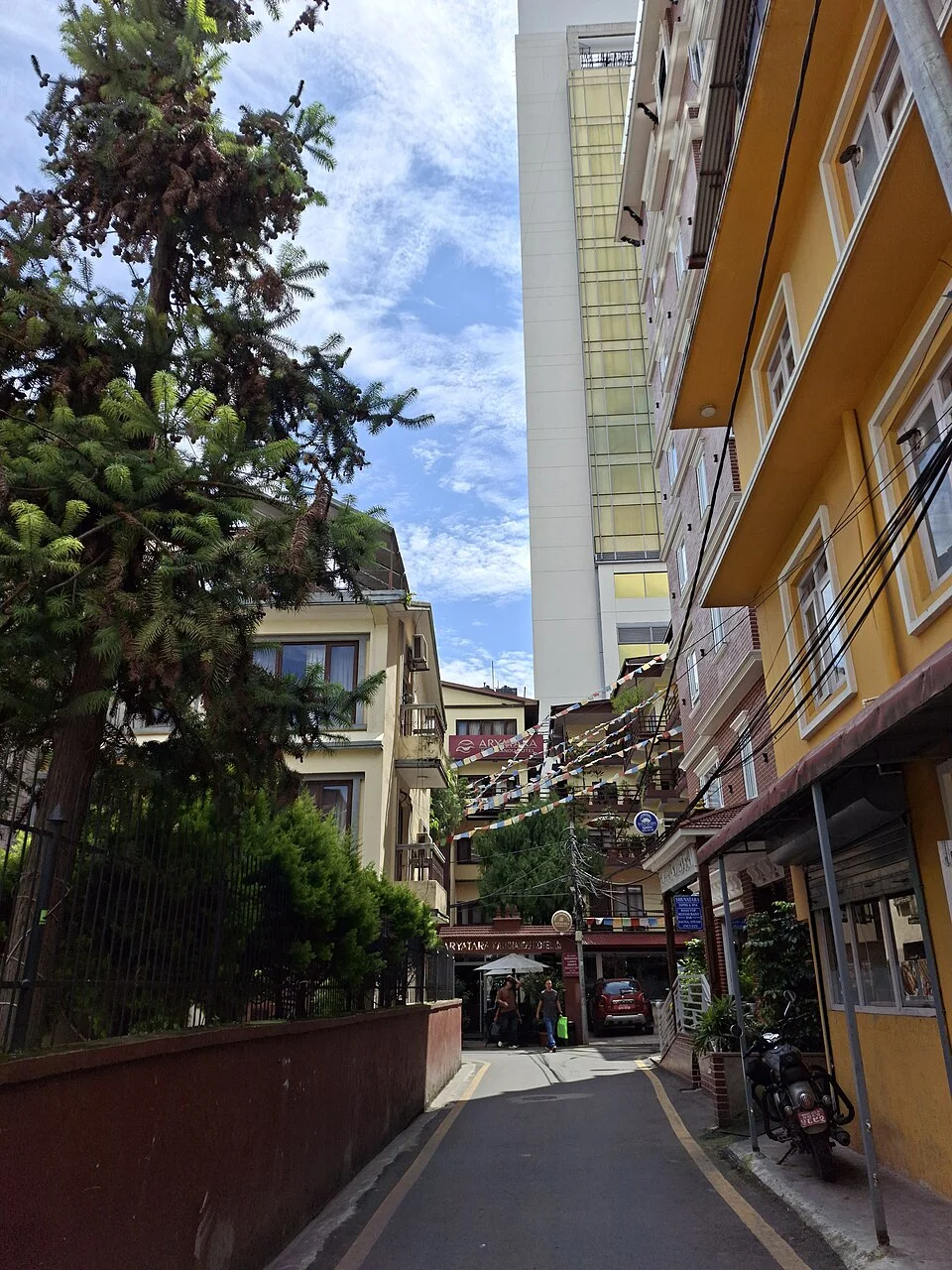

Saddam Hussain Ansari's Thamel street photograph dated 26 August 2026 provides city context; it is not claimed to show a specific restaurant entrance. Apply the same street-level thinking when choosing accommodation: how will you reach the first meal stop and return in the evening? Establish a food business's closing arrangements separately from the hotel's check-in arrangements if arriving late. Staying outside Thamel does not oblige you to return there for every meal. A researched choice in the area you are visiting can let you discover food without turning it into the reason for another long transfer. Connect the meal to the day's geography instead of adding it as a disconnected target.
A Swayambhu day, drinks and transport planning
Arrange meals on a Swayambhu day according to the actual access and walking requirements of the hill visit. Bijay Chaurasia's Swayambhu photograph dated 18 June 2017 supplies historic stupa context, not an image of a stall, cafe or current menu. When deciding on a morning or afternoon break, do not infer the presence of a particular service simply because a picture is attractive. Ask what a drink contains and how large a serving is. Whether it contains milk, sweetness or alcohol may not always be clear from a name. This guide does not present one drink recipe as a standard across the entire city. Let the business explain the preparation it actually serves.
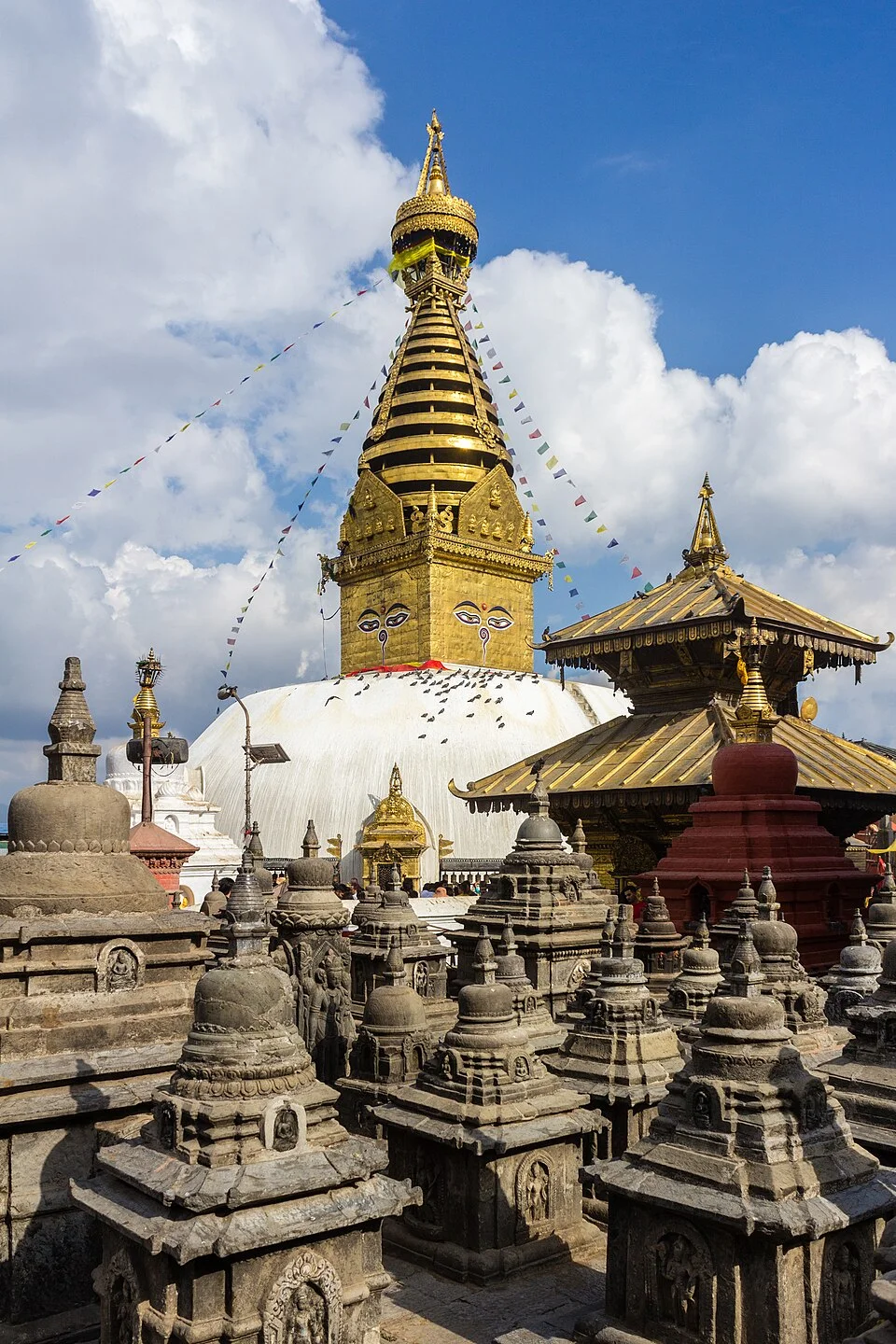

One simple food day might begin with breakfast near your accommodation, a midday choice between momo and dal bhat, and a different Newari plate in the evening if you are curious. Add a short drink break between principal meals when wanted rather than filling every spare hour with food. Nepal Tourism Board's transport source introduces bus and taxi options. For a bus, establish the actual stop and connection; for a taxi, confirm the journey arrangements relevant to that day. No fixed fare or duration is given here. Plan baggage and the return margin separately on the airport day. Sources were checked on 4 October 2026. The Stork's final suggestion is to ask about ingredients, understand the portion, and then get to know both the city and the plate at your own pace.