
What to eat in Kuala Lumpur starts with an appealing plate, but a good food day is more than a list. As you explore Malay, Chinese and Indian cooking, consider the journeys between meals and your own preferences too. The Tatilmerkezi Stork suggests a modest breakfast, one chosen main meal and a flexible evening devoted to a food neighbourhood. You need not try every dish name on the first day. Discovering an aroma you enjoy and choosing the next order accordingly can be more rewarding than several large meals in succession. This guide does not claim that any business serves an unchanged menu every day.
The five authentic photographs include nasi lemak taken in Tanglin, Kuala Lumpur, roti canai photographed at KLIA airport and three different city settings. The airport plate is not presented as the product of a city-centre restaurant. Source dates and licences are retained; old street signs are not current business recommendations. Official tourism sources about food and districts were checked on 4 October 2026. Ask the selected business about its current menu and ingredients. An attractive photograph cannot by itself confirm that a meal meets your dietary needs. The Stork's approach is to order with curiosity while clearly explaining what you want before ordering.
Nasi lemak: choose the plate that suits you
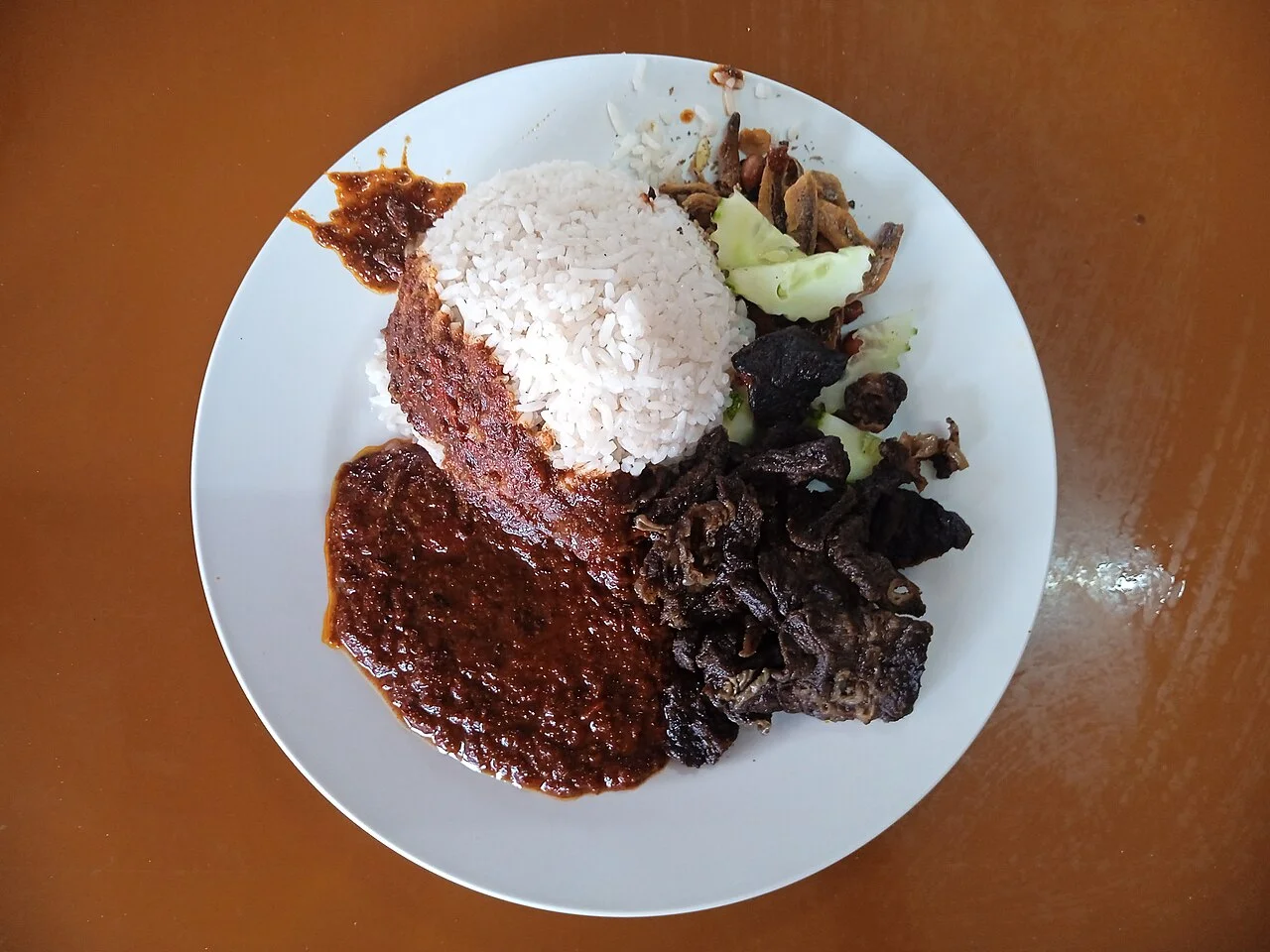
Nasi lemak begins with coconut-milk rice, while accompaniments depend on the business and order. Fish, egg, peanuts or meat may accompany it, so do not choose on the assumption that it is simply a rice plate. The cover photograph shows nasi lemak with paru at Laman Selera MADANI Tanglin on 28 April 2026. It is neither a universal standard serving nor a vegetarian example. The photograph's recorded location is real, but that presentation is not promised to remain unchanged. For a first taste, ask which sides are included and whether the spicy sauce can be served separately. That creates a clearer expectation than comparing your order with somebody else's picture.
If sharing with a companion, order for two actual appetites. When a long walk follows the meal, an earlier rest or a smaller option may suit better. Do not infer the price from an old visitor photograph; examine the current menu and the cost of additions. Rice and sauce appearance cannot reveal every ingredient. For allergens or animal ingredients, a clear answer is more useful than guessing. When you enjoy a detail of one plate, note its name and the presentation you liked rather than assuming another kitchen will reproduce it identically. The pleasure is in discovering what suits you, not finding the largest possible portion.
Give roti canai and a tea pause some time
Roti canai is a flatbread option that may be served with dal or curry. The authentic image used here shows roti canai and dal photographed at Kuala Lumpur International Airport on 4 July 2014. The airport is a separate location from central Kuala Lumpur; the picture is not a particular downtown restaurant or a current terminal menu. If choosing this start to a sightseeing day, look at what a nearby business actually serves. Knowing the food name does not establish the ingredients of dough and sauces. Asking for sauces separately or enquiring about a milder option can help communicate your own preferences.
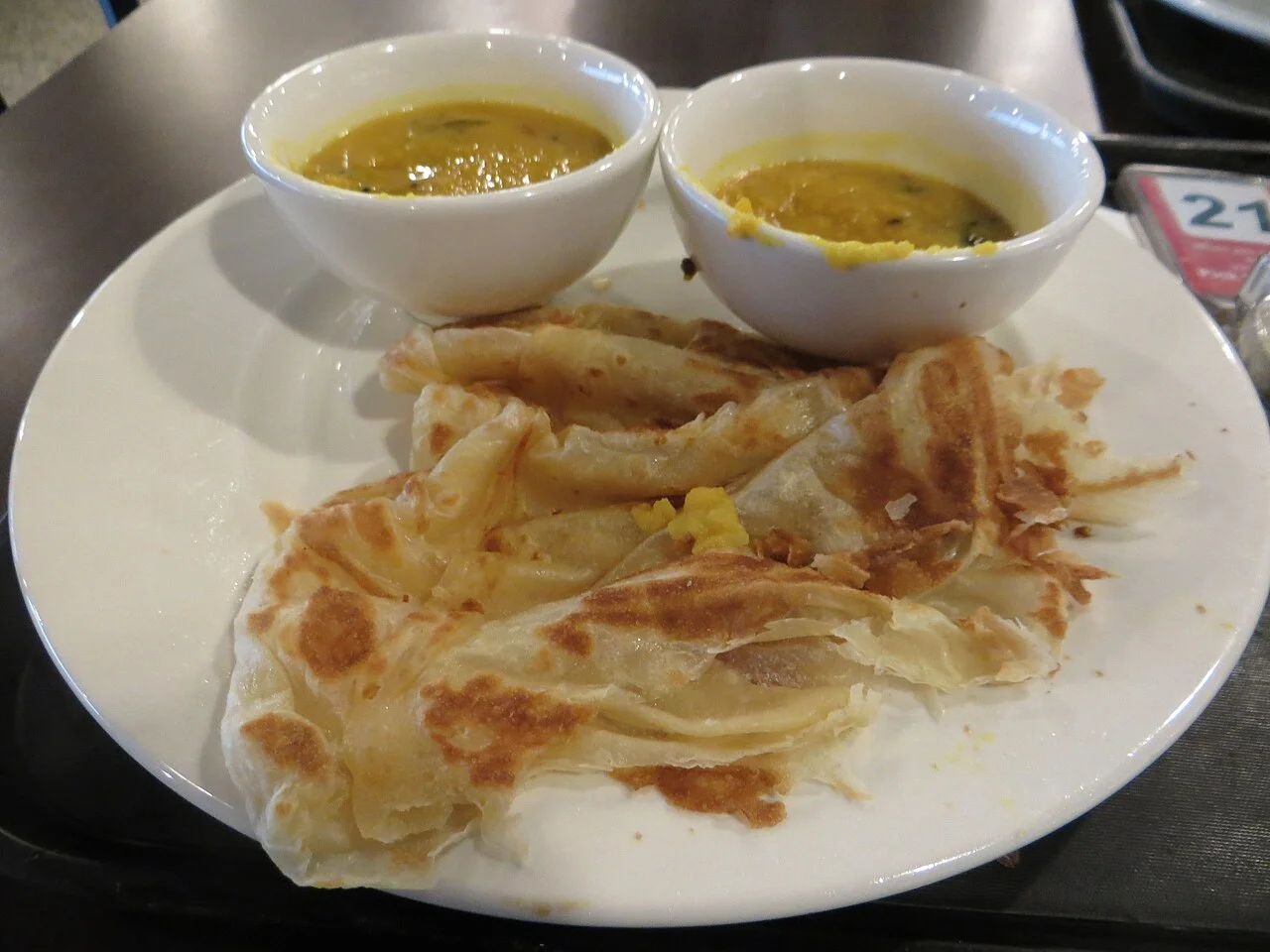

Teh tarik provides another point of interest for someone wanting milk tea. Ask about sweetness and milk choices when ordering rather than assuming uniform preparation. A short walk nearby after breakfast may be more relaxed than immediately travelling to another district. Do not confuse an airport meal with the city's food itinerary; with a flight ahead, establish the terminal and security needs first. There is no need to cross to another terminal or put a connection at risk merely to reproduce a food photograph. Sometimes the value of a meal is simply a few comfortable minutes sitting down. That matters as much as adding another dish name to a travel list.
Around Petaling, start by reading the menu
Official tourism material associates Petaling Street with Chinese cooking and street food. Walking around to see options first can feel easier than committing to the first menu encountered. For noodles or rice, ask about sauce and accompaniments. If the menu language is unfamiliar, request a simple explanation or show a written ingredient question. A cuisine label does not mean every dish in a district contains identical ingredients. The business's answer is the relevant information for the particular meal. The photograph shows the actual Petaling gateway, not a documented chef or serving counter. It provides a neighbourhood setting without pretending to describe a current menu.
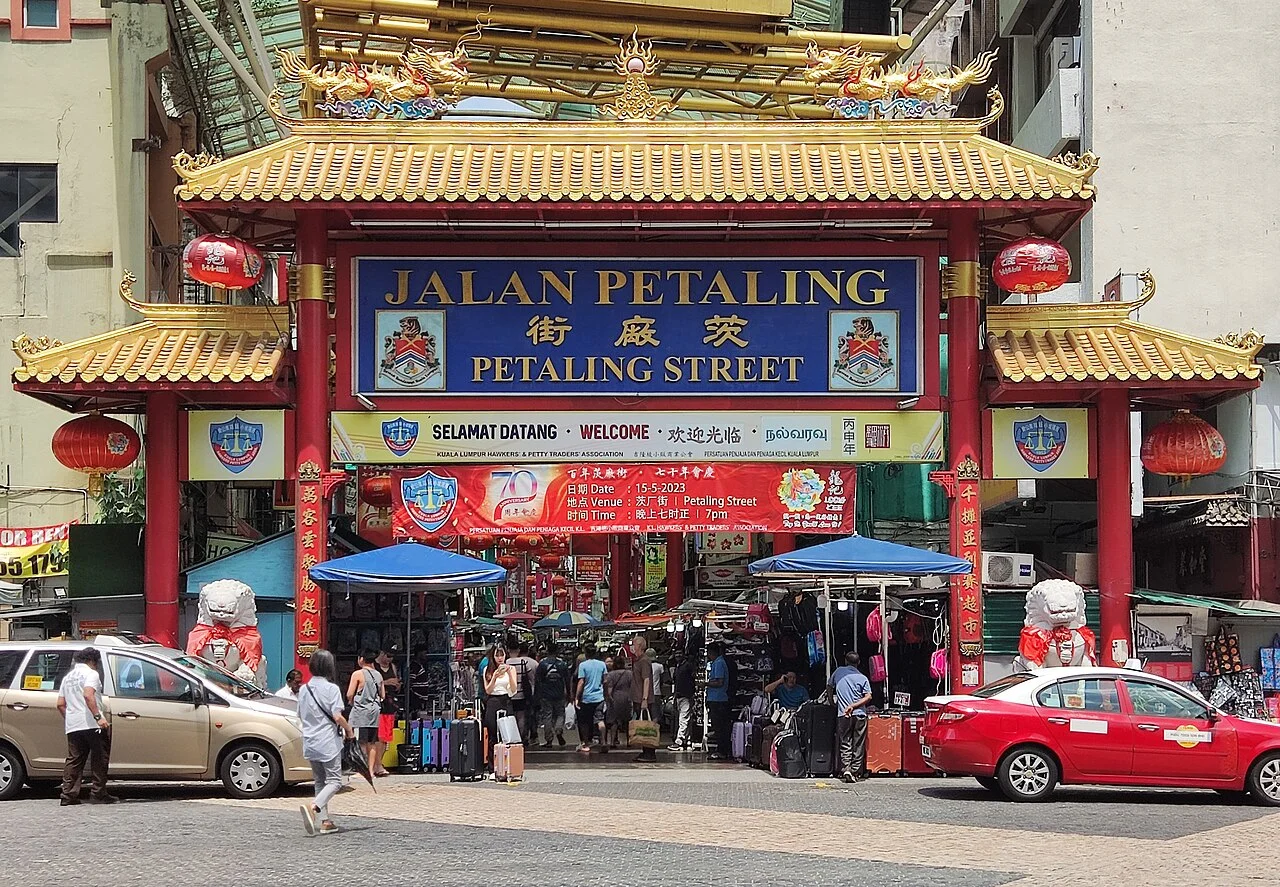

You could connect a meal with a short walk around Central Market. That is a route idea, not a claim that every shop serves food or all stalls operate at identical hours. Before adding a snack, consider whether another main meal is already planned. When travelling with children, ask about separate choices instead of expecting everyone to enjoy the same spice level. For sharing at a table, establish serving and payment arrangements. Exploring street food does not require eating while standing or rushing. A seated pause may also give you more time to observe the surroundings. You can learn about a food district without sampling something at every turn.
Jalan Alor and Kampung Baru: different food settings
Jalan Alor offers one option for exploring an evening food setting, while official tourism material relates Kampung Baru to Malay cooking. They are not treated here as the same cuisine or one collection of businesses. Selecting one for an evening and saving the other for another day can reduce travelling. With an order such as satay, clarify the meat and sauce rather than relying on the name. If halal suitability matters, check the business's valid information. A neighbourhood's food reputation does not establish identical certification for every operator. Do not base a decision solely on a crowd when your specific need remains unanswered.
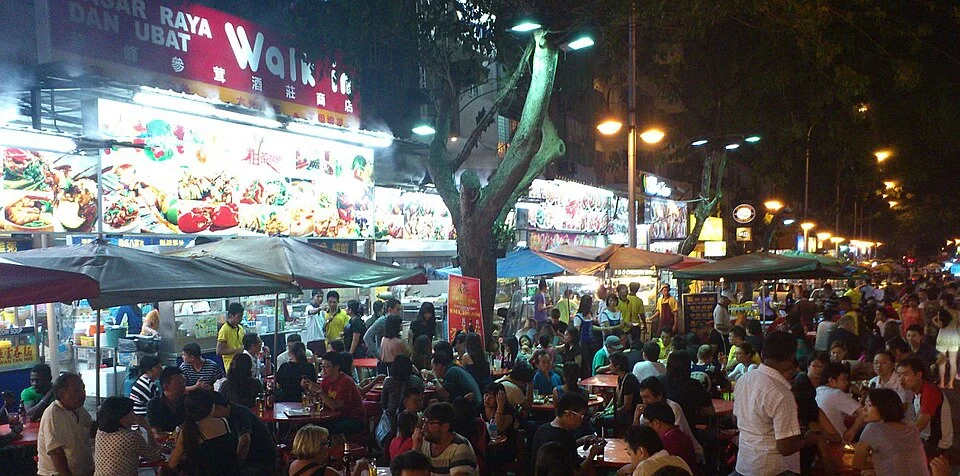

The Jalan Alor photograph is an archive scene from 7 January 2012. Its signs are not a current recommendation list. The night skyline used alongside the district discussion is a general Kuala Lumpur setting, not a particular Kampung Baru dining table or restaurant view. Keeping the visual context clear makes the food story more accurate. For a hot or rainy evening, identify a nearby alternative instead of tying the whole plan to one distant establishment. If you want dessert, leave room after the main meal and ask about ingredients separately. A dessert name is no substitute for an allergen explanation. Flexibility can keep the evening enjoyable when a first choice is unavailable.
Accommodation and the return from a food day
For food-focused accommodation, examine the journey back to the hotel rather than choosing by neighbourhood name alone. The value of staying in Bukit Bintang, around Petaling or elsewhere depends on the actual restaurants and transport you plan to use. Check the entrance address and available route before assuming it is comfortably walkable. Rapid KL's official routes provide a starting point for city connections; consider the night return separately. If meeting companions elsewhere, share the exact business name and address. Similar names can cause unnecessary travel, particularly at the end of a tiring day. A clear meeting point also helps when different people finish sightseeing at different times.


A sample day might start with roti canai, include an unhurried look around Petaling and end in one selected evening district. Nasi lemak could become the main meal on another day. This is not a fixed timetable promising identical breakfast or dinner service everywhere. Menu, weather and appetite may change the order. Understanding the bill before ordering and leaving room for the journey back can make the experience easier. The Stork's final thought is that discovering a city's food begins by giving a plate time and understanding what you enjoy about it, rather than memorising every name. Take that curiosity to the next meal and let your preferences guide the route.