
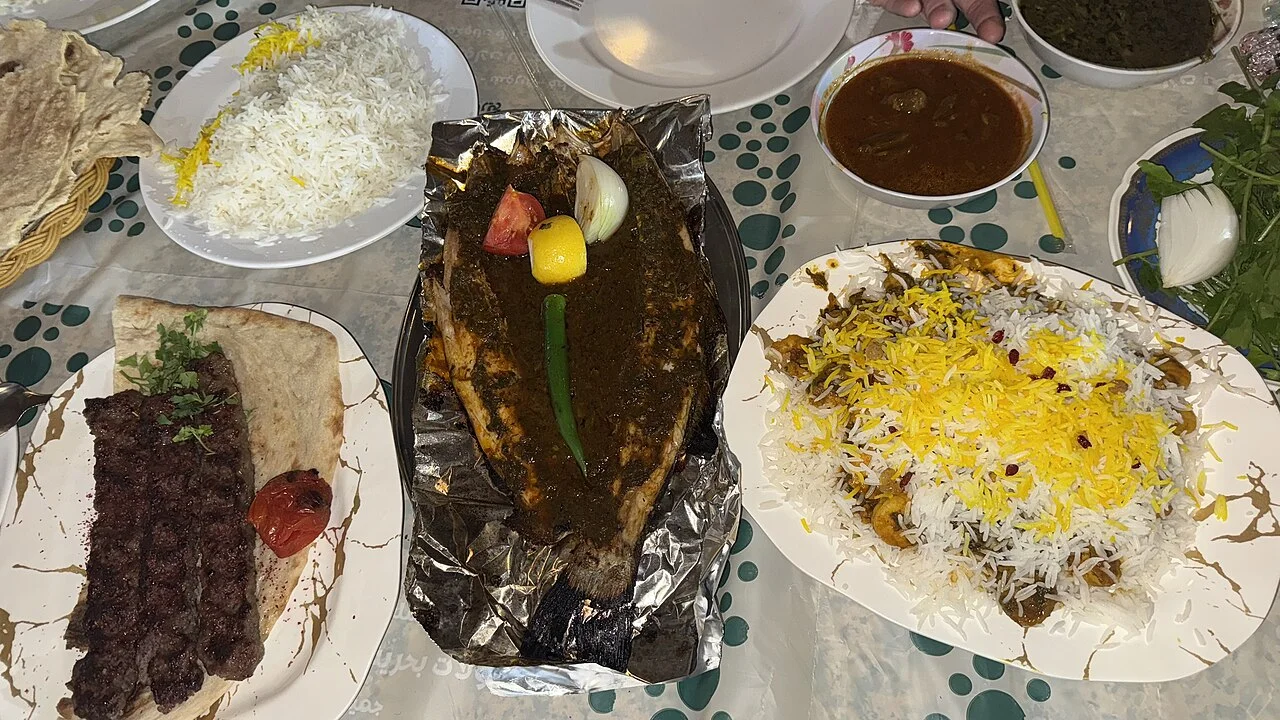
Think about what to eat in Kuwait around a table: rice, fish, chicken or meat, followed by a break that suits the day's pace. Tatilmerkezi Stork is not inviting you to finish every recipe in one day. Spread tastes between a seated Mubarakiya meal and a calmer dinner during a coastal outing. Save the names machboos, murabyan and zubaidi motabbag; recognising them on a menu is a stronger starting point than ordering only by pointing at a photograph. A dish mentioned in a Kuwait guide does not establish the same recipe or portion at every business. A good holiday table is partly about placing the right meal on the right day. Giving one plate attention can create a stronger memory than rushing to three restaurants in succession.
A Mubarakiya table: a seated meal for the market day
Begin the Mubarakiya walk with modest browsing, then move towards lunch. A group does not need to order every possible dish together: one main plate with complementary choices can make a more comfortable start after walking. While investigating the market's dining area, prioritise a place where everyone can sit comfortably rather than a long restaurant checklist. Use a menu or the business's explanation instead of approaching another table to examine its food. A rest between shopping and eating also gives you time to organise purchases and consider the next cultural visit. The meal belongs naturally to the market outing rather than being an interruption you have to hurry through.
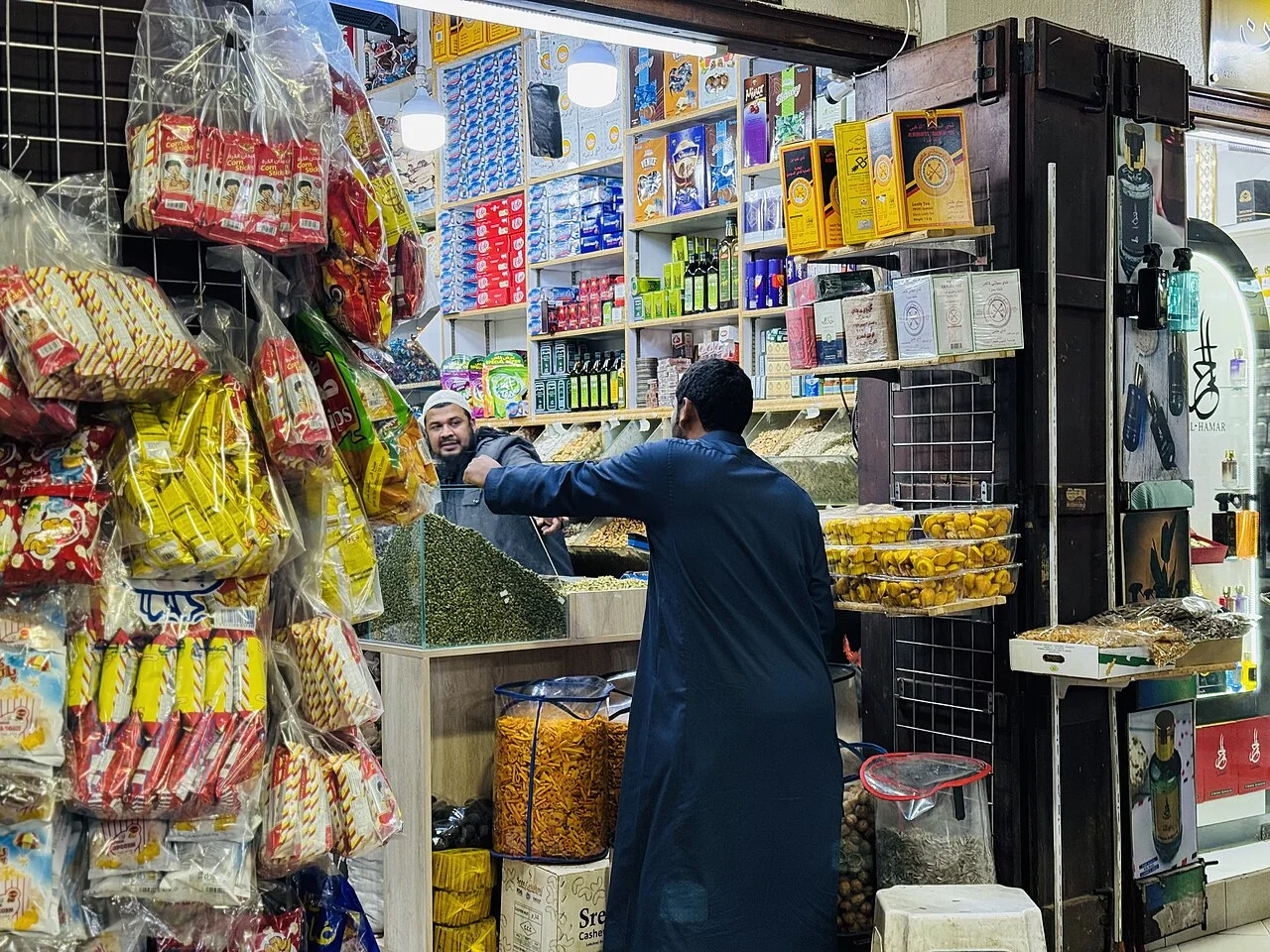

After the main meal, another short section of the area may be enough. If planning a substantial lunch immediately before a long waterfront walk, consider the group's pace; separating them across days can be easier. Distinguish food you buy to consume today from products you intend to carry on tomorrow's flight. Investigate packaging, storage and destination entry arrangements separately. A purchase in the market does not mean that the product follows one uniform recipe everywhere. Choosing something you actually enjoyed where you tasted it can be more useful than travelling to another district purely because a name is well known. Let the table help you understand the visit you are already making.
Machboos: choosing a chicken or meat main course
Kuwait businesses list machboos with chicken and meat options. The local Machboos operator's own ordering page, for example, presents these separately. Do not treat this as a single recipe standard for the whole city; examine the current dish at your chosen restaurant. Investigating the name for a first market lunch helps establish a rice-centred main meal. Instead of adding several other substantial rice dishes to the same table, select one and explore another flavour the following day. A companion who prefers meat and another who wants chicken may also need different serving arrangements. Make the group decision after understanding what the restaurant actually provides.
An online ordering section does not automatically mean that the same location operates a seated restaurant. Menu examples here verify dish names; confirm the branch and service type you intend to use for your own date. If machboos is your lunch, a second large rice-centred table is not compulsory that evening. A smaller later meal leaves room to investigate fish or shrimp tomorrow. Variety in a food plan comes from distinguishing meals, not simply adding every name to one sitting. Organising a day around a particular main course can also simplify the sightseeing route, because the table and the places around it become one manageable programme.
Murabyan and zubaidi motabbag: a seafood day
Kuwait's Gancha operator lists murabyan and zubaidi motabbag on its official menu, with shrimp mumawash as another separate choice. Save these names when investigating a seafood-focused day. Do not assume they are alternate spellings for the same plate: establish the dish's ingredients and serving arrangement with the business. A chicken or meat main meal on one day and a fish or shrimp choice on another create different tables within a short holiday. Kuwait menus also use fish names such as hammour and zubaidi. Knowing what is offered and how it is prepared is more informative than ordering solely from a photograph of a whole fish.


The best time for a fish meal depends on the route. Choose a seated lunch after a museum morning, then leave coastal walking until later. If researching fish for dinner, keep the daytime market break smaller. When sharing, discuss the serving arrangement first: a fish's appearance alone does not establish how many people it feeds. Consider choices together with any companion who has a seafood allergy or another dietary restriction. Kuwait's relationship with the sea does not prove that all restaurants serve the same daily catch. A current menu and kitchen explanation provide more specific information than the general context of a travel guide.
Laban and the cultural context of harees
Gancha's official menu also lists laban as a drink. Choosing water or another listed beverage with a main meal depends on the table's rhythm; there is no need to investigate a large drink selection at every stop. On a longer sightseeing day, keeping a coffee break separate from lunch can help you spend some unhurried time in the place you choose. Select a café for its actual location and connection to the next visit, not only a social-media image. Drinks should create small restful intervals rather than become a succession of rushed destinations. A pause after shopping is particularly useful for arranging bags and the next journey.
The name harees also appears in Kuwait's cultural information. The government's customs page describes Daq Al-Harees, a wheat-processing tradition connected with preparations for Ramadan. That cultural fact does not prove that every restaurant serves the same dish every day. If you want to taste such a preparation, investigate the business's menu for your travel date. Do not assume private family gatherings are tourist experiences; public events and established visitor arrangements are different things. Learning the context of food helps make a table more than a shopping list of dish names. A small cultural connection can explain why a preparation matters without inventing a visit or promising access to someone's home.
Restaurant choices for a towers and coast evening
For a Kuwait Towers day, arrange the viewing visit and meal reservation separately. Operator TEC's current page describes Umimoto, a Japanese restaurant within the towers. Choosing a meal there is different from choosing a traditional Kuwaiti dish; another cuisine can add variety to the holiday. Investigate local plates on one day and a different culinary tradition on another. Do not schedule time in the viewing section and arrival at the table for the same moment. If returning to the towers for dinner, organise the start and end of the daytime waterfront walk around that connection. An appealing view does not remove the need to understand reservation arrangements.


Looking for a simpler table elsewhere along the waterfront can also work. A seated meal after walking provides a comfortable conclusion for companions who have spent the day moving around. Consider the return journey and your accommodation's real position when choosing the restaurant. Staying in Salmiya and staying near the central market create different evening arrangements; do not imagine both as the same short walking area. Some family members may prefer a shorter meal at the end of the day. Seeing a menu beforehand or selecting a smaller service can help the table suit everyone's pace. Finish the evening without turning dinner into an unnecessary race across the city.
A Kuwait food route spread across two days
Combine the Mubarakiya visit with lunch on day one, choosing machboos or another current main course. Continue to a cultural institution whose visiting arrangements you have confirmed, or a short harbour pause. On day two, investigate a fish or shrimp meal during the towers and coast programme, or choose dinner in another culinary tradition. A substantial market lunch and a long restaurant evening need not occupy the same day. This sequence lets you recognise dishes at separate moments instead of consuming the whole list at once. With more time, establish an additional meal plan rather than simply stacking another heavy table onto days already full of food.

On departure day, do not place a new restaurant discovery ahead of the transfer to Kuwait International Airport. Consider the accommodation address, flight terminal and connection time together; older menu prices or hours are not current travel information. Even official business pages deserve another check as your date approaches. These menu examples were researched on 4 October 2026, while the actual menu determines your own order. Tatilmerkezi Stork's final table suggestion is simple: a main meal suited to your appetite, another meal that turns your attention towards the sea and an unhurried drink break make a useful beginning for a substantial short Kuwait holiday.