

A good Machu Picchu visit begins before the first photograph from the mountain. The train arrives in Machupicchu Pueblo, the settlement also known as Aguas Calientes; the celebrated Inca archaeological site is reached through a separate onward journey. The Tatilmerkezi Stork suggests distinguishing these two places first, so that the hotel address, railway station and entrance gate do not become one imaginary location. This guide connects a visit choice, valley transport, an overnight stay and meal intervals in Peru's Cusco region. Huamachuco is a different Peruvian town and does not belong to this itinerary. The next useful decision is to choose a route according to what you actually want to see and the ticket that permits it, rather than expecting every place shown in photographs to be included automatically.
The archaeological site: read terraces and scenery together
Machu Picchu's effect is not confined to the silhouette seen from a high viewpoint. The relationship between stone buildings, terraces and the surrounding mountains is part of the experience. Peru's official tourism information describes the agricultural terraces as an important section of the settlement. Paying attention to the surroundings within the parts allowed by your chosen route can provide more depth than repeating the same photograph throughout the visit. The layout, steps and broad landscape are different pieces of the same story. Do not assume that every area visible in an image can be visited with every ticket. The cover is an actual terrace photograph taken in 2025, not an official route map or evidence of today's access conditions. A visitor prioritising a panoramic view and another wanting more time among the settlement's structures may have different needs, even though both are visiting Machu Picchu.
Tickets and routes: choose the section before transport
The cultural authority's official list groups visits into panoramic, classic and Machupicchu Realeza options, each with distinct routes. These names are more than small words on a ticket: they affect the areas you can walk through and the additional section selected. The official online-ticket page directs sales through the state's Tu Boleto platform. Establish an available date and route before linking the railway journey and overnight stay to it. Mountain, Intipunku or Puente Inka options should not be treated as automatically included in every admission. Some additional routes are listed by the authority as high-season-only; the actual date's sales screen and route map should guide the decision. Matching the ticket name with the expected experience avoids assuming that an area seen from a distance can necessarily be entered. Choosing two different routes on one day, where available, also requires two distinct time intervals rather than one unrestricted visit.
Puente Inka: distinguish it from the town bridge
Puente Inka is the historic access-path and bridge section near the archaeological area. It is not the same bridge as Puente Ruinas by the town. The official route list places the Puente Inka option within a separate panoramic sub-route, so seeing it in a photograph does not establish admission rights for every visitor. The 2009 image used here shows the narrow historical path's position on the mountainside. It is not an invitation to cross the wooden section or go beyond official boundaries. The value of the place can lie in understanding the relationship between landscape and earlier access rather than reaching a particular picture location at any cost. A visit restricted to a chosen classic settlement route can still form a complete Machu Picchu day. Keeping an unselected additional route outside the compulsory programme lets the permitted visit occupy its actual available time.


The railway station: arrive in Machupicchu Pueblo
PeruRail explains that its trains arrive at Machu Picchu Station in Pueblo, rather than at the archaeological entrance above the settlement. The onward journey to the site is a separate stage. Descriptions of standard services such as Expedition and Vistadome state that archaeological admission and the uphill bus are not automatically included; read the scope of the product actually purchased. Some Cusco connections use a bimodal bus-and-train arrangement, making the departure point important as well as the city name. At the source check on 4 October 2026, PeruRail's announcement dated 2 October says railway operations are being resumed progressively and that rescheduled services will be communicated separately. This recent operational situation means a connection should not be built on an assumption that a particular train is certainly running at its usual time. Obtain current confirmation for the booked service and keep the onward visit arrangements consistent with that actual journey.


Overnight in Pueblo: leave room for the entrance time
A night in Machupicchu Pueblo can create greater flexibility for an early or specifically timed entrance. This does not mean every traveller needs the same hotel or that every visit must begin in the morning. Examine the station, accommodation and onward connection together on a map. Travellers prioritising a quiet room should also consider the position relative to the railway and busier streets. On the arrival evening, a meal, preparation for the next day and a shorter town walk can form a more useful combination than a race to collect every local activity. The settlement panorama dates from 2019 and does not show the stone archaeological city on the mountain. Understanding that difference also changes the expectation that every hotel view should resemble the celebrated citadel image. Luggage arrangements and a realistic departure interval on the following day can make the whole visit flow more comfortably.
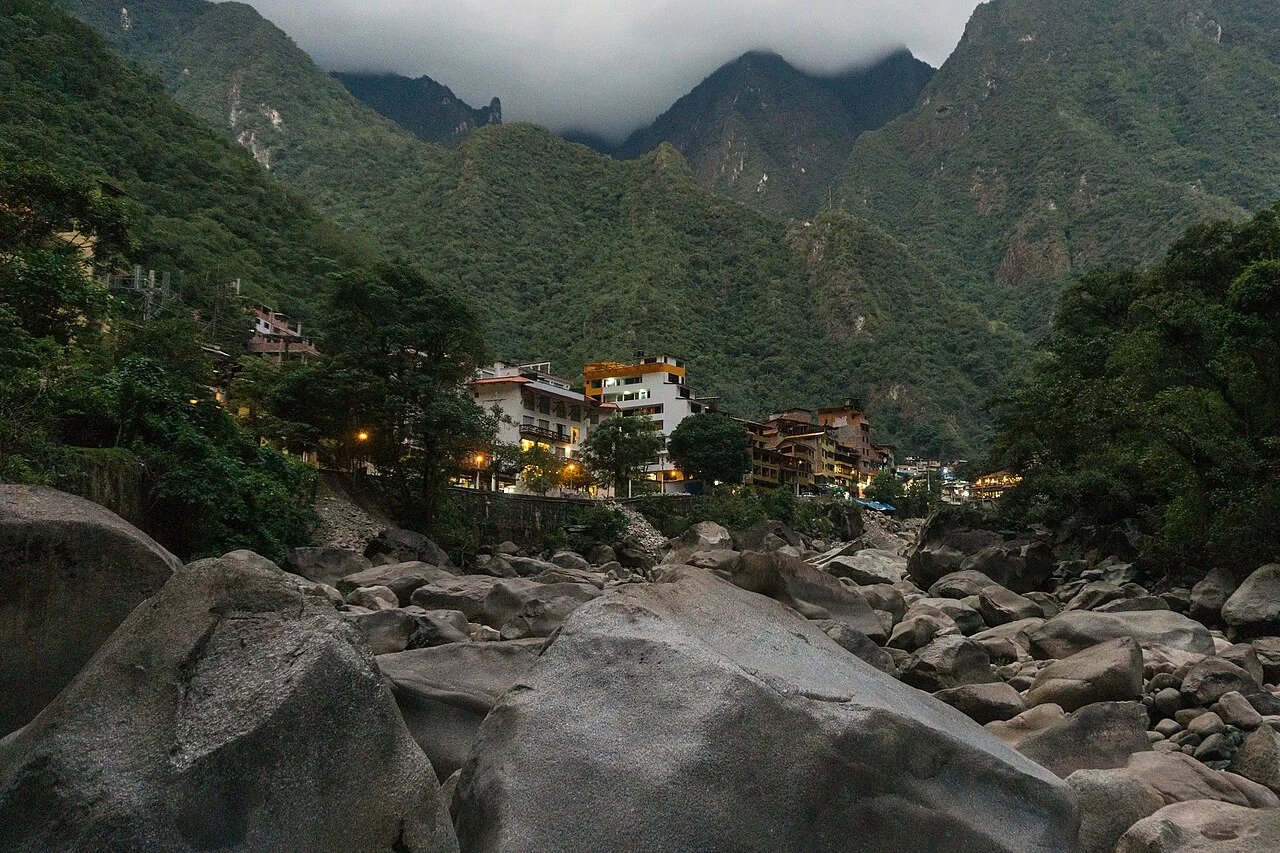

River surroundings and a shorter town interval
The river and bridges around Pueblo offer another scale after the archaeological visit. The Puente Ruinas image is a 2023 record of the functional bridge and river, distinct from the narrow historic Puente Inka path. Peru Travel describes thermal baths and other local visit possibilities in the settlement. Those interested in a shorter thermal-bath outing can give it its own interval instead of treating it as a compulsory activity squeezed immediately before the return train. Museo de Sitio Manuel Chávez Ballón is another museum possibility to investigate separately if additional context is important. A place being named in an older tourism article does not show that all surrounding trails are currently accessible. This guide therefore does not propose a Putucusi climb or walking along the railway as a shortcut. A calmer meal or an appropriate riverside section can be a sufficient addition to the town part of the trip.


Meals and a two-day outline
Meals in Pueblo can introduce products associated with Cusco and the wider Andean region. Peru Travel's regional food guide includes choclo con queso, pairing maize with cheese; maize-based humitas; and patasca, a soup with mote maize. These specific names offer a starting point for exploring the wider Peruvian table. A regional dish name should not be interpreted as a promise that every restaurant serves the same version on the same day. Placing breakfast comfortably before the entrance time can leave room for a longer lunch after returning to the settlement. An editorial two-day outline could give the first day to valley transport, arrival in Pueblo and an overnight stay, then the second to the ticketed route, a town meal and a railway departure with a realistic interval. This sequence makes the independent stages of admission, uphill access, train travel and accommodation visible. Travellers preferring a same-day return can consider it, but tighter connections need to be constructed from their actual times rather than a generic timetable. The Stork's suggestion is not to place more landmarks ahead of the famous view, but to make a few practical decisions that allow the day of seeing it to feel less hurried.