
Placing a meal at the centre of an Osaka day reveals the city differently: a Dotonbori takoyaki pause, okonomiyaki beside a hot griddle and shared fried skewers in Shinsekai. Tatilmerkezi Stork invites you to give these different experiences time rather than eat everything at once. Look beyond colourful restaurant signs to broth, batter texture and the way a table shares food. Staying around Minami simplifies a single-day food programme. With longer in the city, connect Shinsekai or Umeda with a separate meal. The relationship between food, neighbourhood and the return to your accommodation helps each stop remain enjoyable rather than becoming another appointment.
A small takoyaki start in Dotonbori
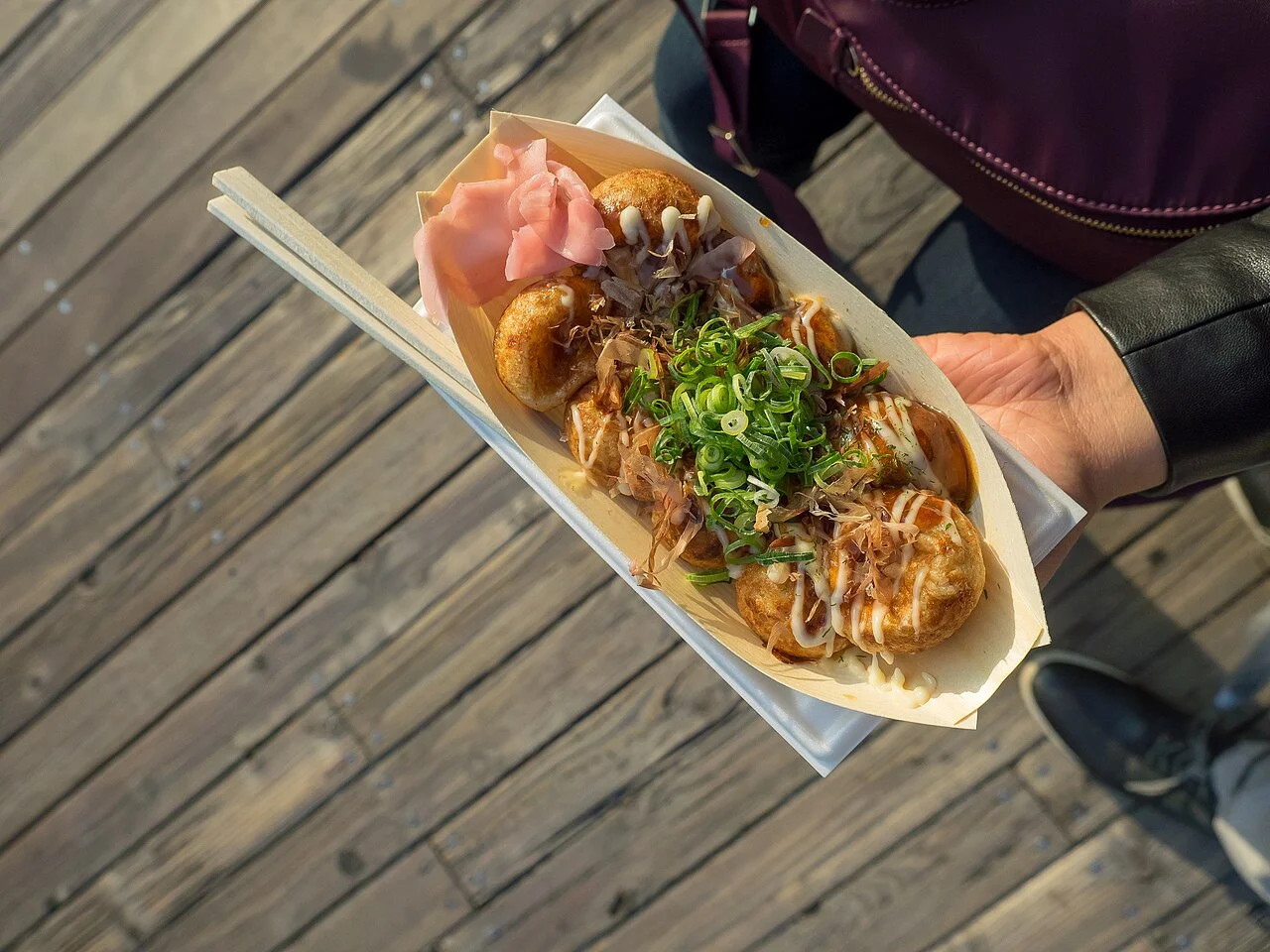
Takoyaki are round batter bites containing octopus, with toppings that vary by kitchen. Around Dotonbori, treat them as a small break rather than automatically making them a large main meal. Check the serving size and decide whether companions want to share. A freshly cooked piece can be hotter inside than its surface suggests; pause before taking a hurried bite. If moving towards the canal, follow the business and area's guidance about an appropriate place to eat. Blocking a pedestrian route for a food photograph makes the walk harder for both you and the people around you.
There is no requirement to move straight to another stall after purchasing the first portion. Learn its flavour and return to a short canal walk, leaving space for a seated meal later. Sauce, mayonnaise and fish flakes matter when allergies or dietary preferences are involved. The phrase octopus batter does not describe every topping. Finding takoyaki in other Japanese cities does not make the Osaka experience less interesting: here it connects with Dotonbori's everyday activity. Move aside after taking the photograph and finish comfortably rather than trying to eat hurriedly while walking through a crowded street. The break should provide rest as well as another flavour.
Okonomiyaki as the griddle-centred main meal
Okonomiyaki combines batter and cabbage with other ingredients on a hot griddle and can form a substantial lunch. Different versions use particular meats or seafood. When investigating Osaka style, do not treat it as identical to Hiroshima's layered preparation. Examine additions and whether the serving suits sharing. If the earlier break involved takoyaki, one okonomiyaki and a smaller accompaniment may be a useful starting order for two people, depending on the kitchen's actual portion. The goal is a comfortable meal, not a fixed quantity prescribed without seeing what the business serves. Leave time to understand the plate's preparation.
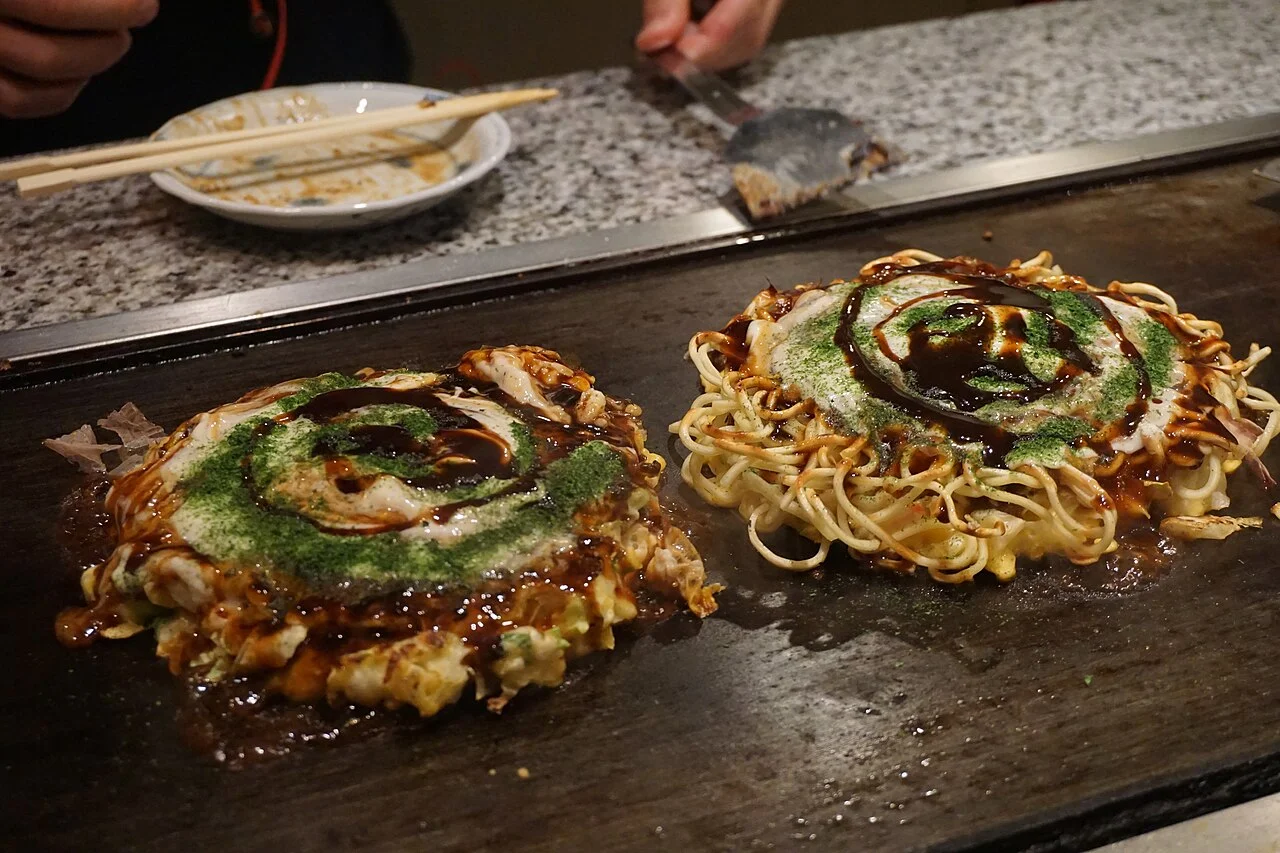

A griddle at a table does not automatically mean that diners must cook everything themselves. Follow staff instructions about cooking and serving, and remember that the surface is hot. Do not handle cooking utensils without permission. When watching a counter, stand where staff can continue working easily. Vegetarian diners should discuss stock, sauces and fish flakes too; removing visible meat may not address the full preparation. Give the rhythm of this meal time instead of placing an ambitious attraction list immediately around it. Sitting down with a hot plate provides a valuable contrast to an active walking day and can become its central pause.
Kuromon Market: stopping matters as much as walking
Kuromon connects food and shopping around Nipponbashi and the Minami area. Osaka tourism information highlights different businesses and opening arrangements that vary by shop. Do not rely on one guaranteed serving schedule for the entire market. Grocery stalls and prepared-food stops can be investigated within the same visit. When choosing a plate, learn which quantity a price covers and whether there is an eat-in space or appropriate standing area. While stopping outside one business, avoid blocking a neighbour's customer access. Let the market's working activity determine where you pause rather than assuming that every passage is a dining space.

If the market is your main lunch destination, keep the morning's snacks modest. One principal plate and a small shared item can leave enough energy for the continuing walk. People avoiding raw fish can investigate cooked options; a dish name alone does not resolve individual health or dietary needs. For a fruit purchase, think about carrying and consuming it. It may help to arrange a chance to leave packaged shopping at the hotel. A meaningful Kuromon experience does not require purchasing from the largest number of stalls. Paying attention to products and preparation can reveal more than a rushed sequence of transactions followed by an uncomfortable journey with heavy bags.
Shared kushikatsu in Shinsekai
Shinsekai is highlighted in Osaka's official food information as an area for investigating kushikatsu. Coated and fried meat or vegetable skewers offer a way to share contrasting pieces. Establish the ingredient in each skewer and how many pieces a set contains before ordering. When a common sauce container is used, observe the rule against dipping the same piece a second time; follow the business's own instructions if it uses another arrangement. Assess current practice from the table rather than assuming that every restaurant works identically. The coating and sauce are part of the preparation and matter to dietary choices too.

Avoid stacking a Shinsekai dinner with a lengthy Dotonbori meal and another reservation in Umeda on the same evening. Short pauses in different areas may be manageable, but full main meals at every stop can become tiring. A brief neighbourhood walk, seated skewers and an uncomplicated hotel return form a useful evening programme. Do not research the final connection only after finishing dinner: save the accommodation's actual position and relevant station beforehand. Variety at the table comes from ingredients complementing one another rather than the sheer size of the order. A smaller collection of contrasting pieces can be more memorable than finishing food after appetite has disappeared.
Udon, pressed sushi and a calmer option
Udon opens another door into Osaka's flour-based konamon culture. Tourism information describes the relationship between soft noodles and dashi, while pressed box sushi represents another Osaka food option. Investigate an udon bowl when you want a calmer lunch, or a sushi menu when looking for another arrangement of smaller bites. Do not assume that either is automatically light or suitable for every dietary requirement. Stock, fish, sauces and other components need to be considered according to the actual kitchen. The structure of a dish can differ from the visible ingredient that first catches your attention in a photograph.
After a day involving takoyaki and okonomiyaki, a different form of meal at the next stop avoids repetition. From an Umeda hotel, investigate a real local menu rather than crossing the city solely to reach another widely mentioned restaurant. A Minami base and an Umeda base create different daily journeys; relate food choices to your accommodation. Placing a meal at the end of a cultural visit or shopping period prevents the whole day from becoming transport between restaurant addresses. Think about where to walk after leaving the table too. A well-positioned lunch can extend the neighbourhood experience instead of interrupting it.
A one-day Osaka food programme
For a Minami-focused day, explore Kuromon briefly in the morning, choose a seated okonomiyaki lunch and allow a small takoyaki break near the canal later. Alternatively, make Kuromon the main lunch stop and leave okonomiyaki for another day. Select one main evening plan: kushikatsu in Shinsekai or a calmer restaurant near your accommodation. Every meal need not be followed immediately by another full portion. Let the return connection, personal requirements and the preparation you are most curious about determine the sequence. This creates a useful route without pretending that all appetites or travel parties are identical.

Verify menus, reservations and opening arrangements with individual businesses: the portion or price in an older photograph is not today's promise. Discuss ingredients clearly when allergies or other dietary needs matter. Tatilmerkezi Stork suggests learning a dish's preparation and neighbourhood alongside its name. A short Dotonbori pause, a griddle-centred lunch and a shared Shinsekai evening can become three distinct memories. Give each enough time and appetite instead of turning Osaka food into a numerical challenge. The city offers many possibilities, but enjoying a smaller selection carefully can provide the fuller experience.