
The Tatilmerkezi Stork opens Paris as if it were a map on a film director's desk. The neighbourhood colours of Amélie, the longing for another era in Midnight in Paris and other screen stories can help us look at familiar streets differently. This guide is a starting point for themed walks, rather than a collection of movie frames. Its photographs are independent pictures of actual places. Screen geography and today's city are not identical, so a rewarding plan starts with two films you enjoy and adds their themes to a journey with room for meals, rest and ordinary neighbourhood life.
Amélie: from Rue Lepic into the Montmartre neighbourhood
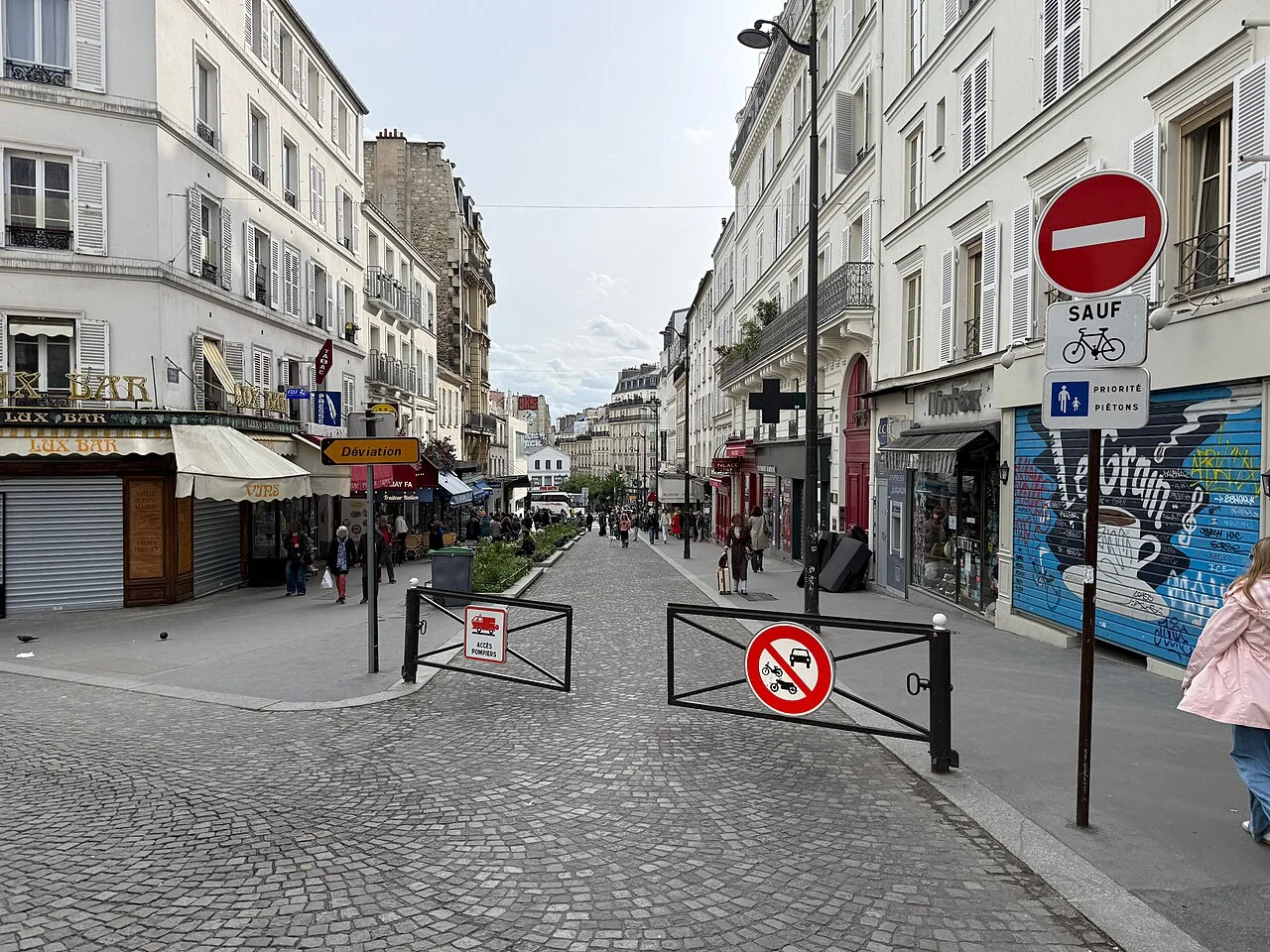
The Paris tourist office places a walk in Amélie's footsteps around Blanche and Rue Lepic, with the Café des Deux Moulins among the associated stops. Instead of trying to locate every detail of a scene, notice the slope of the street, the relationship between shops and pavement, and the neighbourhood's daily rhythm. The film's geography does not create an exact walking sequence in real Montmartre. Giving this area a morning helps keep the uphill sections away from the most tired part of the day. Choose a breakfast or coffee pause before a short walk. This is a lived-in neighbourhood as well as a film association.
The area around Sacré-Cœur can extend that day, without requiring you to cover every side of the hill before rushing to another major district. If you consider staying in Montmartre, the hotel's actual street and the walking gradient matter as much as the famous neighbourhood name. Staying elsewhere and giving the area one morning is another practical option. The photograph is an actual Rue Lepic view from April 2026, not a frame from the film or a promise that the shops will remain unchanged. Leave time for lunch so that photograph stops do not consume the entire day.
Midnight in Paris: separate screen geography from Saint-Étienne-du-Mont
The City of Paris film-trail document identifies Saint-Étienne-du-Mont's north entrance, Place de l'Abbé-Basset and the adjacent street among the film locations. Our photograph shows the church's main façade; it is not presented as the exact camera angle of the famous scene. Knowing that distinction allows you to enjoy the Latin Quarter rather than spend the visit looking for the wrong steps. Plan a short walk around the church without competing with another long indoor visit. You do not have to wait for a particular hour at night to see a street corner. Curiosity about a story can give a daylight walk meaning too.


Staying in this area for lunch reduces the transport work involved in the day. A seated bistro meal and a small sandwich or bakery pause require different amounts of time; choose according to your energy and the rest of the walk. Do not confuse a present menu or a restaurant exterior with an imaginary venue in a film. Consider the atmosphere where you would actually like to sit rather than choosing a meal solely because of a screen connection. The Latin Quarter and Saint-Germain can also be compared as accommodation areas, using real access from the hotel to the starting point of your walk.
Pont Alexandre III: give the riverside more than a photograph stop
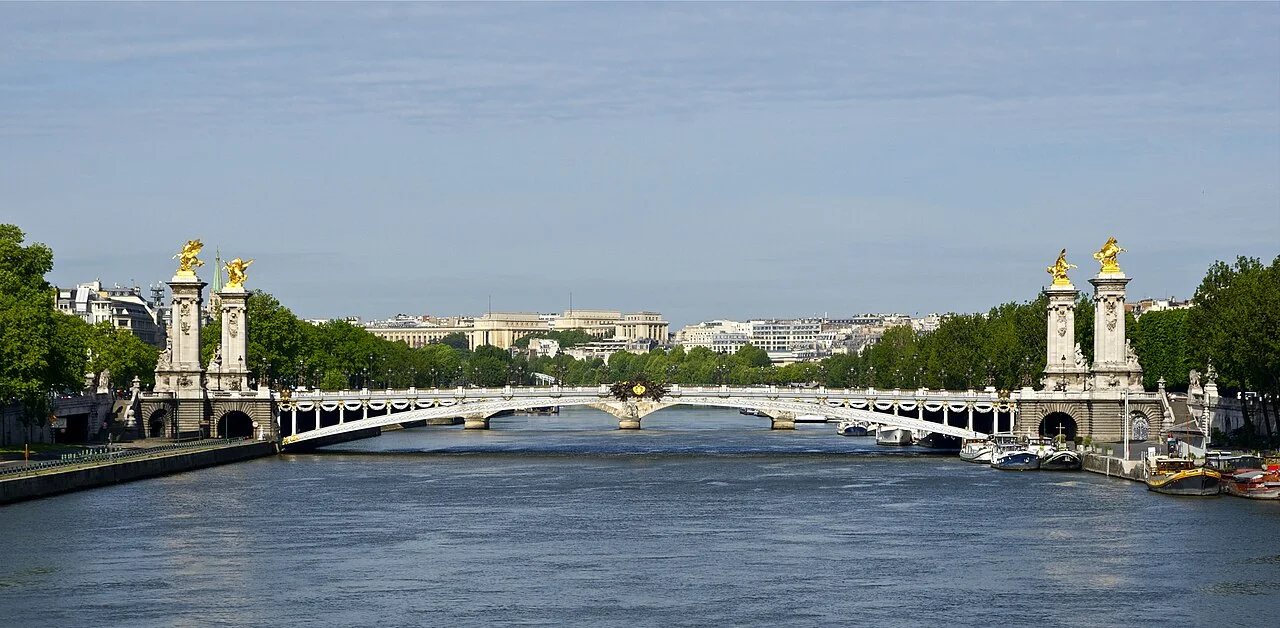
Pont Alexandre III also appears in the municipal Midnight in Paris trail. Make it part of a Seine walk rather than using it only as a spot for a quick picture. Walk beside the water before approaching the bridge, and consider a different return path if it suits the day. The photograph is an archival 2012 view from Pont de la Concorde. It therefore distinguishes a distant river composition from the details you would see on the bridge itself. If you spend longer at one stop, shorten the next part of the itinerary. A relaxed waterfront pause is a worthwhile part of the journey.

Consider this walk on a different day from Montmartre rather than compressing both into one afternoon. The northern neighbourhood and the Seine offer different rhythms. In rain, a shorter riverside section and a sheltered meal pause can adapt the plan without abandoning the theme. A film edit that makes Paris appear continuous does not remove walking fatigue or journey time in real life. Reaching the bridge can be enough for a satisfying section of the day. Sitting down afterwards may be more enjoyable than adding another distant stop simply because it appears on a list.
The Eiffel Tower: see a screen landmark in daylight
The Paris tourist office connects the Eiffel Tower with productions including Rush Hour 3 and A Monster in Paris. You do not need to recreate a film's entire movement during a visit. Seeing the tower from outside and going up to its floors are two separate plans. If you want to go up, use the official operator's current ticket and access information and allow a dedicated time block. The photograph here is an actual daylight view from August 2019. A meal pause and a short walk nearby add a sense of the surrounding district rather than reducing the outing to recognition of a screen symbol.


Notre-Dame and the Seine: a waterfront for other stories
The tourist office's cinema walk links the Notre-Dame area, Quai de Montebello and nearby streets with several screen stories. The smaller streets mentioned for The Devil Wears Prada and the Seine walks associated with Midnight in Paris can create different themes within one area. Our photograph shows Notre-Dame's exterior in 2012; it does not depict current visiting arrangements. Treat an interior visit as a separate decision if you would like to add one. A short river walk, time to browse books and a proper rest can form a worthwhile afternoon without turning every moment into a search for a scene.


A film-themed trip with room for two days
Use the first day for Montmartre and the second for the Latin Quarter and Seine. Adding the Eiffel Tower area to day two means shortening other sections; going up the tower is not compulsory. Breakfast and a neighbourhood lunch on the first day, followed by a bistro or bakery pause between river sections on the second, create a practical meal rhythm. Let transport and the streets where you want to spend an evening influence accommodation more than a famous film title. The Stork's suggestion is to rewatch the film at home, then give the actual city time to answer the curiosity it creates.