
A visit to Pokhara can slow down beside a lake and become exciting again when you look towards the mountains the following morning. The Tatilmerkezi Stork invites you to find the balance between those experiences. You need not begin an Annapurna trek to build a rewarding holiday from the city's lakes, neighbourhoods and food breaks. Think of a first stay through time around Phewa, a separate mountain-view outing and the time you might give Begnas. Clear weather in a photograph does not promise the same conditions on your travel dates. Leave room for small discoveries instead of tying the whole trip to one mountain image. These suggestions are a researched planning invitation, not invented memories of a personal visit.
Phewa shore: begin with the city's relationship to water
Nepal Tourism Board introduces Phewa as an important Pokhara lake associated with boating. A short first walk here can help you get acquainted after the journey. Choose somewhere to sit, continue a little further and learn the return to your accommodation. There is no requirement to circle the entire lake on the first outing. A shoreline drawn on a map does not establish an uninterrupted public footpath along every section. Check actual connections between roads, shore and private areas and build the walk from your own starting address. The first successful excursion can simply be one you enjoy and return from comfortably.
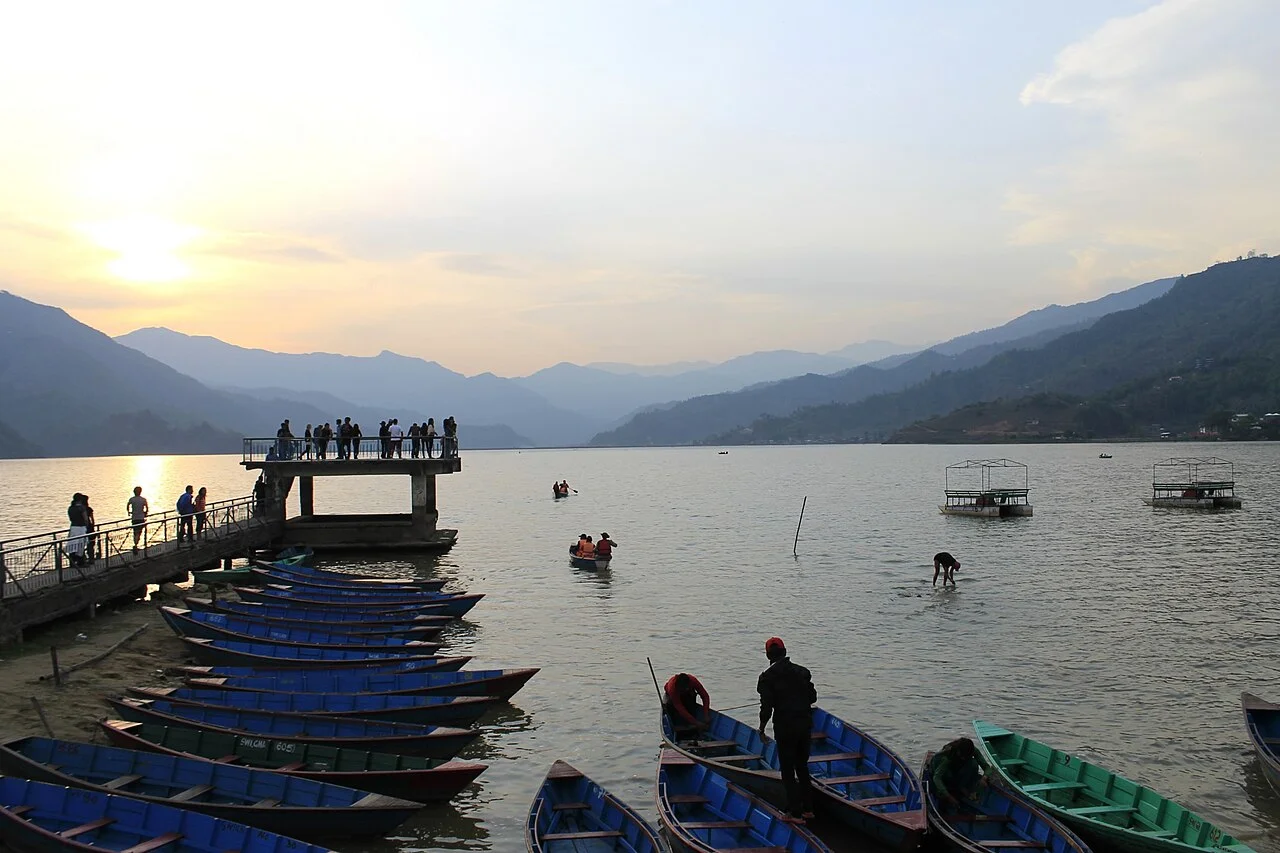
Skrissh2013's photograph dated 13 April 2014 shows genuine boats on the lake in evening light. Its colours introduce the atmosphere without establishing today's departure point, demand or fares. If you want a boat outing, ask the operator what the duration and route include and agree the return arrangements at the beginning. Staying on shore can be a good alternative when weather changes. Leave working space and a passage for other people if pausing on a jetty to admire the view. Treat the lake as a part of the day that sets your pace rather than another box on an itinerary. A quiet pause may be as memorable as a longer activity.
Sarangkot: give the mountain view its own morning
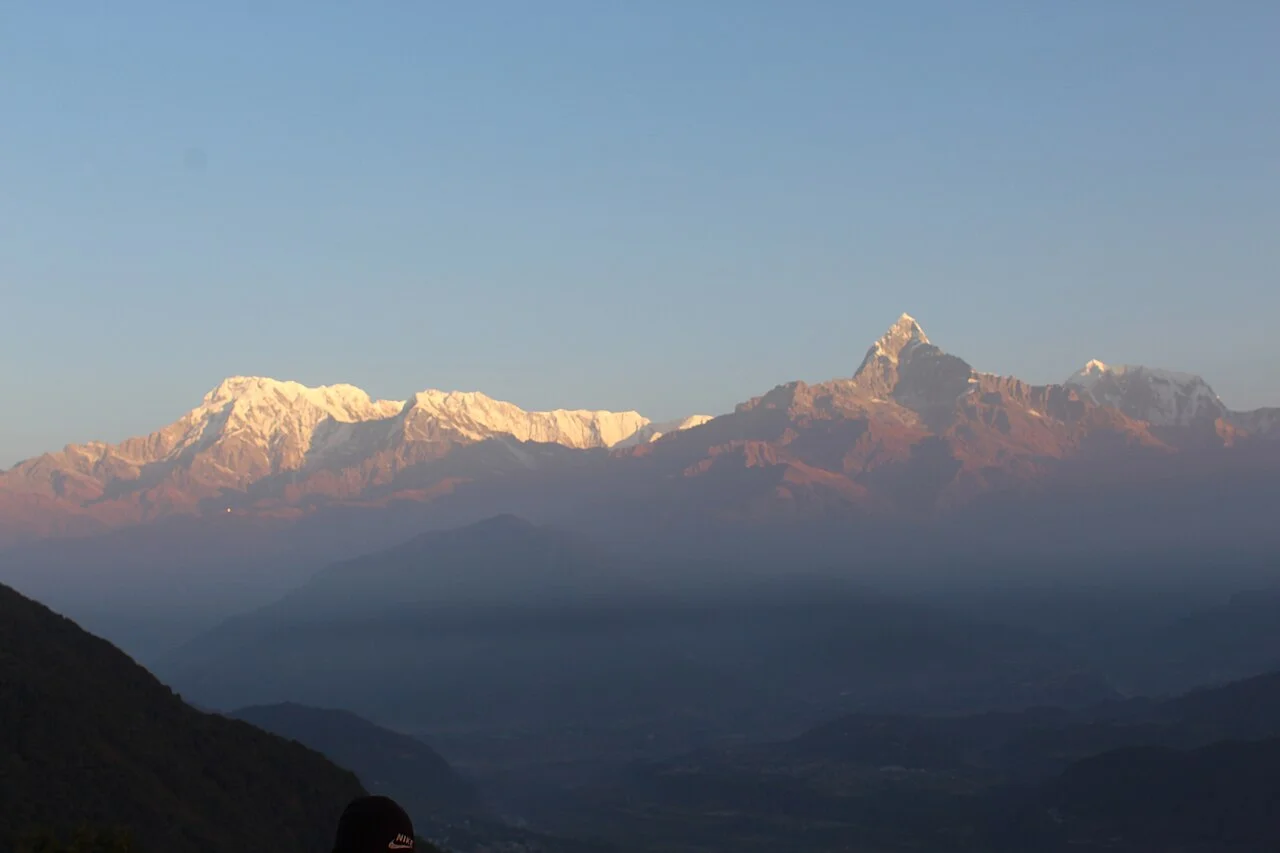
The official Pokhara introduction presents Sarangkot as a viewpoint for the Annapurna scenery. The pleasure here may come from looking at a different scale from the everyday movement in the city streets. Try to distinguish the mountain outlines when they are visible and accept cloud as part of that day's experience when they are not. Nabin845's authentic photograph dated 25 November 2018 records the mountain range from Sarangkot. It does not establish that every day of a particular month provides the same view, or that your room overlooks a specific peak. A panorama and a hotel's promised outlook require separate information when making a booking.

Arrange an early transfer from your actual address the evening before if that is your plan. Discuss the return and breakfast break as well as the outward journey. Do not assume somebody else's old journey time applies to every visitor: starting points and conditions can differ. If attaching a longer walk to Sarangkot, find out about the real route, return light and the pace appropriate to you. A morning reserved for a viewpoint and a long-distance trek are different activities. The Stork suggests choosing one principal purpose here. Knowing whether your priority is a panorama, a walk or rest helps prevent additional activities being fitted in simply because they sound exciting.
Begnas: give a second lake time of its own
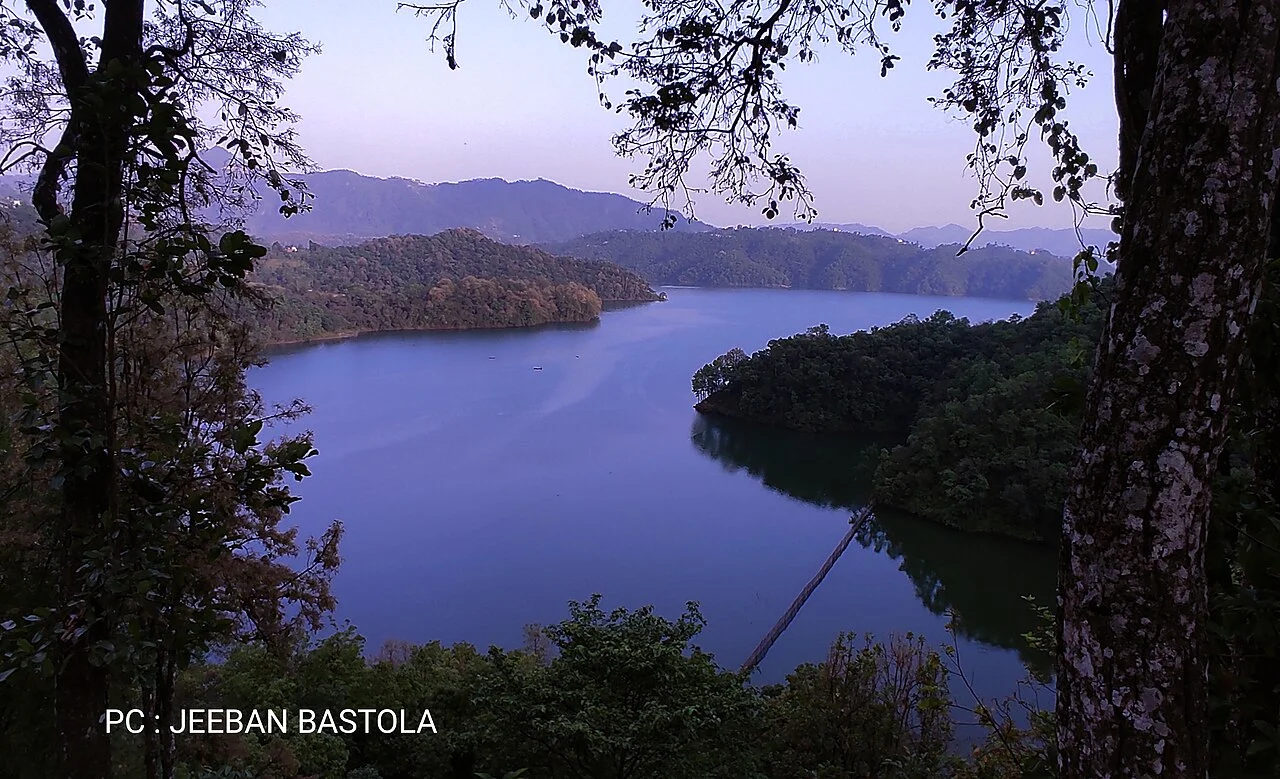
Nepal Tourism Board introduces Begnas and Rupa as lake options separate from Phewa. Do not treat Begnas as an incidental corner that can automatically be added to the end of your first shore walk. Planning travel and return independently allows you to explore another lake setting at a calmer pace. Jeeban Bastola's photograph dated 4 June 2023 records real water and hills seen between trees at Begnas. It is not presented as the view from a current business or an easily accessible viewing platform. Enjoying time at the lake need not involve locating and reproducing the photographer's exact position. Choose a place that is suitable and permitted for you.

Give this day one principal purpose: a shore break, a permitted walk or a boat outing whose arrangements you have verified. Leave a comfortable return margin instead of trying to combine everything. Rain, road work and the actual operation of transport may affect a plan, so reconsider earlier information on the day. There is no need to rank Begnas against another lake and decide which is more beautiful. Meeting two different environments can be interesting enough. Stay in permitted areas when looking for a photograph between trees. Searching for a striking image should not obstruct shore access or the people who live and work there. A respectful, comfortable visit is a better starting point than a perfect copy of somebody else's photograph.
Lakeside: choose accommodation with your walks in mind
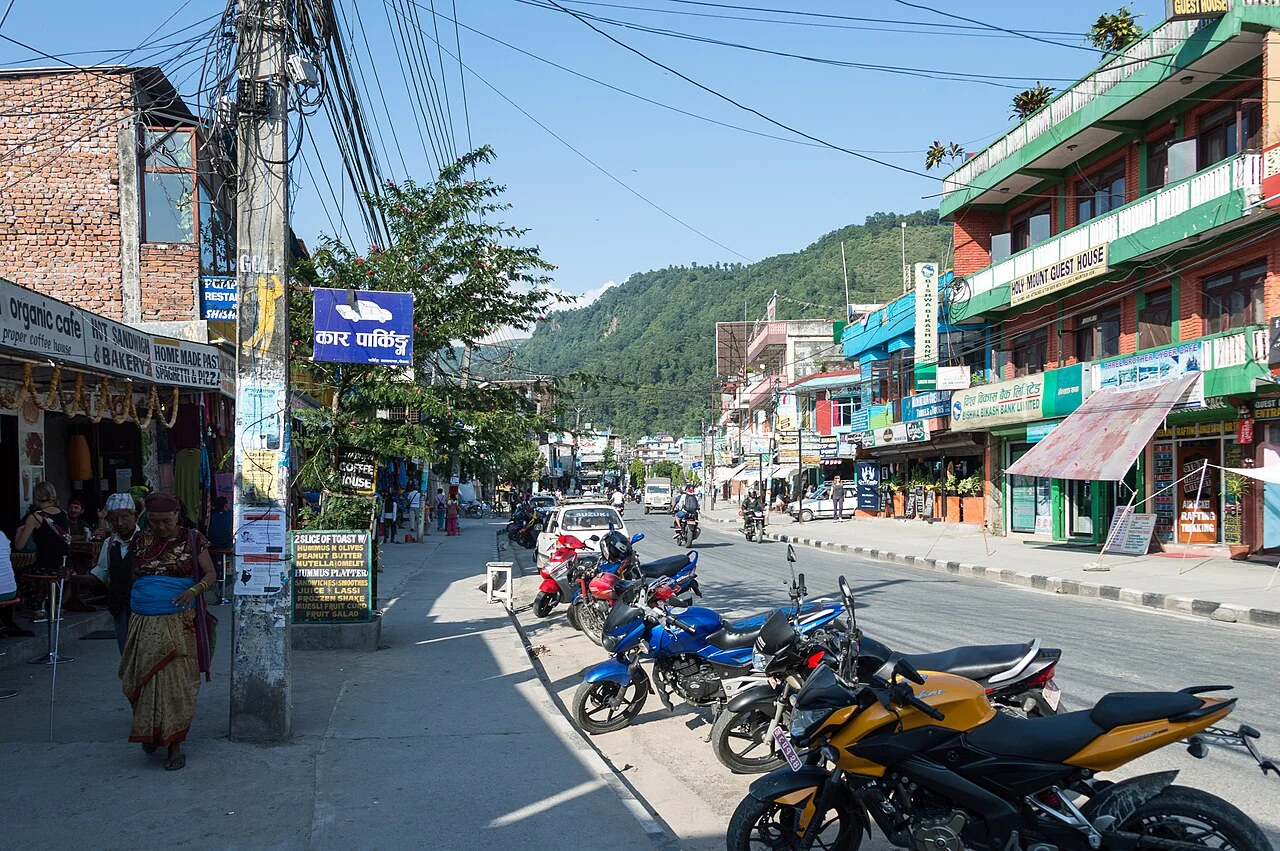
The official introduction associates Lakeside, also called Baidam, with accommodation and eating options around Phewa's eastern shore. Comparing options here may be practical for a first visit. Nevertheless, the neighbourhood name alone promises neither a quiet room nor a lake view or easy vehicle access. Your precise address, room orientation, final approach with luggage and an early-transfer requirement may influence the choice. Sergey Ashmarin's street photograph dated 24 October 2013 provides neighbourhood context. It does not claim that the businesses visible are open today or offer unchanged menus. Do not use an old street view as evidence for a reservation. Check the establishment and its actual arrangements separately.

Balance proximity to the shore with the rest you want in the evening. Someone heading early to Sarangkot and someone spending the day walking may benefit differently from the same address. Learning a return route can be more comfortable than searching new streets for your room each evening. Consider the transfers your programme requires alongside the room price. Check the distance on a map when adding shopping or a meal to a walk. The Stork's friendly recommendation is to become acquainted with your immediate surroundings on the first evening rather than trying to complete the whole city. A smaller first outing leaves energy for the days that follow.
A food break and a flexible three-day beginning
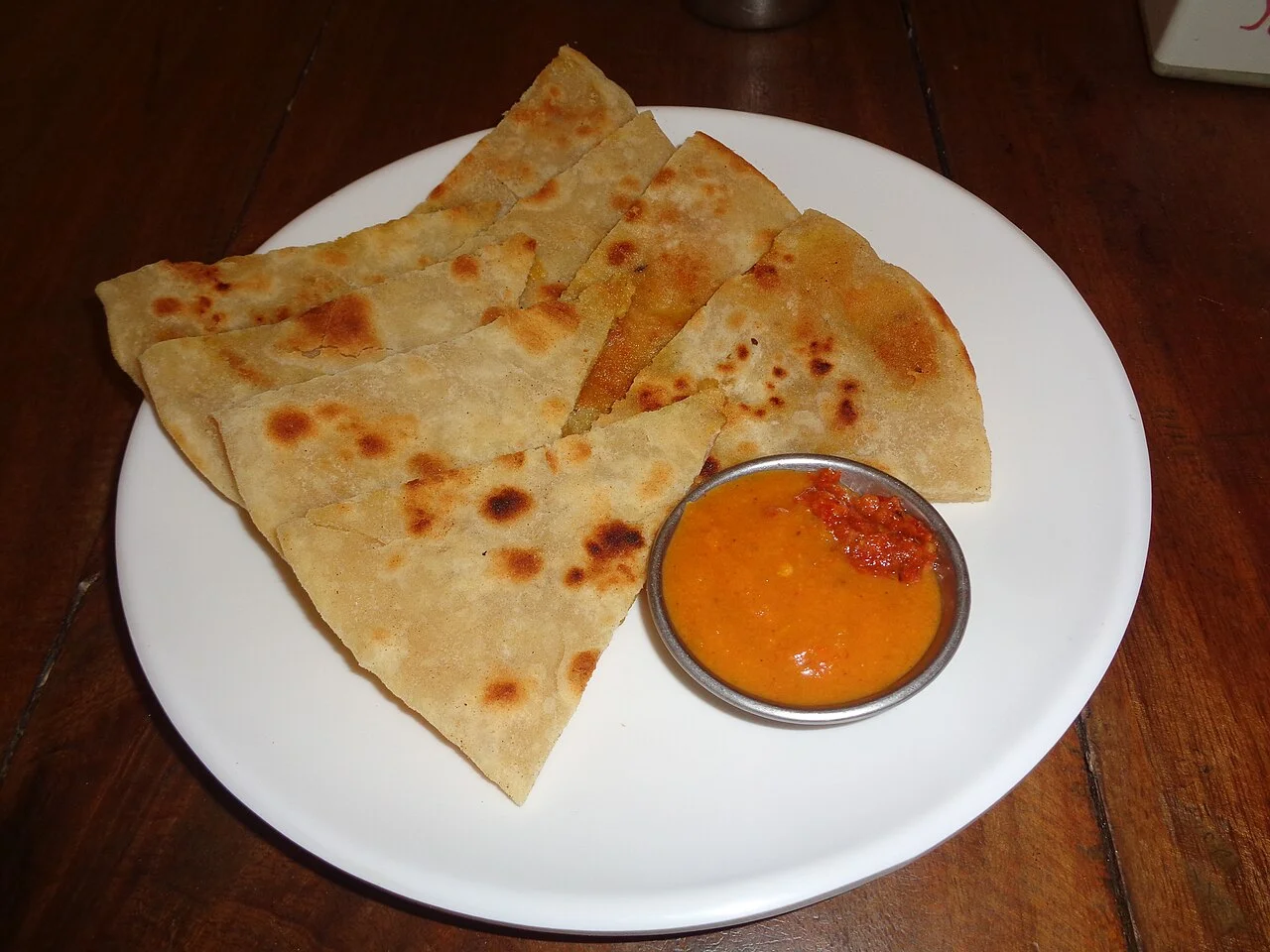
The authentic Pokhara photograph of aloo paratha by Viktor Pinchuk, dated 5 March 2026, offers an inviting introduction to a meal break. We infer no business name, current price or precise sauce recipe from the plate. Nepal Tourism Board's heritage cuisine book introduces other foods including momo and dal bhat. Ask about fillings, accompaniments and portions using the menu in front of you. Avoid making one dish stand for the entire city's food and leave space for different small choices during the stay. A meal can be an enjoyable part of the day rather than a task hurriedly completed just before transport departs.

For a three-day beginning, give the first day to Phewa and Lakeside, the second to a Sarangkot view and rest, and the third to Begnas. With less time, omitting the second lake may be preferable to compressing everything else. The official introduction mentions road and air access from Kathmandu; verify the connection, terminal and luggage arrangements applicable to your dates with the carrier. We provide no universal journey duration or fixed fare. Research current route and permit arrangements separately if continuing to mountain walking rather than treating this city guide as a trekking plan. Sources were checked on 4 October 2026. An hour left open beside a lake may become one of your favourite parts of Pokhara.