
Sarajevo's food map can begin with your first appetite in the bazaar: a warm main dish, curiosity about pastry and a quiet interval for coffee. This time the Tatilmerkezi Stork does not carry a list of sightseeing stops to the table. Instead of stacking meals together, choose what you genuinely want and when. Treat ćevapi as a main meal, pastry as a separate pause and coffee as space for conversation, and even a short stay can feel full. Every local name need not fit into the same sitting.
The official Sarajevo tourism brochure's food section and Centrotrans transport information were checked on 3 October 2026. Licensed photographs show city scenes from different years; plates and visible menu fragments are not current prices or restaurant offers. This guide provides neither personal tasting memories nor a ranking of best businesses or a fixed budget promise. It offers an original meal arrangement to adapt to your companions' preferences, the location of your accommodation and your return journey.
Ćevapi: consider portions and accompaniments together
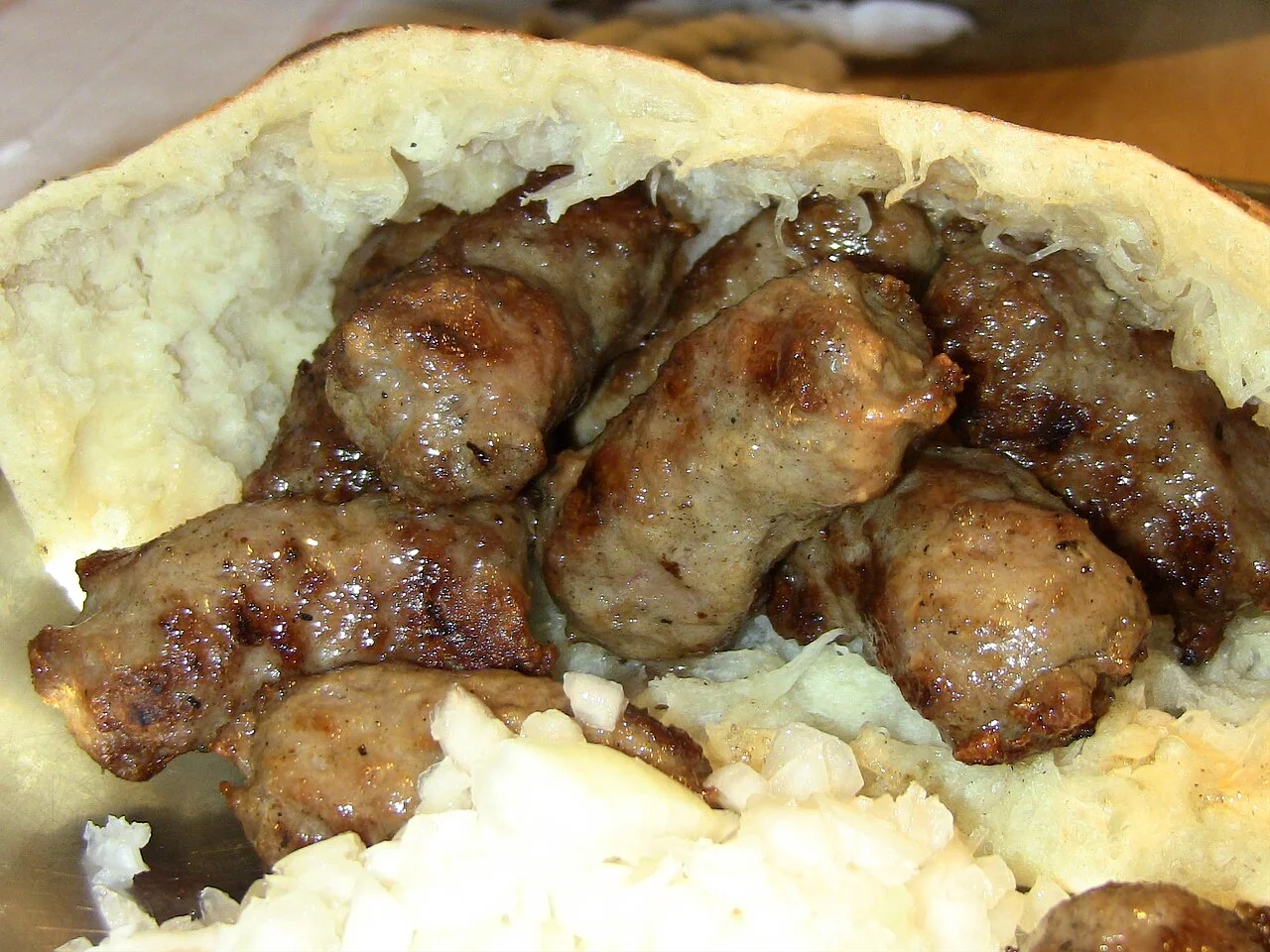
The official brochure describes Sarajevo ćevapi as a grilled minced-meat dish accompanied by somun bread and onion. That brief introduction helps identify a menu name without establishing that every business uses identical ingredients in identical proportions. Check the portion, meat content and accompaniments on the current menu. Choosing it as a main meal also means thinking about how much room you want to leave for pastry later. The 2010 photograph is an example served with bread, not the present ordering arrangement at a named address.
Companions intending to share can discuss the overall portion and separate plates at the beginning. One person might want only the main dish while another wants an additional accompaniment; a single shared order does not necessarily answer both needs. Choose an interval that matches the group's appetite rather than automatically sitting down for a long meal immediately before a walk. Requests about whether drinks and dishes arrive together or in stages belong in the service conversation too. The Stork concentrates on clear questions at the table: what the order contains, who shares it and what space remains for a later meal.
A pastry pause: a photograph is not the current recipe
The official brochure encourages exploring different pastries in the bazaar. Burek photographed in Sarajevo in February 2022 provides one visual example, not a restaurant recommendation or assurance of an identical recipe everywhere. Read the local menu name carefully and ask directly about the filling. A word used for different products elsewhere does not automatically explain your order here. Begin by deciding whether you want a small pastry pause or a larger portion instead of another main meal. Appearance alone is not evidence of every ingredient used in preparation.
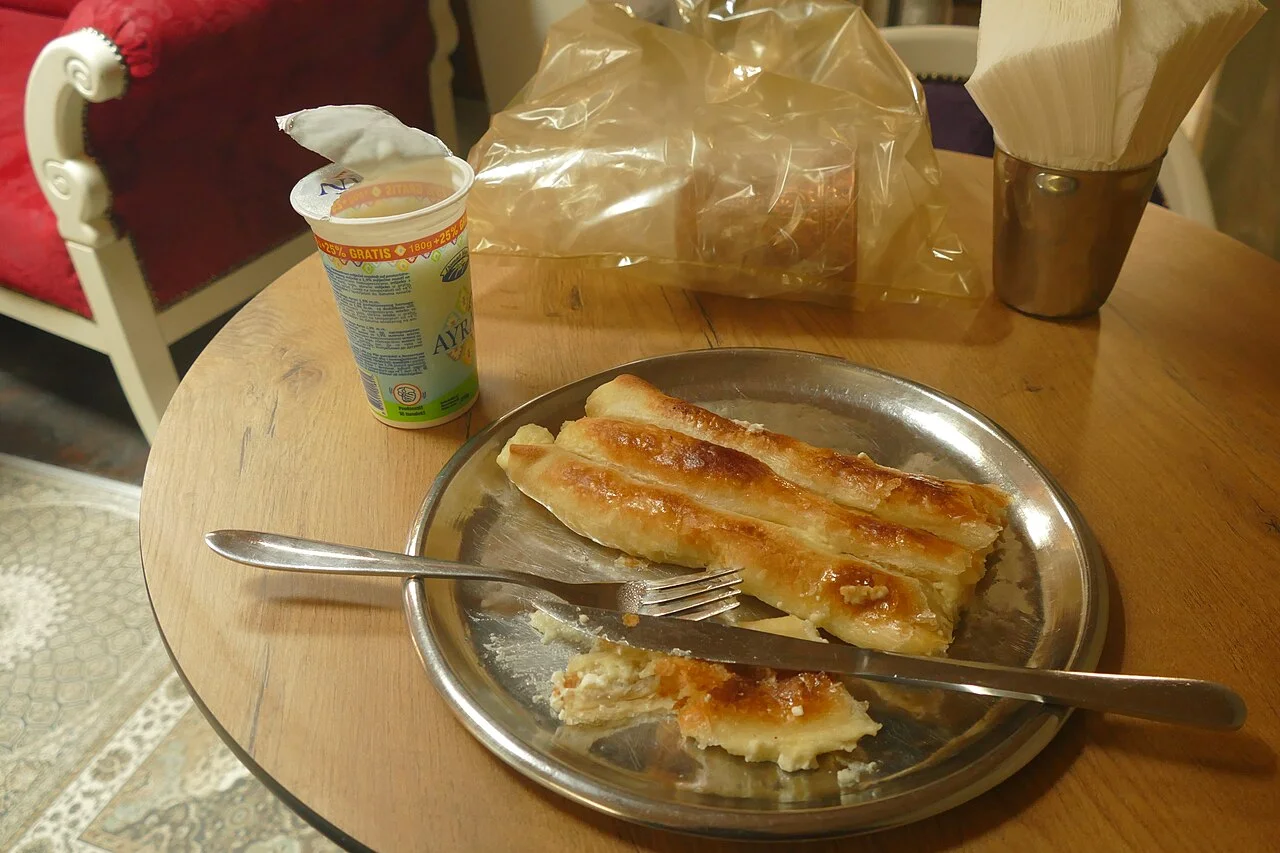

If two people are curious about the same pastry, ask about cutting and serving it for sharing. Think about the earlier meal when choosing an accompanying drink. Someone with breakfast included at their accommodation might move this pause into the afternoon; an early starter might prefer it sooner. A product being unavailable at that moment need not break the day's plan: choose another item or move the meal to another interval. Packaging, branding and accompaniments visible on the photographed table should not be read as a current business offer. This dated image illustrates one plate only.
Leave coffee a separate interval
The Sarajevo photograph taken in March 2017 shows a coffee pot, cup and tray. It is a visual example of a coffee pause, not a replacement for the business's present menu. Ask about serving size, accompaniments and your caffeine preferences when ordering. If coffee is intended as time for conversation, avoid wedging it into a narrow gap immediately before a transport connection. A drink break does not have to expand into a lengthy dinner; choose an interval that suits the part you want it to play in your day.
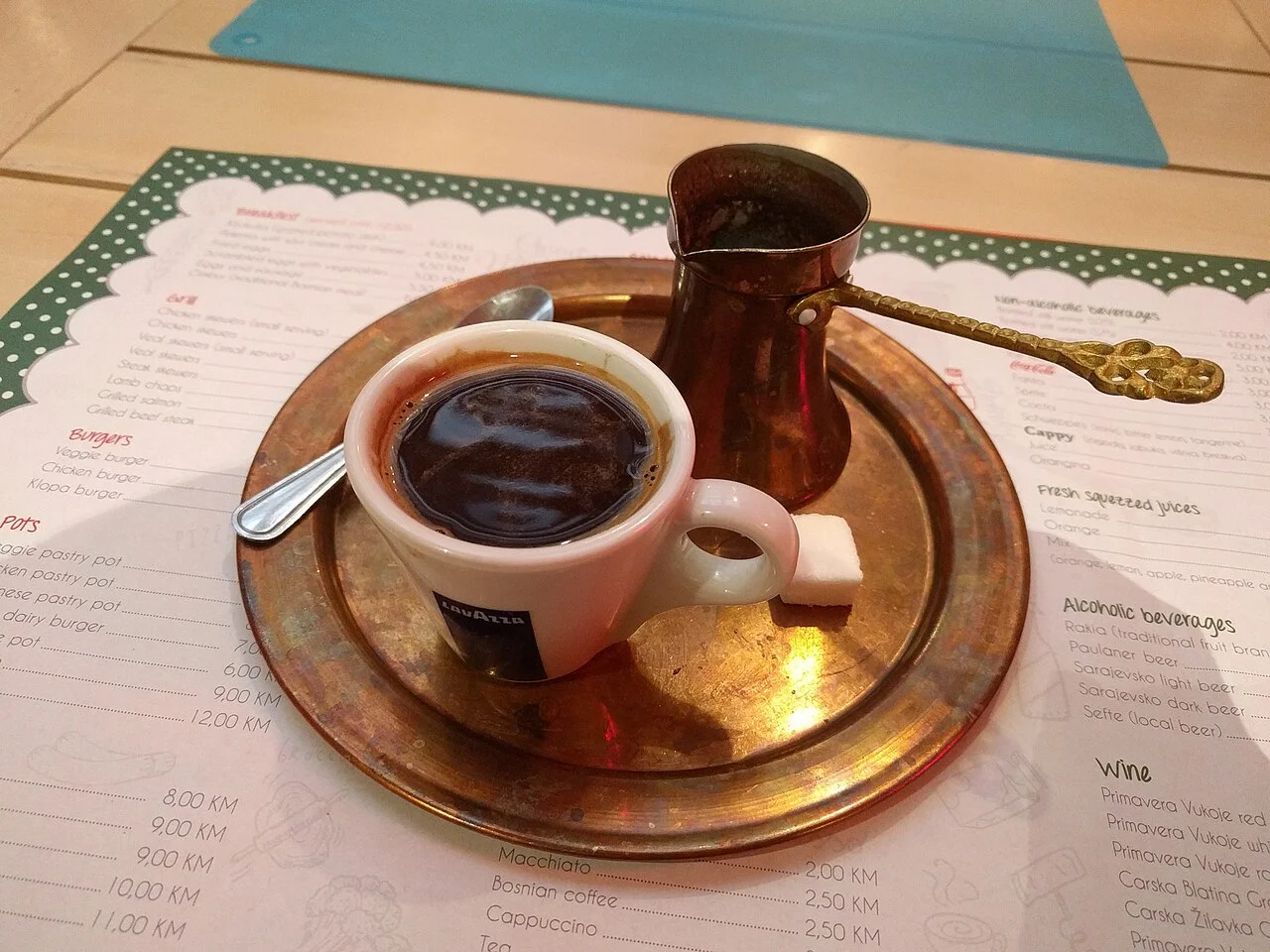

A child or companion who does not want coffee can choose another drink while sharing the table. Sitting together does not mean everybody orders the same product. Comfortable seating and the group's pace matter as much as the appearance of a cup when leaving a pause between city visits. If adding dessert, decide whether you want individual portions or one to share. The printed menu behind the cup in the 2017 photograph belongs to that historical scene. Any visible amount is not carried into present-day budgeting; construct the current bill from the menu available during your own visit.
Give dessert its own place: baklava and tufahija
The official brochure's dessert selection includes baklava, hurmašica, tufahija and kadaif, describing tufahija as walnut-filled apple. These names provide a starting point for menu research rather than a challenge to finish everything at once. One dessert with coffee or a small shared portion several hours after a main meal can spread curiosity across the day. Ask about today's filling and portion; our photographs do not depict every variation of these sweets. Different names do not imply identical ingredients or serving arrangements, so a brief question can help you choose the product you actually want.
Discuss dessert time alongside the rest of the group's plans. One person might want a longer coffee pause while another intends a short browsing stop. Establishing those needs first reduces pressure to rush away from the table. If returning to accommodation and going out again, consider whether the second outing is something you genuinely want. A food journey's success need not be measured through the number of desserts completed. Learning one product's name, asking about its ingredients and leaving time for a small shared portion can create a warm part of your own city memory.
Choosing a meal setting around Baščaršija
Making the bazaar your food base is a choice to connect different meal pauses with shorter walks in the same area. The Sebilj photograph from August 2019 records an evening scene, not a current directory of tables or businesses. When arranging a meal, decide together about indoor or outdoor seating, service time and a clear meeting point. Reviewing a particular address's current menu and hours before arriving can produce a more readable food route than wandering around the entire area without an idea of what you want.
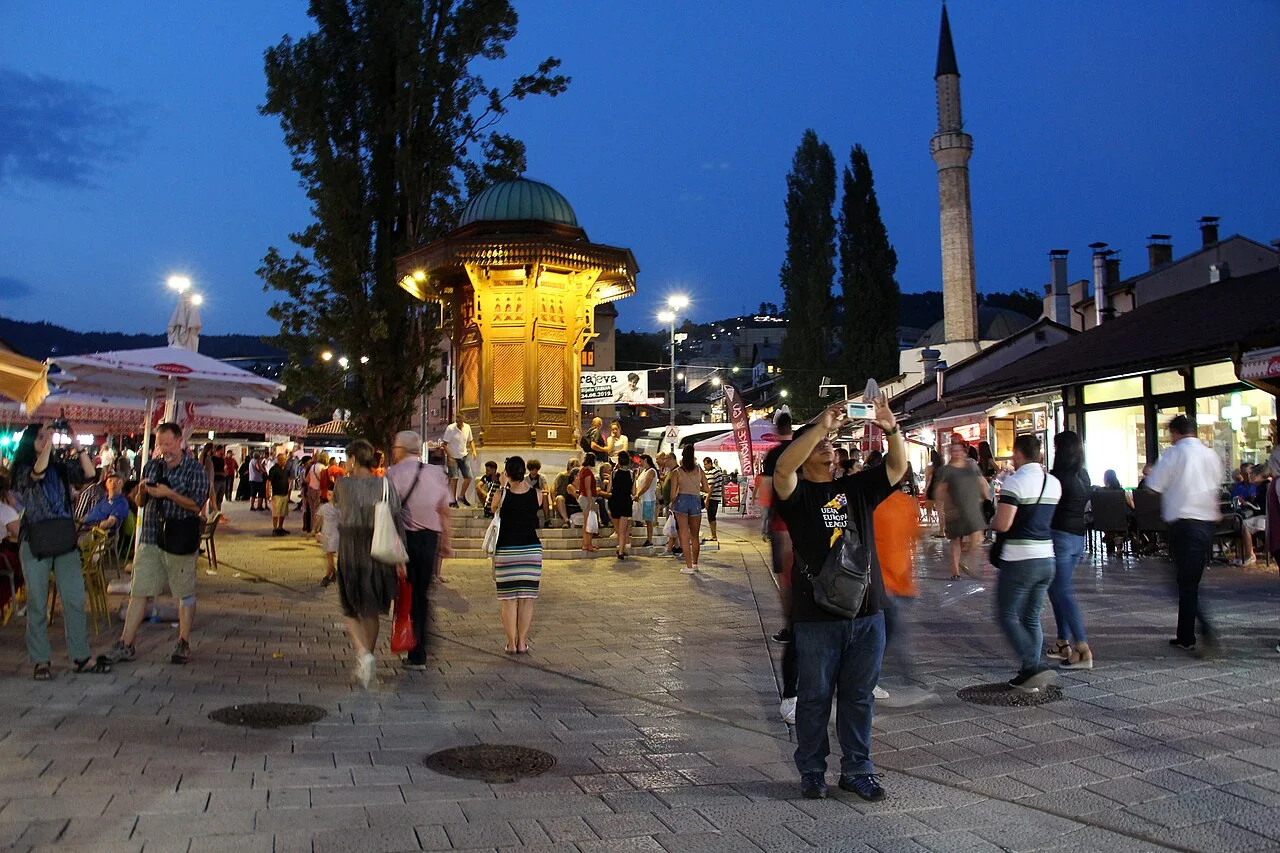

Accommodation nearby might let you separate meals through short returns during the day. Staying further away calls for coordinating your dining time with transport. Choosing another central setting is not a competition: quiet, entrance access and your companions' evening rhythm can lead to different decisions. A district name alone does not explain hills, steps or access with luggage. This food guide is not turning into a sightseeing checklist. Its neighbourhood questions serve the practical task of reaching the table comfortably and returning easily to the rest of your plans after the meal.
A two-day outline with room for departure
A measured day-one arrangement could include the accommodation's actual breakfast offer, a ćevapi main meal during the day and a separate coffee pause afterwards. Give pastry curiosity a place on day two and choose one dessert if it suits your appetite. Groups whose members get hungry at different times may prefer a flexible meeting arrangement. Read spending through the main course, accompaniments, dessert and drinks, comparing prices on that day's menu. This sequence is not a forecast of current amounts; it is a way to construct a bill without overlooking smaller additions.

Centrotrans's official information describes the airport connection towards Baščaršija and Bentbaša. Check the current stop, departure and ticket arrangements with the operator for your date instead of putting a lengthy meal immediately before the final connection. Leave separate room for collecting luggage, leaving your accommodation and transferring to the airport. The Tatilmerkezi Stork's final request for a Sarajevo table is simple: choose the taste you are actually curious about, give the people beside you time and avoid needing to run when saying goodbye to the city. A full food day grows from well-placed intervals before it grows from more orders.