
What to eat in Seoul becomes interesting when a market counter and a shared cooking table reveal different rhythms of the same city. Small gimbap and griddle-cooked bindaetteok at Gwangjang, a different tteokbokki preparation at Tongin and a communal meal in Sindang can answer separate interests. The Tatilmerkezi Stork suggests two food days instead of a restaurant competition: start with a market and its surroundings, then leave another day for a longer table experience. Avoid trying to consume every district in one day, and more time remains for both the plate and the city. Use this guide to shape first choices, with actual menus and service arrangements determining the final decision.
Three authentic photographs record food service, gimbap preparation and bindaetteok cooking at Gwangjang Market. Two city views add context to walking decisions around Gyeongbokgung and Cheonggyecheon. Businesses visible in archived pictures are not claimed to serve unchanged menus today; original dates and usage records are retained. Official Seoul tourism sources were reviewed on 4 October 2026. Obtain opening and price information from the chosen business instead of applying one timetable to every counter. This guide uses a travel writer's interest in planning rather than invented personal visits or claims to have tasted dishes. Small choices that suit your day can matter more than completing someone else's entire list.
Look around Gwangjang before ordering
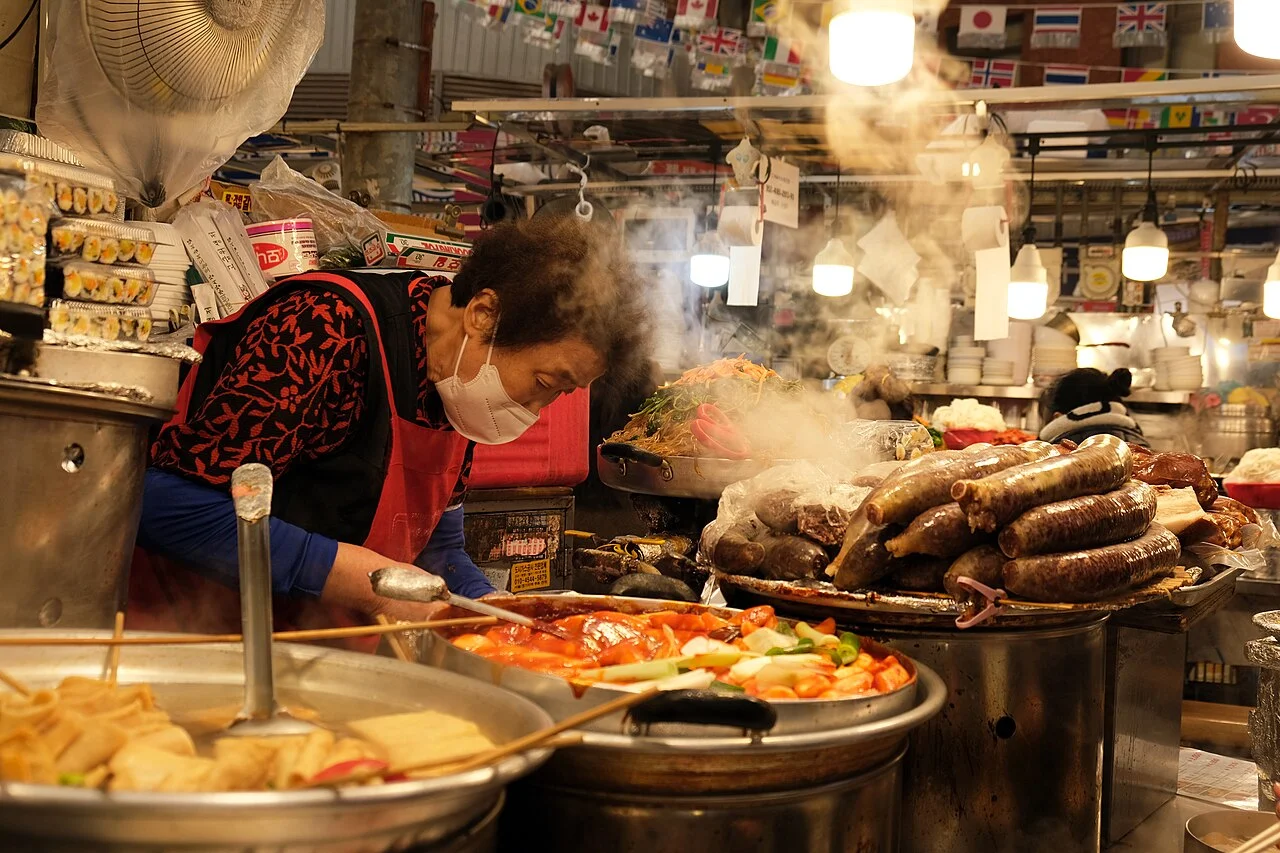
Official tourism information introduces Gwangjang Market through both shopping and food stalls. On arrival, examine service areas and seating rather than immediately ordering everything. A solo visitor might want a brief meal, while companions might prefer several shared choices. A busy stall does not establish ingredients or comfortable seating that suit you. Understanding the menu, portions and payment arrangements makes the first decision easier. The cover photograph records a vendor serving food here on 29 November 2022. Although the source file is named Dongdaemun Shopping Complex, its description explicitly identifies Gwangjang Market as the location. The caption follows that description, rather than assigning a misleading destination.
Steam and plates belong to an authentic market scene; their complete ingredients are not inferred from appearance. Respect the working space before approaching a counter. If taking photographs, avoid blocking service and do not turn people into close portraits without permission. Observe where orders are placed and ask if uncertain. Official transport information points to Jongno 5-ga station on Line 1; complete the final walk using the stall's actual location inside the market. Food areas and other shops can have different opening arrangements, so a single market timetable is not a guarantee for the whole day. Build the itinerary around stops whose availability you have checked.
Start with small gimbap without enlarging every meal
Mini gimbap is among the foods introduced for Gwangjang and can be investigated as a smaller first choice. The name mayak gimbap also appears; this guide does not convert that figurative expression into a health or addiction claim. Ask about fillings, sauce and portions at the actual business. Knowing the number of pieces helps companions share. A roll that looks vegetable-heavy does not disclose every component through a photograph. If a warm dish is planned later, keeping the first choice smaller can help you manage appetite. Everyone need not enjoy the same thing; a shared table can accommodate different preferences.
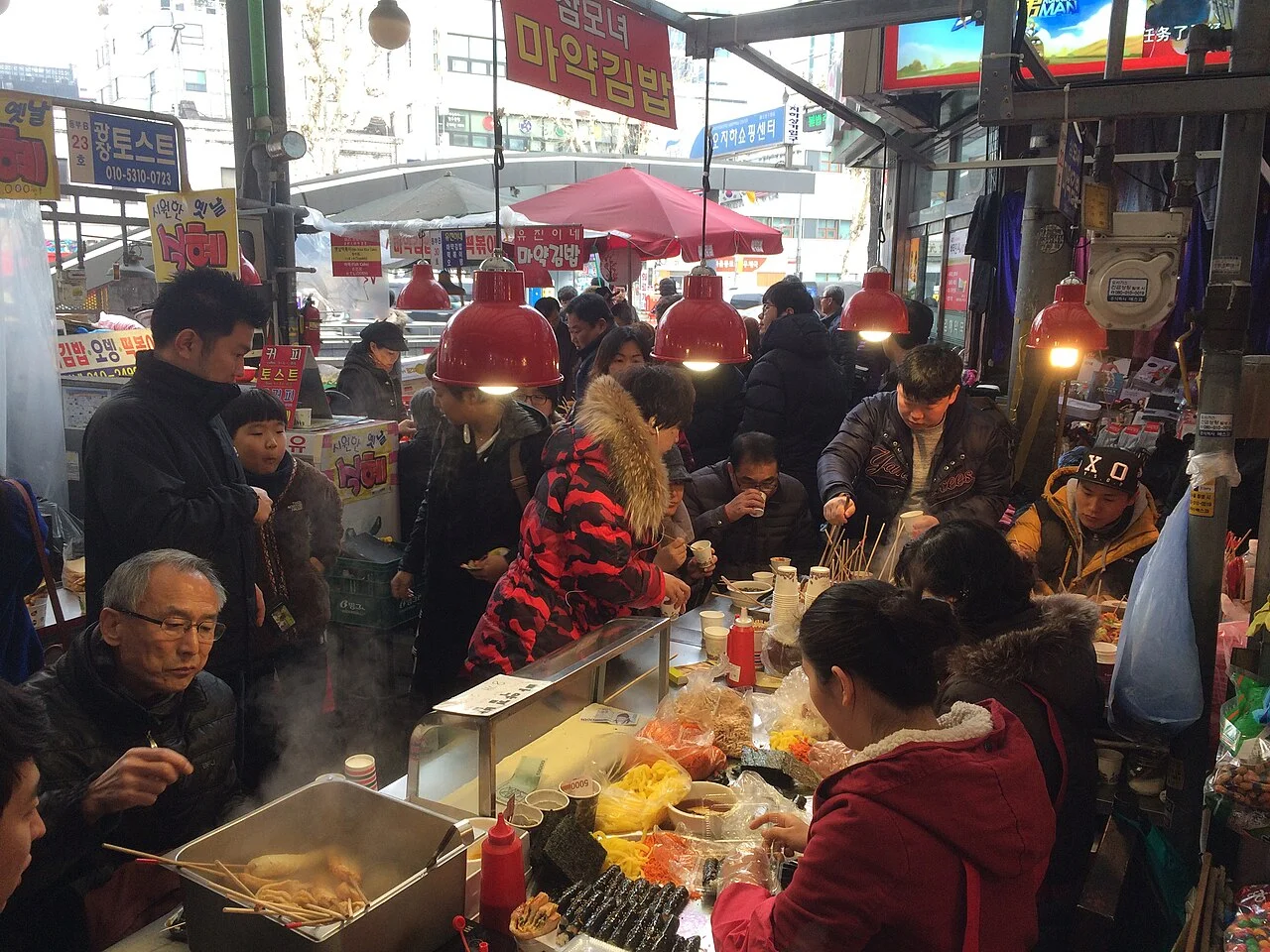

The photograph dated 2 January 2016 records an authentic mayak-gimbap preparation counter at Gwangjang Market. Vendors, customers and small rolls show an everyday market environment, rather than a current restaurant menu or a reserved table. If making gimbap a standalone meal, decide from that day's portions. For takeaway, ask about transport and storage recommendations. Finding one item and allowing an unhurried nearby pause can be more comfortable than joining many distant addresses in a single day. The Stork suggests treating the first order as a useful decision: afterwards you may know more clearly what you wish to share and how much spice interests you.
Bindaetteok: another market experience from the griddle
Official Gwangjang information introduces bindaetteok as a mung-bean pancake option. A reference to pulses alone does not establish identical recipes or a meat-free preparation. Ask about the mixture and accompanying sauce at the business. If sharing a piece, discuss portions before ordering; appearing large in a photograph does not establish an equal serving for everyone. Seating at a counter and a brief standing pause offer different levels of comfort. Especially when another food is planned, consider appetite before making this a second substantial meal. A few deliberately selected tastes can create a better day than many hurried orders.


The photograph records vendors frying bindaetteok at Gwangjang Market on 2 January 2016. It is a different counter and preparation, rather than a crop of the gimbap image; the five illustrations use separate scenes. Observe the hot surface and working area from an appropriate distance instead of entering the service movement. A historical cooking photograph does not verify today's stall or recipe. No health benefit or universal suitability is claimed here. Deciding from the menu and obtaining relevant ingredient information provide a useful starting point. You can slow the walk to observe preparation, then find a different place to rest afterwards.
Separate the Tongin and Sindang tteokbokki choices
Tongin Market's official information describes gireum tteokbokki as rice cakes prepared in oil and seasoning, with soy-seasoned and spicy versions discussed. Jeukseok tteokbokki in Sindang provides another experience, cooked and shared at the table. Rather than treating the districts as interchangeable stops containing the same food name, decide which preparation interests you. Ask about spice level, additions and portions at the business. For a heated table in Sindang, establish cooking and service arrangements. Gwangjang pictures are not relabelled as Tongin or Sindang restaurants in this guide: the locations of individual scenes remain distinct.

The Gyeongbokgung view adds city context to a palace-area day; it is not a photograph of a Tongin counter. Official Tongin information points to Gyeongbokgung station on Line 3. Plan the last walk from the actual market address and arrange other sightseeing around that day. If visiting the palace, check its own admission and opening information separately; a food guide does not provide a fixed palace calendar. A smaller Tongin pause and a longer Sindang table do not have to fit into one meal. Saving a communal table for another day can create room to understand different preparations without using all your energy to reach successive stops.
A Cheonggyecheon pause, accommodation and the return
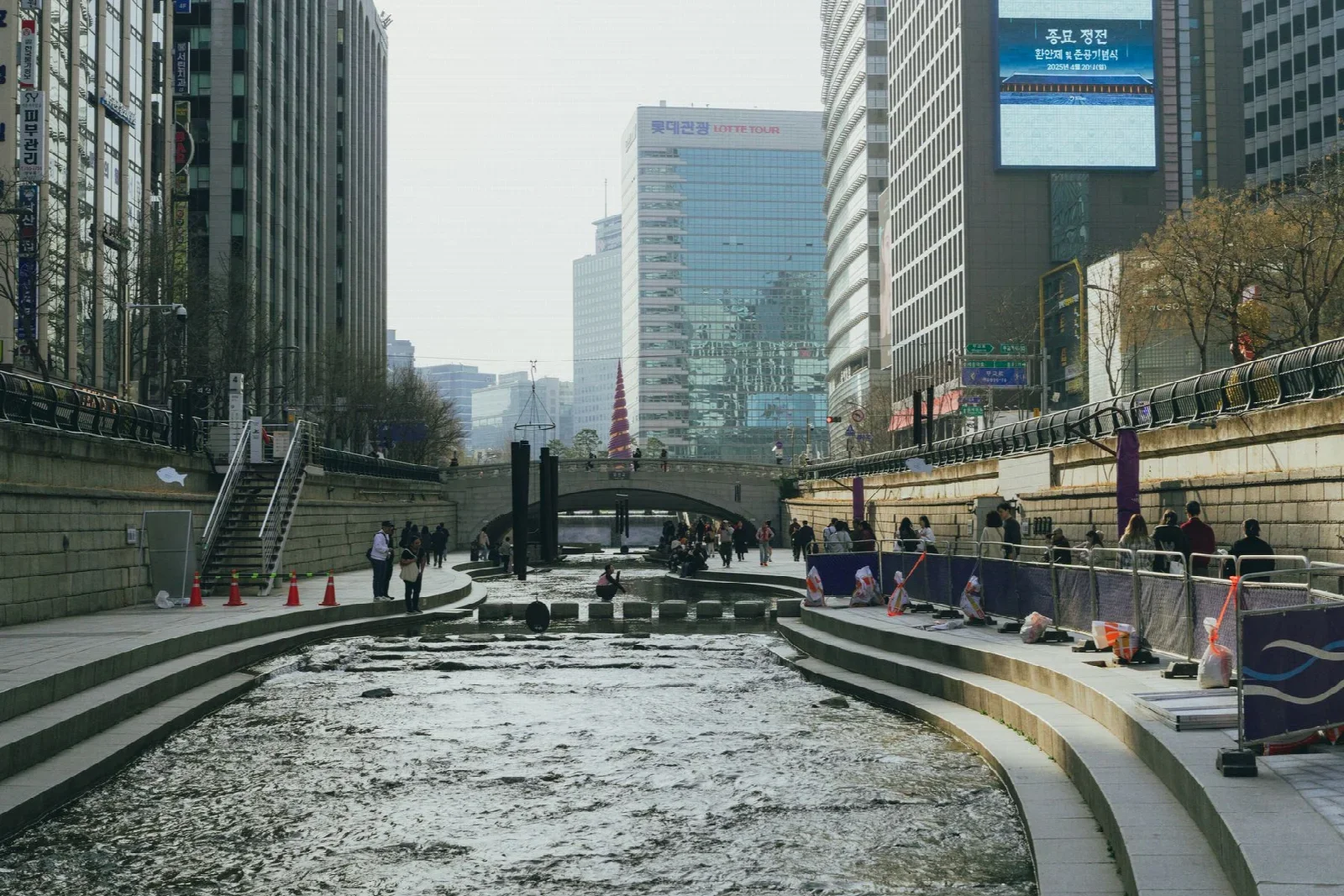
Cheonggyecheon is a central waterway and walking environment; one official Seoul walking route connects Gwangjang Market with this setting. You need not walk its entire length after eating. Choose a shorter section according to weather and current access arrangements, leaving a comfortable return interval. The authentic photograph supplies waterside-walk context, rather than a view from a specific restaurant table. If considering accommodation around Jongno, compare the actual hotel address with food stops. Sindang and Tongin may require separate connections; being in the same city does not make every destination part of one immediate neighbourhood.
Official subway information explains transportation cards and single-use tickets. Check current fares, product coverage and the final connection on the visit day. No figure is carried into this guide from an older fare table as if it were a new price. A sample day could combine small gimbap at Gwangjang, shared bindaetteok and a brief Cheonggyecheon pause. Tongin or Sindang can become another day's distinct meal. The Tatilmerkezi Stork suggests choosing a day's rhythm alongside a plate: quick market service, a pause observing the griddle and a longer conversation at a shared table offer different experiences. Adapt the plan to appetite and actual business availability.