
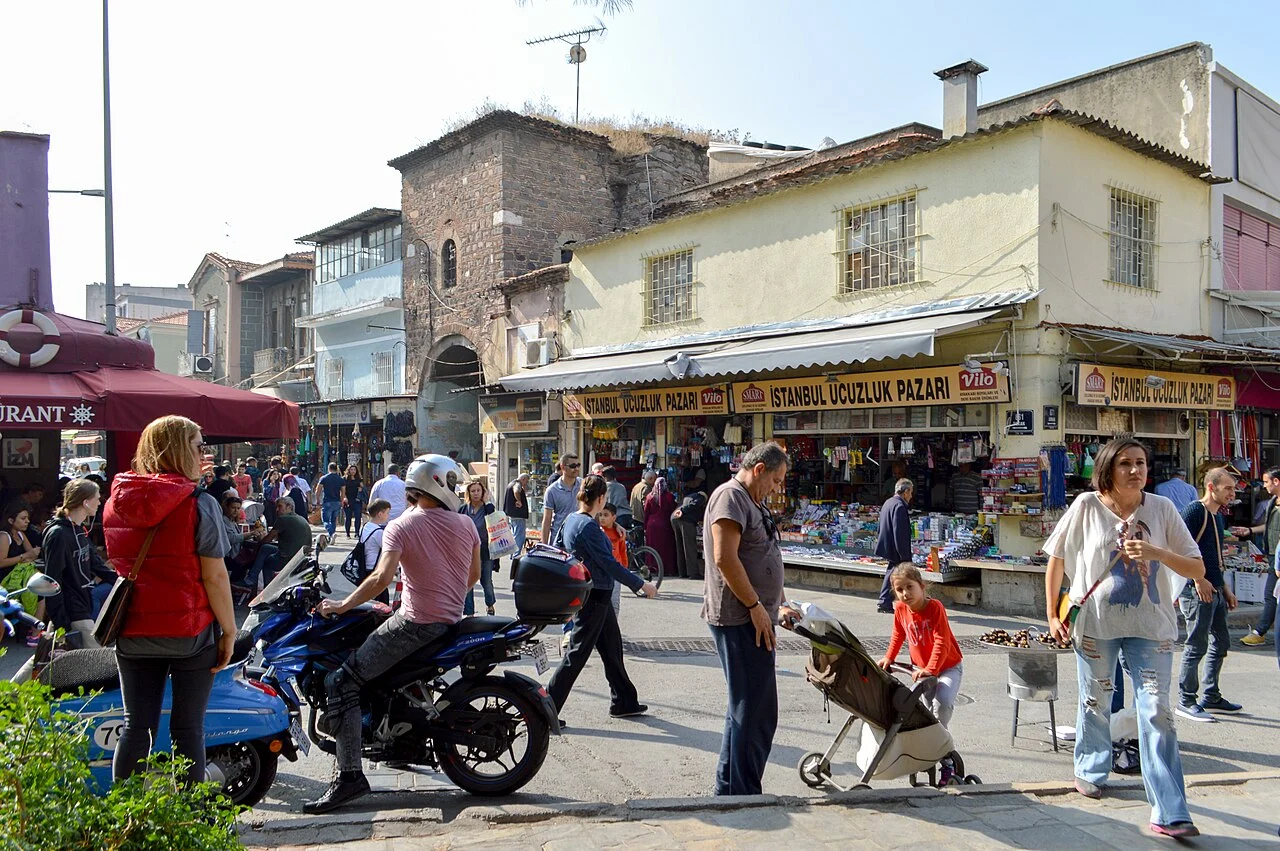
A travel journal does not have to record an entire day minute by minute. A useful page can connect the place name, a detail you actually observed and a question you want to understand later. The Tatilmerkezi Stork suggests five different working days for developing a travel piece: separate market and waterfront in İzmir, draw a walking line in Lucca, notice the rhythm of a pause in Stockholm, connect product and setting on Cunda, and describe arrival on Bozcaada. These are examples for developing your own voice where you travel, not a route requiring all five. You can turn a simple observation into a concrete account without presenting something you never experienced as a firsthand memory. Short notes, a small drawing and a real date often offer a clearer beginning than a long collection of images.
İzmir: write the difference between market and waterfront
An İzmir journal page can compare a short section around Kemeraltı with a separate pause on the Kordon. The official GoTürkiye source introduces both environments. Begin with a detail actually observed in the market: a shopfront shape, passing route or sound, for example. Return to the same question during a waterfront pause. Describing how the surroundings changed does not require you to represent the whole city. State the small section and time in which you were a visitor. Add what you observed beside a word such as “busy”; a personal impression and the conditions throughout the day are different things. The contrast supplies a focus without requiring a complete sightseeing survey.
For a local food note, choose İzmir köfte if available and record the served ingredients separately from the official gastronomy introduction. Do not draw conclusions about the entire city’s cuisine from a meal photograph. Add an accommodation decision to the journal: how did arriving in the centre differ from reaching your room, and why did the starting stop work? When a note is intended to help someone else, separate your actual observation from general transport advice. Considering a market morning, seated meal and later waterfront gives the account sections. Record travel time through your own movement rather than assuming another visitor will have the same experience. A route can be understandable without turning individual timing into a promise.
Lucca: turn a walking line into a small map
Lucca’s official tourism source describes the walking environment around the historic walls. For a journal, draw a selected section instead of completing the full circuit. Use three simple marks for the beginning, first stop and return to a square. Let this be a personal reminder of that day’s movement rather than a city map drawn to scale. Write short sentences about where you stopped and why you continued. After walking, return to the drawing to compare something seen at a distance with another detail noticed close up. Such an account describes a more distinct experience than simply calling the walls beautiful. The drawing helps you recover the sequence without needing to photograph every turn.


If buccellato is available, place the bakery pause in a separate little note box. Lucca’s official food source introduces the product; your record belongs to the serving you chose and your own taste. Show a source separately when describing a recipe rather than presenting a taste impression as recipe knowledge. Assess movement inside the walls alongside transporting luggage on arrival when choosing accommodation. Explaining that difference can help a practical visitor account. If you added a tower or museum, record actual entry conditions on the visit date. When later publishing the piece, do not turn that record into certain current information without checking whether it still applies. Your journal can preserve the past while your practical advice is checked again.
Stockholm: notice the rhythm of a pause rather than only the walk
A walk around Djurgården followed by a chosen fika pause can support a Stockholm journal section about daily rhythm. Visit Stockholm introduces both the district and fika culture. Alongside asking which places you saw, ask where you wanted to stop. A short park section, seated pause and move to another cultural visit can create different feelings of time. If a product such as kanelbulle is available, add a small taste note. Instead of explaining an entire country’s habits from one table, write why your chosen pause fitted the travel day. The order of ordinary moments can provide a narrative just as effectively as a famous landmark.

Use transport notes without turning them into a catalogue of details. How you reached the walk from accommodation and when you decided on the return can connect the journal section. If you considered another museum or island trip, record the actual plan separately from imagined alternatives. This helps prevent an activity you never undertook from being presented as experienced when you later prepare a travel piece. A weather change that shortened the day may explain the real rhythm of the account. Try writing two observations about the same setting before and after a pause instead of simply increasing the photograph count. A small journal page can produce a more readable story than your longest holiday day.
Cunda: connect a product name with the setting where it grows
For Cunda and Ayvalık, GoTürkiye introduces olive surroundings and local tastes. A journal can begin with a tree or product label you actually saw during a walk. Keep the appearance of a leaf, the street surroundings and a product name on a menu as separate notes. If you did not observe a production process, do not narrate it as your own experience; explain researched knowledge separately. Observation from an open, permitted walking section and access to a private garden are different matters. Stating the boundary of your day creates a clearer frame rather than making the story smaller. Note the content you want to understand instead of copying somebody else’s complete label design.


If offered, Ayvalık toast or papalina introduced in the Cunda context can supply a meal note. Learn how the product is served through the actual visit; do not describe one day’s serving as the common form at every establishment. Explaining whether accommodation is on Cunda or in central Ayvalık makes the beginning of your walking day understandable. If interested in an olive-harvest activity, research an actual organisation rather than adding it to the article as something available every day. Leave room for questions in the notebook. An answer checked later can form a separate paragraph bringing observation and research together. The difference between what you saw and what you learned afterwards is useful to a reader.
Bozcaada: describe arrival day as a separate chapter
On a journal page for Bozcaada, describing arrival, settling in and the first short centre walk separately can be useful. Çanakkale’s official introduction includes the island in its destination coverage; examine the current GESTAŞ ferry service for your own travel date. Keep ticket, vehicle arrangement and actual departure conditions as that day’s record. Separate the planned journey from the sequence that really happened. A day beginning with accommodation and a small meal pause after reaching the centre supplies a different account from a separate day aiming to visit beaches. Choose an opening scene instead of squeezing every detail onto one page. It may be a quiet practical moment rather than the most dramatic photograph of the trip.


When turning a journal into a blog piece, state the reader’s need in the introduction. Give observation, practical planning and researched knowledge in different sentences. Preserve photograph location and real date and respect the use conditions of other people’s images. Check remaining questions about names and transport before publishing. For the Stork, a strong travel account does not claim to have seen everything; it clearly explains the small part observed. İzmir offers comparison, Lucca drawing, Stockholm rhythm, Cunda a product connection and Bozcaada an arrival story as five different working examples. Select one, write your own observation and do not feel required to repeat the same method the following day. A journal can evolve through what actually interests you.