
What to eat in Svalbard cannot be answered well through a single exotic ingredient. One day you may want warm soup after the museum, while another evening deserves time for a tasting menu. The Tatilmerkezi Stork invites you to look at the real choices without feeling obliged to order a particular dish simply because you have travelled north. Restaurants, cafés and an uncomplicated meal after a tour meet different needs. First choose your appetite, available time and the day's return arrangements; then select the table. A satisfying meal here can be more than a hurried interval between photograph opportunities.
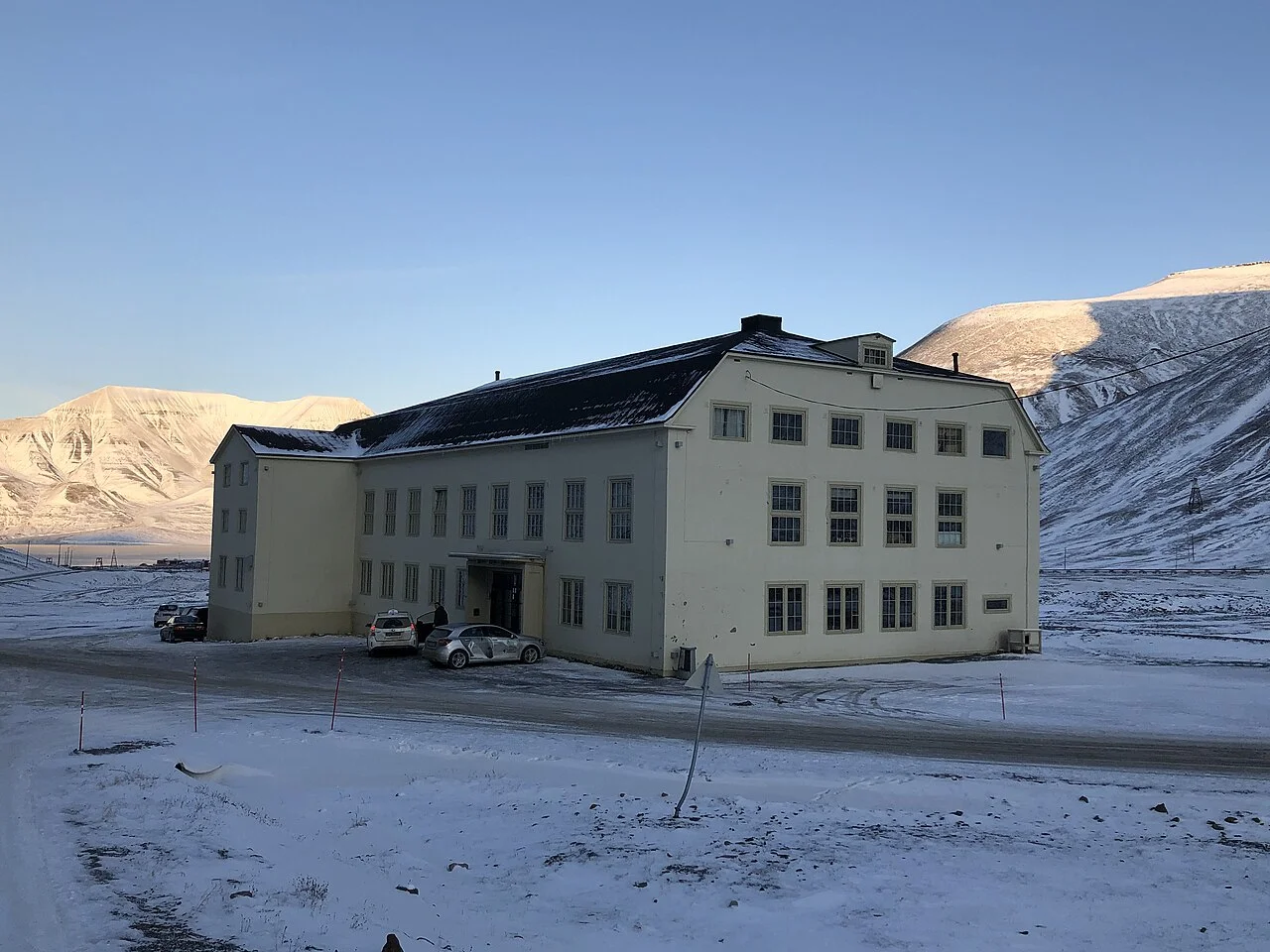
Unlike the Svalbard travel guide, this article focuses on arranging meals in Longyearbyen, choosing service styles and asking useful reservation questions. Its five authentic images show the settlement and Huset's exterior. Four contextual scenes are not presented as dish or dining-room photographs. Huset was photographed in 2019, the other town scenes in 2011 and the aurora in 2014; none is claimed to show today's interior or menu. Official tourism descriptions were checked on 3 October 2026. Confirm current opening, service arrangements and menus for your actual reservation because seasons and products can change.
Huset: a seasonal tasting menu for a longer evening
Huset Restaurant's official description introduces a kitchen focused on Arctic ingredients and a seasonal tasting menu. That may suit a different evening from one when you want a single main course and a quick departure. If a progression of smaller dishes appeals, ask how the menu works on your date, its expected duration and available pairings. A wine or juice pairing mentioned in the description is not automatically included in the food price. Explain allergies, vegetarian preferences or ingredients you avoid before arriving, and do not assume that every modification to a tasting menu is available.
Think of Huset through the actual menu rather than as a place serving one fixed local dish every day. A reference to Arctic ingredients does not mean everything grows on Svalbard, or that every course contains wild-animal meat. The kitchen can explain sourcing and composition; ask about the product that interests you. The exterior photograph is not a rating of the present food experience. Allow a margin between a tour's return and your reservation, and discuss transport alongside the table. If you choose a long dinner, leaving other activities out of the same interval gives you time to enjoy the meal without watching the clock.
Kroa: a more flexible meal after the day's activity
Visit Svalbard's Kroa - Steakers Svalbard description mentions menus changing with the seasons, while its business information includes pizza and hamburgers. This provides a real address to investigate if you want a more familiar meal. It does not establish that a named product appears in every service. Match the current menu and kitchen hours with your own programme. A short afternoon meal and a leisurely evening may have different reservation requirements. Telling the restaurant your group size, children's needs or mobility considerations helps establish an appropriate table and timing before you arrive.
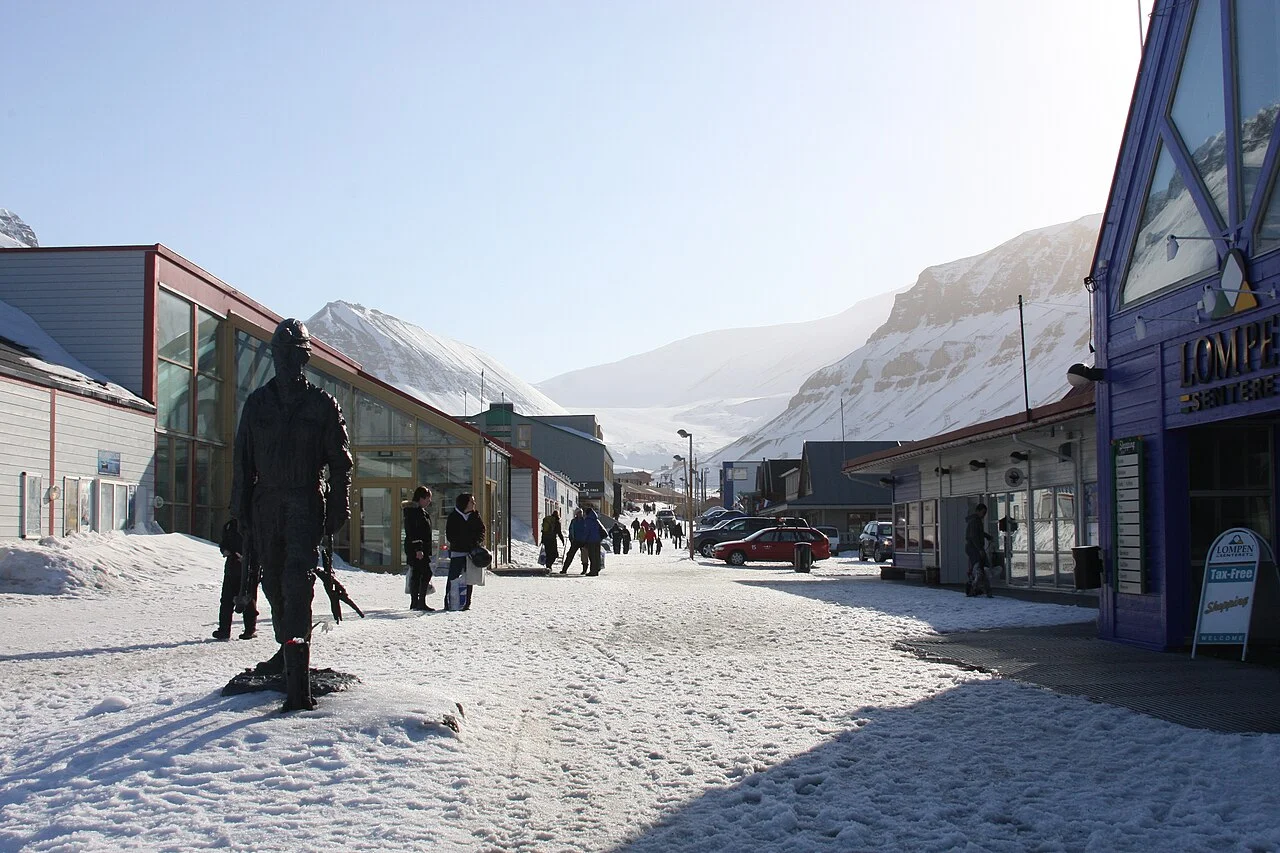

The snowy street photograph does not show Kroa's door or interior; it illustrates the surrounding town conditions. If you expect to return hungry from an activity, include the actual arrival back in the centre rather than only the advertised activity finish. General closing time is not necessarily the last time the kitchen takes orders. Ask about the final food service separately. When a cancelled activity changes lunch plans, use current business links from your accommodation or visitor information. Avoid relying on an old account claiming food is always available late at night. The Stork finds comfort here in a workable time as much as a familiar dish.
Café Huskies: a warm drink and a lighter stop
Café Huskies' official tourism record gives the address Vei 509.2 and introduces coffee, tea, hot chocolate, cakes, bagels and soup of the day. A place to investigate for a shorter break should not automatically replace a full evening meal. Check the day's products and opening arrangements. The listing states that children must be at least five years old; families with younger children should pay particular attention and confirm the current condition directly. References to huskies do not guarantee an animal encounter on every visit. Follow the café's instructions concerning its animals and visitor arrangements.


The church exterior in this section provides settlement context. It is not the Café Huskies building or a view from the café. When planning a pause, consider the real distance between the café and your other stop. For a bagel or soup, ask about portion size, ingredients and availability instead of assuming the name resolves every dietary need. You might use the break for a group meeting, while allowing time for everyone to order and finish. A charming description does not establish access information either. Ask directly about the entrance, seating and any particular needs rather than inferring them from promotional images.
Menu choices: sourcing, dietary needs and a real budget
Rather than searching for one compulsory Svalbard dish, examine what a particular business actually offers. Visit Svalbard's general food introduction presents international choices alongside special dinner experiences. When you want fish, meat or a plant-based plate, use the current menu to decide its type and preparation. Supply and season can affect service, and another visitor's plate is not part of your reservation. A product being described as local does not resolve personal dietary restrictions. Treat the origin of an ingredient and the other components used in the kitchen as separate questions, both of which can matter to your decision.


Build the budget using food, drinks, any pairing and transport together. This article does not provide changing price figures; use the business's own amount for the actual booking date. If you want to share a meal, ask about portion size and service arrangements because not every menu works that way. Do not identify allergens from appearance alone; speak with the team about ingredients and cross-contact. None of the five photographs is a current menu image. Nor should the aurora scene be read as a view definitely visible from a restaurant. Planning a meal and a sky-related activity separately helps establish realistic expectations for both.
Transport and three different dining days
On arrival, consider the airport transfer alongside a shorter town meal; inform the restaurant if a delayed flight affects the booking. A second day may favour a more flexible meal after the major activity, while a third evening could make room for a longer tasting experience. This is an illustration of differing needs, not a guarantee that a business offers a particular service. Staying centrally and choosing an outlying property can create different dinner-return arrangements. Compare the real hotel address with the table's location. A restaurant in a separate destination should not be presented as an ordinary walk from central Longyearbyen; discuss its access arrangements with the business.


Check Visit Svalbard's current airport-shuttle information, since no fixed timetable or fare is supplied here. Do not independently add a photograph spot outside the settlement to the journey between dinner and accommodation. Polar-bear safety and current field requirements remain relevant when the purpose of your outing is a meal; establish suitable movement through local information. The Stork's suggestion is simple: a special evening, an uncomplicated meal and a warm-drink break need not happen in the same order for everyone. Choose them around your own day, and the food on a northern journey can become a series of enjoyable pauses rather than another list to complete.