

What to eat in Taipei is a question with more than one queue as its answer. A bowl of noodle soup, a steamer of small dumplings, an evening market snack and a tea break create different kinds of city days. The Tatilmerkezi Stork suggests choosing according to your appetite rather than finishing everything in one evening. A seated lunch, a short walk and a modest evening tasting can provide an enjoyable start. Sharing a dish also means considering your companion's preferences; people need not want identical spice, meat or drinks. Make room for two flavours that truly interest you instead of turning the city's food into a checklist. There will be time to understand a menu, notice aromas and decide what you want from the following meal.
Taipei municipal food and neighbourhood sources were checked on 4 October 2026. The authentic photographs record dishes and city settings in different years; they do not establish today's menu, branch address or opening arrangements. An old business name in a photograph should not be read as current booking information. Confirm the address, service style and dietary needs with the business. This guide does not assign fixed prices or an unchanging best restaurant for every palate. Portion size, ingredients and serving options can influence what you order; colour in a picture cannot reliably tell you how spicy a bowl will be. Understanding the menu first makes it easier to manage both your budget and the pace of the day.
Beef noodle soup: understand the bowl before ordering
Official Taipei food publications describe different broth styles for beef noodle soup. Clearer or richer versions can provide different directions, with tomato-based alternatives another possibility. For a first order, look beyond the dish's name to the broth, meat cut and available noodles. The cover photograph records a bowl at MuJI Beef Noodles Soup in Taipei on 2 December 2019; it is not a current branch or portion recommendation. The visible meat does not establish that all restaurants use the same cut. If a particular business offers a smaller selection, understand its actual dish rather than expecting a choice that is not on its menu.
Making the bowl your main meal can feel more comfortable than immediately planning another large lunch. Ask about portion size before adding sides, especially when travelling alone. Explain any requirement concerning meat or broth clearly. The word beef does not establish that every ingredient meets a particular religious or dietary standard. Municipal publications separately introduce Muslim-friendly dining options; verify a suitable business's current certification and kitchen information through its own sources. A short walk and water break afterwards give the next stop room to breathe. The Stork's small suggestion is to use that first bowl to discover your own taste, without immediately turning lunch into a ranking exercise.
Xiaolongbao: share the steamer and take your time
Xiaolongbao are small dumplings whose soup-filled interior gives them a particular place in Taipei food exploration. The municipal tasting guide introduces their folded wrappers and filling. The authentic photograph shows a steamer photographed in Taipei on 5 April 2015; it does not represent a brand's current presentation or measure the temperature of the contents. Find out what the filling contains before ordering. A dumpling should not be assumed vegetarian merely because the wrapper is visible; read a different filling's description on its own terms. Take care with hot food rather than rushing the first bite, and ask staff how to use the provided spoon or condiments if uncertain.


Two travellers might share a steamer alongside a main dish to build a balanced tasting. Prepare your own condiment portion instead of assuming that everyone wants identical sauce or spice. The pictured sides are not a compulsory ordering package. Nor does tasting this dish require attaching your whole day to one famous business; investigate an appropriate option with a confirmed current address and menu. Adjusting your mealtime may help when queues would otherwise dominate the walk. Time spent waiting does not have to be compensated for by rushing through another neighbourhood. A satisfying food day depends more on feeling comfortable at the chosen table than on reaching a particular number of restaurants.
Dihua Street: tea and the rhythm of shopping
Municipal sources associate Dihua Street in Dadaocheng with tea and dried-goods trading. Observe shopfronts and everyday shopping together rather than treating the street as a quick photograph stop. The authentic inline photograph records historic facades on 17 May 2019; it does not promise the same products at the same businesses today. When interested in tea, ask the seller about its type, preparation and storage. A traditional product name does not establish a medical benefit. Requesting permission before photographing a counter and leaving space for customers can turn a brief stop into a more pleasant interaction with a working shop.


Drinking tea and buying a packet to take home answer different needs. If tasting is offered, understand the conditions instead of assuming that every shop provides free samples. Food taken home may also be subject to rules in the arrival country; this guide does not give a universal permission for every product. Dihua can form a quiet part of the day separate from the main lunch. Compare metro connections around Beimen or Daqiaotou against your actual address. A publicly accessible street does not establish identical hours for its businesses; keep alternatives rather than making one small shop the only possible destination. The Stork reminds you to leave room for what you notice on the walk, alongside what you put in a shopping bag.
Raohe evening: modest tastings and a return route
Raohe Street Night Market in Songshan provides one way to combine an evening meal with a market walk. Municipal introductions mention examples including pepper meat buns and oyster vermicelli. There is no requirement to try them all; one main choice and a smaller shared item can be a starting point. The photograph records the illuminated eastern entrance on 30 May 2017. It is not a food close-up or a current location guide to one stall. Confirm shellfish, meat, sauce and allergen ingredients at the actual counter. When unfamiliar with a product, learning what it is before buying a whole portion can make the exploration more enjoyable.
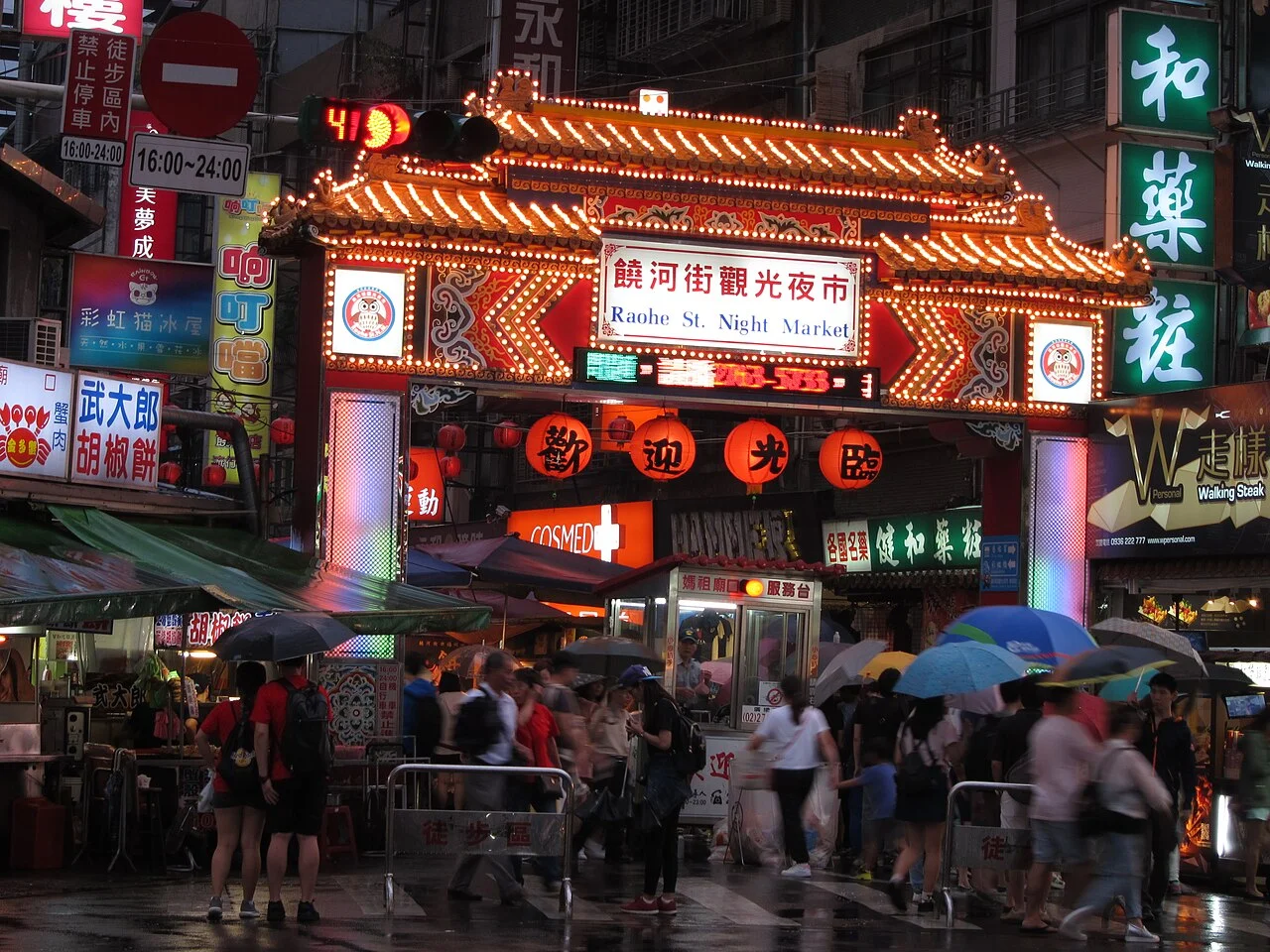

Food carried while walking and a seated meal provide different levels of comfort. Take care with hot items in a crowd and avoid blocking passage for a long photograph. If a friend wants a different tasting, agree on where to meet again. Check the real metro connection around Songshan and current final services for the return; a night photograph does not mean transport runs indefinitely. If the evening is centred on food, keep the earlier part of the day shorter. A distant hot-spring outing, a very large lunch and a late market can make tiredness more memorable than flavour. Leaving another evening open may be a better choice than packing every experience into the same day.
Drinks, accommodation and a two-day food outline
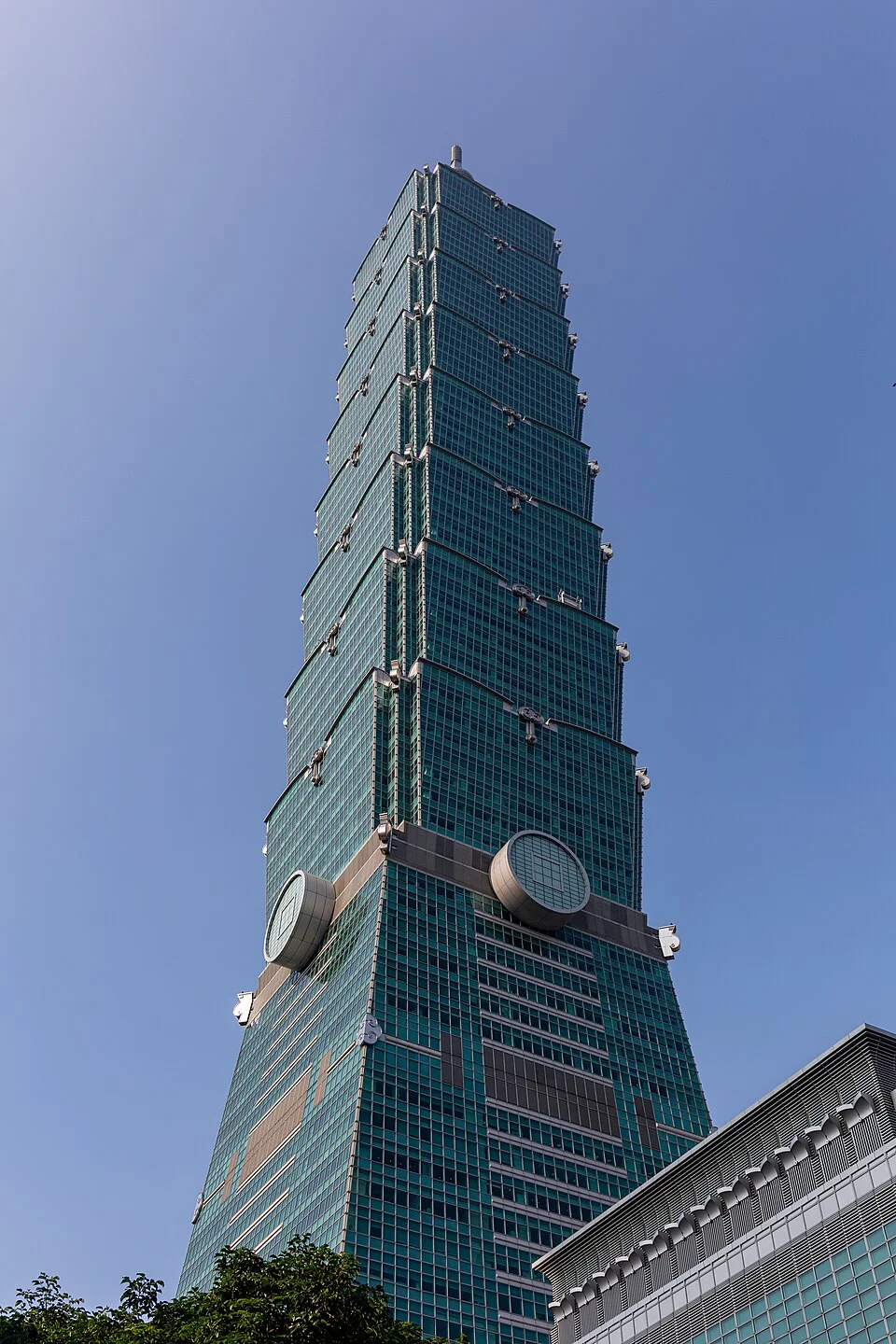
For bubble tea, understand the tea, milk ingredients and added components; some businesses may allow sweetness and ice selections. Express your preference through the actual menu instead of expecting one standard drink to suit everyone. The Taipei 101 exterior photograph provides city context for a Xinyi walk, rather than advertising a drink or identifying a boba shop. A noodle lunch, unhurried Dihua break and lighter evening on day one, then shared xiaolongbao, a short modern-city walk and Raohe tasting on day two provide an outline. It is not a fixed schedule assuming every business opens at identical times. Remove a stop when availability, appetite or weather suggest a simpler day.

Compare the Taipei Main Station area when connections matter, Datong for interest in older trading neighbourhoods and Xinyi for a modern-city emphasis. Examine the actual hotel's station walk and nearby dining independently; a neighbourhood name does not give a door-to-door distance. Check official duration conditions for Taipei Metro tickets and passes, without assuming airport connections are automatically included. Knowing the way back and leaving some meals unplanned can make food discovery easier. The Stork suggests a little curiosity and a little space around the city's table. You do not have to finish today's flavour quickly simply to make room for the next bowl.