

Tallinn does not require you to memorise every medieval tower before enjoying it. Walking through a stone passage, looking for the sea beyond red roofs and changing pace among Kadriorg's trees the next day make a rewarding beginning. The Tatilmerkezi Stork suggests a visit with two layers: Vanalinn and Toompea first, then a park and one carefully chosen museum. Give the slopes, side streets and seasonal light enough attention instead of treating the compact centre as something to finish quickly.
This two-day plan is a suggestion to adapt to your own pace. If a tower queue takes your morning, there is no obligation to add every neighbourhood that afternoon. Visitors arriving for a day from the harbour should treat the second day as an optional extension, with their ship's return time setting the main boundary. Early winter darkness, long summer evenings and stones that become slippery in rain can change the same walk considerably. Choose footwear for walking comfortably, not merely for appearing in photographs.
Raekoja plats: from the square into the Old Town
Town Hall Square, or Raekoja plats, is a natural starting point for orientation. Look beyond a single façade photograph and notice how the town hall tower relates to the surrounding streets. Before taking a table, check the menu and service arrangements. A very central location does not mean every business offers the same prices or dining experience. You can also begin here to understand the area, then leave your meal for another street. The square works well as a reference point to return to rather than the whole itinerary.


Mark a short connected loop through Vanalinn on your map. Choose two linked walking axes around Viru, Vene or Pikk rather than trying to complete all of them immediately. Town hall interiors, churches, towers and museums have separate programmes and rules. Respect worship spaces and do not confuse a historic appearance with unrestricted visitor access. If one interior matters especially to your trip, check the institution's current opening days and build the surrounding walk around it. This is more reliable than hoping every doorway on the route will be open.
Toompea and Kohtuotsa: a view across the roofs
Ascending from the lower town towards Toompea changes the scale of Tallinn. Kohtuotsa viewing platform brings historic roofs and the more distant sea and harbour direction into a wider picture. Visit Tallinn places it on the northern side of Toompea. Enjoy the view without occupying one photographic position for an unnecessarily long time. Leave space for others and look for different details; the panorama is more interesting when approached as a city to understand rather than one image to reproduce exactly.
Choose slopes and stairs to suit your group. Nearby streets on a map may still involve a height difference that makes the same route unsuitable for some visitors. If using a pushchair or mobility support, do not plan the whole Toompea walk from the accessibility label of a single platform. Ask the tourism information service about a suitable current approach. The Stork suggests choosing one roof colour, a tower and the line of the sea in the distance: moving your attention between those three helps make the panorama legible.
St. Catherine's Passage: a closer look at craft
Katariina käik, also called St. Catherine's Passage, connects Vene Street and Müürivahe and gives the Old Town walk a smaller scale. Visit Tallinn presents its historic stone walls alongside artisan workshops. Viewing the passage outside is different from entering an artist's working space. Even when a door is open, first ask whether visitors are welcome, and do not photograph someone's working table or creations without permission. A neighbourhood's picturesque quality should not turn ordinary work into an assumed visitor performance.
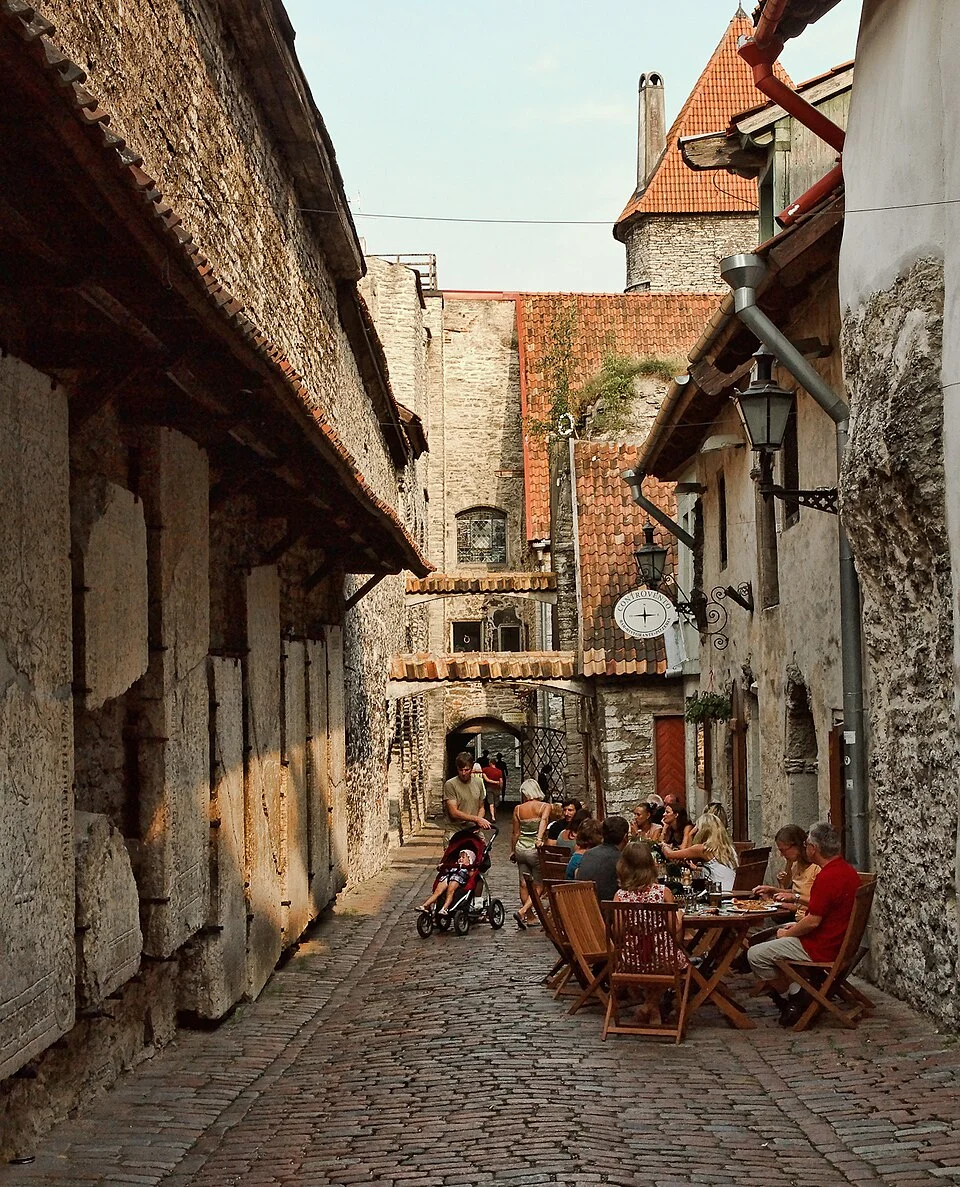

If buying a souvenir here, asking who made it and which materials were used can make the purchase more meaningful than choosing an anonymous object. Take a small detail walk of your own, looking at stone surfaces, doorways and the overhead links between buildings. A large group stopping in the middle of a narrow passage can obstruct everyday movement, so keep conversations and photographs to the side. Do not expect a fully sheltered shopping arcade. Balance this short section with an indoor visit or café pause according to the day's weather.
Kadriorg: give the trees time after the palace
Moving to Kadriorg on the second day reveals another Tallinn after the stone surfaces of the Old Town. Do not count a park walk, the palace exterior and a museum exhibition as a single identical visit. Visit Tallinn describes Kadriorg through both green spaces and cultural institutions. Decide which part of the park matters to you before organising a walk between the Swan Pond, palace garden and nearby streets. Choosing one museum carefully can be more satisfying than collecting several rushed admissions during the same afternoon.


The palace's historic exterior does not mean you have seen its collection. Consult current exhibition and ticket information for an interior visit. The park changes with the season, so a summer photograph's flower display should not be expected on every autumn day. A pause beneath the trees, a warm drink and a short look at nearby residential streets can complete the outing. If conditions worsen, shorten the outdoor section and lengthen your planned museum visit. Supervise children beside water and respect formal planted areas as part of the visit.
Estonian food and choosing an accommodation area
Dark rye bread makes a useful introduction to the local table. Official tourism descriptions also feature potatoes, fish or meat and various dairy ingredients in traditional meals. This does not mean you already know every ingredient in a dish. Ask before ordering when fish, milk, eggs or gluten affect your dietary needs. Plan one breakfast or evening meal at a relaxed pace: sitting down with your companions can help you notice more local detail than walking every street without interruption.


Compare the Old Town for a short walking-focused stay, central transport connections for late arrivals, and the Kadriorg area for a park-led visit. These are neighbourhood considerations, not guarantees of hotel quality. Think separately about rolling luggage over stone streets, a room facing a busy lane, night-time noise and an early departure. If arriving through the port, verify the terminal name rather than assuming every ship uses the same door. Confirm luggage storage arrangements before booking, as leaving bags and checking into a room may happen at different times.
Airport trams: do not copy an old route number
Visit Tallinn's current arrival page, checked for this guide, lists airport trams T2 and T4. It gives Hobujaama as a central example for T2, and A. Laikmaa, Viru and Vabaduse väljak for T4. Rather than relying on a line number in an older article, consult transport.tallinn.ee on your flight date for direction, departure times and possible changes. Identifying which stop works for your accommodation is more useful than simply knowing that a tram goes towards the centre. Keep the final walk with bags in that calculation.
For a late landing, allow separately for baggage collection, the connection to the stop and the last available vehicle. If buying a contactless ticket or using a card, read the official purchase and validation instructions. This guide does not reproduce a fixed fare as though it were valid indefinitely. Once in the city, walking need not solve every journey. Leave a transport option for the Kadriorg return, especially if the day has already included a long museum visit. For your flight home, establish the terminal and airport arrival time first, then fit the final city stop around them.
Is one day enough for Tallinn?
One day can cover selected Old Town streets and a viewpoint. Two full city days provide a better starting point for Kadriorg and unhurried interior visits.
Are all Old Town towers open continuously?
No. Towers and museums have separate programmes, and some visits can be seasonal. Check current institutional information rather than assuming that a visible historic building is automatically open inside.