

Deciding how early to reach an airport involves more than choosing when to leave the hotel. An airline's recommended arrival time, the deadline for check-in or bag delivery and the time needed to reach the gate are different kinds of information. The Tatilmerkezi Stork separates those three lines first, then adds the journey from the accommodation. Departure-day planning can then follow the tasks of your actual flight rather than another traveller's unusually quick experience last week.
The Turkish Airlines check-in source reviewed on 4 October 2026 recommends reaching the airport two hours before domestic departures and three hours before international departures. That is guidance published by that carrier, not a universal interval for every company or terminal. Consider any more specific instruction for your own flight. Completing online check-in does not establish that luggage handover, document checks or security queues disappear. The source also lists differing counter closures at particular airports, illustrating why the details of the itinerary matter.
Set the terminal target before calculating hotel departure
Write down the scheduled departure in local time. Establish the terminal-arrival target from information applicable to the flight, then work backwards through the transport arrangement. As a calculation example only, a noon international departure using a three-hour recommendation gives a terminal target of 09:00. That is not the hotel departure time. The actual transfer duration, waiting and the section between its stop and the terminal entrance must be included separately. This calculation does not assume a one-hour journey, or any other fixed transfer duration, for a particular city.
Do not treat a map's moving time as the entire arrival process. Waiting for transport, obtaining a ticket, changing services and carrying luggage along the final section all belong in the plan. A vehicle departing at a certain time is not the same as you reaching the terminal then. For an early flight, organising documents, the entry address and packed baggage the previous evening reduces the number of decisions needed in the morning. Learn the accommodation's early-checkout arrangement rather than assuming reception operates identically at every hour.
Salzburg: organise the final night around morning transport
After a sightseeing day around Salzburg's Mirabell, an early departure does not require a distant visit on the final evening. Read the accommodation location alongside the chosen transport connection. The city's official arrival information is a starting source; confirm the actual service for your travel day through its operator. The Mirabell photograph supplies city context and cannot establish a journey time to the terminal. If you will reach the airport from another city, a calculation beginning at central Salzburg would not describe your itinerary.


A local Bosna pause can belong to the last evening, leaving the next morning's food decision separate. A business determines its own menu and serving hours; the product in a photograph is not promised at every location. Store the transport ticket and flight record under clear, accessible headings. Purchases made late in the visit may also change the packed bag. If you need to check weight or dimensions, the final evening is a more useful moment than the first attempt while waiting with the bag at the terminal.
Place the coffee pause after establishing the remaining tasks
The Salzburg coffee image does not show an airport establishment. It provides a city example for distinguishing time available to sit down from tasks still pending. Arriving early at the terminal does not mean everything is complete and a lengthy café stop can begin immediately. Establish luggage handover, required checks and the gate's location first. Review the available time alongside the flight display, then decide whether a short meal or coffee pause fits. Confusing boarding time with departure time can lead to spending too much of the remaining interval at a table.
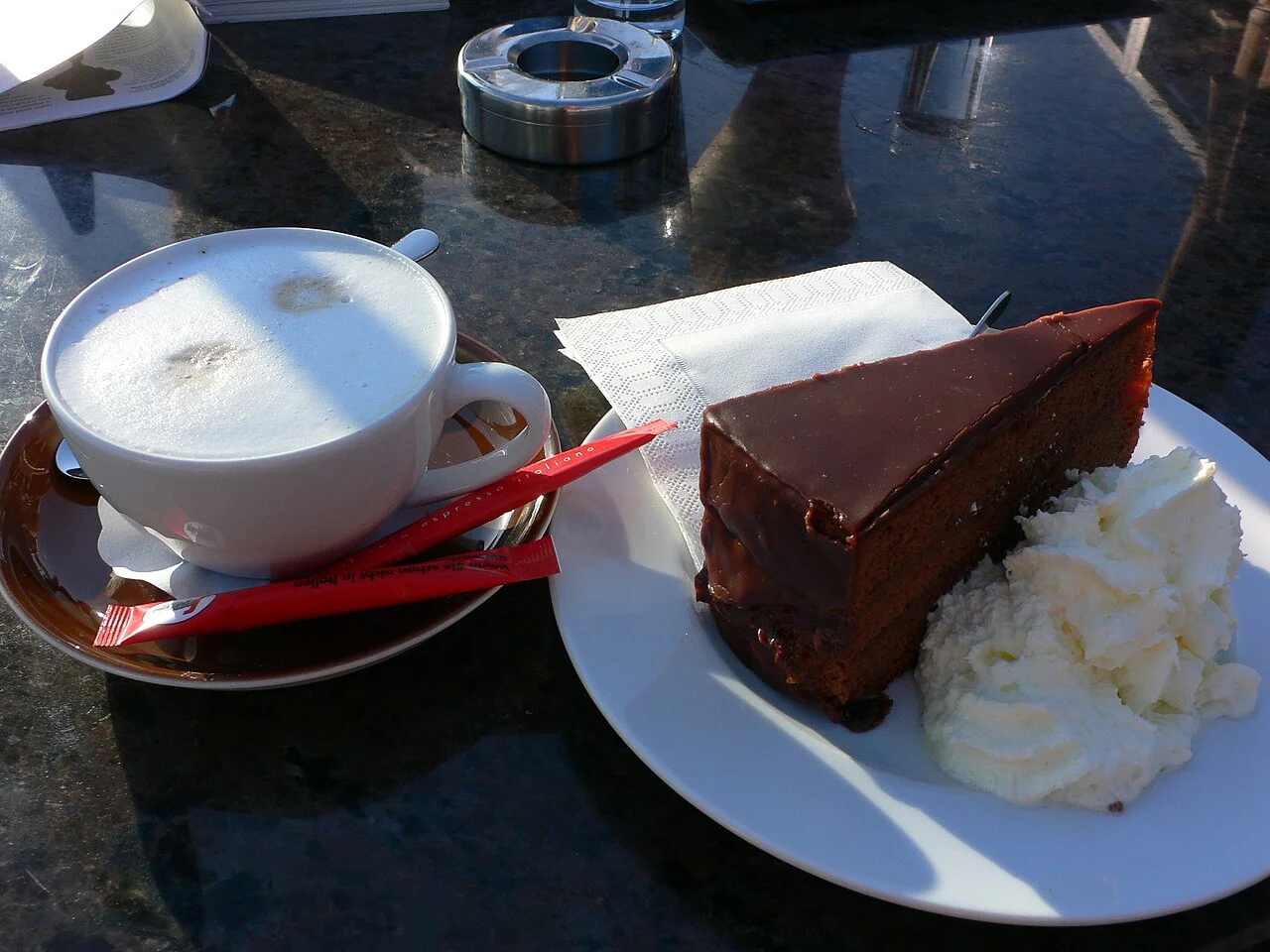

Consider the arrangements of companions, too. One person's task being finished does not mean the entire group is ready. An understandable meeting point and accessible individual documents can reduce repeated searches for the same information. If particular assistance is needed, contact the airline's relevant request channel beforehand. This guide offers no medical advice, queue-free service or identical assistance entitlement for all travellers. The actual arrangement attached to the reservation matters more than a general packing or airport checklist.
Munich: separate a final market outing from the terminal target
Consider a departure-day Viktualienmarkt visit only after establishing the terminal target. The market, collecting luggage from accommodation and reaching the airport are three separate sections. Treating them as one brief walk makes the schedule vulnerable to even a modest change in transport. Leaving the market and local meal for the previous day may be simpler. Eating Breze or Obatzda in the city and deciding what to carry home are different choices; purchases can alter the space needed in the bag.


In the Munich example, confirm the airport and terminal from the ticket. A hotel close to central sightseeing is not automatically close to the terminal. Choose the final accommodation through the budget, city programme and actual transfer connection together. Avoid copying a friend's previous journey time as your own plan. Examine the service operating on the selected date and at the relevant hour, review announced changes and add flexibility appropriate to your arrangement. This guide guarantees neither uninterrupted transport nor a particular waiting time inside a terminal.
Make separate decisions about Bavarian breakfast and departure morning
The Weißwurst photograph is a Bavarian food scene, not a cabin or airport service. If tasting that meal interests you, reserving another morning for it can simplify the final day's time calculation. When purchasing the flight, compare its departure with the last local meal you would like to enjoy. A very early flight may suit a simpler morning prepared the previous evening. A later one adds different decisions, such as where luggage can remain after checkout; that arrangement should not be assumed without confirmation.


Finish with three lines: terminal-arrival target, any check-in or baggage deadline, and the plan for reaching the gate. Continue observing airline notices and terminal flight displays. If circumstances change, review how the three lines fit together rather than adjusting only the hotel departure. The Stork's aim is neither to arrive earlier than everybody nor later than everybody. It is to make the necessary sequence clear, so reaching the airport is not mistaken for being ready to board.