
Vilnius rewards a visit that leaves space between its landmarks. Historic towers and church fronts provide one view of the Lithuanian capital; the smaller streets beyond the Vilnelė River and the greenery of Bernardine Garden provide another. The Tatilmerkezi Stork suggests building a rhythm before building a checklist: a main stop, a side street and a pause you actually take. Two full city days make a useful starting point, allowing hill climbs and meals to sit comfortably beside the Old Town walk.
The route here is an editorial suggestion, not a transport timetable or a promise that everyone will spend the same time at each stop. Give the first day mainly to the cathedral area, Old Town and Gediminas Hill. Put St. Anne, the garden and Užupis together on the second. Leave flexibility for rain, an early autumn sunset or a long lunch. If your companions have different interests, an agreed meeting point is more helpful than insisting that the whole group follows every minute of one itinerary.
Cathedral and Old Town: the first walking spine
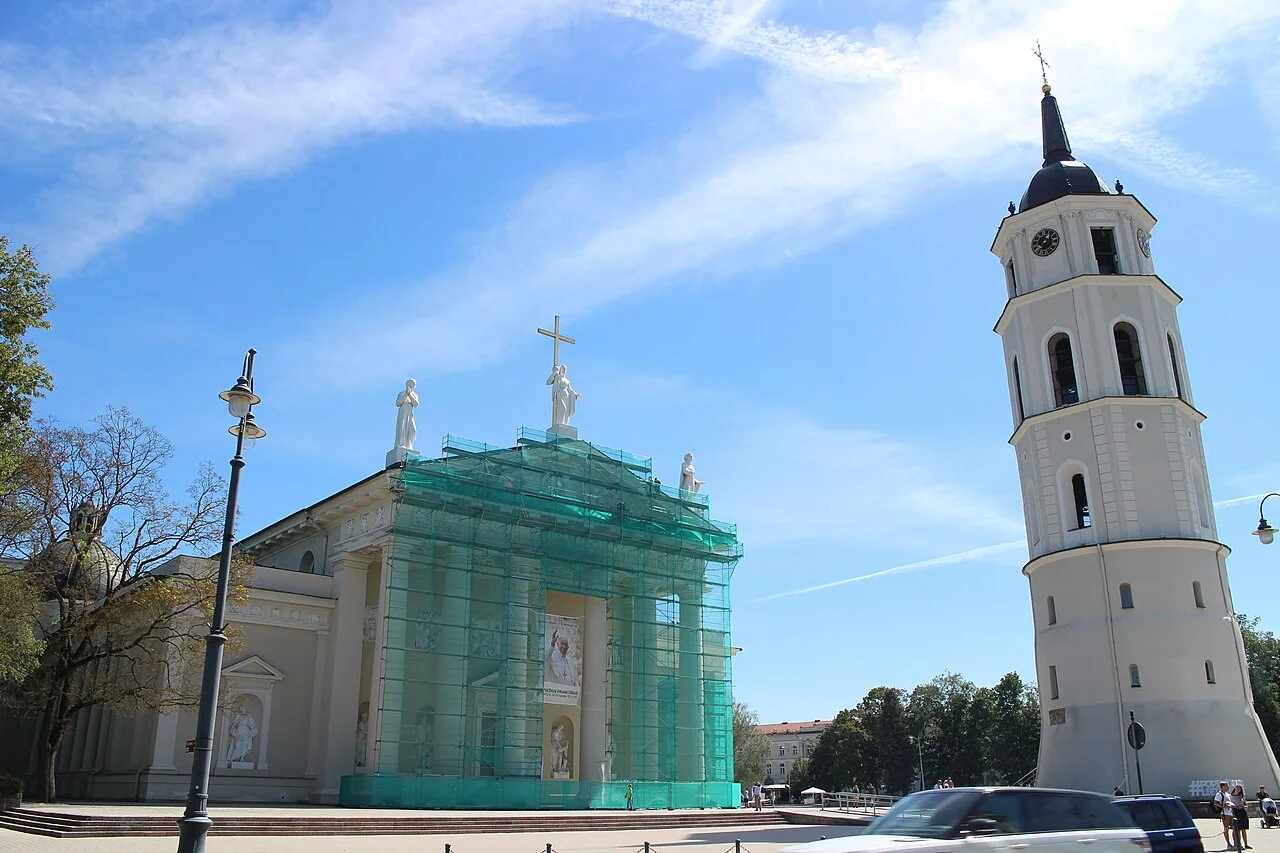
Cathedral Square is a useful place to get your bearings. Distinguish the cathedral from its separate bell tower: viewing the buildings outside, entering a worship space and choosing a tower visit or special tour are different decisions. An open doorway does not mean unrestricted sightseeing. Follow worship arrangements and the institution's photography rules when you enter. At this stage, it can be more rewarding to understand the relationship between the square, hills and streets than to begin with a packed museum programme.

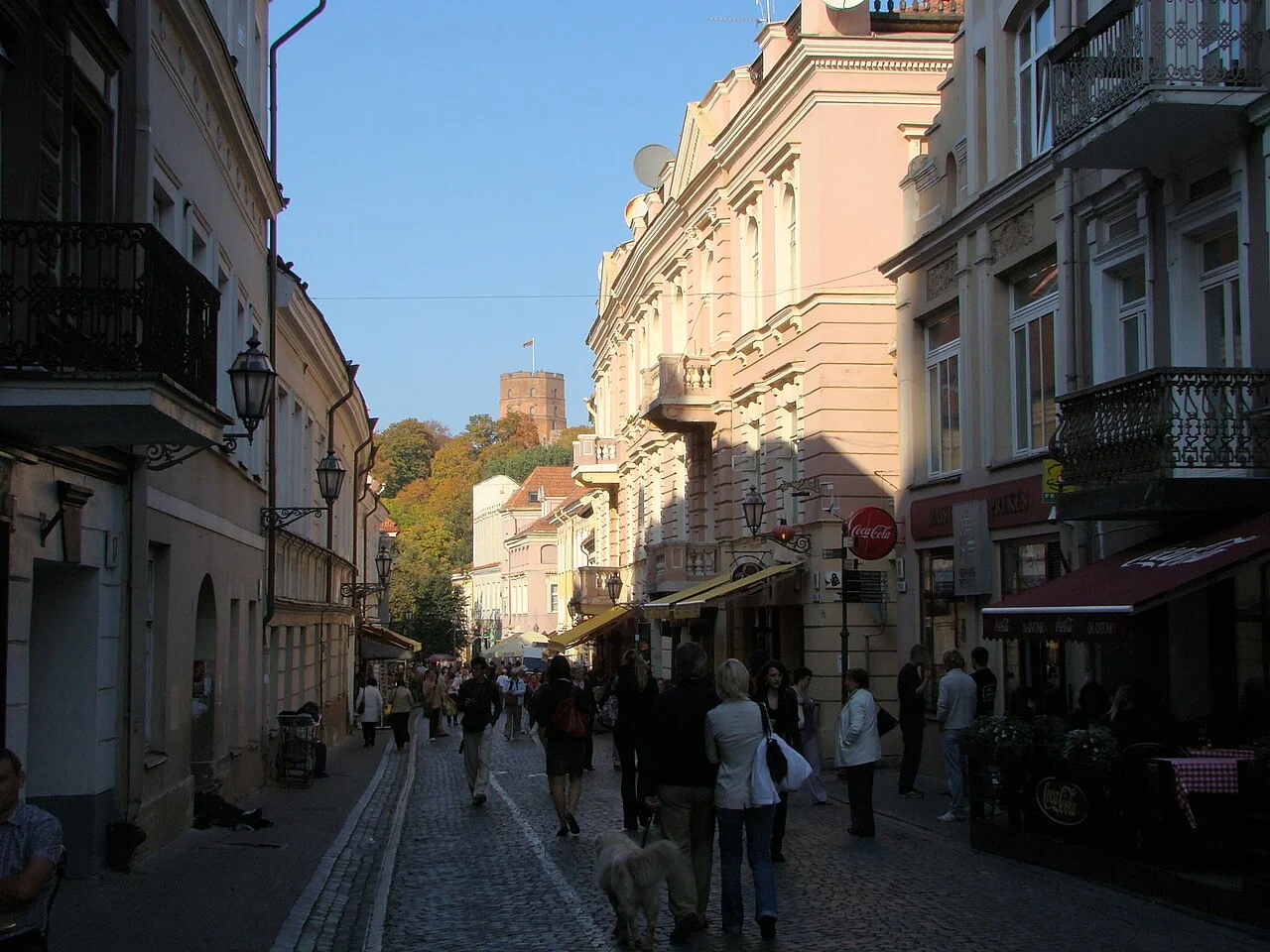
Continue along Pilies Street and allow room for more than the main street's shop windows. Choose a side street, a façade detail and, where permitted, an open courtyard. Residential entrances and university or institutional gates are not automatically visitor areas. Gediminas Avenue opens another urban axis from Cathedral Square. Use a short part of it for orientation if that interests you, rather than feeling obliged to follow every central route to its end in the same walk. Comparing nearby streets is enough to notice how the city changes.
Gediminas: separate the hill from the tower visit
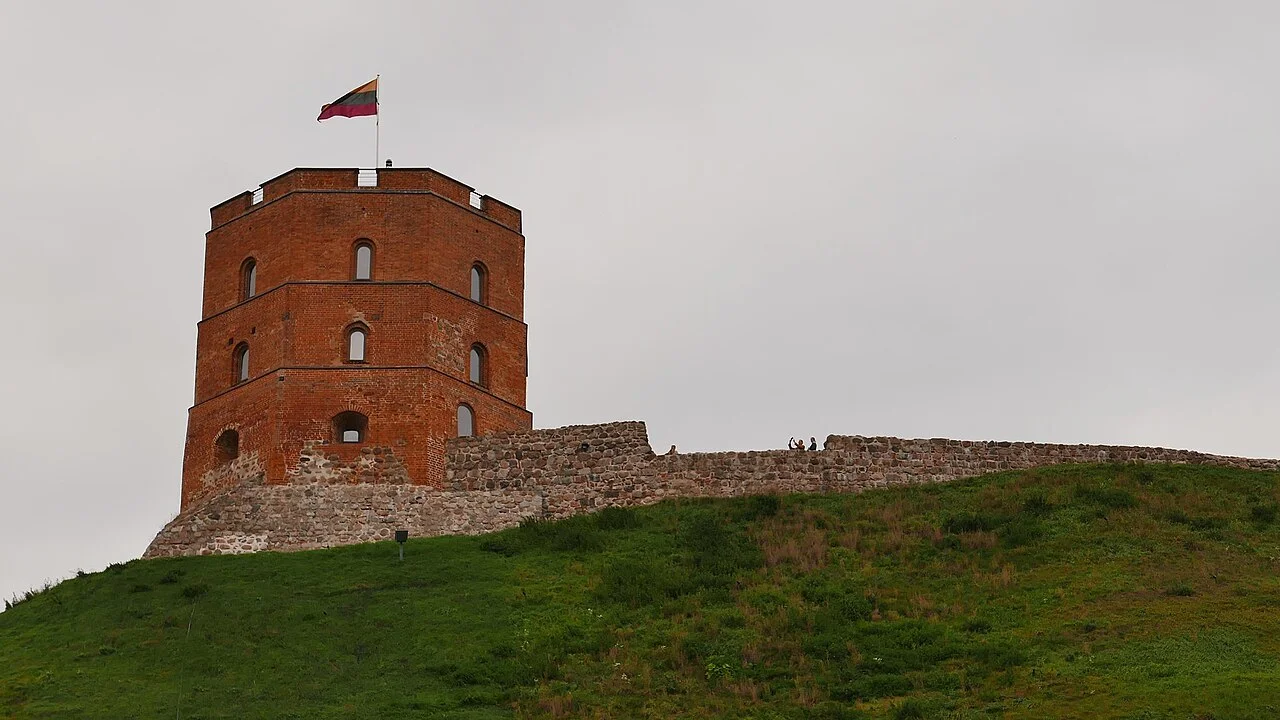
Gediminas Castle Tower links the panorama of Vilnius with the city's historical story. Reaching the hill and visiting the tower exhibition or upper viewpoint are distinct activities. Check the National Museum of Lithuania's current visitor information for access, tickets and opening arrangements. This guide does not fix a price or claim that the timetable remains identical throughout the year. Use the information for your actual travel day. Exposed conditions on the hill can feel different from a sheltered street below, so an extra layer is a sensible comfort measure.
Accessibility needs particular care. The museum states that the tower exhibition is not accessible to visitors with reduced mobility. Access to the hill and the lift's operating status require separate consideration; a mention of a lift in an older article is not a guarantee that it will be running. If travelling with a pushchair or mobility support, establish the suitable approach with the institution in advance. The Stork's suggestion is to choose a route your group can realistically use, rather than turning a viewpoint into a test of endurance.
St. Anne: make time for red-brick details
St. Anne and the Bernardine complex provide another chapter of the city's architecture. An overall view of a façade and a closer look at its brickwork, lines and entrance reveal different things. Approach the worship buildings respectfully, rather than treating them simply as backgrounds for photographs. Go Vilnius publishes separate visiting information for St. Anne and the Bernardine Parish. Do not apply one building's timetable to the entire complex. If entering is especially important to your trip, organise that part of the day around current arrangements.
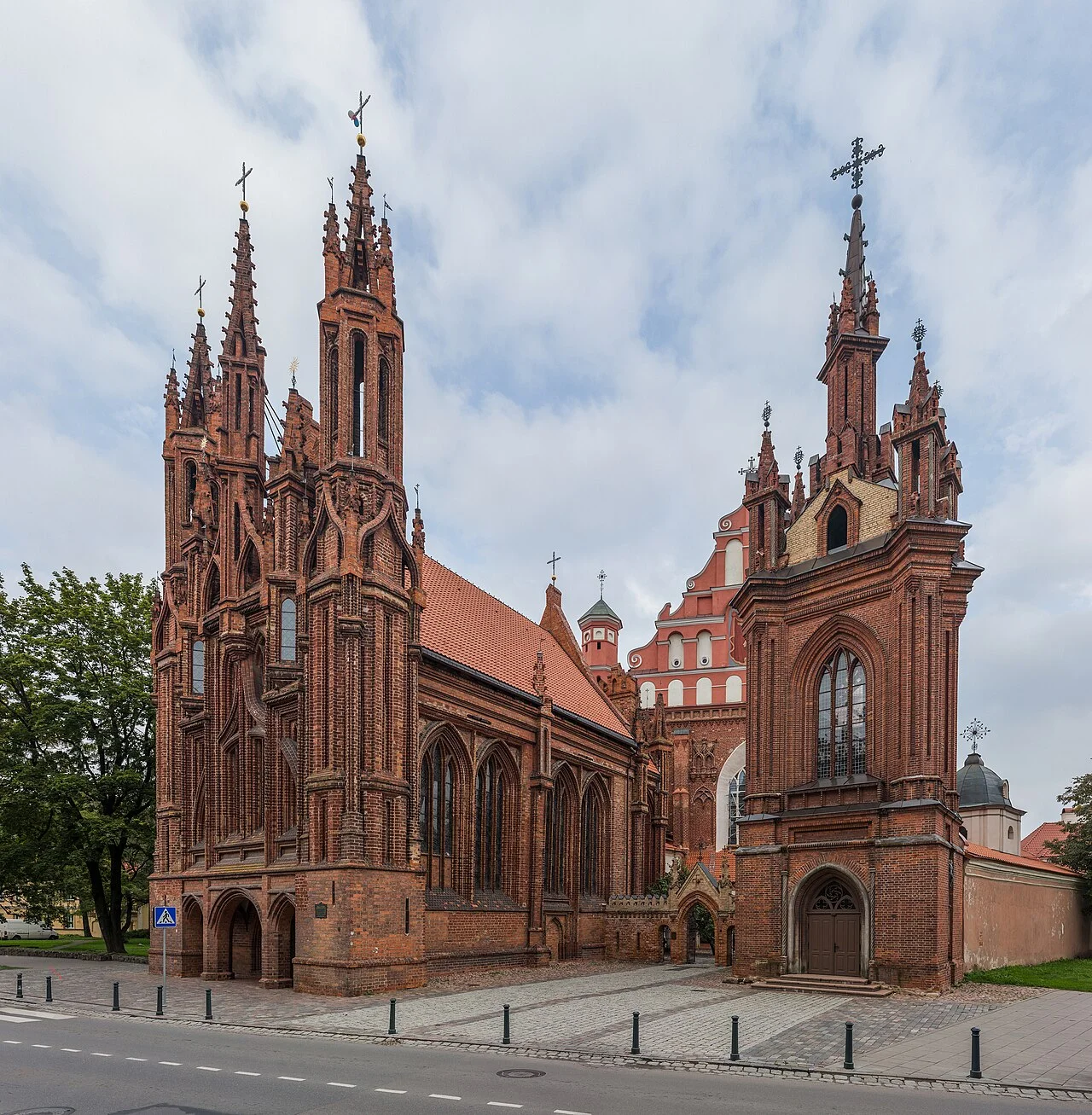

Combining this area with Bernardine Garden can provide better balance than immediately rushing to another interior. Look at the church front, then explore the relationship between the garden and river. Family members need not share the same enthusiasm for architectural details: divide a short observation walk and a longer park pause in a way that suits everyone. Rain may shift the balance towards a planned indoor visit. Stand aside rather than blocking entrances or crossing routes when photographing the buildings; these are also spaces people use in everyday life.
Bernardine Garden: a pause beside the Vilnelė
Bernardine Garden sits between Gediminas Hill, the Vilnelė River and the Bernardine complex, making it a natural breathing space in this route. It deserves more than being used as a shortcut. Explore its different corners, shaded stretches and paths near the water. The official description highlights botanical features and garden design, but do not expect every plant or outdoor activity to look identical in every season. Read the season from your travel date rather than from a sunny photograph taken in a different year.
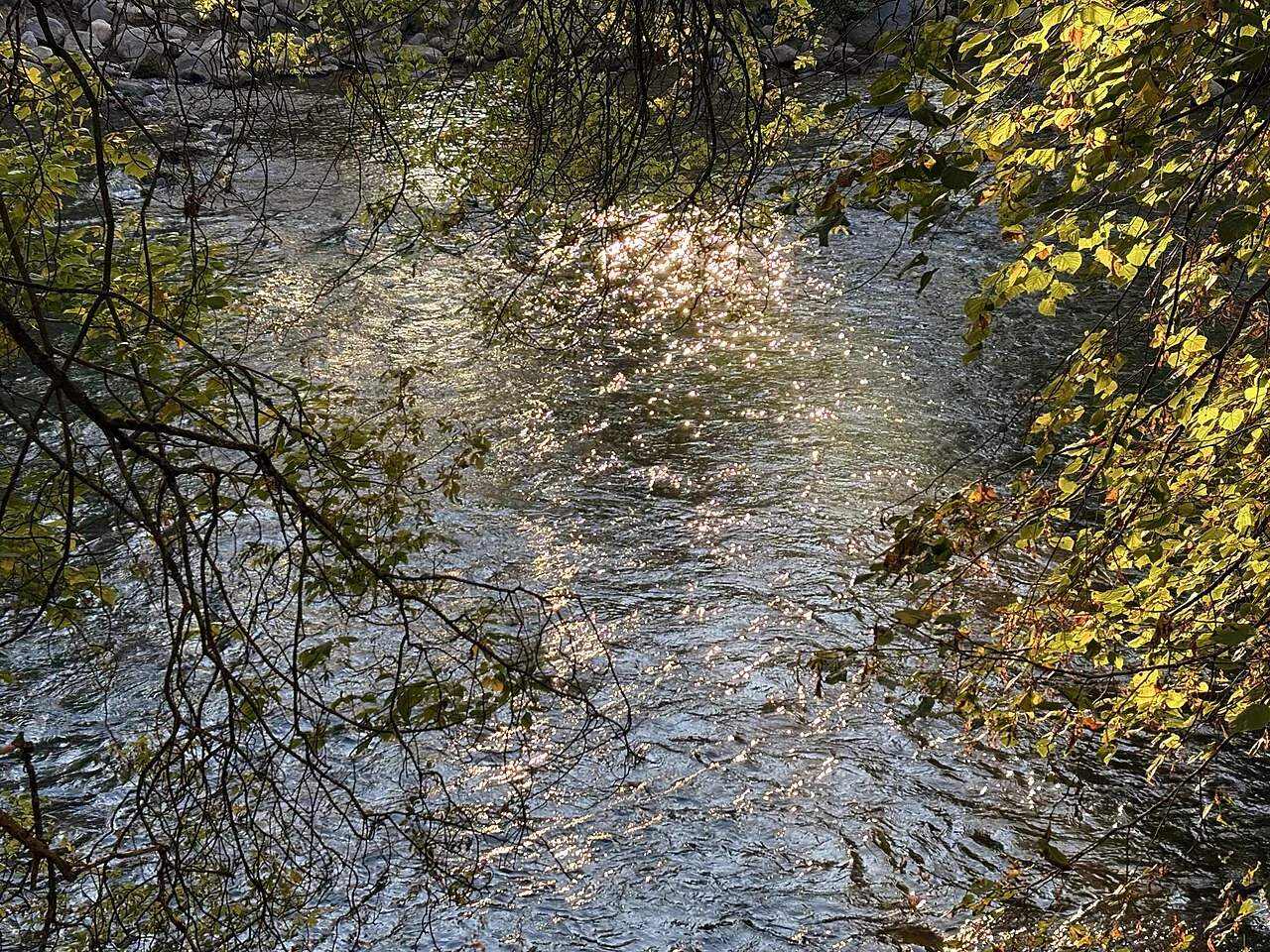

If bringing food or drinks, carry waste to a suitable bin. Continue supervising children near the river; a central location does not make every surface equally easy to navigate. Sitting on a bench is not a wasted part of sightseeing. It allows you to recall the buildings you have seen, decide where to walk next and check how much energy remains. On a cold or wet day, you may prefer to extend the pause in a nearby café. That adjustment can improve the afternoon more than another hurried stop.
Užupis: explore an arts neighbourhood as a living place
Across the Vilnelė, Užupis changes the scale of the walk. Go Vilnius describes the role of artists, creative communities and local businesses in its character. The neighbourhood's playful independence story should not be presented as an international border. After crossing the bridge, allow time for smaller streets and a café rather than collecting only symbolic photographs. Ask about access to any open studio or exhibition: an arts district does not mean every creative space is free to enter or permanently open to visitors.
Seeing artworks is also different from having permission to reproduce their images commercially. Personal sharing and publication rights are separate questions; respect creators' conditions. Do not enter residential courtyards as though they were designated sights. Everyday life is not hidden behind the neighbourhood's scenery: it forms part of the experience you are observing. A quieter walk can make it easier to notice the surroundings while talking with your companions. On the return, use permitted public riverside paths, without assuming that every passage beside the water is public.
Food, accommodation and the airport connection
For a local food introduction, consider šaltibarščiai, the chilled pink beetroot soup. Kefir and beetroot form its base, while recipes can include other ingredients such as eggs. Ask about your dietary requirements before ordering. Do not expect an identical recipe or seasonal menu in every restaurant. Go Vilnius presents modern Lithuanian cooking alongside a range of other options. Make one meal a proper part of the day rather than finishing every bite while walking; it gives both the city and your companions more room in the itinerary.

Compare accommodation in the Old Town for walking priorities, around Gediminas Avenue for central connections, and near the station for rail arrivals or an early onward journey. These are neighbourhood considerations, not guarantees about every hotel's quality or quietness. Check room location, luggage storage and the final transport connection. A train links the airport and the city railway station, but arriving at the station does not mean arriving at your hotel door. The airport recommends checking LTG Link's current service changes. For a late flight, establish a suitable alternative rather than assuming a train will still operate.
How long should a first Vilnius visit be?
Two full city days are a useful starting point for the Old Town, a hill visit and the Užupis–garden walk. Add time for further museums or trips outside the city.
Is Gediminas equally accessible for every visitor?
No. The approach to the hill, current lift operation and tower exhibition need separate checks. Travellers requiring mobility support should consult the museum's current access information in advance.