
Latur: a short trading-city stop around Ganj Golai
The clearest starting point for a Latur city visit is the relationship between Ganj Golai’s central structure and its markets. Current Maharashtra promotion describes this centre together with the commercial streets spreading around it. The Tatilmerkezi Stork chooses one night over two calendar days: arrive early enough to settle at the room, spend a main session in the market setting and sit down for a meal, then leave the following morning after a modest final urban pause. If arrival is late, extending the same programme to two nights is more realistic. This is not a circuit completing the forts and caves of the whole Latur district within one city day. Udgir and Ausa require separate town connections, while Kharosa represents another location and duration decision. The city photographs show the central market and everyday public or educational building exteriors. Their purpose is not to turn institutions into compulsory tourist visits. Understanding the trading centre through the room location, meal and return arrangement gives this small stop a concrete role.
Latur and Latur Road are different arrival points
The state access account lists Latur, Latur Road and Harangul as different railway points. Match the stop on the actual train ticket to the full room address instead of treating these names as one station. For a bus journey, identify the real drop-off position of the booked service. The final ground connection and reception time directly affect how much of a single-night programme remains usable. A room near Ganj Golai can be considered for returning from the market and eating, while one nearer a transport terminal offers a different convenience. Equal walking distances are not assumed. Discuss late admission, baggage storage and morning departure with the accommodation. If travel consumes most of the first day, another night can prevent the market visit becoming a race against closing. An airport name or city distance in official promotion does not establish a present flight. A genuinely bookable flight must be planned together with its remaining road journey. Keep time on the final morning for the correct departure point rather than a new district excursion.
Ganj Golai: the central structure and actual market life
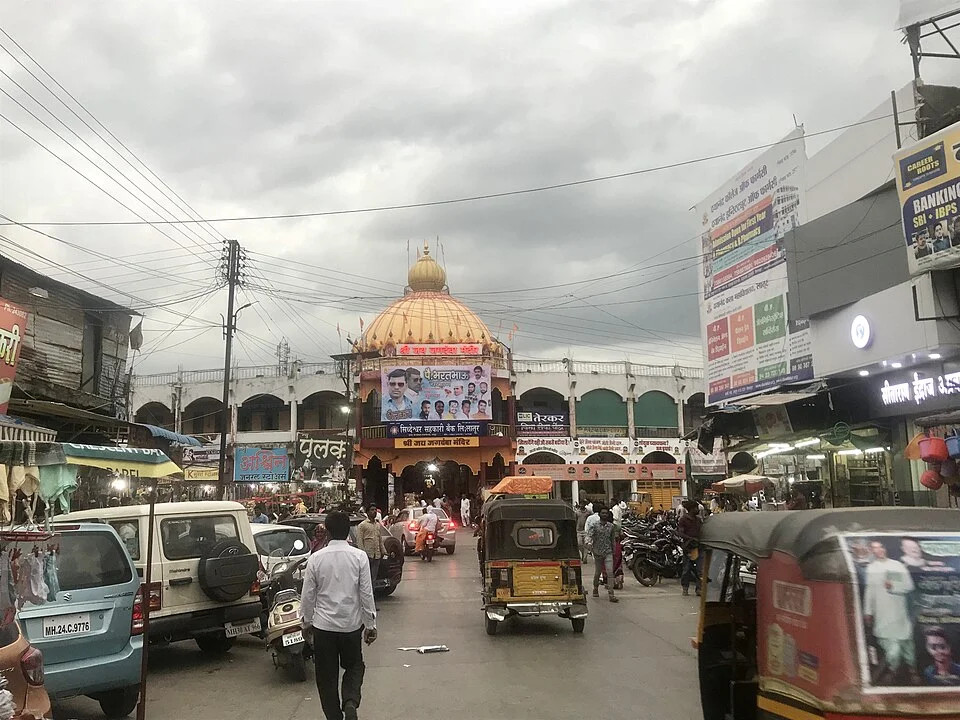
The selected photograph brings the domed central building, two-storey surroundings, vehicles and everyday market movement into one scene. It helps read Latur through a recognisable urban centre. Sources give differing counts for the connecting roads, so the guide uses no exact number; the relevant feature is that different trading streets open from the centre. The current state page associates the structure with 1917, without establishing that every surrounding building dates to the same year. Admission to a sacred interior or every upper level does not follow from the image. Organise a market walk through appropriate public streets and keep vehicle passage and entrances clear. If interested in jewellery, textiles or footwear, inspect products and terms at an establishment genuinely open on the day. A sign in an older picture is not a current recommendation. Buying something is not compulsory. A short surrounding session, seated meal and return to the room can make a clearer one-night city plan than trying to finish every street. An upload date has not been used to make an unverified capture date appear current.
The Collector Office exterior does not establish tourist admission
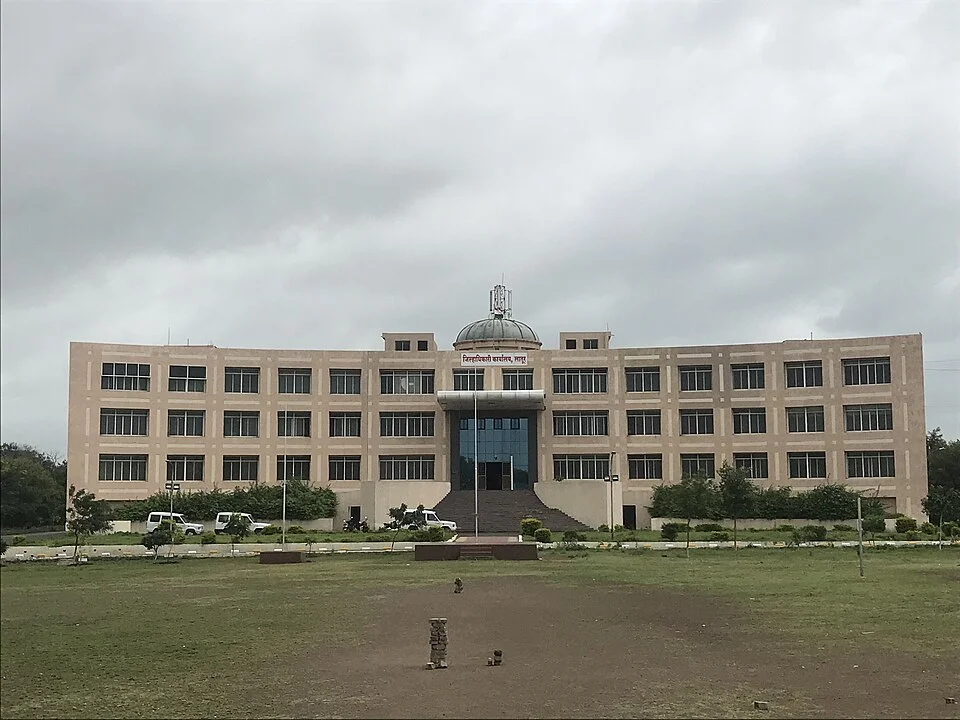
The New Collector Office photograph shows a broad facade and lawn in front. It supplies a genuine public-building scale different from the market centre, not a programme of touring office floors. Someone interested in the architecture may observe an admitted exterior without obstructing public work, after learning the current address, entrance and appropriate approach. The photographed lawn is not called a park open to all visitors. An image from 2018 does not establish present working or security arrangements. If the Ganj Golai session takes longer, this separate interest can be dropped in favour of rest at the room. Every photograph in the guide does not become a compulsory extended sightseeing stop. Trading and administrative settings have different scales, but their real connections should be assessed before presenting them as one uninterrupted pedestrian route. A reader attending to official business should also distinguish appointment time from visiting time. The picture provides no office transaction or admission schedule.

Dayanand College: a tree-lined entrance and an educational setting
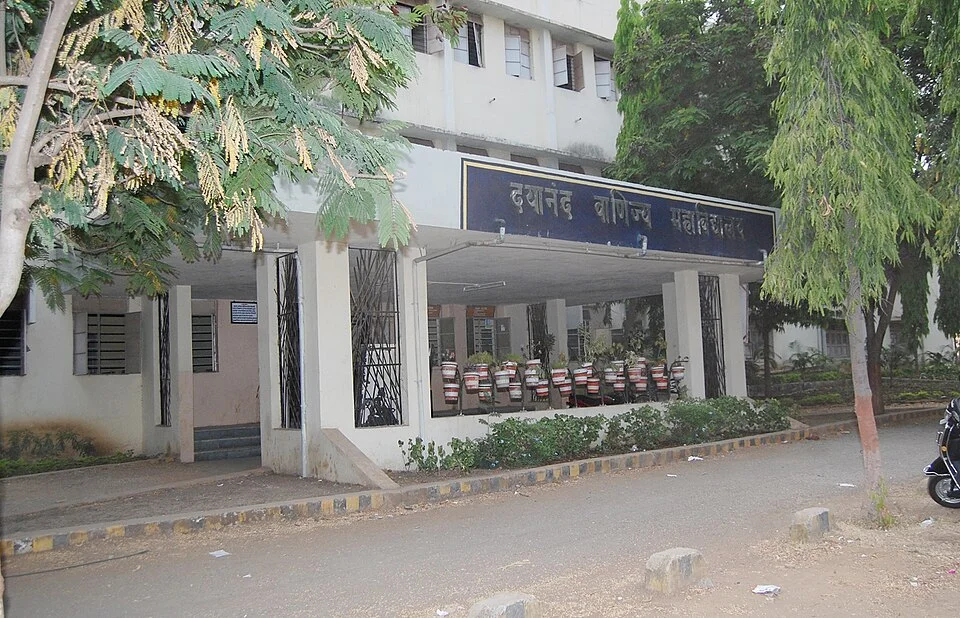
The Dayanand College of Commerce photograph shows a named entrance, adjoining structure and tree-lined exterior. Its source identifies this Latur institution rather than substituting a similarly named campus elsewhere. A personal interest in educational institutions can support a modest exterior pause after the actual current address and admission requirements are learned. The image proves no unrestricted tourist access to classrooms, a library or the whole campus. An old gate view is not described as evidence of current academic activities or a teaching schedule. This urban setting differs from the market session without being compulsory for every visitor. Remaining around the centre is coherent when the day becomes short. The photograph dates to 2010 and promises neither identical gate colour nor the same surroundings today. Anyone arranging a special visit should obtain the institution’s actual admission information directly.

Keep school and medical-college images within their limits
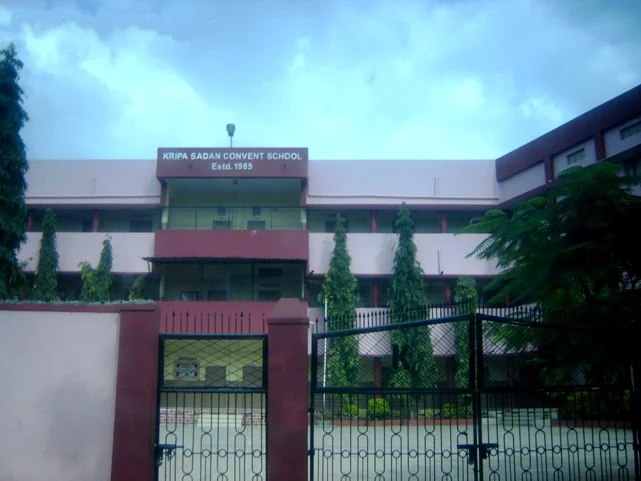
The Kripa Sadan Convent High School photograph shows a facade and outside gate. It is not a proposal to join children’s activities or enter the school. Describing an everyday educational setting through a genuine building differs from turning it into a tourist performance. The named institution’s image from 2008 remains separate from current admission arrangements.

Keep school and medical-college images within their limits — Medical-college exterior
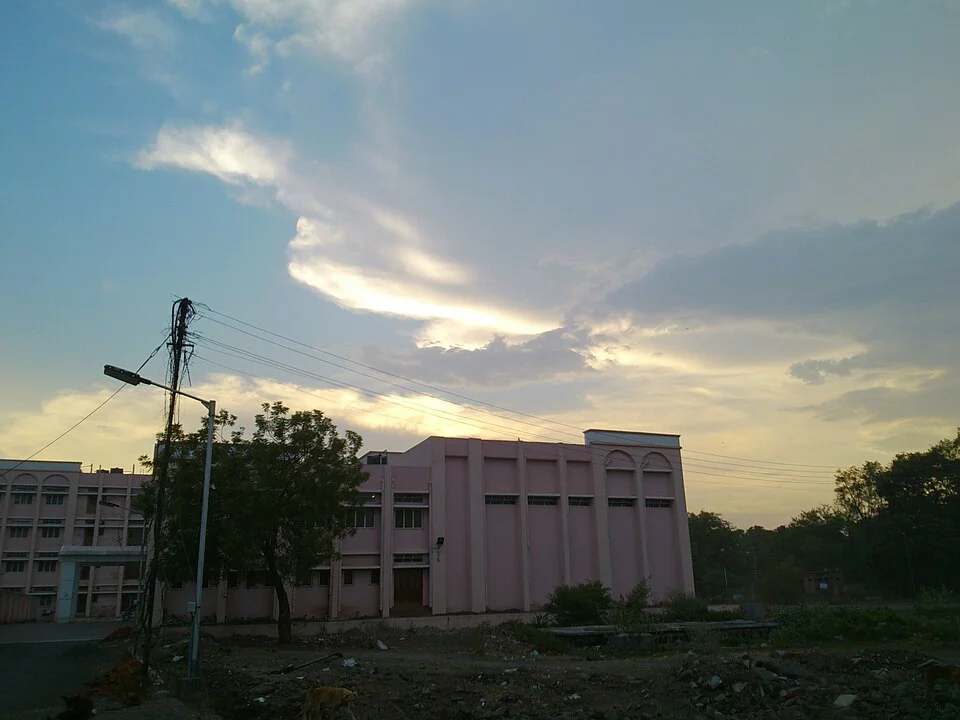
The medical-college surgery-complex and auditorium image provides another genuine external building scene. There is no hospital-interior photograph, patient image or claim about medical service. Its building description comes from the source filename, while an unverified exact capture day has not been replaced by an upload date. These two images document different institutional surroundings; they do not all have to be inserted into the itinerary. Consider only public and permitted exterior approaches during a city visit. The short Latur stay can be spent primarily at the central market and a meal. Anyone with a particular institutional-architecture interest should avoid adding another long district excursion to the same day.

Bhakri and pithla give the day a real meal break
Maharashtra’s official cuisine booklet describes bhakri as an unleavened grain-flour bread and pithla as a savoury chickpea-flour preparation. Where an actual Latur establishment serves them, the pairing supplies a concrete regional meal after the market session. A recipe exclusive to Latur and identical flour or heat in every plate are not claimed. Discuss the bread flour, pithla ingredients and available accompaniments while ordering. A personal dietary requirement cannot be resolved through the general dish name alone. Allowing time for a seated meal keeps the city visit from becoming uninterrupted shopping or movement through traffic. No plate photographed in another town has been imported; the food description relies on the genuine official account. Prices and memories of a personally tested restaurant are not invented. If arrival was not early enough, consider a second night rather than rushing the meal. Leave the final morning for baggage, check-out and the actual ticketed connection. Sources were checked on 5 October 2026. Unverified capture days remain unverified, and other photograph dates stay separate from present conditions.