
Give Rewa’s historical centre and water settings proper time
For a short stay in Rewa, choose the fort and Rani Talab as two separate city focuses. The district places Rewa Fort explicitly inside the city and Rani Talab in its southern part. They offer an introduction without compressing the entire district’s waterfalls and palaces into one day. On arrival, settle into your accommodation and clarify the meal arrangements, then give the first full morning to the historical centre. A shorter afternoon visit beside the water can change the pace. With another day or a generous interval available, check Eco Park’s daily access separately. Govindgarh, Keoti and distant waterfalls require their own journeys rather than being the next points on the same city walk. A worthwhile Rewa break depends on retaining time at the places you choose, rather than completing every name appearing on a map. Let the arrival schedule and the group’s energy decide how many additional options belong in the programme.
Establish the open visiting section at Rewa Fort
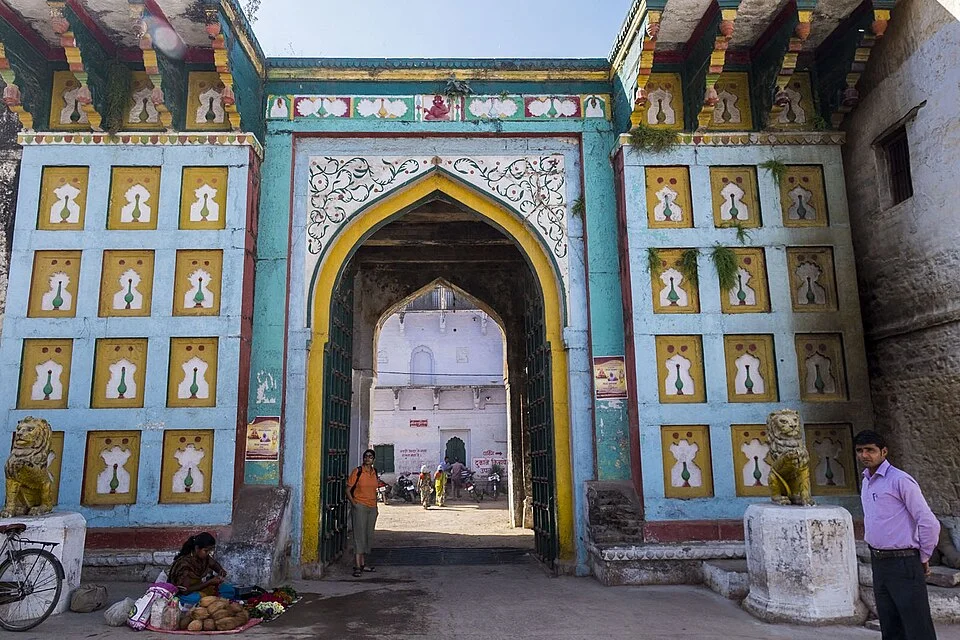
Begin the fort visit by finding the entrance and sections currently available. The district’s place record describes old structures, museum collections and spaces towards the river around Rewa Fort; this account does not establish that every room will open on your day. Ask about tickets, photography and guiding if considering a museum or private area. The cover photograph shows a colourful arched entrance and street approach recorded as Rewa Fort. The reference to a white tiger in the filename does not mean an animal appears in the frame or that a fort visitor will see one. Someone interested in the collections needs a different time allowance from someone looking only at the exterior. Establishing your own purpose first helps protect the later stops from unnecessary hurry. If a section is closed, an exterior observation can be followed by the water-setting portion of the programme instead of spending the whole morning waiting for access.
Rani Talab and the Kali temple surroundings
After the palace focus, Rani Talab offers a different part of Rewa to explore. The district introduces it as a substantial waterbody in the south of the city, with a Kali temple on its western side. If planning a visit near the water, locate the open approach and usable path first. An older institutional account describing a pond’s multiple uses does not establish swimming or boat services for visitors, and this guide promises neither. If approaching the temple, respect the worship and photography arrangements in use that day; looking at its outer surroundings and returning is also a valid form of visit. No photograph of a similarly named pond in another city has been substituted for Rani Talab. Plan from the actual location record, and avoid making this the compulsory longest walk if your group needs a rest. Keep the return journey clear before spending additional time beside the water.
Consider Eco Park as a separate water and rest option
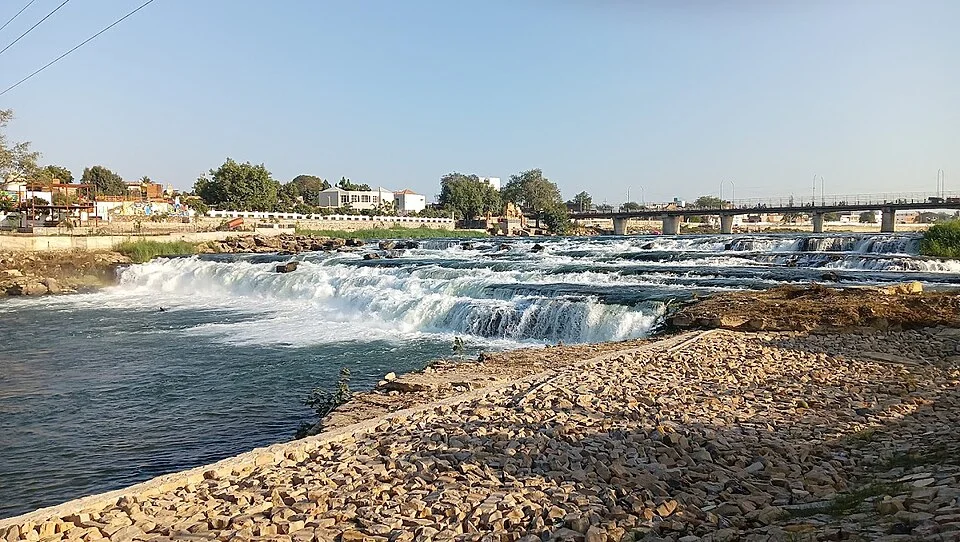
Eco Park Rewa’s own site identifies a Choti Pul Jaisthambh address and presents park, accommodation and restaurant facilities. It should not be treated as another name for Rani Talab: the operator and visiting arrangements are separate. The actual photograph records a low cascade and banks beside the water identified as Eco Park. The present flow may be different. Before visiting, establish which sections operate, the entry arrangements for someone wishing only to see the park, and suitable access for your group. Although the site lists various activities, do not assume all will function that day or be appropriate for everyone. A visitor seeking a short look need not turn the programme into participation in every attraction. If the palace and Rani Talab already fill the available day, leaving Eco Park for the next morning can produce a calmer arrangement. Treat the photograph as a place record, rather than a current service announcement.

Understand the city’s scale through the Sirmour flyover
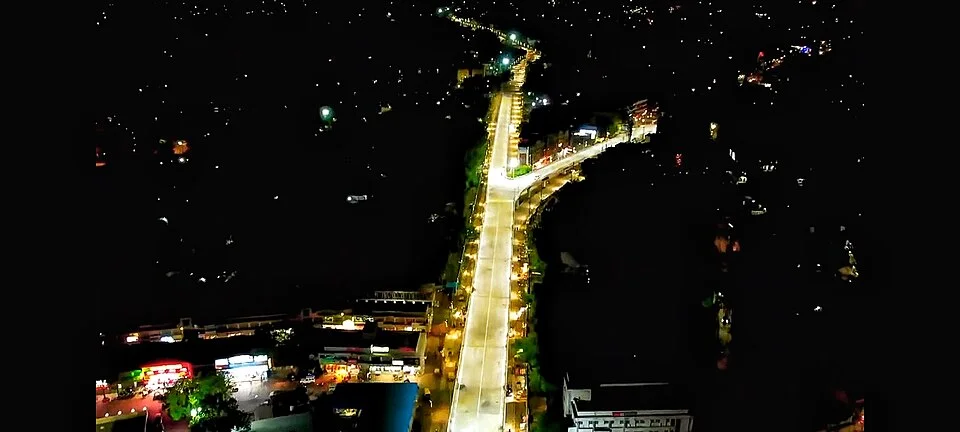
The night photograph of the Sirmour junction places Rewa’s main road arms and flyover in a single scene. It helps explain why transfers deserve attention when connecting different stops in the city. The flyover is not presented as a pedestrian viewing terrace or a tourist night-walking route. Attractive lighting in an archive photograph does not establish present illumination, traffic or walking conditions. If observing the movement of the city, choose a usable public approach and think through the journey back to your accommodation first. Three views of the same road structure were not counted as five separate city scenes: this guide uses only one photograph of the junction. Reading the city’s scale during an ordinary vehicle journey can be more useful than turning each bridge into another compulsory itinerary stop. Preserve the time reserved for the fort, pond and meal instead of expanding the route merely because a structure is visible in an image.

The Collectorate exterior and the public city
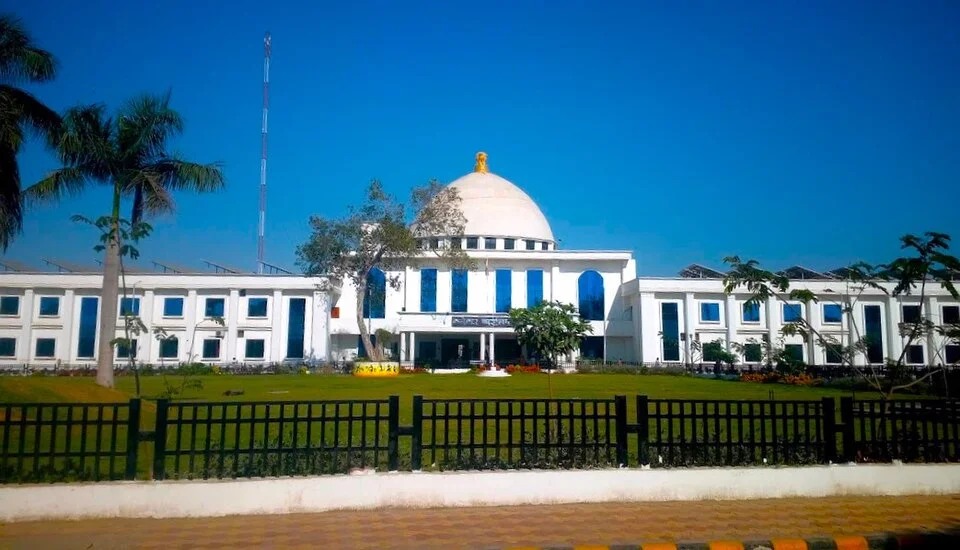
The Rewa Collectorate photograph records the outside of a domed administrative building, its green foreground and boundary. The institution is not presented as a museum or a palace whose rooms visitors can freely explore. If passing nearby, an observation from suitable public space can introduce contemporary urban functions beyond the historical fort. Without an administrative reason to enter, do not make proceeding through a gate part of the programme simply because a photograph exists. There is no need to extend your main visits solely to recreate a building image. Public institutional exteriors can explain a city even when they are not ticketed visitor attractions, but an image and an admission arrangement are different pieces of information. Treat this small observation as optional context rather than a compulsory visit replacing the fort or the water surroundings. Access and your actual onward direction should decide whether it makes sense on your day.

The university exterior as context rather than admission
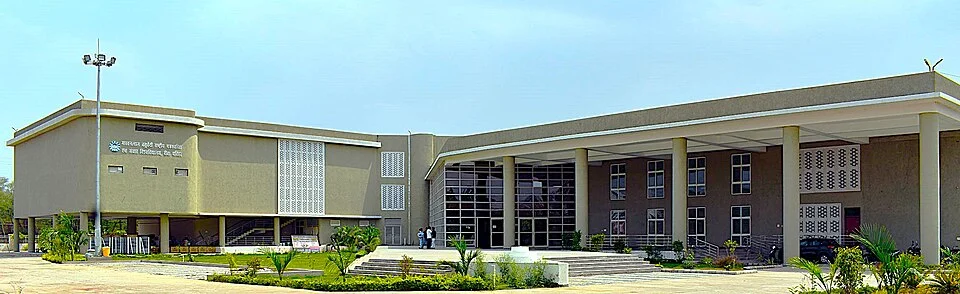
Another actual city image records the outside of the Makhanlal Chaturvedi university building in Rewa. Its long facade and green foreground recall the role of educational institutions in shaping the city. The presence of the image does not grant access to classrooms, the whole campus or a particular event. This guide does not describe the university as a public museum or promise an interior visit. If it does not naturally fit your daily route, a separate journey is unnecessary simply because the structure appears in a photograph. The numeric date in the image record conflicts with the upload chronology, so no exact capture date has been invented. Such uncertainty should not become a claim about present appearance or use. A brief look at an educational building’s exterior is meaningful only from an appropriate public approach and where it genuinely fits the main programme. Keep the primary historical and water-setting visits intact.

A meal from Vishnu Empire’s actual menu
For a concrete city meal, this guide uses the actual menu of Vishnu Empire Royal Restaurant at Railway Station Road, Dhekaha. The operator’s restaurant page links directly to the menu PDF on the same domain. Paneer Lahori appears on page eleven, with Tawa Roti and Steam Rice on page thirteen. Someone able to eat dairy and wheat can begin by asking for Paneer Lahori with roti. For a different option, establish the day’s availability and suitable accompaniment for Bagheli Chicken, which appears in the operator’s menu and restaurant description. These names are not presented as dishes invented in Rewa or a personal tasting endorsement. Explain spice preferences, portion needs and allergen requirements to the kitchen before ordering. Prices in the accessible menu have not been repeated as a current bill: confirm the final cost and availability with the business. Position the meal within an actual transfer plan instead of assuming the restaurant is beside every attraction.
Choose accommodation together with the arrival point
The district’s transport page identifies Rewa railway station, its connection with Satna and the code REWA. Compare the code, station name and travel date when searching for tickets; a destination page is not a live departure or seat-availability record. The same source names Rewa Airport. If travelling by air, confirm a service that actually operates through the carrier’s current search, because the existence of an airport name does not establish flights on your date. Within the city, weigh the final transfer from your arrival point alongside access to the fort and Rani Talab. Vishnu Empire’s own site introduces rooms and the restaurant, while room layout, late arrival and accessible arrangements require direct confirmation. A Railway Station Road address does not mean the business occupies every station entrance or the fort gate. Clarifying reception arrangements for a late arrival can make the first morning more useful and relaxed.
The main line of one day and room for a second
The fort’s open visiting area, a rest and the Rani Talab surroundings can provide a sufficient outline for the first full day. Allow a suitable meal interval using the actual operator menu and your return direction. Leaving Eco Park or brief observations of the wider city for another day helps avoid compressing every option into one afternoon. Govindgarh, the Mukundpur safari area and distant waterfalls need separate outward journeys, daily services and return arrangements; a photograph of an unvisited outlying place should not be labelled as the city centre. Institutional and operator sources were reviewed on 5 October 2026, while some institutional pages retain older update dates. The check establishes accessible source information rather than guaranteeing daily opening, transport or food service. The archive images’ capture dates must also not be read as today’s landscape. Complete the final plan with access information obtained near the actual travel date.