
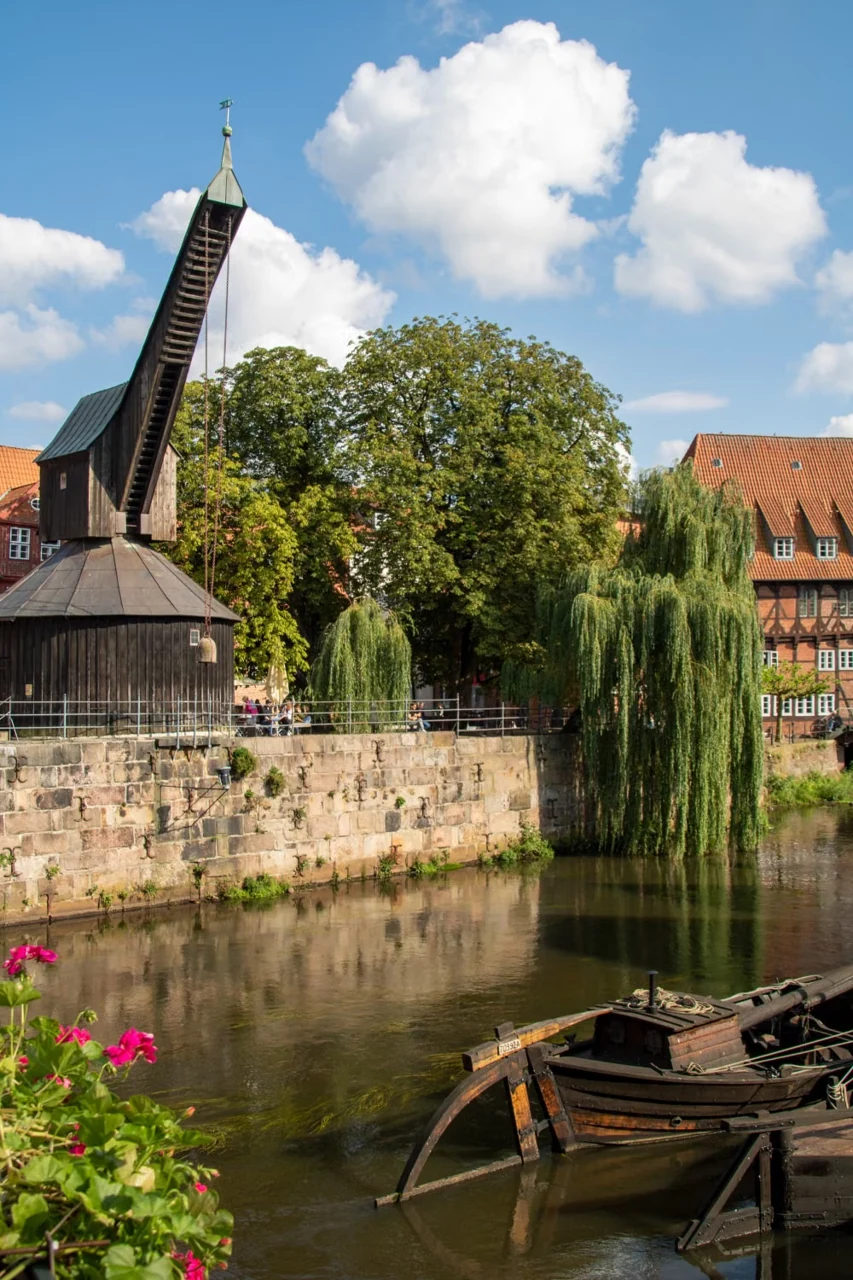
Salt can give an overnight visit to Lüneburg a clear subject, but do not leave it as a fact encountered only inside a museum. The Tatil Merkezi Stork’s route moves from the former production site through western streets, past the façades of Am Sande and towards a loading point on the Ilmenau. Follow those connections on the first day and return briefly to the water the next morning. You do not need to enter every church, museum and shop. Choose one interior as the main visit and keep the remaining time for streets and waterfront observations that connect the city’s past with its present use.
Put the museum on a day when it is open
The Deutsches Salzmuseum occupies the former Saline production site. The city tourism listing records the saltworks’ closure in 1980. That date matters because this is not a large factory continuing its original daily operation. Approach the visit as an opportunity to understand how salt was obtained and what it meant to the town. Keep one tool or stage of production in mind. When you reach the old harbour, it can become the starting point for thinking about the same material as cargo.
The museum’s visitor page currently lists Tuesday to Sunday opening, from 10:00 to 17:00; check exceptional closures for your date. A Monday arrival could therefore put the street walk first and the museum on the following day. The institution describes access as limited rather than fully step-free throughout. Parts of the lower exhibition and the Solehügel are not accessible to everyone. If you need assistance with movement, discuss the areas you can visit with the museum before arrival. That allows the chosen interior to fit your trip rather than forcing you to rebuild the entire day at the entrance.
Look for the ground-level consequences in the western streets
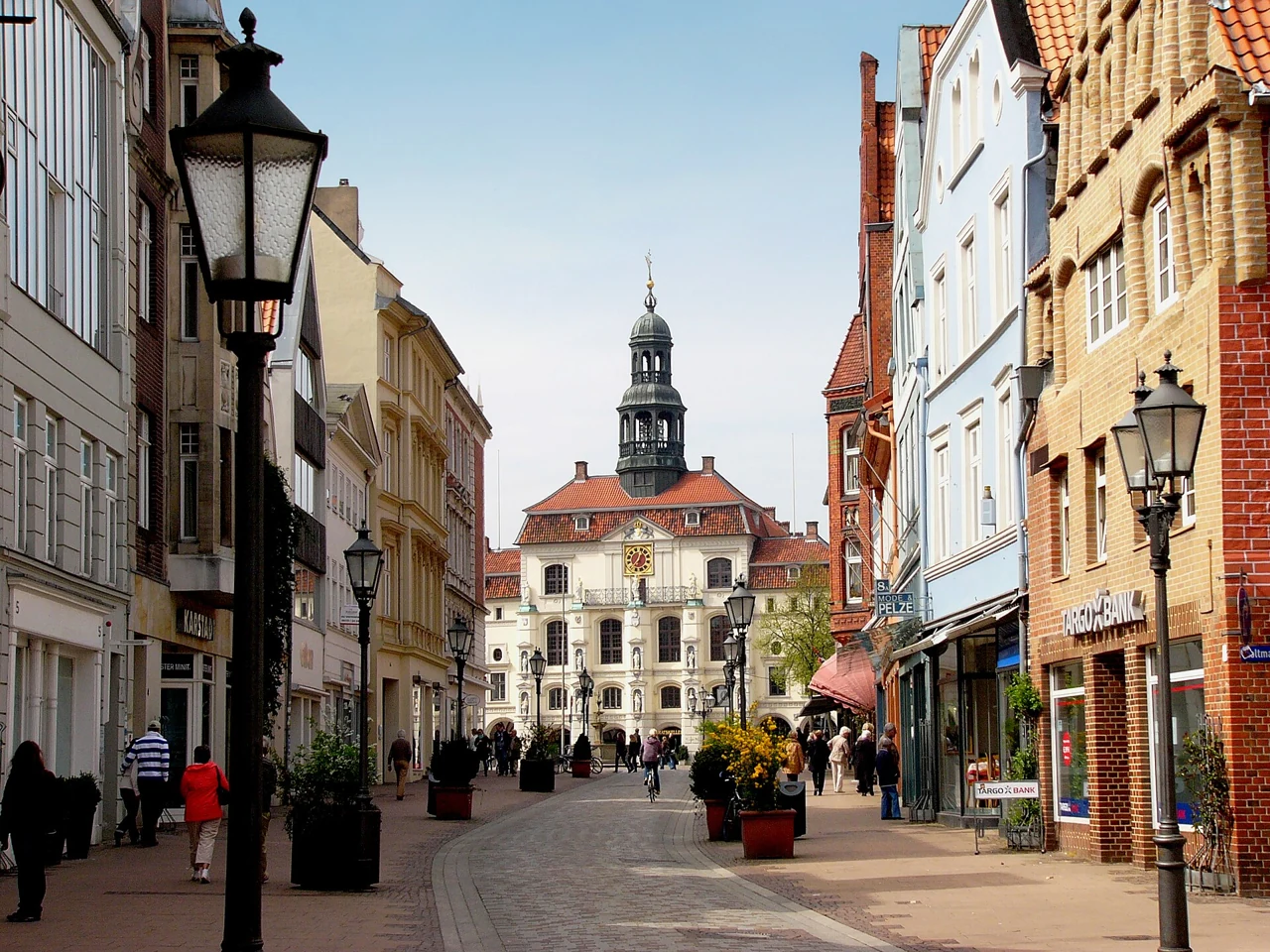
Continue towards the western old town after the museum. The official city account explains how extracting brine above the salt deposit contributed to cavities and subsidence. At the junction of Waagestraße and Neue Sülze, look towards Auf dem Meere and observe the change in ground level. Avoid treating every crooked line or detail on an old house as the result of a single process; a street visit is not an expert structural assessment. The useful question here is how production beneath the town affected the place people inhabit above it.
Break the walk along Auf dem Meere into short observations. First look at the street’s overall level, then at the position of doorways relative to the pavement. Comparing those two views may tell you more than recording another map pin. Entrances remain part of everyday life, so keep passage clear while observing exterior architecture. If somebody in your group finds uneven ground difficult, you do not need to extend this section. Choose a more comfortable connection and continue the same question elsewhere. The purpose is to find a visible counterpart to the museum story, rather than to exhaust every street before moving on.
Change scale at Am Sande
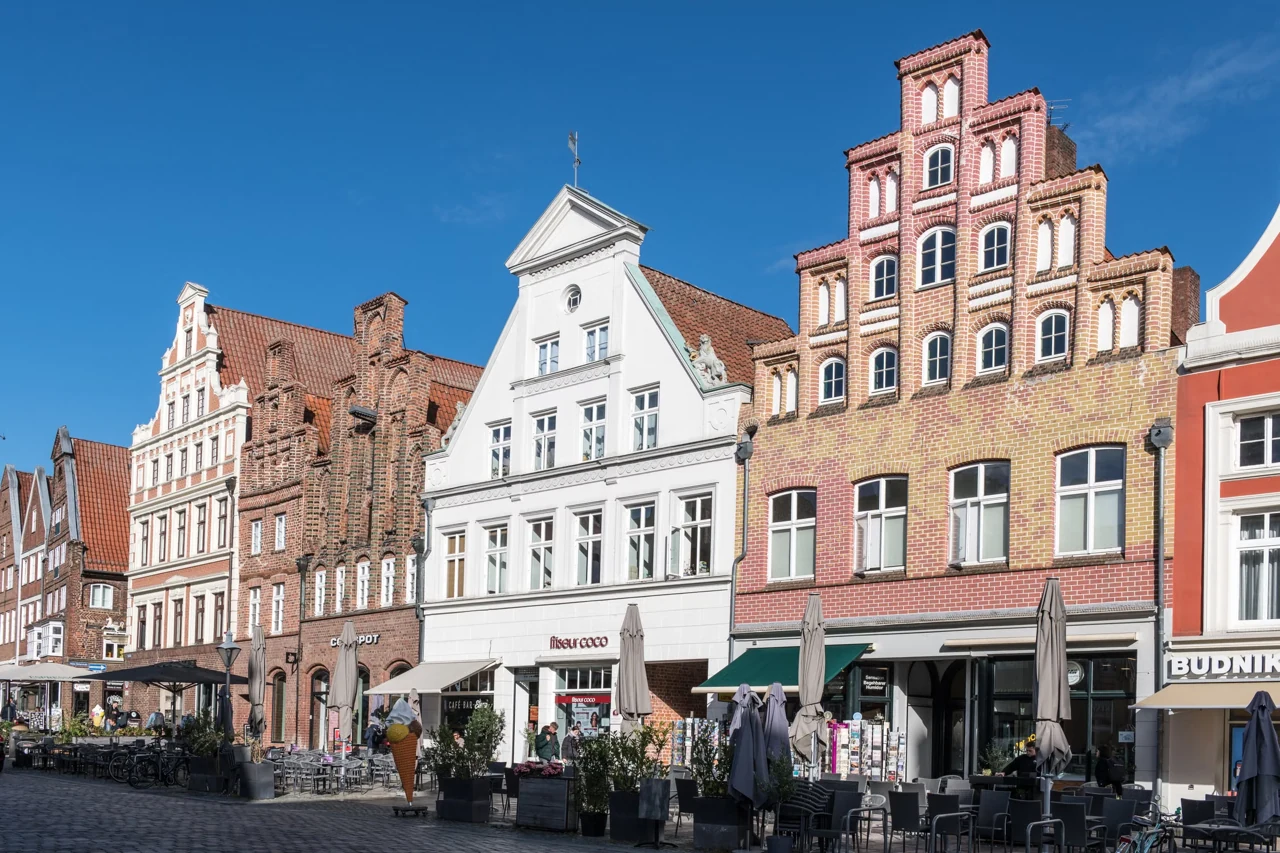
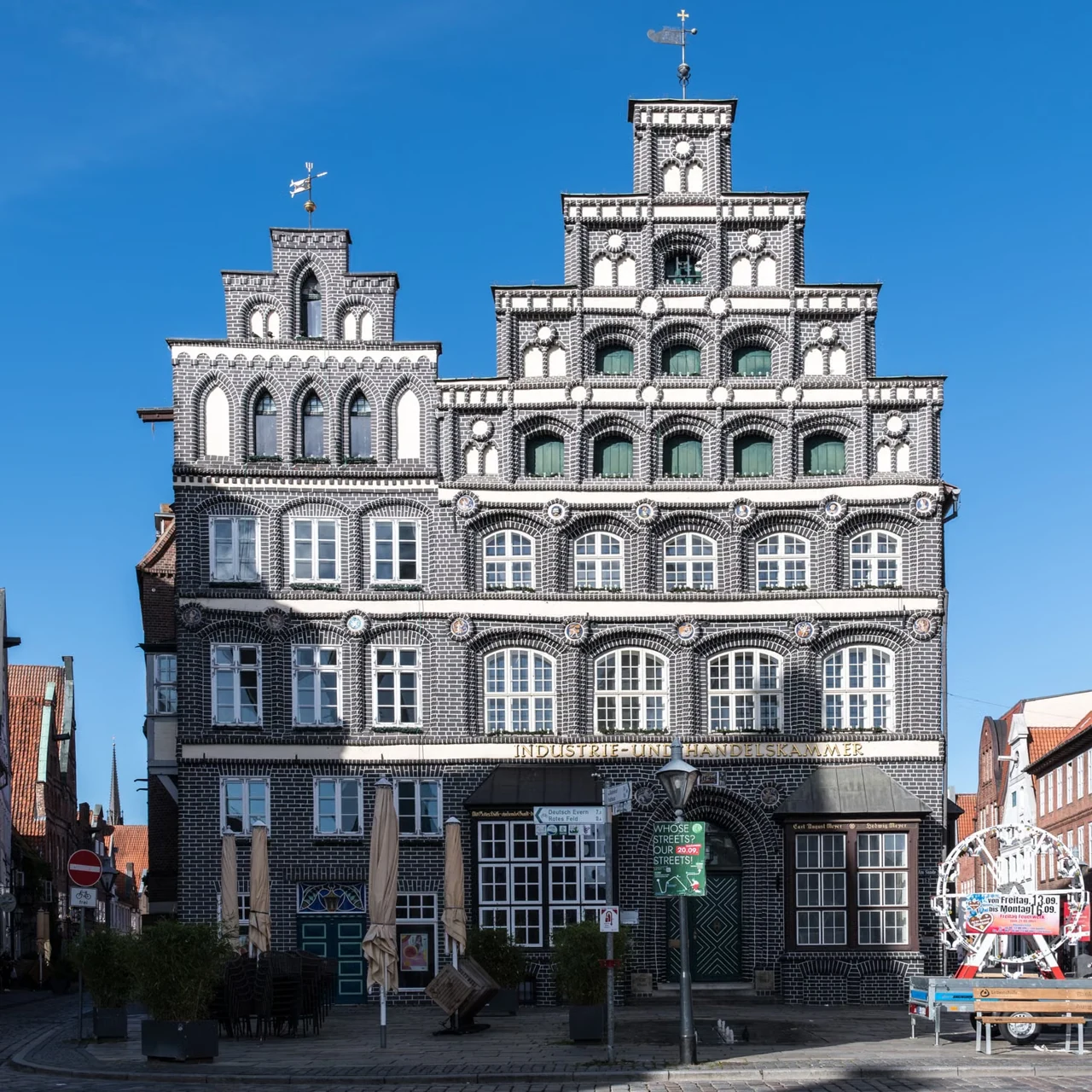
Am Sande changes the scale of your attention. Brick fronts from different periods along the long sides create a broader view than the narrower streets. Begin with the overall setting from one end, then choose just two façades and compare their roof lines. You do not need a date label for every house. Differences in height, openings and shape help separate individual buildings within a familiar postcard view. This remains a place of transport and shopping, so take vehicle movement and pedestrian flows into account when deciding where to pause for a photograph.
St. Johannis beside the square gives brick architecture another scale. Looking at the church from the street, entering it and joining a tower tour are distinct choices. Check the arrangements for your day and add only the one that most interests you. To understand the tower’s lean, look at it alongside surrounding vertical lines instead of artificially rotating a photograph to exaggerate the effect. Comparing a small façade detail with the broad body of the church gives the walk a second focus without turning it into another collection of obligatory stops.
Break the evening with a substantial meal
Mälzer Brau- und Tafelhaus at Heiligengeiststraße 43 is one meal option. The operator’s own menu describes Lüneburger Pannfisch as fried fish fillets with wholegrain mustard sauce, fried potatoes and cucumber salad. It is a specific candidate when you want the evening’s main meal rather than a snack. If fish or mustard does not suit you, discuss ingredients with staff. The existence of alternatives on a menu does not mean every dish can accommodate every allergy, so choose against your actual requirements.
Eating before the final waterfront section can keep the end of the day flexible. Confirm table arrangements and service for your date; shorten the walk if you have a fixed booking time. Do not treat the main dish price as the total cost of the evening, because drinks and extra orders change the bill. Travelling companions could each bring one observation to the table: a production stage from the museum or a detail found in a western street. You do not need to attach a local-food label to every dish merely because the route follows salt. A meal that actually appears on the restaurant’s menu and fits your preferences is enough.
Finish the connection at the Alter Kran
The old harbour and Alter Kran on the Ilmenau can complete the transport side of the story. You selected a tool at the museum, ground levels in the western streets and façade scale at Am Sande; here, consider the relationship between the bank and cargo. Let the river be more than a photographic background. Observe the crane, opposite bank and water from separate positions to bring together the question followed through the day. Seeing the exterior does not imply access to its mechanism.
The city tourism page says interior access is through a city tour. Do not build an evening plan on the assumption that the door will be open. If the workings are especially important to you, investigate a suitable tour in advance and leave more flexible time for the exterior and riverbank. For a short return the next morning, begin with the viewpoint selected on the first day. Seeing it again under different light can give an overnight stay a purpose without adding a distant new stop before departure.

Choose accommodation with its building and luggage arrangements in mind
DORMERO Hotel Bergström Lüneburg is an accommodation candidate in the water district. The operator explains that rooms are spread across five buildings and that payment is by card. A central location alone does not explain the room you will use. Ask which building contains your reservation, how you will reach the room and whether bags can be left before arrival time. That is more useful than guessing the correct door with a suitcase in hand. If you intend to revisit the river in the morning, include time to collect luggage and reach the station.
The Lüneburg station listing gives the address as Bahnhofstraße 10. Check trains, platform access, lift availability and any replacement transport for the actual travel day. Resolve luggage arrangements before making the museum your first stop. The museum describes its walk from the station as a good twenty minutes, but that is not a guarantee for your pace or bags. A first day moving from production site to harbour, followed by a short morning return to one selected riverside view, completes an overnight visit without crowding departure with unnecessary additional attractions.