

If Orléans is a city you know mainly through Joan of Arc, spend one night discovering a different side as well. This itinerary combines the fine arts museum near Sainte-Croix with the history and archaeology focus of Hôtel Cabu, allowing space between them for a broad square, a real lunch and the Loire. It is designed for travellers who want two different institutions without reducing both to the same historical story. Leylek suggests keeping the overnight stay spacious: exterior architecture and the river after arrival, selected collections the next day. For a shorter visit, remove one museum rather than rushing through both. An afternoon in the centre can be a worthwhile city break on its own.
Orléans and Les Aubrais are different arrival points
Read the station name on your rail ticket before arranging the rest of the day. Gare d'Orléans serves a different arrival point from Les Aubrais, which is in Fleury-les-Aubrais. Seeing both names in a journey search does not mean your particular train stops at both. SNCF's Les Aubrais information identifies a connection with TAO tram line A. Check the service for your actual travel date rather than extracting the last departure or a guaranteed transfer time from an old network map. For a late arrival, the accommodation's check-in arrangements and your final local connection may matter more than adding another monument to the list.


Once your luggage is settled, you can begin around Place du Martroi. Consider the square as a setting where façades and everyday movement are seen together, rather than simply approaching the statue in its centre. A wider view helps you notice how café seating and walking routes share the space. Tables and paving shown in older photographs belong to the date they were captured, not a promise of today's arrangement. Walk around actual works, event areas or barriers. Also check the return station early: a ticket departing from a different station does not automatically mean retracing the arrival walk.
Sainte-Croix and Hôtel Groslot: read the exterior scale first
The exterior of Sainte-Croix introduces a much larger architectural scale than the surrounding streets. If stepping back for a photograph, keep the pavement clear for other people. Examining the cathedral frontage is separate from permission to climb a tower or enter every interior area; worship and special visiting arrangements need their own confirmation. Give yourself one observation to follow, perhaps the repetition of tall openings or the building's relationship to the lower neighbouring structures. This can make the place easier to remember than trying to memorise a complete sequence of historical dates.


Use Hôtel Groslot as a separate architectural stop within the same walk. The photograph in this guide shows the exterior, not evidence of current access to rooms, ceremonies or a garden. The official tourism organisation includes Sainte-Croix and Hôtel Groslot together in its old-town walking description. Compare them as distinct buildings rather than treating them as two names for the same place. A short pause outside before continuing to the art museum can be more enjoyable than rushing from monument to monument. With children, selecting a window shape to find may work better than recounting the whole history at once.
Musée des Beaux-Arts: narrow the visit to your interests
The Musée des Beaux-Arts on Place Sainte-Croix is the main art stop. The institution's thematic routes and collection records can help you choose a focus in advance. Follow landscape, portraiture or light, for example, without assuming that every work listed online must be on display in exactly the same location that day. Current gallery guidance is better evidence for loans and temporary arrangements. If visiting both museums in one day, consider a thoughtful comparison between a few works rather than making completion of every floor your main goal. Leave room afterwards for the different questions raised by archaeology and city history.
The regular calendar checked on 5 October 2026 lists Tuesday–Saturday opening 10am–6pm, extended to 8pm on Thursday, and Sunday 1pm–6pm. Monday and the specifically listed holiday closures remain separate conditions. The nineteenth-century collections on the mezzanines are not accessible to visitors with reduced mobility, so a general accessibility statement should not be applied to every level. Explain your requirements and select the suitable galleries. Read the official practical information alongside the current ticket conditions. The art museum's Thursday evening opening does not establish that Hôtel Cabu remains open until the same hour.
Place lunch and Hôtel Cabu in a workable sequence
A concrete lunch option is Tante Jeanne at 6 Rue de la Cerche. The operator's menu lists a chicken fricassee with mushroom cream, small potatoes and salad. Another main course is duck parmentier, made with shredded duck confit, mashed potatoes and green salad. These are dishes actually offered by a city operator; they are not presented here as ancient recipes unique to Orléans. Ask about the current suitable option if you do not eat meat. Discuss cream, sauces and allergens when ordering rather than drawing conclusions from the dish name. A garnish listed beside one dish should not be assumed to accompany every alternative.
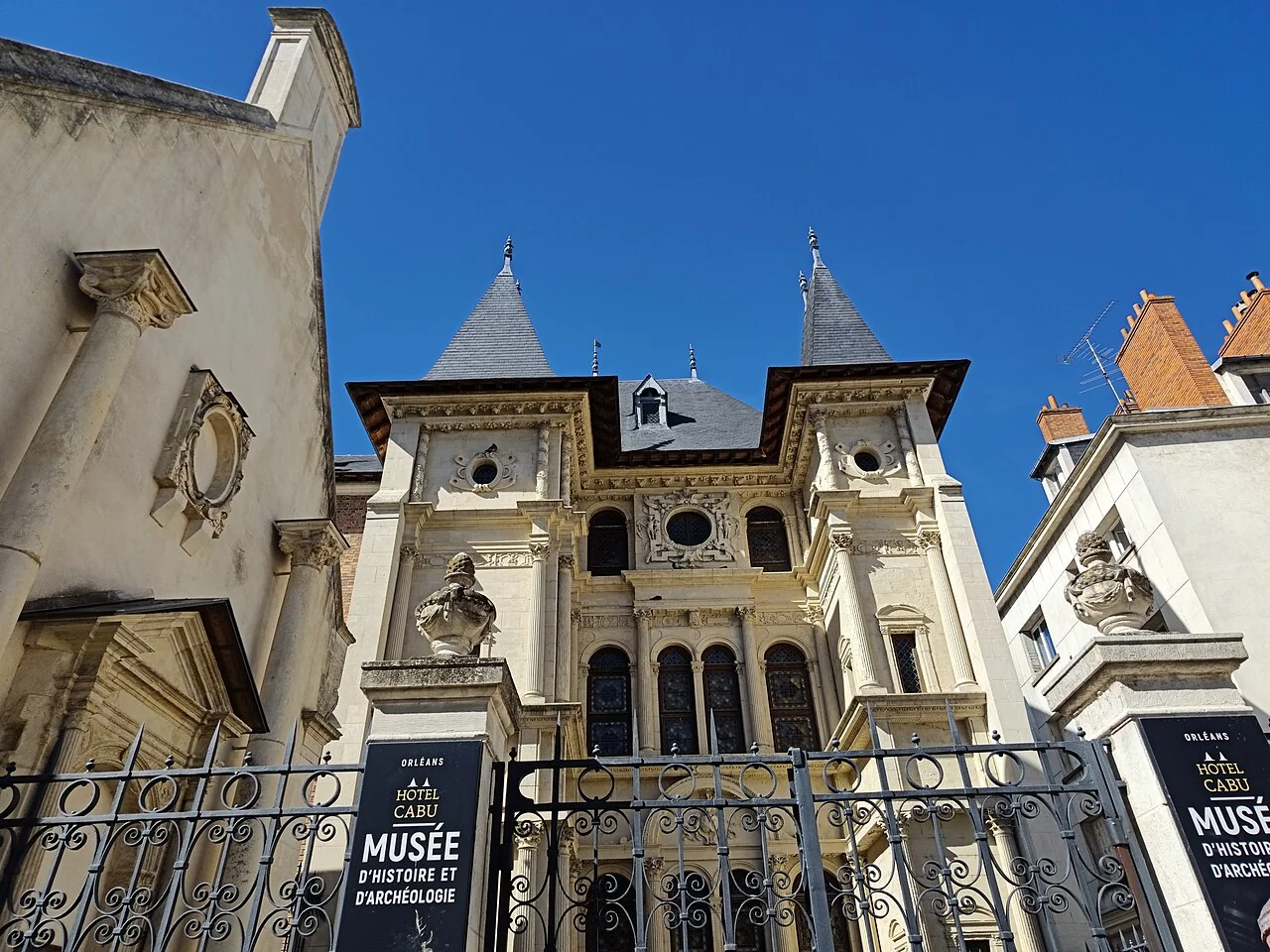

The operator's practical information lists Tuesday–Saturday 9am–7pm and reservations by telephone only. Do not read those business hours as a promise that hot main courses are served continuously. Confirm the lunch kitchen hours and availability of the dish you want. Afterwards, Hôtel Cabu on Square Abbé Desnoyers offers a separate history and archaeology visit. Its October–April programme is Tuesday–Sunday 1pm–6pm, with Monday and the announced holiday closures excluded. There is no lift; only the ground-floor temporary exhibition rooms are accessible for reduced-mobility visitors. Planning the afternoon around that actual restriction is more useful than promising all rooms merely because the building is called a museum.
Finish beside the Loire and choose a base for the return
Moving from the old streets near Hôtel Cabu towards the Loire changes the scale again, from museum objects and enclosed streets to a broad river setting. Seeing Pont George V from the bank and crossing it to explore other neighbourhoods are different choices; decide according to your remaining energy. Walking both banks is not compulsory. Keep to designated pedestrian space and pay attention to actual traffic, tram or cycle movements on the bridge. Shorten the riverfront section if flood warnings, wind or a closed path affect it. This itinerary does not promise a boat departure, a swimming opportunity or access down to the water.


For one night, the old centre is a useful starting area if evening streets and walking access to the museums are the priority. The station area may suit an early train and easier luggage transfer. These are selection criteria, not a hotel ranking. Ask the property about quiet rooms, lifts, entrance steps and late departure arrangements. If the morning train leaves from Les Aubrais, keep the final stroll within the centre and allow margin for the tram connection. A good Orléans visit can connect art, city history and the Loire without attaching Joan of Arc's name to every object. Sources were checked on 5 October 2026; verify changing access and service details again before travelling.