
Chandrapur: separate the city day from the safari address
Chandrapur in Maharashtra is considered both for its own historic and religious institutions and for wider nature journeys. The Tatilmerkezi Stork chooses two nights for the city in this guide; a Tadoba visit is not automatically inserted into that time. Reach the accommodation on the first evening, use the following day for a modest city session around Anchaleshwar and Mahakali exteriors, and return to the real onward connection on the final morning. Three calendar days provide one full urban day. A traveller heading for a safari needs the gate, admission time and separate vehicle or accommodation address stated in the actual booking. Having the city name on a reservation does not bring all forest entrances into the same centre. These photographs show genuine temple architecture, a station entrance, a separate church facade and Ramala Lake. No wildlife sighting scene or personal safari memory has been invented. Giving the city day its own scale also makes preparation for the nature reservation more comprehensible.
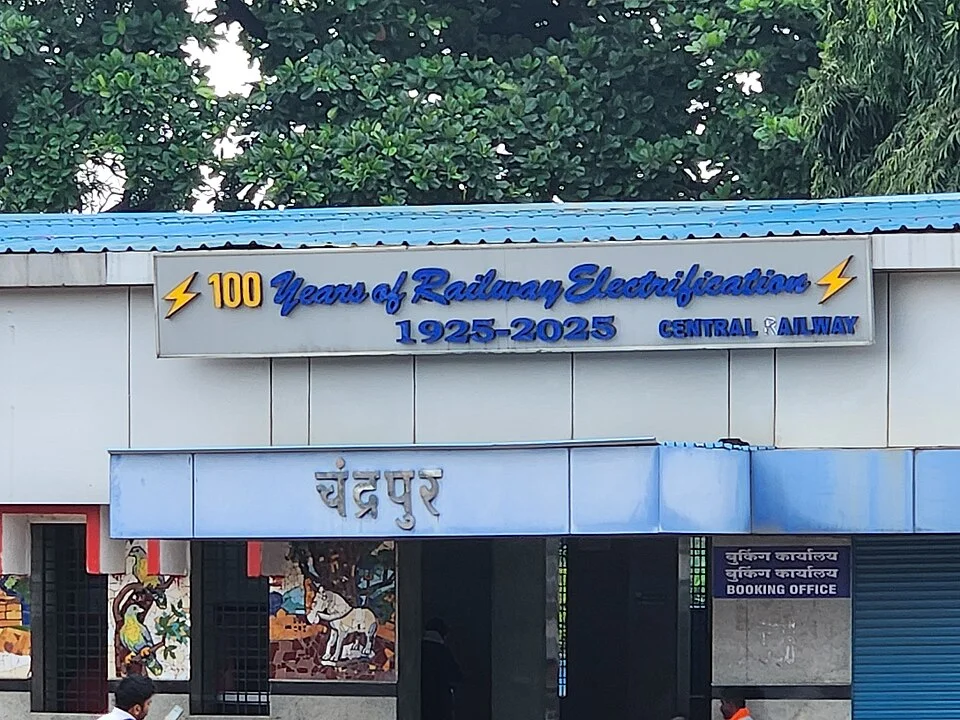
From the station entrance to the real room doorway
The station photograph captured in 2025 displays the Chandrapur name and entrance facade. Even a relatively recent image cannot guarantee the train, platform or drop-off arrangement used today. Match the actual arrival station on the ticket to the full accommodation address. Another connection point such as Ballarshah is not the same station doorway. For a bus arrival, separately identify the terminal and final vehicle connection. A central room can be assessed for the main visiting day and returning after a meal; a room nearer a safari gate serves a different travel purpose. Do not assume the same convenience makes them interchangeable. Discuss late reception and baggage arrangements with the accommodation beforehand. There is no obligation to reach the fort setting, lake and every institution immediately on arrival evening. Reaching the room and arranging the next day’s actual connection are enough. Leave a separate transfer margin on the final morning. A station photograph or general access sentence in tourism promotion does not replace the ticket the traveller has actually purchased.

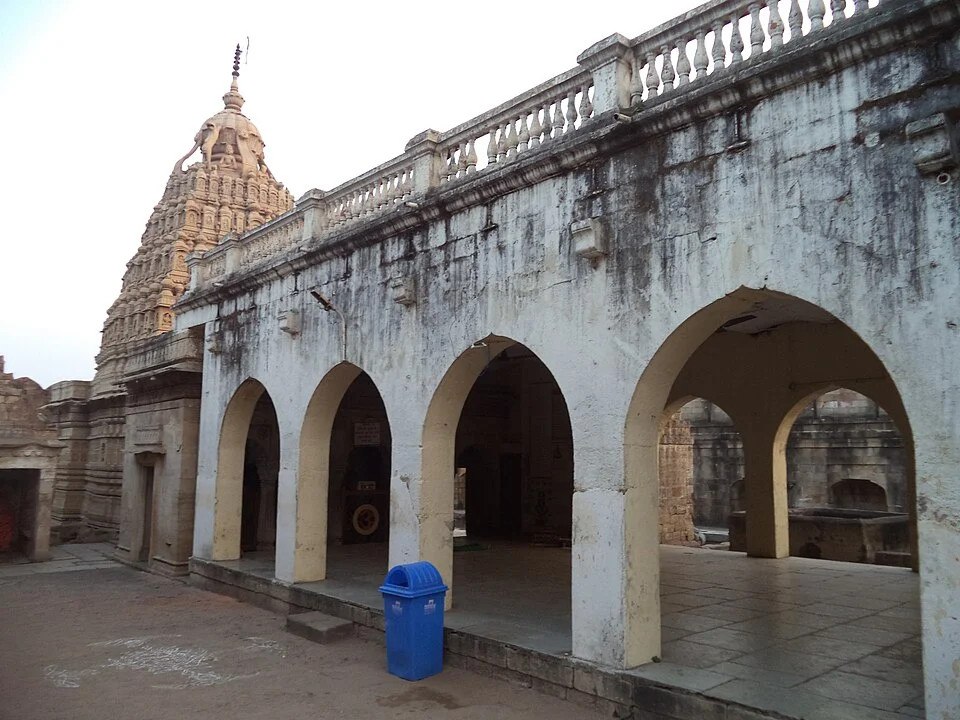
Anchaleshwar: an arched veranda and courtyard scale
The Anchaleshwar photograph combines a long arched veranda, courtyard ground and the upper structure behind. This concrete architectural relationship differs from a close-up of a sacred figure. An unseen interior or an uninterrupted route through the whole structure has not been added. Organise a short session according to the area actually admitting visitors and follow staff guidance on footwear, worship and photography. An open courtyard in an older image does not prove every door is open today. The source photograph names Anchaleshwar, while city accounts may use a spelling such as Ankleshwar. A spelling variation does not create a separate distant temple itinerary. Standing in the courtyard, observing the arches and their relation to movement and shade, then leaving room for food and rest can form part of the main day. A construction year, complete repair history and guaranteed sanctum admission are not derived from the picture. Since an exact capture day has not been verified, the upload date is not presented as the date photographed.
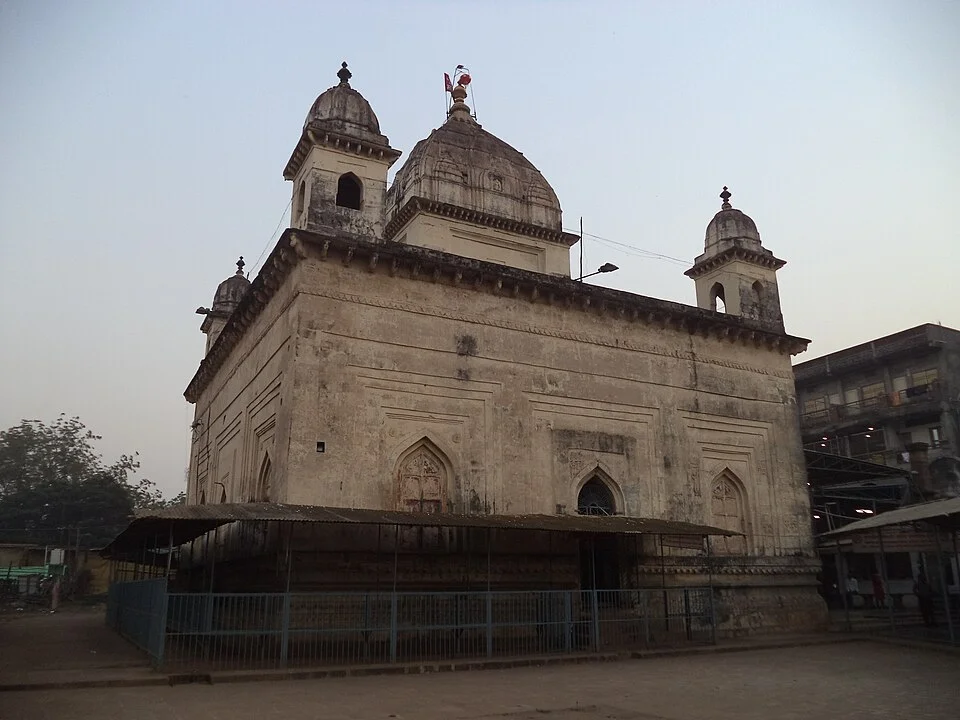
Mahakali: the exterior dome and urban surroundings
The current district tourism account identifies Mahakali Temple as a prominent Chandrapur institution. The selected photograph shows the main dome, smaller upper structures, wall and nearby urban buildings from outside. A facade photograph grants neither photography in an inner sacred area nor admission at every hour. Keep the entrance flow open and learn the current worship and crowd arrangements locally. Interest in a particular weekday mentioned in an official source is not converted into an event time on a specified travel date. Anchaleshwar and this institution are not represented by the same photograph or repeated crops of one scene. Assess the genuine city connection and break between them, and do not make a distant excursion compulsory afterwards. Reading the external structure and returning to city time can remain meaningful without an interior visit.

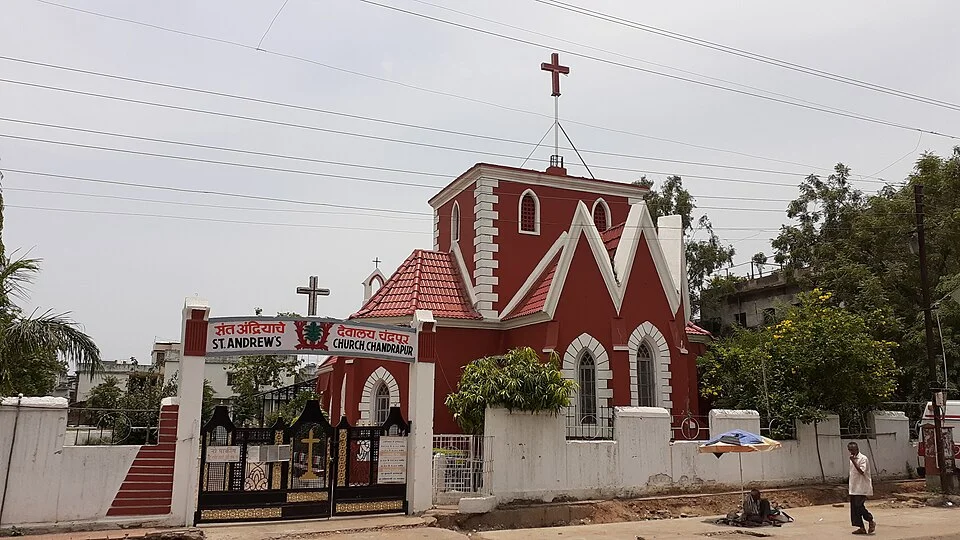
St. Andrew’s Church offers a separate exterior interest
The St. Andrew’s photograph shows a red and white building, entrance gate, crosses and the exterior facing the street. This institutional architecture is not treated as the same religious experience as the temple sessions. Someone interested in architecture can choose a brief exterior pause after learning the real address and an admitted public viewing position. Interior admission, attending a service or entering school surroundings do not follow from the picture. Respect everyday movement at the gate and follow institutional guidance. The source filename identifies this Chandrapur institution, but no foundation year or function of every adjoining building has been added. If the main day becomes short, this choice can be dropped in favour of resting at the room. There is no obligation to compress connections merely to see more institution names. The facade captured in 2020 remains separate from present maintenance and visiting conditions. City variety is described through genuinely different external forms without assuming the visitor will enter all of them.

Ramala Lake: a modest pause for water and the urban skyline
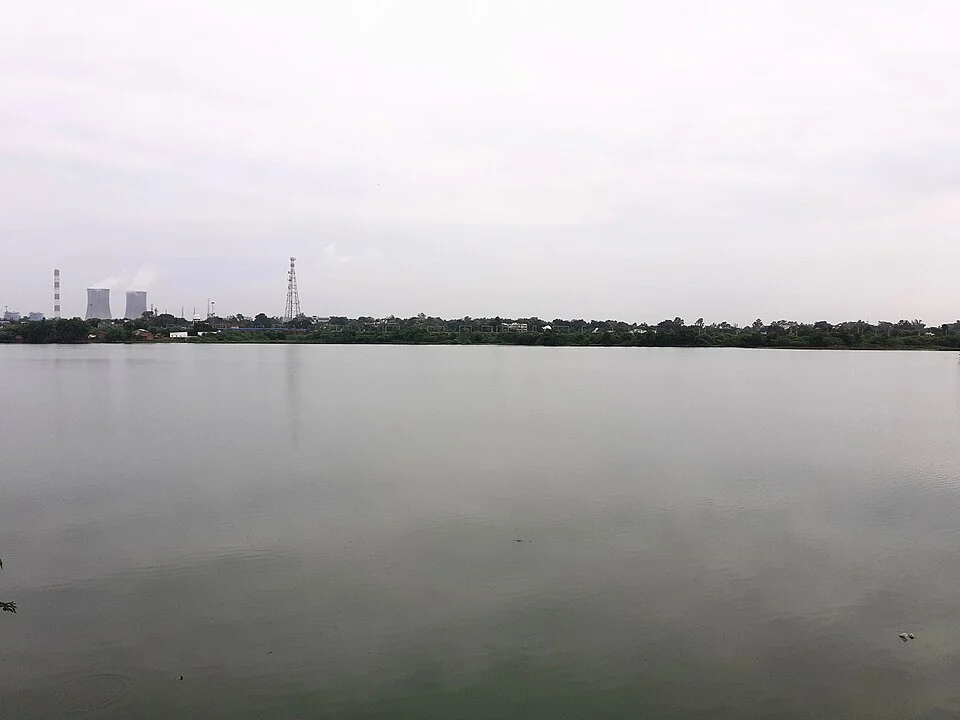
The Ramala photograph shows a broad water surface and urban skyline beyond it. A boat jetty and continuous public bank route are not documented in the image, so neither has been added to the programme. Consider the lake as a separately connected short interest according to the time remaining, and identify the real access position and return to the room. If the temple sessions, meal and church option have all taken longer, returning to the city may be clearer than inserting another stop. Water and light photographed in 2019 do not guarantee present level or weather. A lake name does not constitute an offer of swimming or watersports. Observing city water and taking a nature trip in Tadoba have different purposes; this image is not relabelled as a safari-area photograph. A view from an appropriate public position may suffice. Another night can be considered for a slower waterside interest, but Ramala is not a compulsory extended excursion in the existing two-night plan. Keeping an uncertain bank programme out of departure morning protects the ticketed connection.

A poha breakfast, a meal break and the next journey
Maharashtra’s official cuisine booklet describes poha as a breakfast preparation made from flattened rice and mentions onions, spices and peanuts in some recipes. Where a genuine Chandrapur establishment serves it, it gives the main city day a concrete regional meal at the start. It is not claimed as one recipe invented exclusively in this city or a plate with identical contents everywhere. Discuss ingredients and heat when ordering; a dish name alone cannot resolve a personal dietary need. A seated poha breakfast begins the day without turning a station exit or worship area into a rushed eating stop. Select a genuine later main meal with the same attention rather than planning to get through the whole day on coffee alone. Prices, personally tested restaurants and food photographs imported from another city have not been invented. The final morning is reserved for baggage, check-out and the booked connection. A safari or wider district visit requires added time and a real gate plan. Sources were checked on 5 October 2026. Known photograph dates from 2019, 2020 and 2025 remain distinct from conditions on the visiting day.