

Pretoria: two days and two different collections
The Tatilmerkezi Stork invites you to ask different questions in one city rather than compress all of South Africa into two days. Spend the first day considering political memory in a house museum and the second looking at classification and time in a natural-history collection. Allow an arrival evening, two full sightseeing days and a separate departure period. A short visit from Johannesburg is possible, but this stay is intended for readers who want time with institutions. It does not reproduce a national safari itinerary or a long intercity tour.
Choose the visiting days before filling the timetable. If a closure or special event affects a museum, swap the days rather than convert the programme into a continuous series of vehicle stops. With only one night, select one main collection instead of fitting in two museums and another house. Ask companions whether history or nature interests them more. A shared meal and short outdoor break may work better than keeping everybody in every room for the same length of time. Arrange a dependable return to your accommodation; deciding what to do after dark is separate from planning a daytime walk.
Day one: Kruger Museum and competing memories
DITSONG identifies the Kruger Museum at 60 WF Nkomo Street. The institution brings together the historic house, two display halls and a state railway coach. Rather than searching only for a leader’s possessions, consider the political order represented by the house and whose experiences become visible in the exhibition. The institutional description also explains the adjacent former Bantu Commissioner’s Office and its connection to the enforcement of Pass Laws. This is an important question about how the same historical setting shaped other people’s lives, not a detail to omit from the visit.

Check the admission type, accessible displays and arrangements for your chosen day directly with DITSONG. Take the published Christmas and Good Friday closures into account; the itinerary does not depend on a fixed opening or train time. Selecting a room, a document and a transport object can help you consider the collection at different scales. If a label does not answer your question, ask a staff member or keep a research note. Learn the photography and bag rules on entry. Combine your exit with an arranged vehicle meeting point rather than expecting to explore every central street when tired.
Day two: the National Museum of Natural History
On the natural-history day, shift your attention from political domestic life to specimens, classification and time. DITSONG’s official document for 1 April 2026–31 March 2027 identifies the National Museum of Natural History at 432 Paul Kruger Street. It lists Christmas, New Year and Good Friday closures. Recheck the applicable admission and tour information for your travel date; no price is copied into this guide. The municipal museum list describes natural sciences, fossils and geological materials as different collection subjects. Ask which sections are open and accessible before choosing one or two themes.


Begin with the specimen labels. Findspot, age and species are different kinds of information, and a larger skeleton is not automatically older or more significant. With children, choose a comparison question instead of requiring every case to be completed; noticing similarities and differences can become a small learning activity. A companion who wants longer reading time may prefer an independent circuit and a clear meeting place. Ask staff about rest facilities, toilets and accessible sections. The exterior photograph is not evidence of the present display arrangement or a record of an artwork inside.
Union Buildings: a short architectural pause
If you would like an outdoor section between collections, treat the surroundings of the Union Buildings as a separate, short architectural stop. The photograph depicts the west wing and its setting; it promises neither access to government offices nor unrestricted public entry today. Discuss the usable approach and a vehicle meeting point with your accommodation or a trusted local adviser for the actual day. Follow marked boundaries and security directions. If you add this after a museum, leave enough time to return before dark instead of choosing a return time from the attractive light in an old evening photograph.
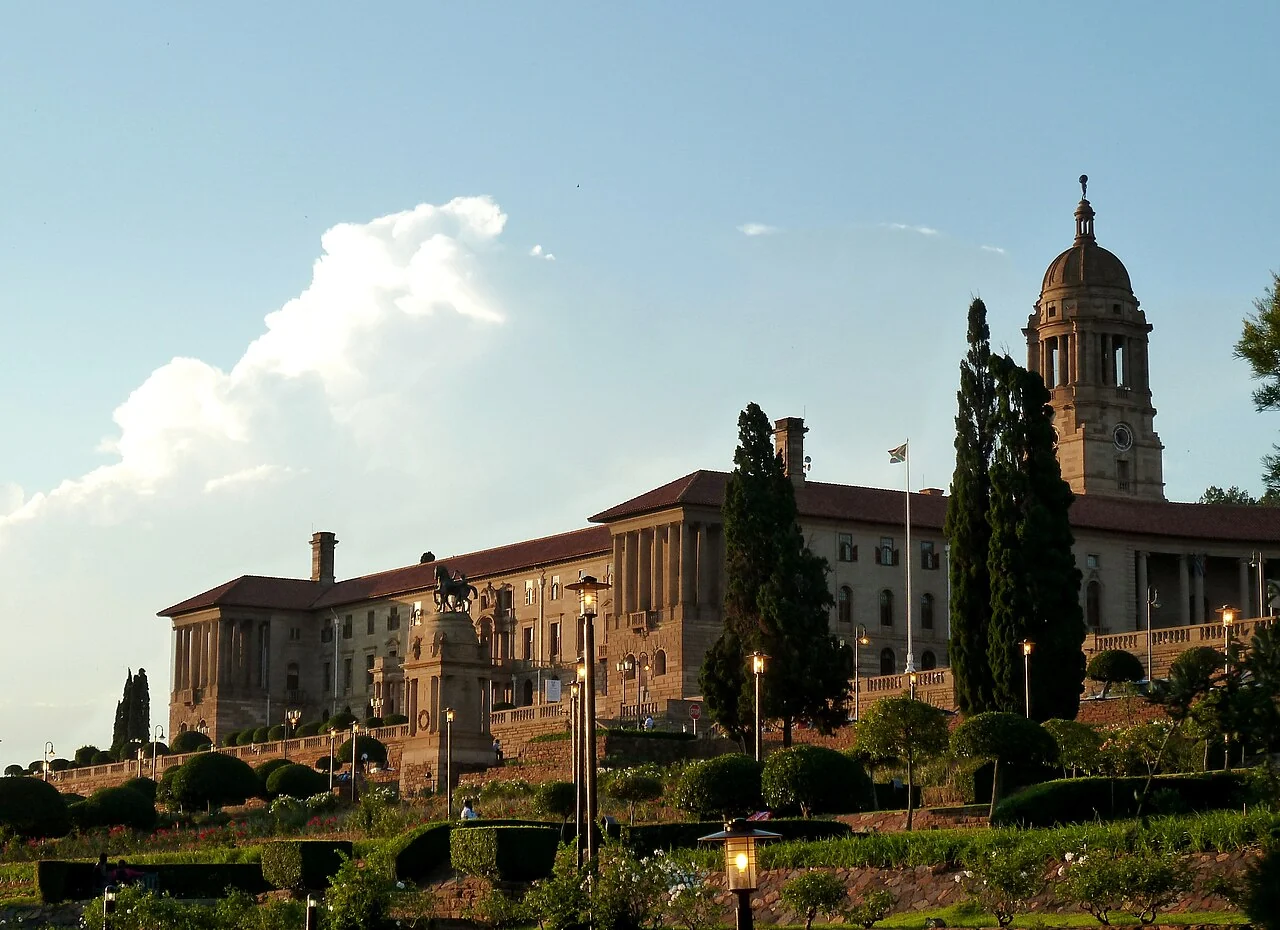

From a permitted viewpoint, consider the relationship between the wings, slope and vegetation. Do not enter a restricted or private section for a better angle. If crowds, weather or transport make the pause unsuitable, replace it with a seated meal and a return to your room. A museum programme does not succeed by reaching every photo position. Travelling with someone who needs easier access requires actual information about the vehicle drop-off, steps and shade. Water and a short rest period can make a small city section more comfortable without extending the day unnecessarily.
Melrose House: an optional municipal institution
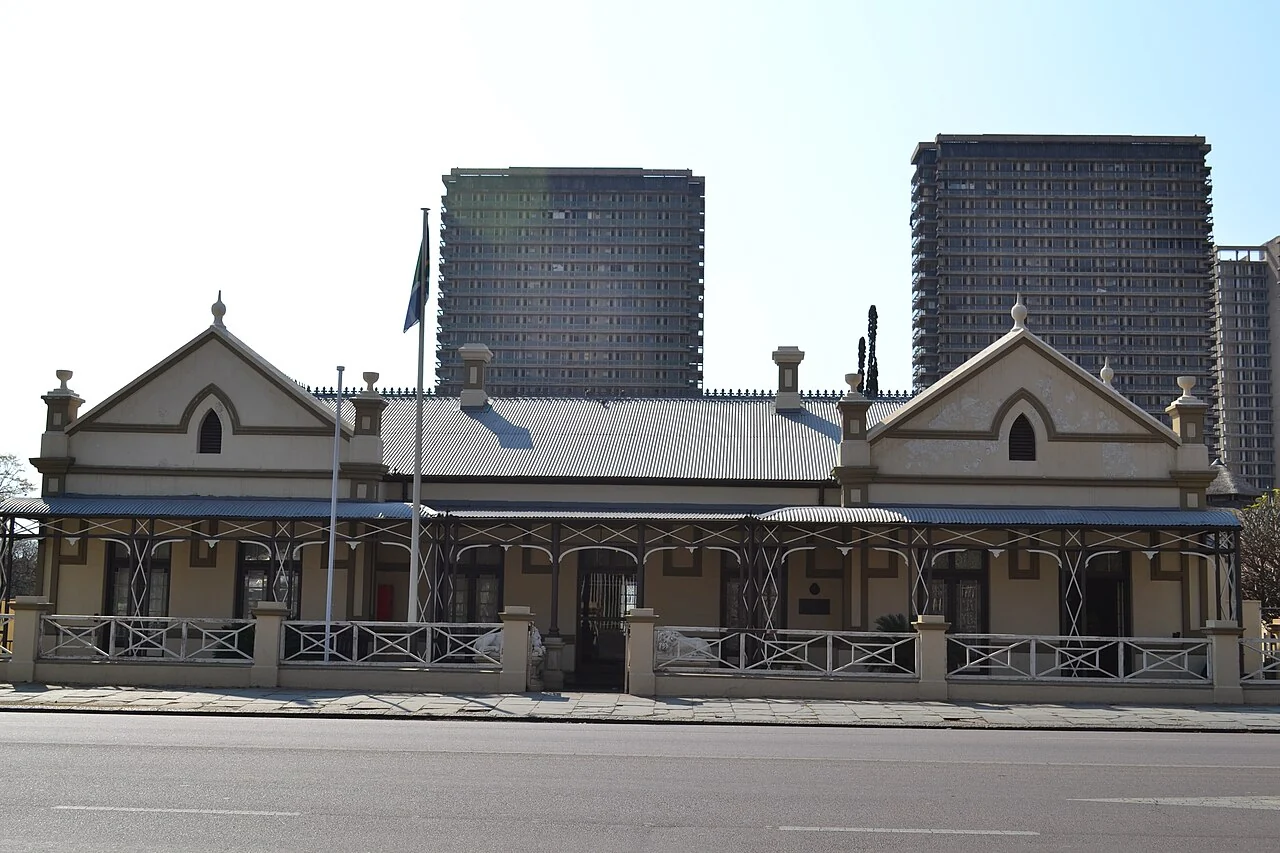
Do not make Melrose House an obligatory third museum on day two. Keep it as an option if domestic architecture interests you and enough time remains. Tshwane’s current municipal record gives the address as 275 Jeff Masemola Street. It explains the house’s Anglo-Boer War and Treaty of Vereeniging connections and describes furnished historical rooms and other collection elements. However, it specifically asks visitors to contact the museum for current hours and fees. No interior visit is promised without that confirmation. Match older street naming in the photograph’s description with the current municipal address when arranging transport.


If a visit is confirmed, consider service spaces alongside the more elaborate domestic rooms. Ask how the exhibition presents the household, which work a room supported and how its current presentation differs from its historical use. Decide whether another institution would require a shorter natural-history visit rather than adding it automatically. If access cannot be confirmed, remove it from the interior programme; any permitted external approach also depends on the actual day. The photograph records the exterior setting in 2013, not the present museum arrangement or a guided tour offered today.
Pap, boerewors and a multicultural meal
The national tourism authority’s culinary guide describes pap as a maize-based accompaniment, boerewors as a seasoned sausage and braai as a grilling tradition. These belong to South African food culture broadly; they are not presented as a recipe exclusive to Pretoria. If listed on the menu, pap and boerewors can provide a main meal after the first museum. Ask about the meat and portion. With wheat, milk or other allergies, the name alone is insufficient: discuss sauces and accompaniments with the establishment. Leave a seated meal break rather than postponing lunch through a succession of snacks.
South African Tourism’s Pretoria food article also describes a multicultural dining scene. On day two, a curry and naan meal, when available, can provide a different choice. Businesses mentioned in an older tourism article are not guaranteed to operate or serve the same menu today. For dessert, you might ask about melktert, another product described in the national guide. Finishing the main meal before returning to your accommodation reduces the need to search for a new restaurant after dark. No food image is supplied here, so city facades are not labelled as dishes. Combine the institutions you visit, a real menu and your energy level when choosing the meal.
Accommodation, Gautrain and the last connection
Hatfield offers a different base for travellers prioritising a Gautrain connection. The operator describes it as a terminal station east of Pretoria’s central business district. Check actual Pretoria Central and Hatfield services for your date. Do not assume that the airport service and commuter service form the same uninterrupted train journey; build connections with the operator’s trip planning. Staying nearer the museums may reduce daytime transfers, but examine the particular building entrance, night return and vehicle approach separately. A neighbourhood name alone does not guarantee safety or place every requirement within walking distance.
Current official travel advice explicitly addresses crime, transport risks, tensions between e-hailing and taxi drivers around stations and the risks of walking to stations after dark. Wait in a dependable indoor location until a booked vehicle arrives, and match its plate and driver with the app record. During strikes or protests, use a researched reliable transfer alternative. Avoid displaying valuables or building a night itinerary through empty streets. Ask accommodation how power interruptions affect doors, lighting and communication. Two days in Pretoria can end with a clearer understanding of different collections, a real meal and a dependable return rather than an inflated count of completed attractions.