
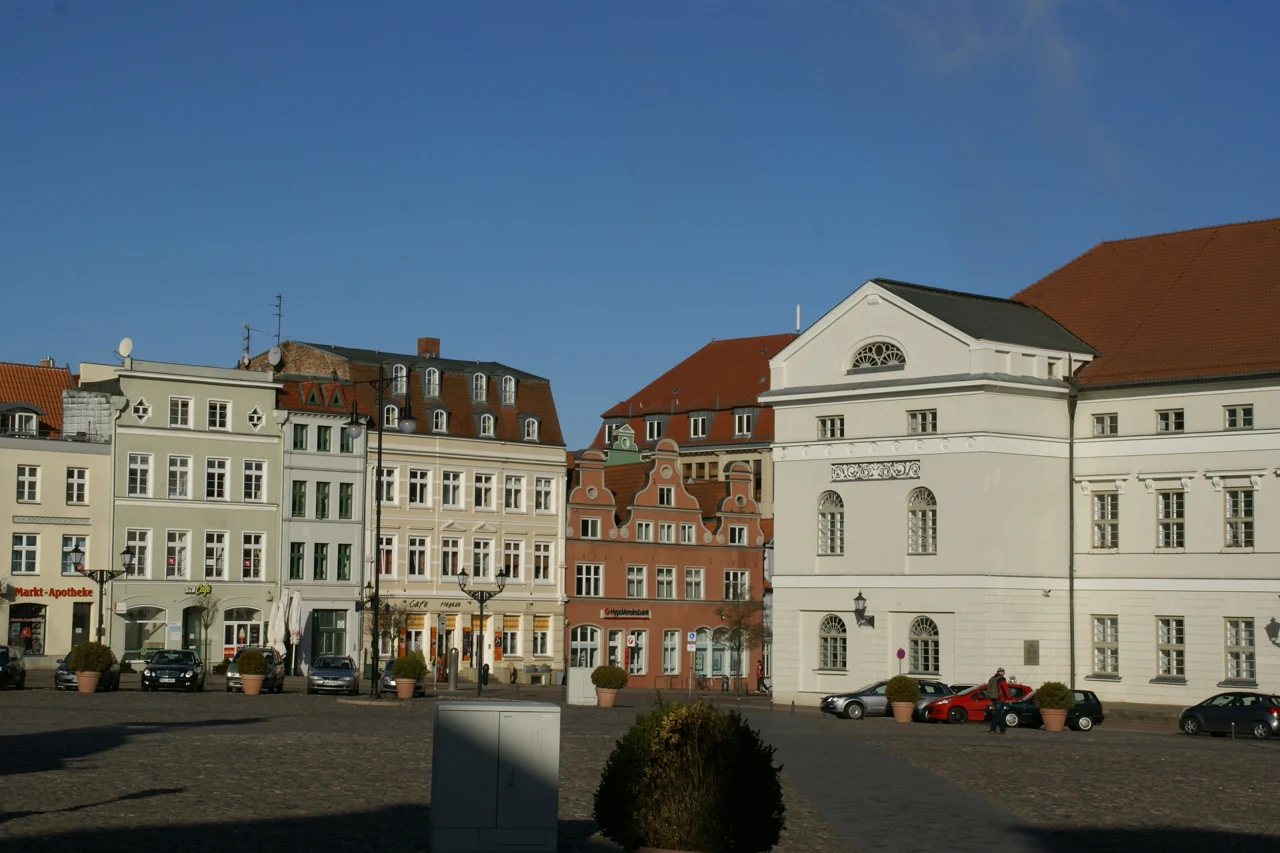
In Wismar, do not look for water only at the harbour. The Wasserkunst on the market square, the Grube running through the old town and the Alter Hafen explain the city at three scales: drinking water, a stream within the streets and trade reaching the sea. The Tatil Merkezi Stork suggests a day linking the square, brick churches and harbour. Its purpose is to see how water and buildings work together, with enough time to notice the transitions. Start at Marktplatz on a first visit and make the harbour a substantial final stop. Choose a view from St. Georgen or time inside St. Nikolai to give the middle of the day a focus.
Marktplatz and the Wasserkunst: a monument that served the city
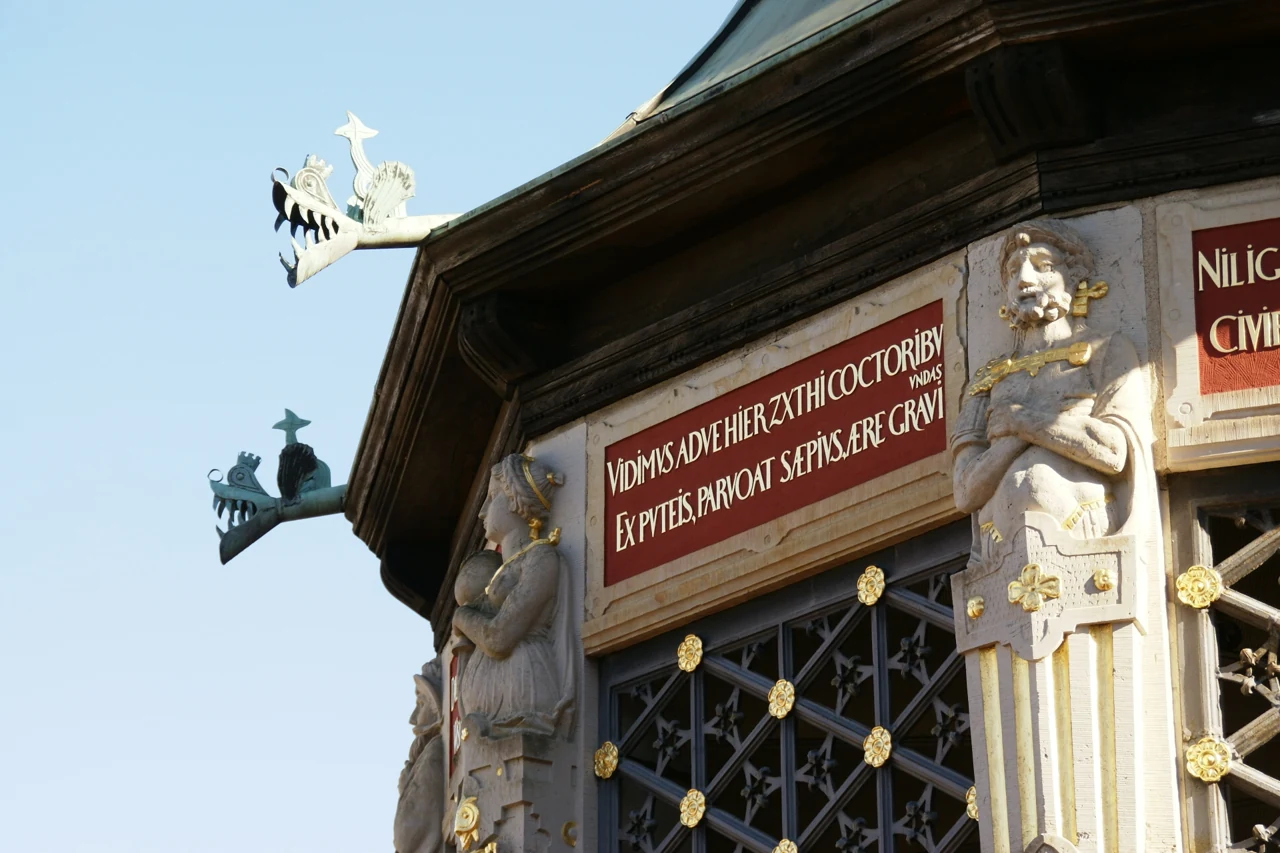
The official city tourism account places Wismar's old town within the UNESCO World Heritage designation since 2002. On reaching Marktplatz, compare the compact structure near the centre with the much larger façades around it. The Wasserkunst was built from 1579 to 1602 in the Dutch Renaissance style and served the city's drinking-water supply until 1897. That function gives a useful question to carry around the square: how did a busy urban place organise a daily necessity? Look at the building as a piece of infrastructure as well as a subject for a photograph.
Walk a broad circuit first, then return to a detail that interests you. One stop might examine a group of façades; another might compare the Wasserkunst's roof with the open space surrounding it. If your party walks at different speeds, agree on a recognisable street corner for meeting again. The square also offers a chance to decide how much time to put inside buildings. An exterior walk can connect church surroundings and harbour in one day. A longer interior visit deserves its own allowance, including a proper meal, before you add another tower simply because it appears close on the map.
Separate the stories of St. Marien and St. Georgen
The official St. Marien account explains that its war-damaged nave was demolished in 1960, leaving the substantial tower that remains today. The space around the tower is therefore part of the visit. Approach it with the surviving structure and absent building in mind, rather than expecting an entire church. Nearby St. Georgen tells a different story: reconstruction after 1990 led to reopening as a church and cultural venue in 2010. Their brick architecture does not make their present condition interchangeable. Comparing the two makes the walk more rewarding than attaching a generic medieval label to both.
St. Georgen has a viewing platform reached by lift, described by the city as 35 metres high. An early visit can help you picture the square and harbour before walking between them. A later one lets you recognise streets already explored. You need not pair it with a guided tower ascent at St. Marien on the same day. Treat entering the church and using the viewpoint as separate choices, and consult the visit-day arrangements when an event or weather may affect access. When recording photographs, note the correct building name: similar brick colours are an unreliable way to identify the place afterwards.
St. Nikolai and the Grube: another connection towards the harbour
St. Nikolai is described by the city as the church of sailors and fishermen. Beside the Frische Grube, it connects the civic order of the market with the maritime history of the waterfront. From outside, look at how angles and light reveal details within the brickwork. If choosing an interior visit, check the day's arrangements and respect worship. The church remains a living religious place. Its exterior may already give you a satisfying architectural stop if your priority is the route through the city rather than an extended visit inside.
The city's harbour guide distinguishes sections of the watercourse as Mühlengrube, Frische Grube and Runde Grube. Following those names on a map helps turn a single attractive waterside scene into a connection between places. Pause on a bridge to compare the direction of the water with the street, then continue towards the Lohberg surroundings and harbour. Make room for a seated break if the party is tired. With children, asking which way the water reaches the sea can begin a more lively exploration than reciting a long series of building names. Keep the route responsive to the people walking it.

Through the Wassertor into the open space of Alter Hafen
The Wassertor survives from the city's former defensive system. The official harbour account dates it to around 1450 and identifies it as the gate through which visitors could move directly from harbour to city. Compare its two sides: the closer scale of streets on one side and the broader waterside space on the other. Instead of taking a single picture and leaving, experience that transition. This is an urban maritime route. A harbour walk does not automatically provide the same experience or facilities as a beach day, so leave bathing plans as a separate decision.
At Alter Hafen, allow time for vessels, warehouse buildings and the water's edge. The Poeler Kogge Wissemara is a replica of a historic vessel type, rather than an original ship surviving from the Middle Ages. The guide's photograph records a past scene; check dated operating information for the vessel's position or a sailing on your visit. If a boat trip appeals, compare departure, return, weather conditions and your homeward train before incorporating it. Do not assume that a sailing will fit into a spare interval between sights. A quiet waterfront finish without going aboard can also complete this day well.

Sit down at Stern for a regional main meal
The Restaurant Stern operator's online menu lists Mecklenburger Rippenbraten: roast pork belly filled with prunes and apples, accompanied by red cabbage and boiled potatoes. At Lübsche Straße 9, this is a concrete sit-down main-meal option rather than a suggestion to get through the day on coffee and snacks. If pork is unsuitable, review the operator's fish or plant-based dishes and establish which choice is available during your visit. Discuss ingredients, sauces and allergens with staff; a regional dish name cannot answer an individual dietary question.
Place the meal after the market and church section, before a longer harbour visit, if that fits the day's service arrangements. While seated, reconsider the remaining programme: another tower may be less welcome than time by the water. The amount shown beside one dish is not the total cost of a meal with drinks or extra orders. Check current service and table arrangements directly with the operator. This recommendation does not imply a reservation or a meal already tasted; it supplies a specific choice around which you can plan a real lunch or dinner.

Connect accommodation and the return train with the old town
Stadthotel Stern, at the same Lübsche Straße 9 address, is an actual old-town accommodation option. Its operator describes lift access and rooms suitable for visitors with access requirements. Discuss the particular room and bathroom layout before booking when specific dimensions or arrangements matter. A general access description cannot make that individual comparison for you. An overnight stay can create time for an evening return to the harbour and a more detailed church visit the following morning. On a day trip, establish when bags must be collected to avoid carrying them repeatedly between the waterfront and closer streets.
The DB Wismar station listing gives Bahnhofstraße 12 and provides current arrival, departure and replacement-transport information. Research the connection for your travel date instead of transferring times from an older itinerary. If the final harbour stop becomes longer, consider luggage collection, the journey to the station and finding the platform together. The strongest memory of Wismar may be a relationship rather than one isolated landmark: a square supplying water, churches rising in brick and a harbour linking the city's trade to the sea. Organising the visit around that relationship gives even a short day a coherent shape.