

Rottweil has three distinct areas that are easy to merge mistakenly in an itinerary: the historic centre around Hauptstraße, the Roman sites in the district called Altstadt, and the modern TK Elevator test tower at Berner Feld. The district name Altstadt does not mean that the Roman route sits directly beside Schwarzes Tor in the central streets. A useful first visit therefore combines the centre and a museum on day one, then chooses either the tower or the Roman route on day two. With only one day, select one outward excursion after the centre instead of treating all three areas as a single compact walk.
Station arrival, Hauptstraße and Schwarzes Tor
Check the day's connections on the Rottweil station page. Arriving by train and starting a walk in the elevated historic centre are separate stages of the journey. If carrying bags, decide beforehand whether to walk or use a local connection. In the centre, use Hauptstraße and Hochbrücktorstraße as your initial line. Before committing to a long indoor visit, take time to notice fountains, projecting bays and the upper floors above the shops. Heading only towards a distant tower can mean missing the details along the way.
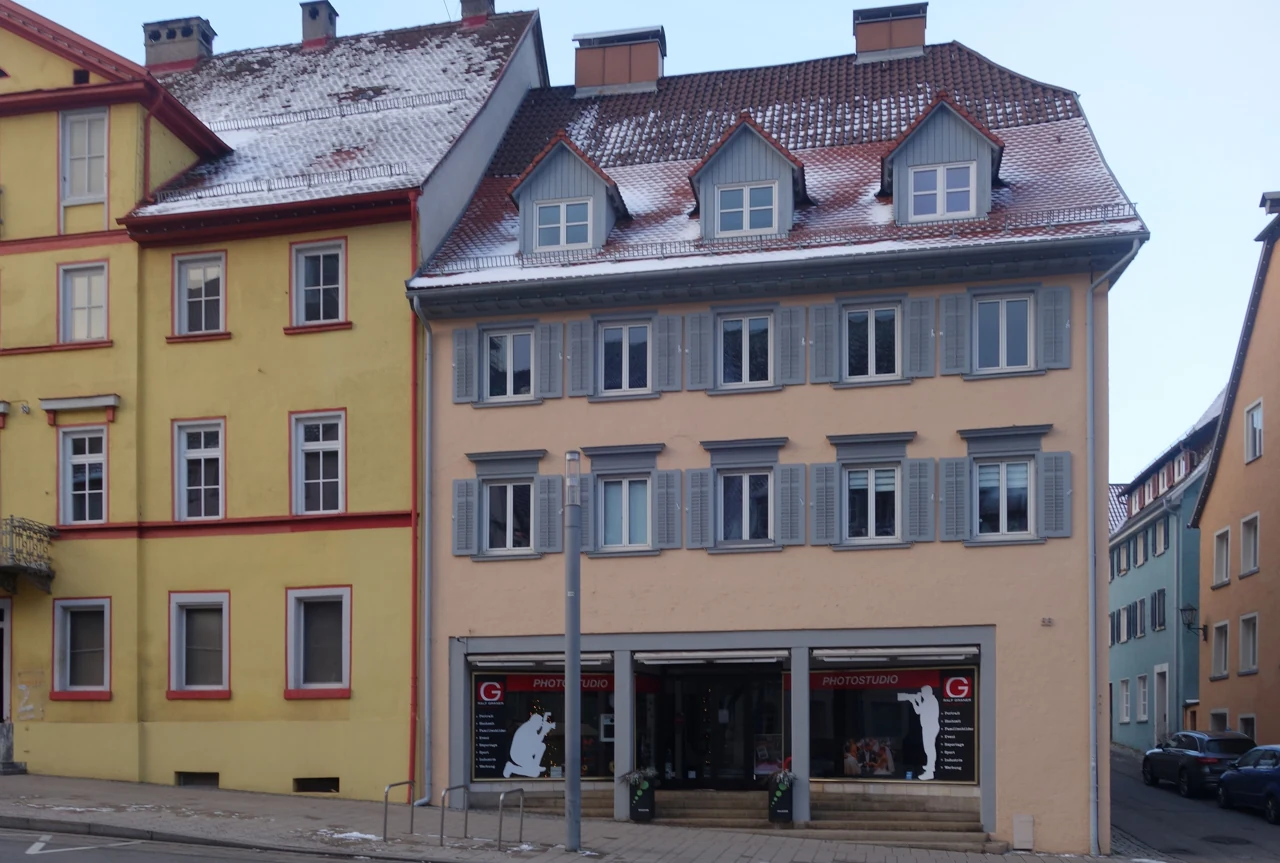
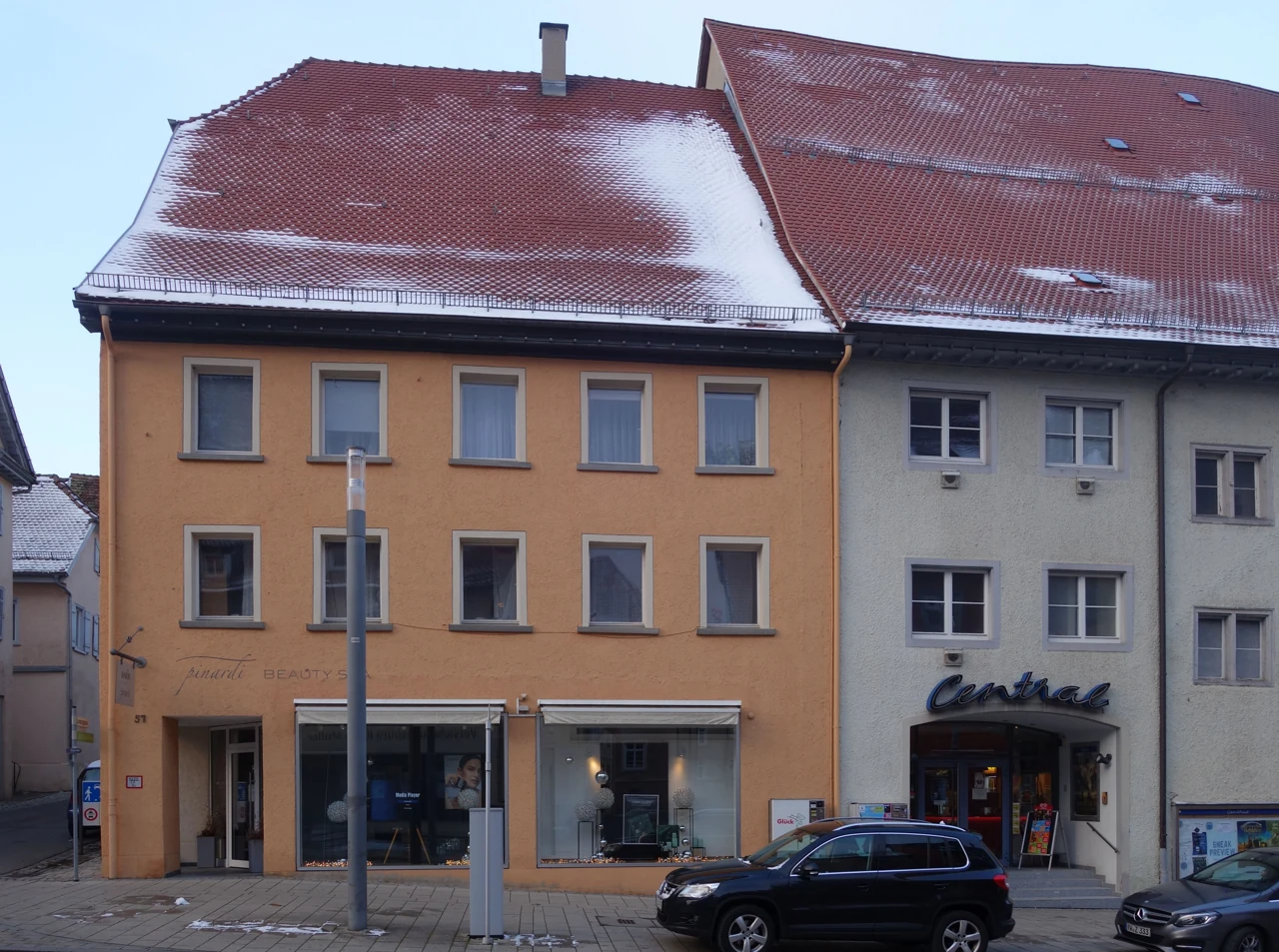
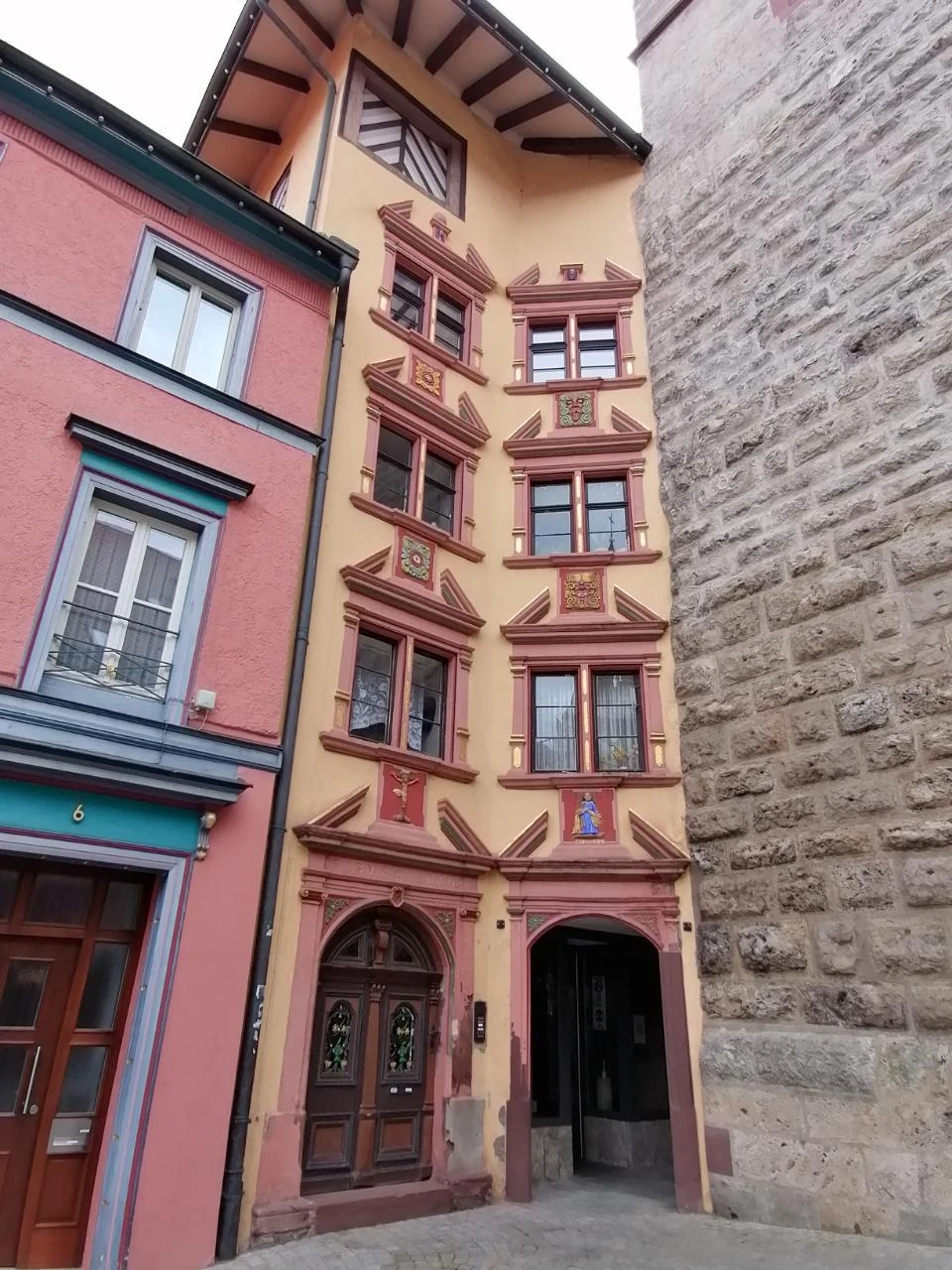
The municipal introduction to the historic centre connects the Altes Rathaus, Schwarzes Tor and Hochturm with the wider townscape. Near Schwarzes Tor, the corner house at Hauptstraße 4 is a useful pause for looking closely at its facade. Further along the street, buildings such as Hauptstraße 55 and 57/59 show more of everyday urban life. Different doors and shopfronts should not be assumed to share the same date or function. Make a short loop into a side lane and return to the main line rather than losing the shape of the walk.
The older panorama taken from Hochturm shows the dense arrangement of roofs. Its 2007 date does not establish unconditional access to the tower today. Ask the visitor information office about current arrangements if going inside matters to you. If access is unsuitable, continue the outdoor route rather than rebuilding the whole day around a viewpoint. Church interiors likewise depend on opening, services and the local visiting arrangements. A walk past historic religious buildings is not a promise of admission to every interior.
Use Dominikanermuseum to add context to the centre
Dominikanermuseum, at Kriegsdamm 4, brings Roman finds, late Gothic works and changing contemporary art presentations into one institution. A museum block of roughly ninety minutes is a useful option for visitors who want to connect the streets with the city's longer history. The current municipal listing gives Tuesday–Sunday hours of 10:00–17:00. Monday is not a regular open day, and specific holidays including 1 November are closed. If staying at the end of October, check that date before placing the museum on the following morning.
Afterwards, use Bockshof and the town-wall surroundings for a short outdoor pause. This gives the first day a different rhythm from shopping along the main street. Keep pedestrian routes clear when stopping for photographs. Any performance or concert needs its own current ticket and time check; an area used for events in summer does not necessarily offer the same programme in October. In rain, lengthen the museum visit and shorten the outdoor loop without losing the structure of the day.
Plan the test tower around its calendar and visibility
The TK Elevator operator's visitor page places the observation platform at 232 metres, with the tower address at Berner Feld 60. Regular opening is Friday–Sunday and public holidays, 10:00–18:00. A special autumn schedule runs from 6 October to 1 November 2026, opening 10:00–18:00 except Mondays. This provides additional weekday choices during October; do not apply it automatically to other months. The final ascent is thirty minutes before closing. Consult the operator's calendar for the exact open day and ticket availability.
The platform combines an enclosed section with an outdoor area, but the view depends on weather. In fog, decide whether seeing the architecture and the tower experience itself is enough for you rather than expecting a distant mountain panorama. Large luggage, backpacks, pushchairs and animals are not allowed on the platform. Use this information before leaving your accommodation, not only after reaching the entrance. There is no catering on the observation level, so plan food in town. Allow an independent block for travel and possible waiting instead of adding the tower in the final minutes after a museum visit.

Separate the Roman route and the two bath sites
The Römerpfad is an outdoor route starting around St Pelagius in the Altstadt district. Information points help explain an ancient town whose structures are largely buried or covered by later development. You should not expect a continuous sequence of standing Roman buildings. The hypocaust beneath St Pelagius can be viewed from April through October, 09:00–18:00; November–March access requires an advance telephone request. Year-round access to the outdoor path and access beneath the church are separate arrangements.
The Legionsbad at Hölderstraße/Königstraße is another site, listed by the municipality as permanently open and free. The 2013 Römerbad photograph in this guide should be understood as a dated record rather than the complete current appearance of the surroundings. If Roman history is your main interest, choose these sites instead of the tower for the second day. Combining both baths under one name can lead to an incorrect address and misleading winter opening assumptions, so establish which place you intend to visit first.
A real main meal, accommodation and return arrangements
The current Landgasthof zum Seehof menu, at Balinger Straße 100, lists Pille: chicken breast with tomato cream sauce, vegetables, herb butter, fries and salad. This is a specific substantial main course from an operator offering German, Bulgarian and Greek dishes, rather than an invented local speciality. The restaurant is not on the central shopping street. Place the meal according to your transport and outward excursion, and ask about service and reservations before travelling there specifically for dinner.
The same operator's actual hotel has eight rooms. Its parking information may suit drivers, while rail travellers should consider the location and the return journey to the centre. Standard arrival is 17:00–20:00 or by prior arrangement. Do not assume a large breakfast buffet: the operator describes coffee, tea and a small snack arrangement, with a fuller group breakfast organised separately. One night works well with the centre and museum first, followed by either the tower or Roman history. Match the dates, luggage arrangements and transport to that choice so that the itinerary remains useful in practice.