Nanded: separate institutional visiting from urban time
Nanded is a Maharashtra city associated with the Godavari and an important Sikh pilgrimage destination through Hazur Sahib. The Tatilmerkezi Stork chooses two nights here for a visit that has room beyond a single dome photograph. Arrive and recover on the first evening, devote the following day to an unhurried institutional visit, see the Old Mondha clock tower in its urban setting, and stop for a concrete Maharashtra meal. Three calendar days do not provide three full sightseeing days: arrival evening and departure morning enclose one main day. A Vishnupuri waterside outing needs a separately timed vehicle connection. Places such as Mahur and Hottal appearing in district promotion are not joined to the same central walking circuit. Thinking about religious visiting and ordinary urban time together creates a base without making every movement a race between ceremonies and onward travel. The photographs are older captures that explain spatial relationships. They do not establish present crowds, weather or admission arrangements.
From Hazur Sahib Nanded station to your accommodation
The station photograph clearly displays the Hazur Sahib Nanded name. This genuine sign helps identify the arrival context, while an old platform photograph supplies no current train number, platform allocation or departure time. Confirm the station and arrival time on the actual ticket, then arrange the final connection to the full accommodation address. Maharashtra tourism describes railway and road access but does not prove identical services on every travel date. If considering a flight, distinguish the existence of an airport from a presently bookable flight and verify both the flight and its ground connection. A late arrival can be made simpler by asking the accommodation about late reception and directions to the correct entrance. Leave large baggage in the room rather than taking it straight to a visiting institution. Allow a separate transfer margin on departure day for the actual station or bus stop. No claim is made that the train pictured still operates the same service. Transport decisions should follow current tickets and the real room address.


Hazur Sahib: the exterior of a living institution
Maharashtra tourism identifies Hazur Sahib as one of the five Takhts in Sikh tradition and explains its association with Guru Gobind Singh. Treating it solely as an ornate historic facade misses the character of a functioning place of worship. The selected photograph shows a white facade, dome and courtyard relationship. Begin by standing on an admitted side, keeping the entrance clear and following staff guidance. Learn the current requirements for head covering, footwear and photography at arrival rather than assuming an older photograph gives permission everywhere. The official source explicitly describes restricted access to the inner sanctum, so this travel plan promises no entry to that space. Historical context comes from the institutional account rather than construction dates invented from a photograph. Give the main visit a generous session without turning it into a competition to catch a particular ceremony. If access arrangements or crowds differ, observing permitted exterior architecture and returning later can still form a meaningful visit. The priority is enough time to understand the setting and follow its working routine.
An arched entrance and courtyard offer another architectural view
A second architectural photograph comes from a different capture and shows an arched gurdwara entrance in Nanded, its surrounding wings and people moving through the courtyard. Although its original filename lists several neighbourhood names, the scene is not described as an ordinary road junction. What is actually visible is an architectural entrance setting. No special gate name or unseen function of an interior hall has been added. This entrance image and the dome photograph are not two crops of a single source. Reading the breadth of a facade and waiting around the principal worship setting call for different kinds of attention. Keep the passage open for people entering, observe the flow and choose an appropriate edge for a short architectural pause. People in the photograph are not all presumed to be tourists. The image is treated as another view of institutional architecture in the city rather than an invented distant attraction requiring an extra stop. Confirm the admitted public space and practical walking connection locally instead of building an uninterrupted route from photographs alone.


Old Mondha clock tower brings the city back into view
The Old Mondha clock tower photograph supplies a separate urban scene so that Nanded is not reduced to the surroundings of one sacred institution. Its white tower, clock faces and upper dome can be observed. Neither a precise construction year nor the claim that every surrounding street forms a historic trading quarter follows from that image. Connect the stop from your accommodation using the actual street distance and choose road crossings according to traffic conditions. Visibility from outside does not establish access inside the tower or to an upper level. A brief exterior pause followed by a seated meal and rest at the room may be enough for the main day. People carrying out daily tasks need not become props for a visitor photograph. If the Hazur Sahib session takes longer than expected, retain the clock tower as a modest city stop rather than expanding it into another extensive excursion. The useful feature of this small programme is seeing different settings with breaks, instead of trying to finish every location on arrival evening.


A thalipeeth meal and the separate meaning of langar
Maharashtra’s official cuisine booklet describes thalipeeth as a griddle-cooked flatbread made with a blend of grain flours, spices and sometimes vegetables. Where an actual Nanded establishment serves it, this gives lunch a concrete regional identity. It is not presented as a dish invented exclusively in Nanded or made from an identical flour mixture in every kitchen. Page 82 of the official booklet identifies yogurt, butter or pickle as accompaniments. At an actual Nanded establishment serving thalipeeth, you can ask whether thalipeeth with yogurt and, if available, pickle can be prepared together; this regional account is not presented as a particular restaurant’s menu. Also ask about the flour blend and spice level, because the general description guarantees neither that day’s plate nor suitability for someone avoiding dairy. A seated meal between visiting sessions is more practical than an unexplained list of snacks. The Hazur Sahib account also describes langar in the context of a communal kitchen and equality. This cultural service is not treated as a paid restaurant booking or a fixed menu guaranteed at a particular time. If joining, learn the current serving and seating arrangements from staff and state personal dietary needs clearly. No food photograph from another city has been inserted into this guide. Restaurant rankings, prices and invented tasting memories are omitted so the decision remains tied to genuine service on the day.
Vishnupuri needs its own waterside transport decision
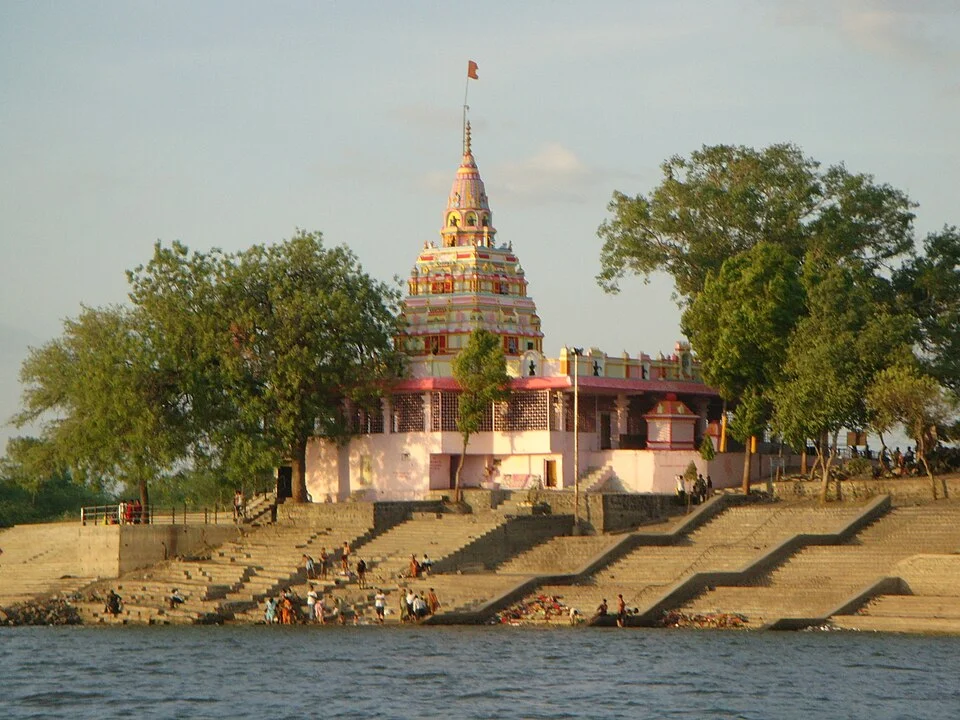
The Vishnupuri photograph genuinely shows temple surroundings, water and steps towards the bank. Its source identifies a Vishnupuri temple; the image alone does not establish a more detailed shrine identity or demonstrate that every step remains accessible today. Treat the district’s waterside setting as requiring a separate connection from the city centre. After the institution visit, urban pause and meal, measure the remaining time against the real outward and return journey. Swimming, boating and continuous bank access are not promised. If road or water conditions have changed, dropping the waterside option and staying in the centre remains a coherent choice. Two nights provide the useful ability to return to the same room and rest. A larger district tour requires added days; other centres such as Mahur should not be squeezed into the final morning. Keep that morning for baggage, check-out and the booked connection. Sources were checked on 5 October 2026, and capture dates from 2008 to 2015 remain visible in photograph credits rather than being confused with present conditions. Nanded is selected for a combination of institutional significance, real urban architecture and a regional meal.