
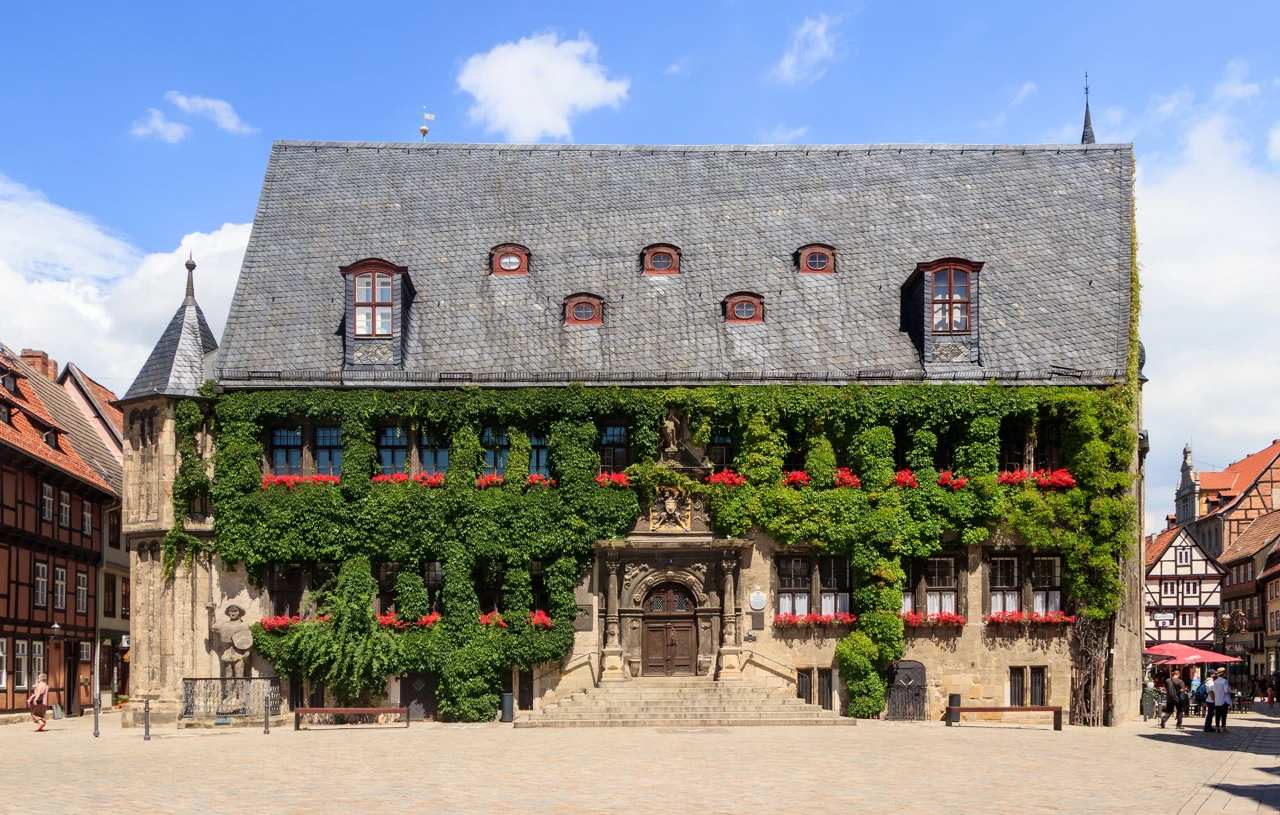
Build an overnight visit to Quedlinburg around three different ways of looking: the public face of the town at Markt, the details of houses along Hohe Straße and Finkenherd, and the history of authority and belief on Stiftsberg. The Tatil Merkezi Stork suggests leaving the museum for your second morning. If your arrival train runs late, an evening of streets and façades is easier to reshape than a programme resting on a single admission time. The photographs illustrate places at their recorded dates; they do not promise that a particular doorway is open today.
Begin at Markt and give the walk a clear start
The official tourism organisation introduces Quedlinburg through its historic townscape and timber framed buildings. Choose Markt as your first orientation point. Look at the Rathaus as a whole before considering its windows, entrance and stonework. Seeing an exterior and visiting a working municipal building are separate activities, so do not treat the door as an invitation to wander inside. Keep the route back to your accommodation alongside the square on your map. A recognisable starting point helps more than a long list of streets that you cannot remember afterwards.
Make this first stop an opportunity to agree on the shape of the evening. If someone in your group needs frequent rests, allow one before moving towards the smaller streets. Give a meeting place a precise façade or entrance rather than saying that everyone should return to the centre. In wet weather, retain a straightforward way back to the hotel. There is no need to complete every planned street on your arrival day; staying overnight gives you another chance to return. The point of this opening walk is to notice the town, not to measure your visit by the number of names crossed off a list.

Read the houses along Hohe Straße and Finkenherd
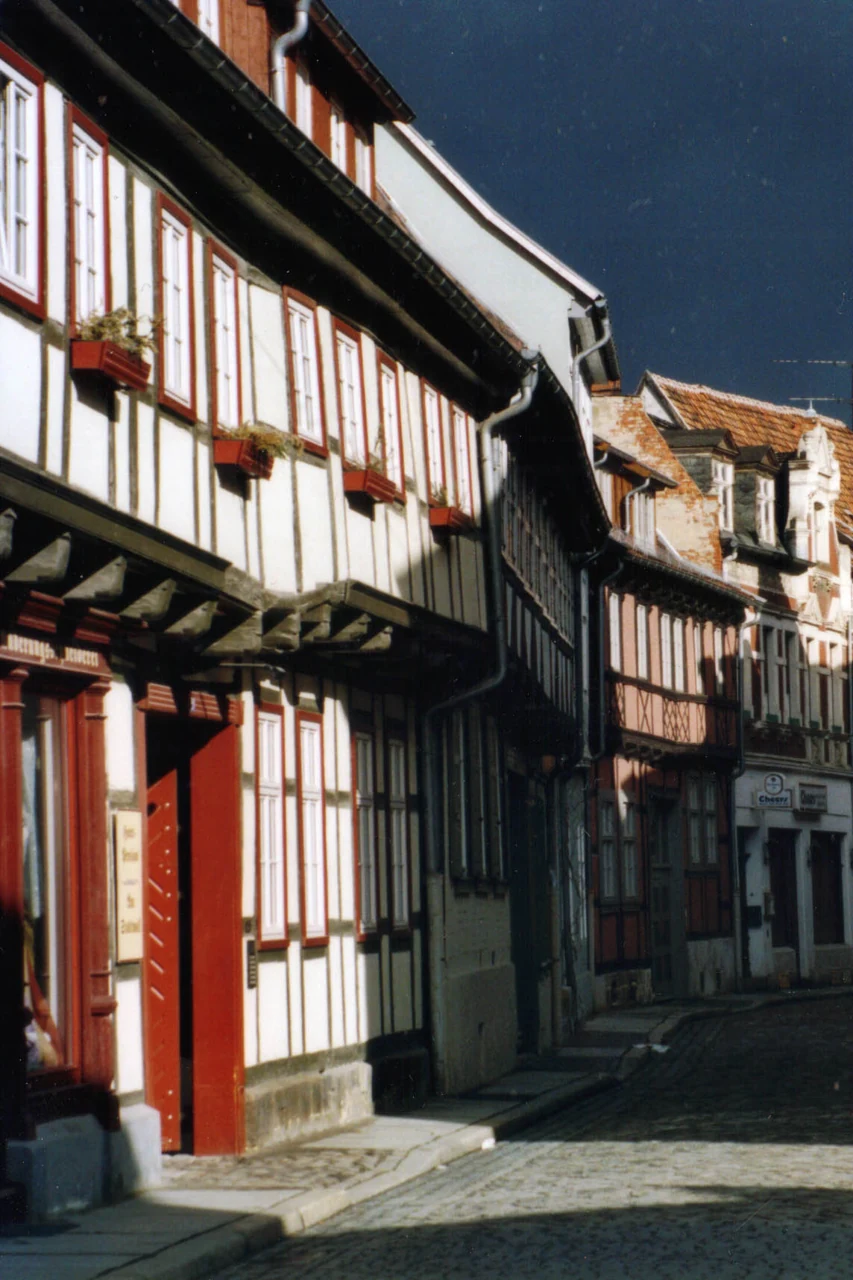
Use Hohe Straße and Finkenherd for a closer look at timber, plaster, windows and door proportions. You can compare a few fronts without assigning an unverified building date to each one. The Hohe Straße photograph here dates from 2002; the view of Finkenherd 2 was made in 2012. They offer a record of the physical streetscape, rather than recommendations for businesses shown on old signs. Keep passageways and entrances clear when taking your own pictures. Stay in the publicly accessible street and avoid turning residents’ windows into close inspection points.
Trace your chosen connections from Markt through Hohe Straße towards Finkenherd on the current town map. This order is a suggested walk, not a guaranteed walking time. Your luggage, breaks and the precise streets you take will affect the experience. The cobbled surface visible in the photographs is also useful when deciding what to wear: choose shoes you already find comfortable rather than testing a new pair on this outing. A small written route or offline map can let you put the phone away between turns. Before returning to your room, settle where tomorrow’s outing starts and how you will deal with your bags.


Give Stiftsberg its own morning
Stiftsberg’s visitor website brings the Schlossmuseum and Stiftskirche together in a historical narrative, with powerful women central to the museum’s account. Arriving rested makes it easier to follow that story after looking at the buildings from outside. The operator suggests around two and a half hours for the museum route. Use that as space to reserve in your day, with room to move at your own pace, rather than as a deadline to hurry through the rooms. The exterior photograph in this guide was made in October 2005; its scaffolding is part of that historical image.
Check the operator’s arrangements for the date you intend to enter. Museum and church admission conditions differ, so reaching one entrance before its last admission does not establish that you can complete the other visit as well. If steps, mobility needs or a pushchair affect your plans, ask about the current approach and internal access before setting out; the official tourism listing also carries access information. Avoid placing admission immediately before a fixed return train. A separate morning is more useful than an extra attraction added to the final minutes of your arrival walk.


A proper meal at a named address
Brauhaus Lüdde at Blasiistraße 14 offers a concrete place to consider for your meal. Its 2026 seasonal menu describes Kartoffeltraum as a baked potato accompanied by homemade herb quark and salad. This gives a traveller avoiding meat a specific main dish to ask about, while anyone avoiding dairy or needing other dietary adjustments should discuss ingredients with staff. Choose from the menu available at your visit; a dish description is not a claim that the writer has eaten it, or that your order has already been accepted.
Divide the walking plan around a meal break rather than leaving food until every sightseeing task is complete. The restaurant’s regular weekly schedule shows a Sunday closure, so do not build a Sunday itinerary around an assumed lunch there. Confirm the arrangements for your date, including any holiday variation. A proposed time in a guide is not a table reservation. If service does not fit your arrival, have your meal elsewhere and protect the next morning’s museum time. Budget separately for the main dish, drinks and any booking conditions instead of treating an old menu total as the bill you will pay.
Choose accommodation with the stairs in mind
Hotel Zur Goldenen Sonne presents rooms and holiday apartments by the historic Mathildenbrunnen. It is a named candidate for travellers wanting to stay in a timber framed building, with availability depending on dates. Its own information says there is no lift. If stairs or heavy bags make a difference to you, ask about the floor and room access before booking simply because the property is central. Confirm whether bags can be left before check in if you want to walk first. Assess payment, cancellation and parking arrangements against your actual booking, not another guest’s assumptions.


Keep arrival, sightseeing and departure distinct
The official transport page points travellers to INSA for bus and train timetable information. Search the service that fits your origin, connection needs and travel date. The trains in the station photograph are a scene from 2007, not evidence of today’s departures. Plan the station to accommodation leg together with the return journey after collecting your bags. If a Selketalbahn excursion interests you, allocate a separate part of the trip instead of inserting it between the town walk and museum admission.
For this overnight plan, the first day belongs to Markt, Hohe Straße, Finkenherd and your meal. The second morning belongs to Stiftsberg, followed by luggage collection and the journey home. Leave enough room between those commitments to deal with a slower walk or a changed meal arrangement. You can shorten the street section without abandoning the trip, or choose one interior visit rather than rushing several. Quedlinburg rewards looking at differences between places; an itinerary with breathing room makes those differences easier to see.