Tenkasi: separate the temple city from a waterfall excursion
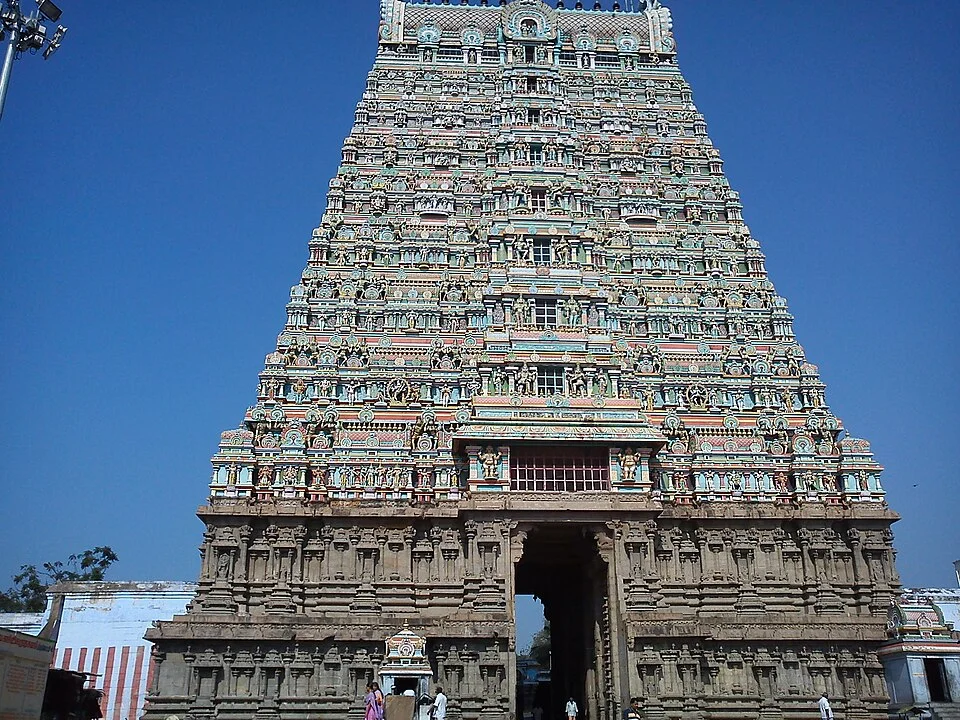
Our Tenkasi plan uses three calendar days and two nights: arrival on day one, Kasi Viswanathar surroundings and an urban meal on day two, and departure on day three. Visitors wanting Courtallam waterfalls should add a separate day and transfer rather than make the city pause depend on bathing at a waterfall. The Tatilmerkezi Stork's main interest is the relationship between a large gateway and a working city, with distant hills framing surrounding landscapes. The district HRCE account explicitly identifies Kasi Viswanatha Swamy Temple in Tenkasi. Build the day around permitted public approaches to this setting. Other towns on the district map are not quietly counted as the same urban stop. A meal, short shopping interval and walk with a clear return can answer a different need from taking one tower picture and immediately leaving.
Arrival and room: use the actual Tenkasi connection
For bus or rail travel, check the service's real Tenkasi stop and booking date. A district label does not replace the final city connection. Match the stop on the ticket with the room's entrance address and arrange the transfer with luggage separately. Arrival evening may need only food and accommodation, while establishing the temple direction helps the following morning. Discuss reception contact for a late arrival or luggage storage and rest for an early one. Accommodation towards Courtallam requires comparison with the movements of the city day; proximity to waterfalls does not create an easy walk to every urban destination. This short programme uses the same room for two nights and does not count arrival and departure as complete sightseeing days. Current fares and service frequency come from real bookings rather than guesses based on a tourism introduction.
Kasi Viswanathar: the gateway and its approach streets
Give the first part of the full day to Kasi Viswanathar Temple. See the gopuram in relation to its entrance, street and overall building scale instead of isolating one decorative figure. The official department page identifies it in Tenkasi. Exact historical years in differing descriptions are not needed to sustain this practical visit. Establish the visitor entrance and photography conditions on site, moving without blocking worshippers. Interest in a gateway does not grant access to every interior or permission to recreate every image. If an inner area is closed, the public approach and surroundings can still support the day. Keeping one main architectural focus instead of scattering the morning across the district leaves time for an actual lunch break. Use institutional information for the relevant day when checking hours or ceremonies; an older visiting schedule is not a guarantee.
An urban lunch interval with Tamil dishes and fruit
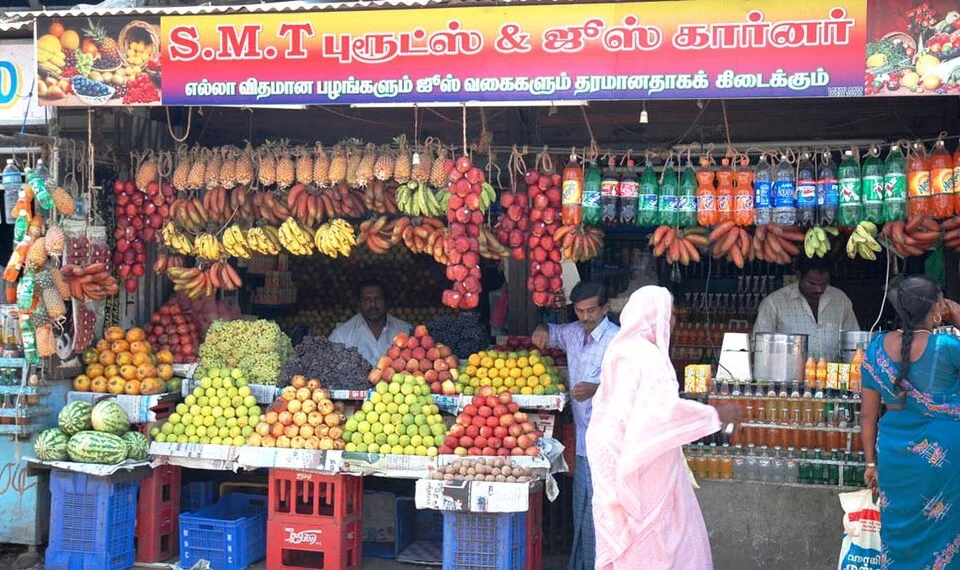
Look on the actual menu for idli or dosa with sambar and chutney as concrete meal choices. The national tourism food account places these in a Tamil Nadu context, not as preparations exclusive to Tenkasi. For a more substantial lunch, consider the rice and vegetable plates offered that day; kitchen information determines how they are served. Travellers wanting fruit can judge the available product and preparation at a wayside stall. The 2007 fruit-shop photograph is not a list of currently open businesses or stock. Use lunch for sitting, food and a short shopping interval rather than rushing out onto a waterfall road. A different available plate can serve dinner. The guide does not invent prices, rank restaurants or assume that every business cooks identical recipes. Food supplies a useful pause within actual urban movement.

Distant hills and surroundings: a short look with clear limits
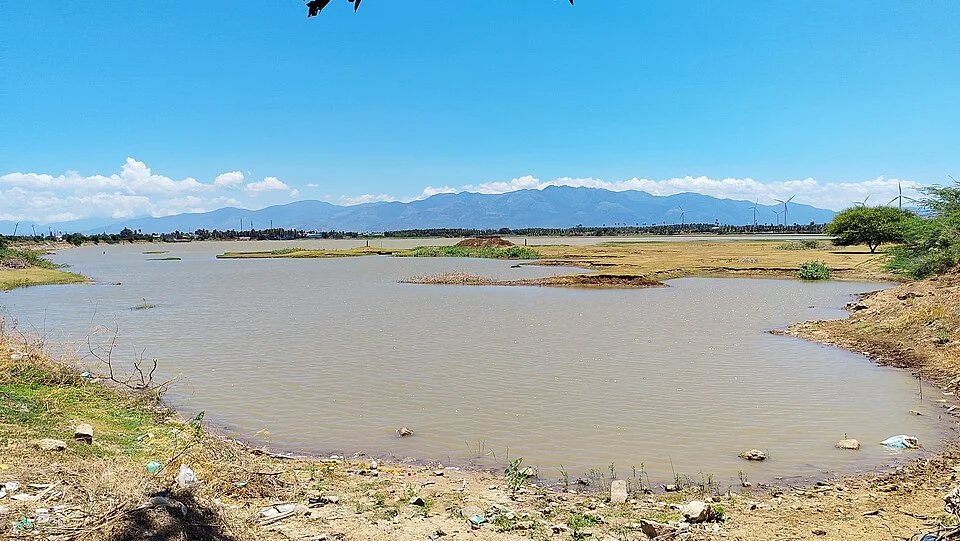
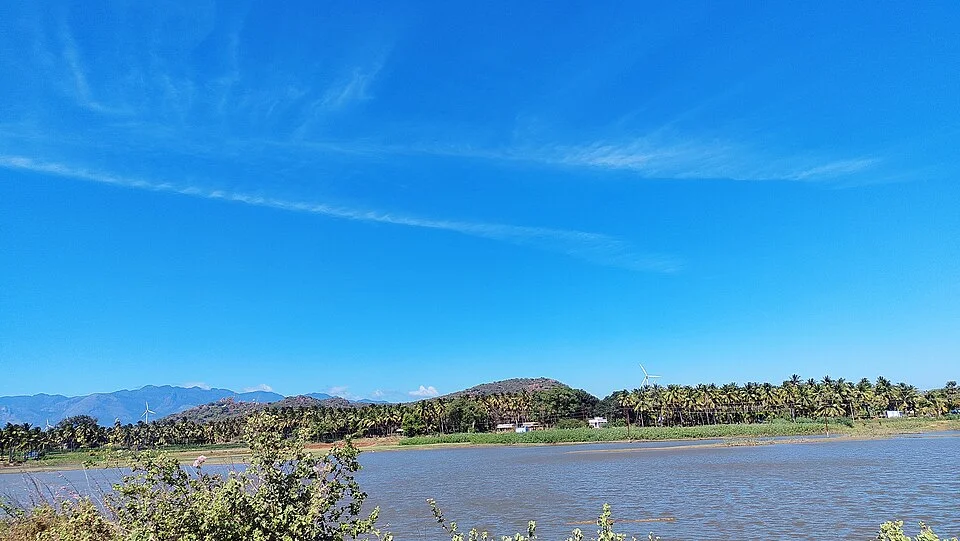
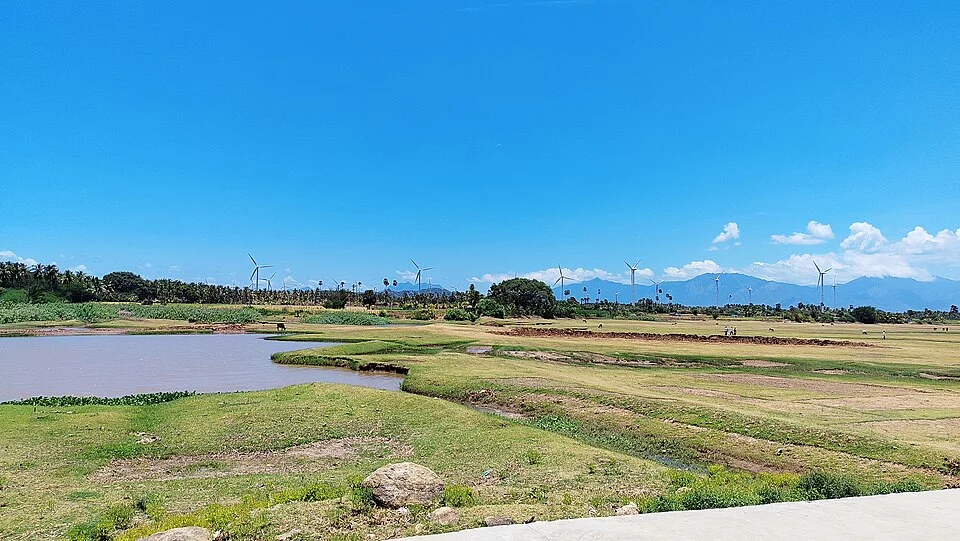
Water, fields and distant hills in Tenkasi's surroundings give readers considering a movement beyond town a different context. These images establish neither the same view from every central street nor unrestricted access to private land. In the afternoon, choose only a public road section with a clear start and return. Do not enter a field without permission or treat a waterside as an automatic walking trail. Travellers staying in town can use the same interval for another approach to the main entrance and everyday streets. Those making surrounding landscapes the whole day's interest should reorganise accommodation and transport accordingly. Source coordinates remain attached to the exterior scenes, which are not labelled temple courtyards. Water, cultivated ground and distant hills are geographic context, not a promise of an operated tour or publicly accessible recreation facility.

Courtallam: another day with weather and access checks
District tourism accounts identify Courtallam as a separate settlement associated with waterfalls. When adding a day, establish outward and return transport alongside weather and actual local access notices. Seasonal descriptions and bathing language do not prove safe, authorised entry at every waterfall every day. Water conditions or restrictions may require an exterior look or postponement. The main Tenkasi city day remains independent of that change: the temple approach, meal and streets form a complete programme of their own. Do not try to fit every fall into one outing, search for closed roads after dark or make entering the water a compulsory achievement. Promotional health-benefit language is not repeated as a medical outcome. Allow transfer time and avoid asserting opening or bathing hours when the current condition is unknown.

Two nights and departure on the third morning
Select a room against the temple approach, evening food and actual departure stop. Compare everyday central activity with the return connection from a quieter street instead of choosing difficult transport solely for a landscape view. Two nights in the same place avoid carrying large luggage during the complete day. Where mobility is limited, discuss entrance steps and pedestrian conditions with the accommodation. The final morning is for breakfast, luggage and reaching the booked service. Three calendar days mean two nights and one full city day; an additional Courtallam day remains outside that calculation. Sources were checked on 5 October 2026 without a promise of unchanged conditions later. The Stork's Tenkasi pause combines an architectural approach, an actual meal and working urban surroundings. It is not a programme rendered pointless when a waterfall is unavailable.