
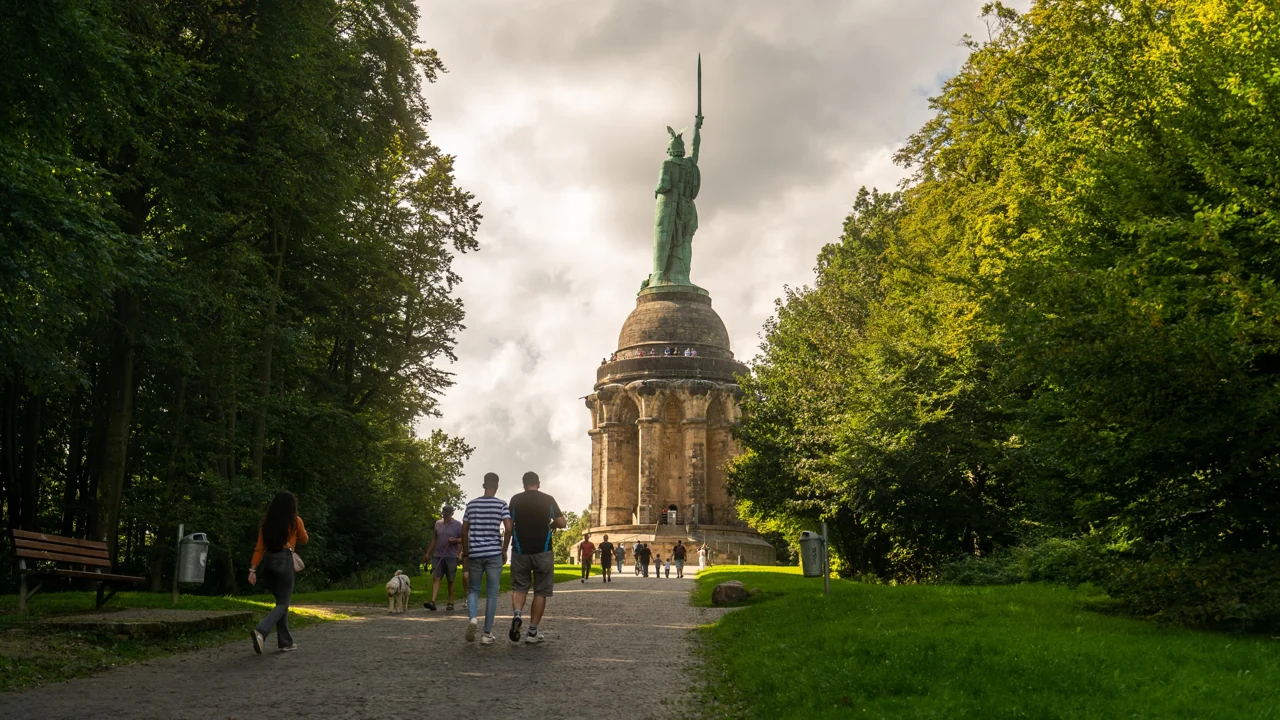
Detmold becomes easier to plan when you give its two principal outings separate amounts of time: an independent walk around Marktplatz, the palace and older streets, and a museum visit guided by a map of a much larger outdoor site. The Tatil Merkezi Stork suggests joining the nearby central stops first, then opening another substantial block for the LWL museum. With one night, choose the centre on the first day and the open-air museum on the second. If you have only a few hours, complete one outing. The Hermannsdenkmal in the cover photograph is another excursion, rather than the palace in the old town.
Move from Marktplatz towards the scale of the palace
Begin at Marktplatz. The tourist information office is at Marktplatz 5, a useful place to ask for a current map and settle which interior visit you want. Pause before heading for the palace and observe how the streets open into the square. Choose one front, one doorway and one street opening. Comparing these three scales gives the walk a clearer subject than taking repeated photographs from the same position. If companions plan to explore separately, describe a specific door or building for meeting again rather than relying on an indistinct instruction to return to the square.
The Fürstliches Residenzschloss listing gives Schloßplatz as its location. An exterior walk and an interior visit are different decisions. At the round tower, examine the window levels and roof form separately, then widen your attention along the façade. One tower image cannot explain the whole building. For admission, establish the arrangements and, where relevant, the language of a guided visit for your date. You can make a worthwhile stop outside without suggesting that you have entered every room. Keep what you actually see distinct from the experience you might book later.

Follow the relationship between wall and houses in Adolfstraße
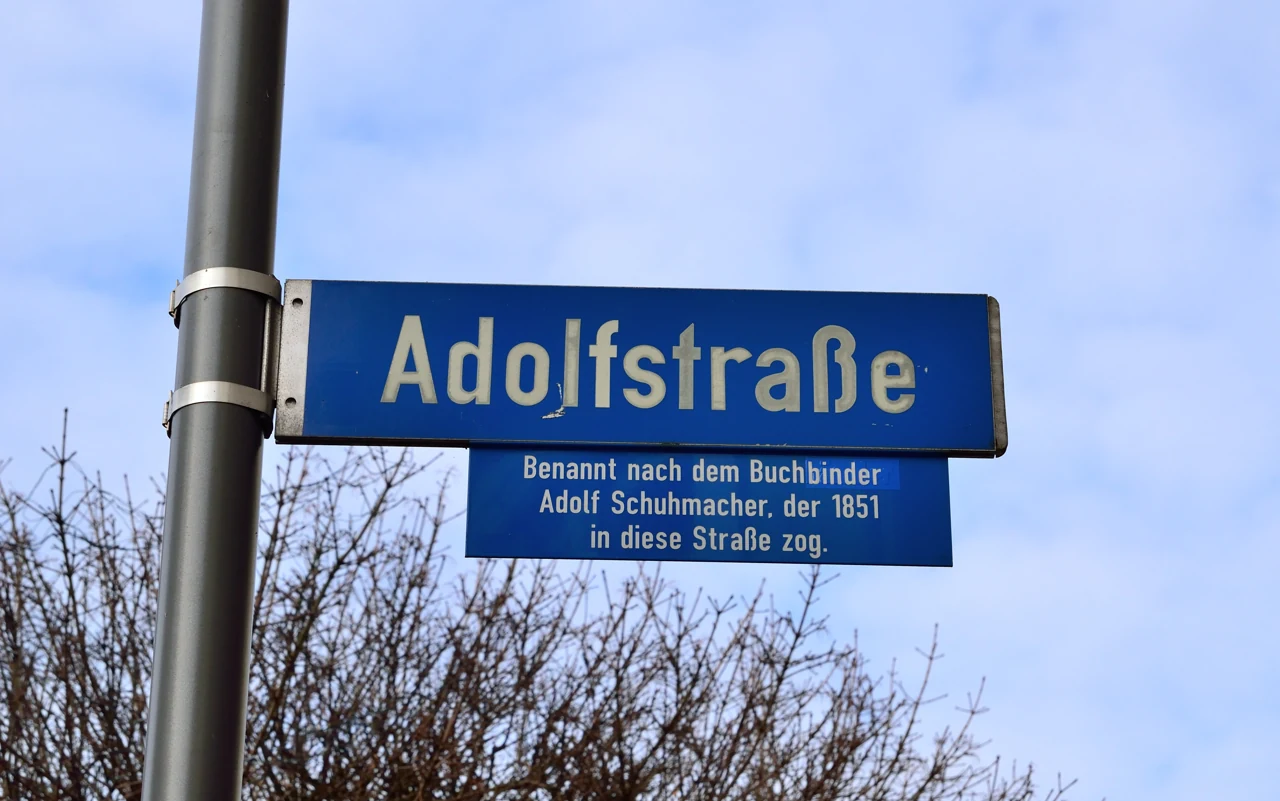
Make Adolfstraße the next street section. The regional tourism account describes a row of houses formed in the seventeenth century on and beside the historic town wall. That fact turns the street into a question about limited building space as well as attractive timber fronts. The street-sign photograph helps identify the place; it is not a panorama of the houses. After noticing the name, turn towards the buildings themselves and compare the relationship between roofs, doors and passage. A short connection on a map may still reward a deliberate pause.
Keep your attention on exterior architecture rather than private life behind open windows. There is no need to occupy a doorway to compare the buildings. If rain starts, shorten this street section and return to an interior you selected in the centre. Where pavement or entrance arrangements matter to you, obtain current access information instead of drawing an accessibility conclusion from a photograph. A good route need not be the same length for every traveller. Places where you can pause comfortably and make an easy return can matter as much as the number of names crossed off a list.
Distinguish the central regional museum from the outdoor site
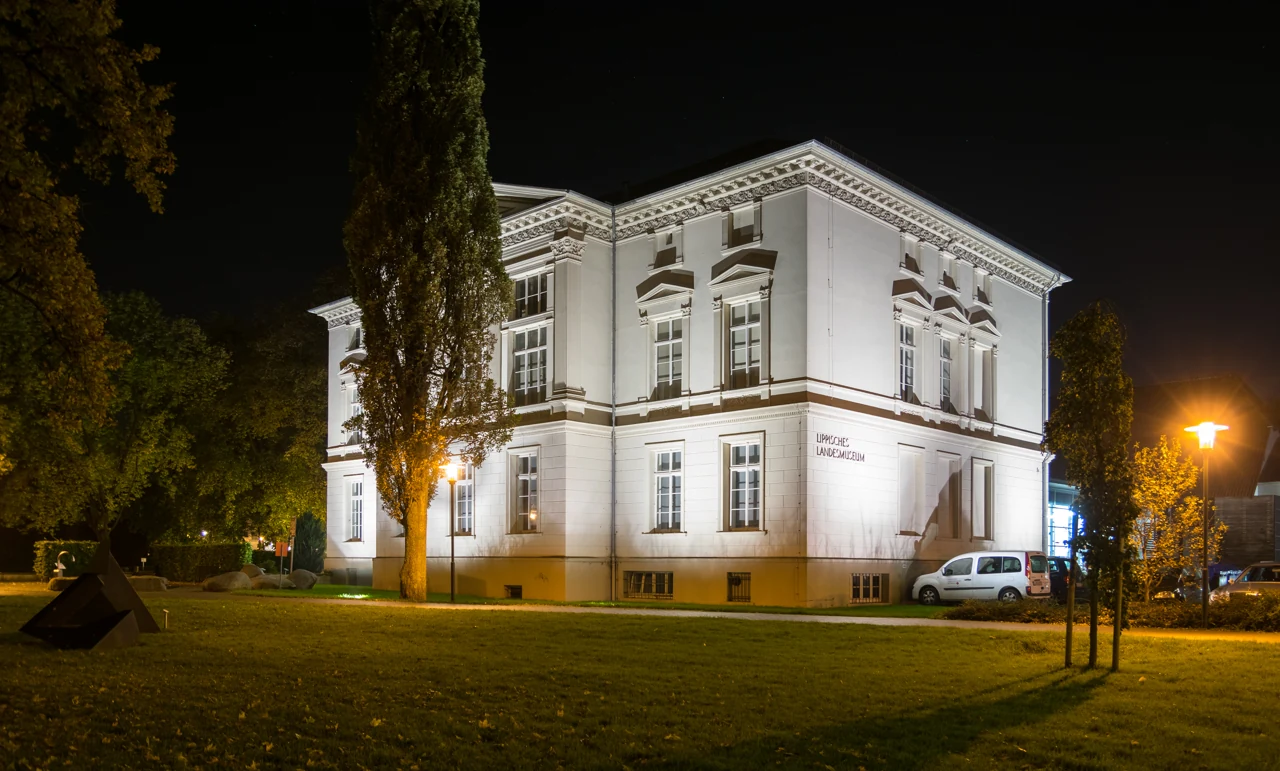
The Lippisches Landesmuseum is a separate institution in the centre, opposite the palace. Its account identifies natural history, archaeology, regional history, art and other collection areas. It offers an interior option worth researching if you want to stay near the town walk during a wet afternoon. The night photograph dates from 2014: it does not establish late admission or promise the same lighting today. Choose a particular exhibition from the current programme if that is your reason to enter. An appealing building does not require you to consume every collection in one visit.
Remove part of the exterior route when adding a substantial interior. You might see the palace only from outside and give the museum longer, or finish the streets without entering either. With different interests in a group, choose a clear meeting point for someone who leaves earlier. With a child, a question about one room or object can be a more manageable goal than completing an entire museum. This keeps the central outing coherent and allows the following day’s outdoor visit to be a different experience, rather than another stop rushed through in the same style.
Give Hellerlecht its own half-day
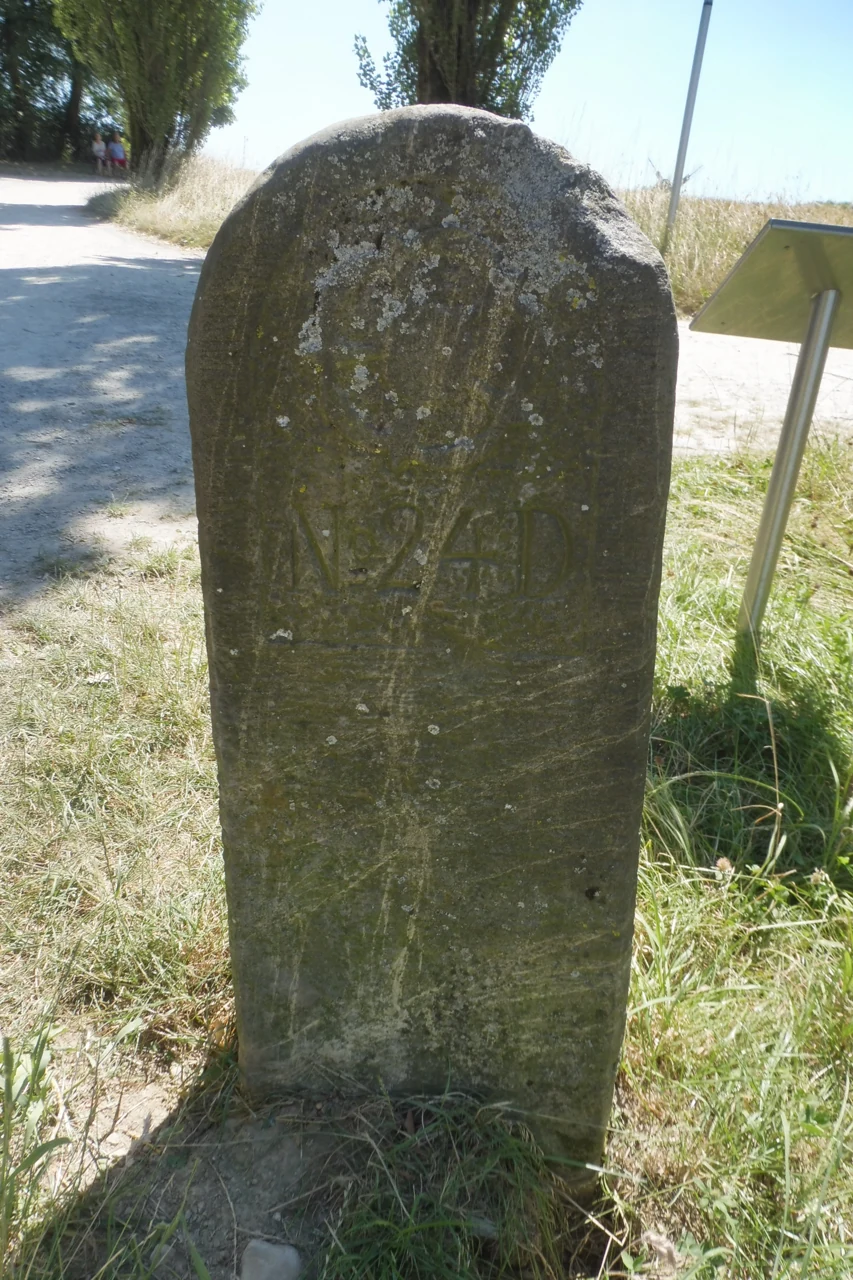
The institution formerly known as LWL-Freilichtmuseum Detmold now presents itself as LWL-Museum Hellerlecht. Historic buildings spread across an outdoor site call for a different approach from a short walk between central streets. Collect a map at the entrance and choose one area as your initial aim. Follow the relationship between a dwelling, a working space and a garden. Give one building time to explain how it was used rather than collecting one photograph at every door. The boundary stone pictured here dates from 1860 and was photographed on the museum grounds in 2018; its inclusion does not promise it will be the first thing every visitor encounters today.
The operator’s 2026 information distinguishes the outdoor season, 28 March to 31 October, from the Forum entrance and exhibition building, which operates throughout the year. Keep that distinction in mind for winter planning and check what is open on your date. Access to an indoor exhibition does not establish access to every outdoor house. Settle the route back to the exit near the beginning rather than only searching for it when tired. A craft demonstration may be an enjoyable addition, but consult the current event programme before expecting a named craftsperson to work at a particular hour.
Choose a substantial meal from an actual menu
Gasthaus Zur Ortmühle’s own menu lists roast wild boar with red cabbage, croquettes and lingonberries. It provides a specific warm main-meal candidate for travellers who eat meat. The address is Passadestraße 29, so treat it as a separate journey rather than a restaurant that will automatically appear on the Marktplatz walk. Assess transport and kitchen service times before deciding. The menu also lists Lippischer Pickert; the roast is the main plate selected for this plan. If ingredients are unsuitable, discuss another meal with staff. A menu description cannot answer every allergy or preparation question.
Check the restaurant’s current working days and table arrangements instead of planning museum departure as though a booking already exists. Consider the journey after dinner too: transport available on the outward trip may differ by the time you return to the hotel or station. Budget for drinks and travel alongside the main dish. After a long outdoor visit, preserve the meal as a break rather than the beginning of another sightseeing race. A further major attraction can belong to a later day, especially when fitting it in would turn dinner into a hurried obligation.
Choose accommodation with both station and museum in mind
Elisabeth Hotel at Elisabethstraße 5–7 is an accommodation candidate. The operator gives approximately 300 metres to the railway station. Establish the key-box arrangements with your own reservation if arriving late, and ask about luggage, room access and cancellation conditions for the option you choose. The official Detmold station page gives Bahnhofstraße 8 and current travel information. If you need assistance, research the service arrangements before relying on a member of staff being present when you arrive.
The museum’s current access page describes routes 701 and 782 from the station to Friedenstal, followed by a pedestrian connection. This matters when comparing older directions naming the Freilichtmuseum stop; check actual timetables and access notices for your day. If the Hermannsdenkmal appeals, use its own visitor pages to plan another outing. Making three separate decisions about the centre, the open-air museum and the monument removes the pressure to fit all of them into one short afternoon and gives each a clear place in the trip.