
Sangli: between a temple threshold and the Krishna bank
The Krishna River and Ganpati Mandir surroundings offer two connected ways to understand Sangli as a city. Maharashtra promotion discusses agriculture and turmeric trade in its district context; this does not require presenting every urban street as an open spice market. The Tatilmerkezi Stork suggests one night across two calendar days: arrive early enough to leave baggage at the room, visit the temple surroundings and sit down for a meal, then keep the following morning for a modest urban session and departure. If travel ends late, extending to two nights makes the same programme more realistic. The monumental temple entrance and Krishna bridge provide central interests; educational buildings in the Vishrambag area form a separate optional architectural session requiring their own transport plan. They do not form a tour completing every destination in the wider Sangli district. Audumbar, Tasgaon and nature areas require their own travel decisions. The purpose is a small central plan that does not reduce this river city to a single temple photograph or an agricultural nickname.
Choose the room through its real address
A central room can be assessed for returning from the Ganpati setting and resting after a meal. Accommodation advertised with a river view does not automatically provide the same convenience without its full address being checked. The combined names Sangli, Miraj and Kupwad do not make every terminal a walkable central arrival point. Examine the actual destination on the train or bus ticket alongside the room address and final vehicle connection. If arriving in another nearby city, allow time for the remaining road journey rather than calling that arrival in Sangli itself. Ask the accommodation about late reception, baggage storage and the morning check-out time. The success of a single-night programme depends on an accessible early arrival and the actual onward departure. When travel consumes much of the first day, two nights give more breathing space for the temple and river sessions. No fixed service frequency, ticket price or unchanging airport transfer duration is supplied. Make the transport choice through currently bookable tickets and the genuine address.
Read Ganpati Mandir through its monumental entrance
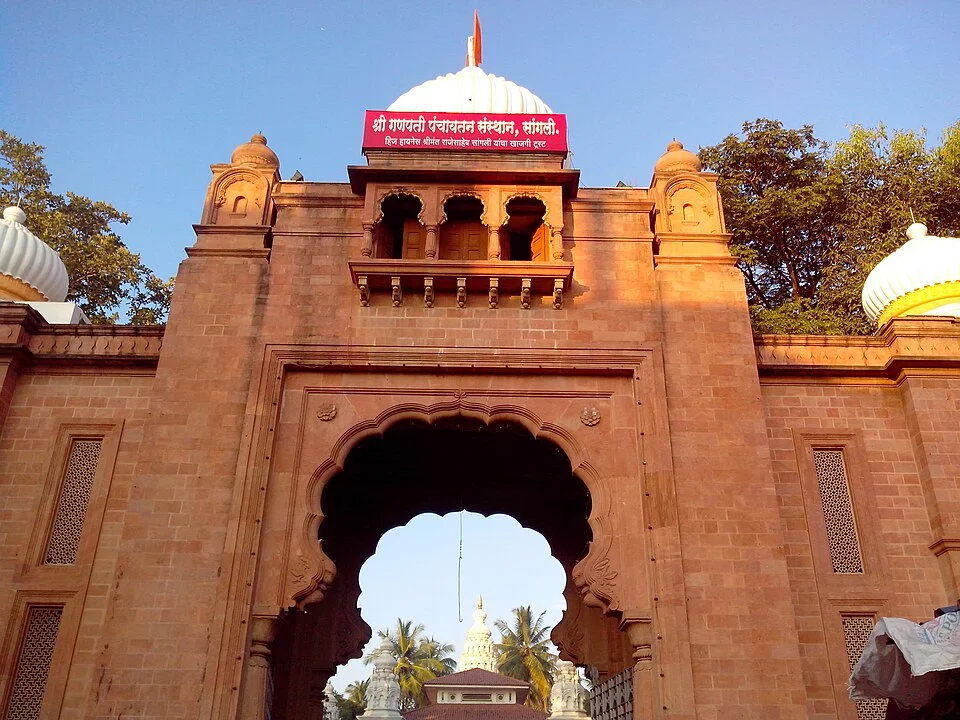
Official district and state sources identify the Ganpati temple in Sangli. The chosen gate photograph shows a stone facade, broad arch and domed upper arrangement. Instead of deriving construction dates from the colour or filename, this guide concentrates on the visible architectural relationship. Stand without blocking the entrance and observe the facade from an appropriate edge for a short first session. The temple remains a religious institution, so ask staff about entry, footwear, worship and photography arrangements. An architectural exterior is not permission to roam every interior space. If the intended visiting time coincides with crowds, shorten the exterior pause and return when appropriate. There is no need to constrict the travel programme around reaching an assumed ceremony. A photograph captured in 2013 is not current evidence for signage, maintenance or admission procedure. The gate itself is enough to explain the scale of approach and the character of the first institutional session. Allow the actual working arrangements to determine how long the visit takes.
Willingdon College: a separate architectural pause
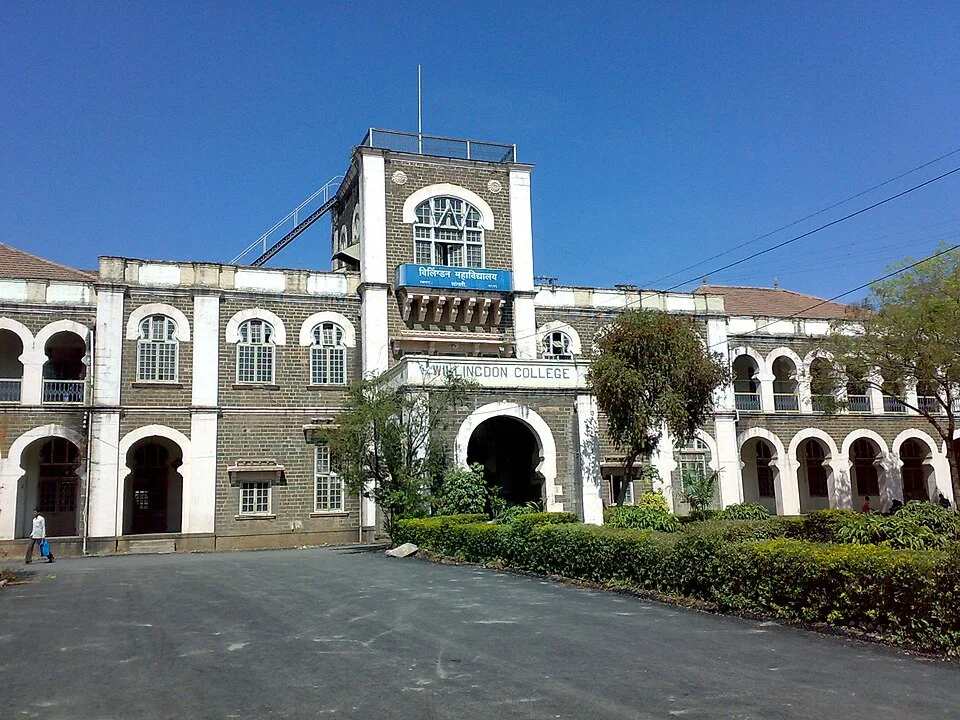
Sangli extends beyond the Ganpati and Krishna setting. Willingdon College in the Vishrambag area offers another view of the city through its educational architecture. The current institutional website identifies a working college in Sangli, while an official institutional report supplies its Vishrambag address. Plan any short architectural interest here through a separate transport connection rather than presenting it as the next doorway on a temple walk. The licensed photograph from 2011 shows a dark stone facade, white arches, a central entrance and a planted foreground. It does not establish unrestricted access to the photographed courtyard today. Prefer an appropriate public viewpoint; entering controlled space requires permission from the institution. A college during teaching or examinations is not a sightseeing performance. Travellers who do not want an architectural session can omit this part of their single full day. The Stork’s useful route is one with a few suitable stops, enough rest and a real return connection, rather than an obligation to open every door.

The Walchand gate and everyday Vishrambag
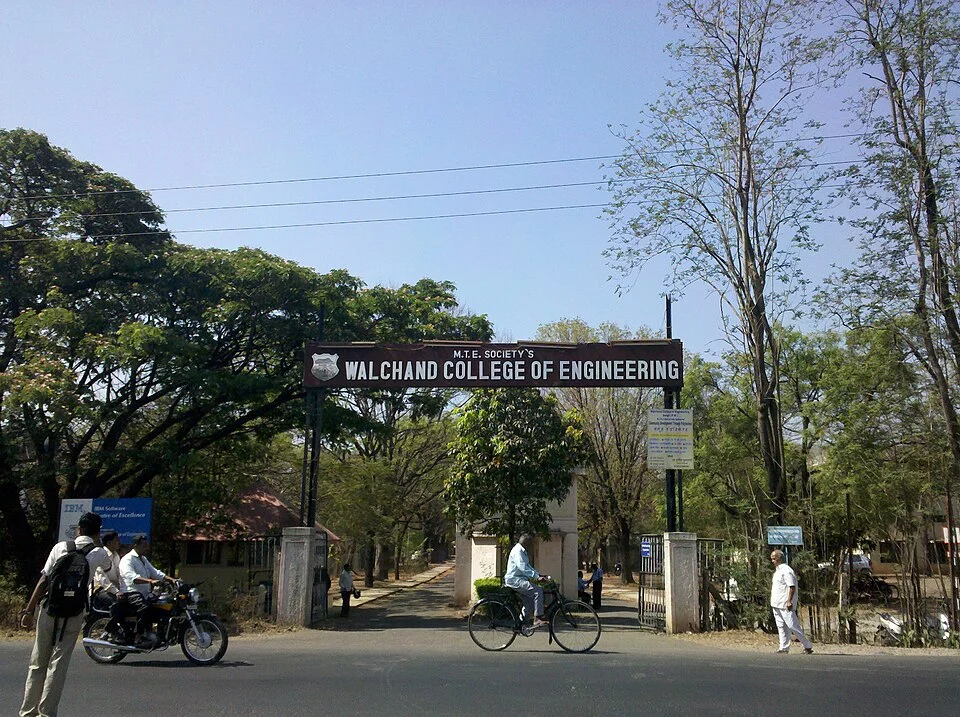
Official contact information for Walchand College of Engineering confirms its address in Vishrambag, Sangli. The chosen photograph from 2011 shows the named entrance from across a road, with trees, a cyclist and motorcycles. This is an everyday urban scene distinct from the monumental temple setting; it is not labelled as a street beside Ganpati. Willingdon and Walchand are separate institutions. Sharing the Vishrambag area does not establish an uninterrupted pedestrian circuit without checking the intervening roads. Confirm a suitable vehicle connection, where it can stop and how to return to central accommodation. The campus behind the entrance is not recommended as a publicly accessible park or a free visitor attraction. Observing from a permitted public position without obstructing normal movement is enough for a modest exterior pause. This adds the educational part of the city to the itinerary without promising admission to classes, a library or a course. Trees and traffic recorded in an older photograph are not assurances about present conditions.

Irwin Bridge: stone piers and urban connection
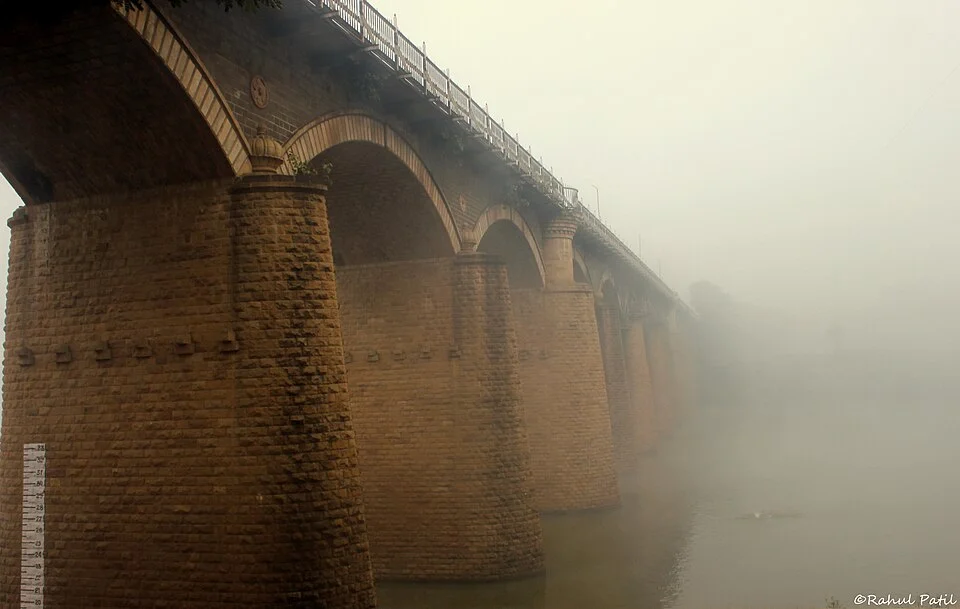
The selected Irwin Bridge photograph shows arches from below and substantial stone piers. This close architectural view offers a distinct subject from the more distant river panorama. Present pedestrian access to the exact lower viewpoint is not promised; road use, riverside access and any work arrangements need their own assessment. Seeing the relationship of the bridge and water from a permitted public position may be sufficient. A construction year or historical cost found only in a Commons caption has not been converted into definitive city history. The main interest is how the river shapes urban connections. If heading towards the bank after the temple session, find out the genuine road distance and return arrangement. An older photograph does not establish the present water level, a dry route below the structure or the safety of every edge. Reduce the bank objective during rain or high water. Photographing an arch closely does not justify assuming access to a location whose current conditions are unknown.

Chintamanrao: a distinct stone building
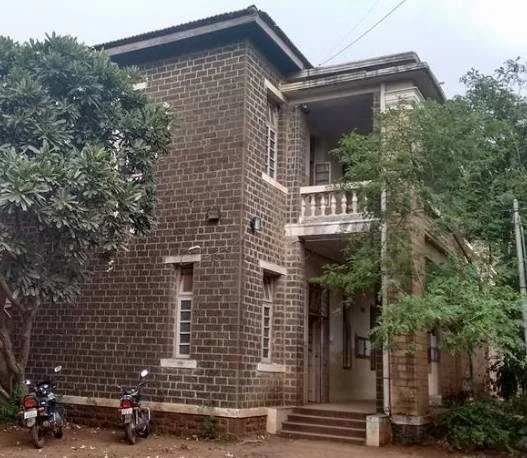
The institutional website identifies Chintamanrao College of Commerce in Sangli. The description of the Commons photograph dated 2019 identifies the Chintamanrao college, supported by its Sangli category. The image shows a stone building corner, an open balcony, entrance steps, trees and parked motorcycles. It is neither a different crop of Willingdon’s arched frontage nor the interior side of the Walchand entrance. It records an architectural detail of a third institution. If interested in seeing the surroundings, separately confirm the actual institutional address and an appropriate public approach. An exterior interest does not require entering a private courtyard without permission; the photograph does not explain which areas currently admit visitors. Its modest original resolution also limits detail, so unreadable signs are not interpreted. Choose one educational exterior if this kind of architecture interests you rather than making all three institutions obligatory stops. That decision preserves time for the temple session, a permitted river viewpoint, a seated meal and a return to your room.

A Krishna view followed by bhakri and pithla
Afterwards, where a genuine establishment serves bhakri and pithla, these provide a concrete seated Maharashtra meal. The state cuisine booklet describes bhakri as an unleavened grain-flour bread and pithla as a savoury preparation based on chickpea flour. Neither is claimed as an invention exclusive to Sangli or as a dish prepared identically in every kitchen. Ask about the flour, heat and accompaniments while ordering; personal dietary suitability does not follow automatically from a dish name. This meal supplies a rest between city sessions without invented prices or restaurant tasting memories. Travellers wanting a broader district itinerary should add days. Sources were checked on 5 October 2026 and photographs from 2011 to 2019 retain their genuine capture dates. Leave the final morning for baggage and the booked onward connection rather than counting it as another full sightseeing day.