

Bidar: one urban day from ramparts to madrasa
Bidar on northern Karnataka's Deccan plateau is a concrete stop for readers interested in the relationship between a fort and everyday city life. The Tatilmerkezi Stork suggests one full day for defensive surroundings, an audience hall, a separate gunpowder store and the urban Mahmud Gawan Madrasa instead of merely photographing a famous gateway and leaving. Three calendar days mean two nights: arrival, one full city programme and departure. This guide does not squeeze the entire district into the same trip. Ashtoor tombs, Basavakalyan and other district interests require separate connections and time. Following the different functions of buildings in this former capital avoids treating similar stone facades as repetitions. A named North Karnataka meal at lunchtime makes the architecture session more than a photographic collection. In hot conditions, prefer fewer exposed areas, actual drinking water and a seated rest interval.
Arrival connections and two nights in the city
The state introduction describes Bidar station in relation to Hyderabad, Bengaluru and Solapur; this does not establish identical trains on every route every day. Connect the actual station and booked service date with the room address. For air arrivals through Hyderabad, the selected flight and road transfer to Bidar are separate decisions. An approximate distance on a tourism page is not an unchanging driving time. A central room may simplify the madrasa session and return from dinner, whereas a station-area option prioritises luggage and departure. Evaluate late arrival, night noise and pedestrian street crossings against the actual address. Settling in and eating something light can be sufficient on the first evening rather than forcing an ambitious fort session immediately. Two nights in the same room reduce baggage handling on the full day. Confirming the real departure point the previous evening makes the last morning more comfortable.
The gateway: the first defensive layer
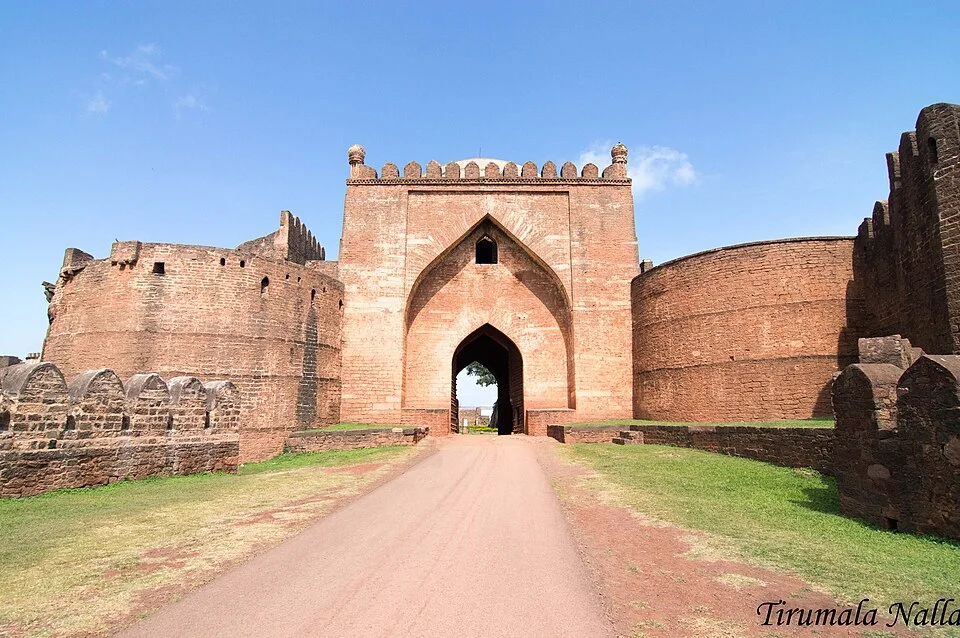
The district's historical-monuments page distinguishes the citadel containing palaces, mahals and a mosque from defences around the city built for ordinary residents. The gateway helps establish that distinction at the beginning. Examine the arch, thick walls and passage between gates from a permitted route rather than assuming access to every rampart or tunnel. Learn the actual visitor instructions first and set a small objective for the next session. The entrance photograph dates from 2016 and retains its photographer's visible signature. Nearby gates are not presented as five different crops of one scene. A broad defensive view, an entrance, an audience hall and a store illustrate different functions. In heat or restricted conditions, a safe ground-level look can replace climbing onto walls. If choosing a guide, ask for an explanation of the relationship between gateway and urban defences rather than merely a list of names.

An audience hall and traces of public administration
The district account identifies Diwan-i-Am as a public audience hall and also gives the name Jali Mahal. A building where rulers received invited people demonstrates that the fort consisted of more than military walls. The real photograph's source identifies a kings' audience hall; it is not described as a stage for a show operating today. Looking at spatial orientation, openings and surrounding structures from permitted ground creates a separate cultural session. Avoid climbing stones and approaching fragile edges. An older official account of decoration and coloured tiles does not promise that every ornament remains complete and visible. A seated pause after this section can be more useful than rushing through another large monument. Establish ground conditions and admission arrangements locally where mobility is restricted; a broad photograph does not guarantee step-free access. The hall offers a useful point for considering the relationship between palace life and administration of the city.


Barood-Khana: a separate store and open setting
The actual source description identifies the Barood-Khana image as a gunpowder room inside Bidar Fort. Its long building sequence and open foreground are a different scene from the audience hall. This stop offers a separate way to consider military logistics, without claiming that all rooms remain accessible to visitors today. Choose an exterior look according to the signs and staff instructions in the section actually reached. Openings in the ground, older stone surfaces and slippery conditions after rain may warrant a shorter session. Vegetation and maintenance visible in the picture date from 2015, not a promise of current conditions. Connect lunch to a genuinely open eating business rather than an imagined establishment within the fort. Establish that business and the return connection separately. Selecting a few building functions removes the obligation to finish every room of the whole complex. Fewer meaningful stops preserve energy for the madrasa.


Jolada rotti, ennegai and a North Karnataka meal
The state's cuisine booklet treats Bidar alongside Belgaum, Bijapur and Gulbarga within the northern Karnataka plateau. Jolada rotti, aubergine-based badanekai ennegai and hesarukalu provide concretely named regional meal components from that context. They are not presented as dishes invented exclusively in Bidar or available on every business's daily menu. Requesting an actual bread serving with a vegetable or pulse preparation makes a seated lunch interval practical. Establish spice, oil and individual ingredient restrictions for the plate being ordered. The tourism page's emphasis on spicy northern cooking does not promise identical heat or health benefits for everyone. Adjust sweet extras or second bread servings to appetite; a very heavy meal is not a requirement between architectural sessions. No current price or best-restaurant ranking is invented. Another small serving in the evening can provide a different eating experience. Dish names are sourced, while business choice depends on genuine current service.
Mahmud Gawan Madrasa and Bidri craft
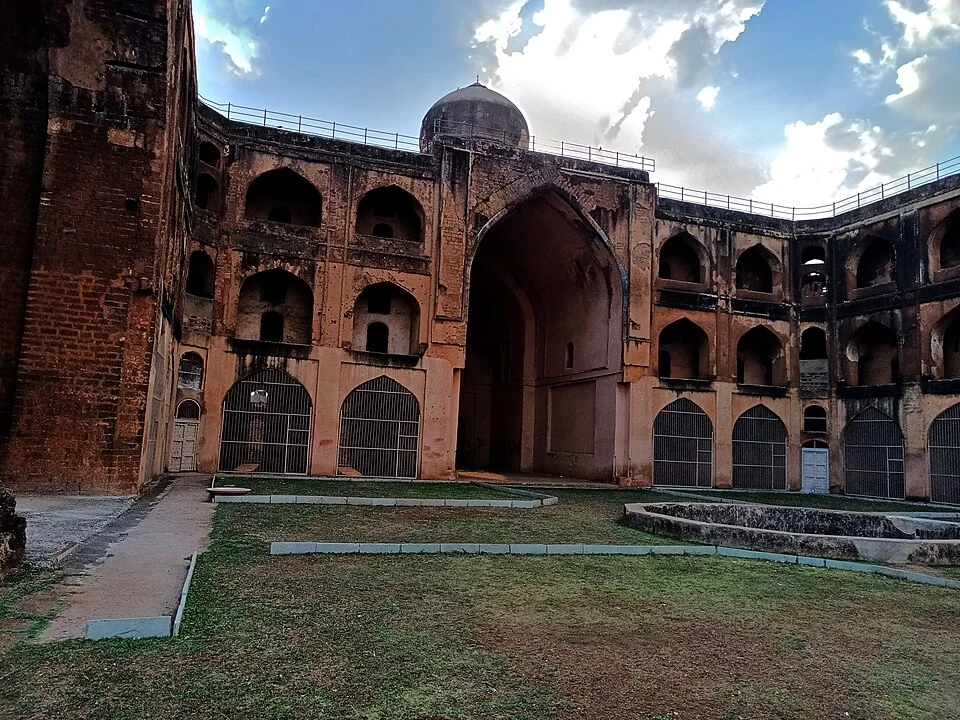
The district describes Mahmud Gawan Madrasa as a former institution of learning. Moving from the fort to this separate urban structure makes the functions of education, palace life and defence easier to distinguish. Choose a permitted look at the courtyard and facade for the arch sequence and surviving building scale; access to all storeys or specific interiors is not guaranteed. The 2023 madrasa photograph is a genuinely separate city location from the fort store. State tourism describes Bidriware as silver inlay on black metal. Where an actual workshop or shop is open, learning about material, workmanship and care from the seller supplies a different afternoon need. Every object is not claimed to be handmade, antique or automatically unrestricted for export. Ask permission before photographing production. Seeing a display is not the same as completing a workshop tour. Keeping the educational building and craft interval distinct prevents the city from being reduced solely to its fort surroundings.

The real calculation for three calendar days
Arrival day provides settling in; the full second day contains the fort entrance, two functionally different stops, lunch, appropriate madrasa surroundings and an optional genuinely open craft business; the third day is departure. Two full sightseeing days are not claimed. The official introduction particularly notes summer heat, while actual daily weather and admission conditions complete the decision. Shorten the programme during rain, maintenance or closures instead of inventing a museum alternative. Readers choosing Ashtoor tombs or another district stop must allocate separate time; the city programme does not automatically include that transfer. Sources were checked on 5 October 2026, with older photograph capture dates retained in short credits. The Stork links defence, a public hall, a logistical store and a learning building with a real meal rather than counting every monument. This meets a concrete two-night Bidar city need distinct from a broad Karnataka account or a simple fort list.