
Following the Freedom Riders story in Anniston
This Anniston, Alabama itinerary focuses on Freedom Riders National Monument and the places connected with its civil rights history. The former downtown bus depot and the bus-burning location outside town are separate stops, not a single museum complex. Give the first part of the day to reading and reflection, then leave room for a meal and a slower finish. The five images in this guide are documentary photographs from the NPS commemoration archive. They do not show an event scheduled for your visit, the current staff or people you should expect to meet. Read their captions as historical context rather than a current program announcement.
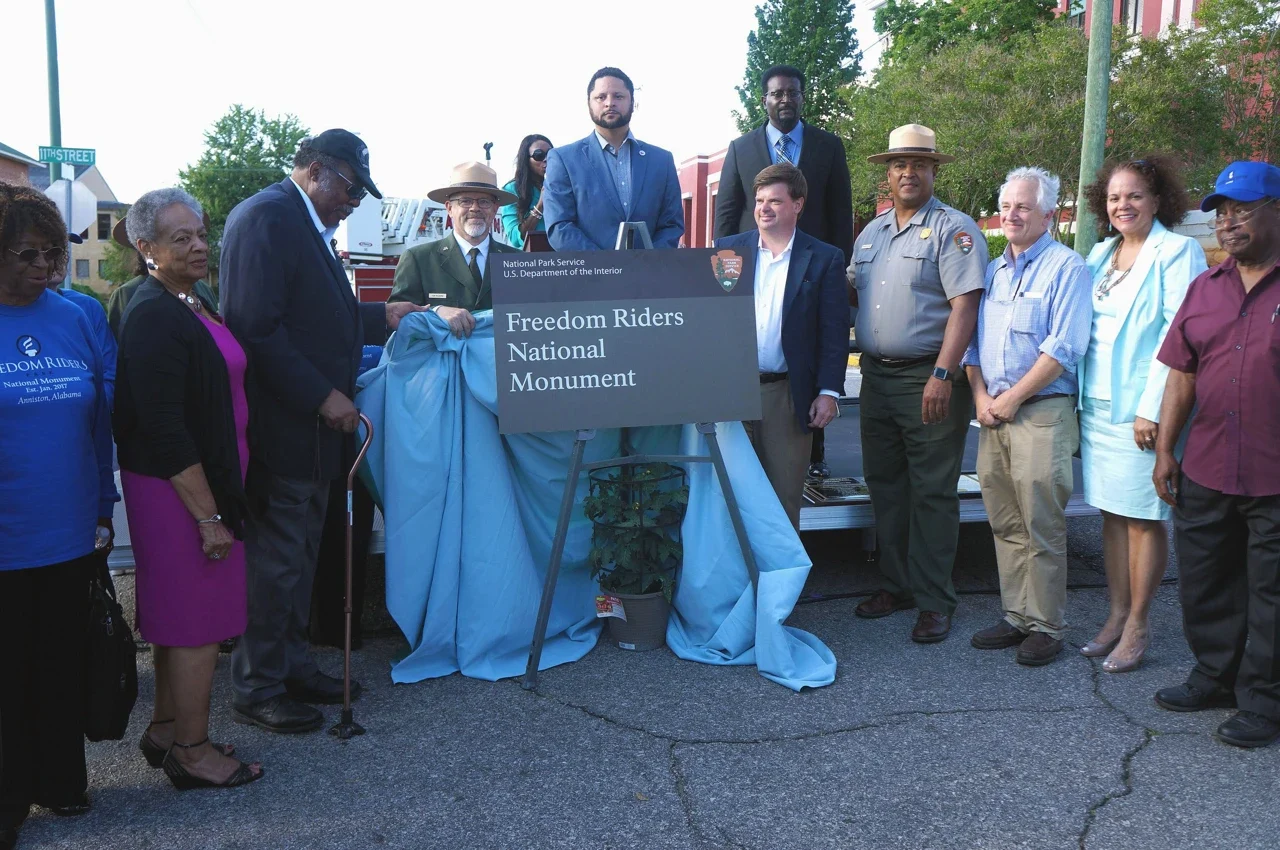
Why the places matter
The Freedom Riders challenged racial segregation in interstate bus travel and terminal facilities. On May 14, 1961, a Greyhound bus was attacked in Anniston and subsequently burned outside town. The NPS history explains how public exposure to the violence increased pressure for federal action against segregation. Approach the locations through the experiences of the people who fought for equal access, rather than treating them simply as scenery associated with a disaster. Following the sequence of events and distinguishing a person's account from later interpretation helps give even a short visit depth. Allow time to think between reading panels instead of moving immediately to the next photograph.
Start at the former depot
Begin at the Greyhound Bus Depot, 1031 Gurnee Avenue, the navigation address recommended by NPS. The park's Noble Street mailing address is not the same starting point. The official driving directions use I-20 exit 185 and Alabama 21 from the east, or exit 179 and Alabama 202 from the west. Check the final approach to the corner of Gurnee Avenue and Eleventh Street. A compact downtown visit gives you a clear starting point before driving to the second location. Keep the address saved offline so that finding the site does not depend on a reliable mobile connection at the last moment.

Build in reading time instead of allowing only a quick picture stop. With children, explain beforehand that the subject includes discrimination and violence, using an approach appropriate to their age. People in a group may need different amounts of time with the material; choose a meeting point rather than requiring everyone to read together. If you want to take notes, stand where you do not obstruct others. Give yourself a pause to consider what the setting adds to the story. Respect other visitors and the everyday activity around the site when taking photographs, and avoid turning a reflective visit into a hurried checklist.
Separate indoor hours from outdoor access
The NPS basic-information page lists the depot visitor center as open Tuesday through Thursday, 10 a.m. to 4 p.m. Outdoor exhibits are listed as accessible every day around the clock, though a daylight visit makes reading and navigation easier. Confirm the day's service if going inside is essential. No entrance pass is required and public Wi-Fi is unavailable. Visitor facilities are limited, so organize restroom and drinking-water needs before beginning rather than relying on an open building. Outdoor access does not establish that a ranger, an indoor exhibit or restroom service will be available at the same time.
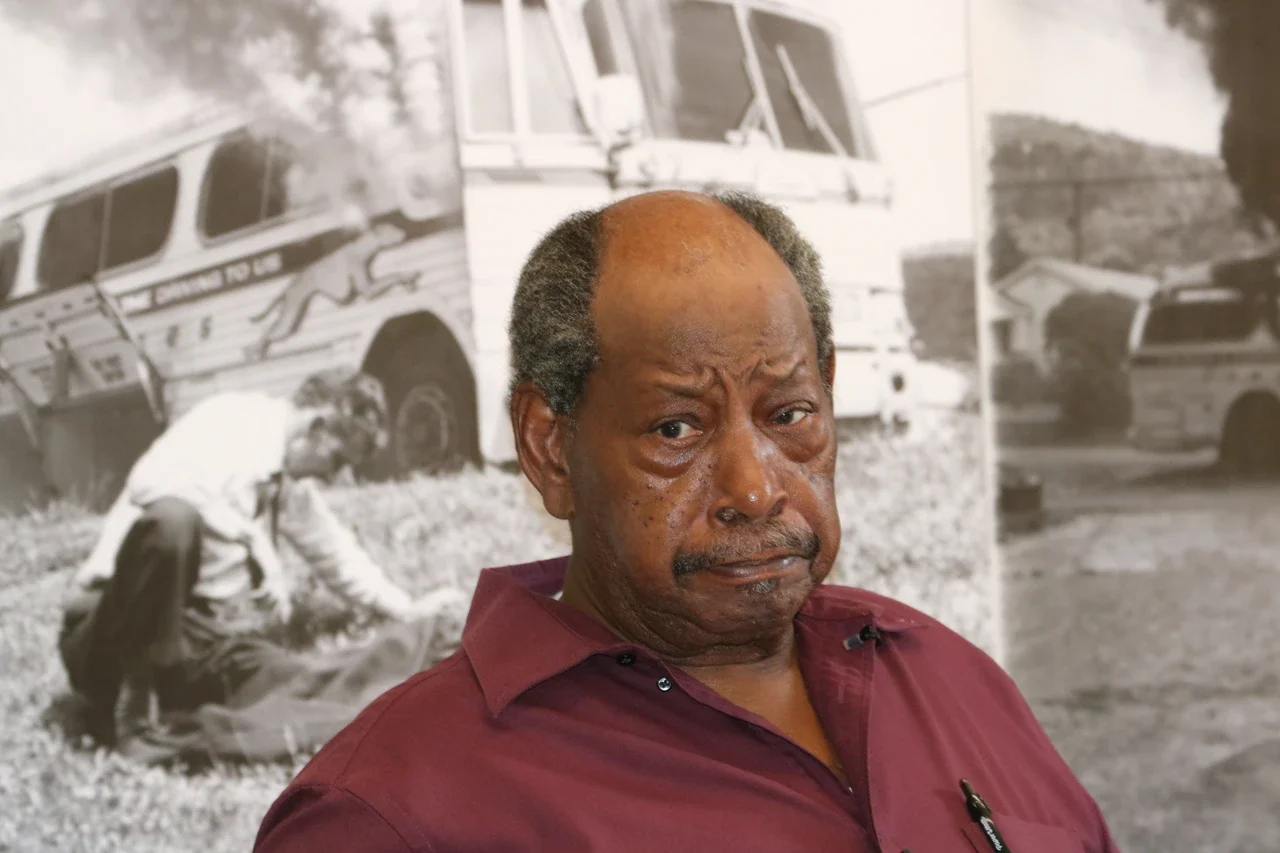
Continue by road to the Bus Burning Site
The second stop is at Alabama Highway 202 and Old Birmingham Highway. NPS identifies a gravel parking area at Barkwood Drive and Old Birmingham Highway. This limited-facility memorial location opens from sunrise to sunset. Travel there by road; do not treat the two stops as a continuous downtown walking route. Traffic moves quickly in the area. Do not use private driveways to turn around, stop unpredictably along the road or step into traffic for a better view of a marker. A short, attentive stop can still be meaningful. The priority is to understand the place while using the designated approach responsibly.
Accessibility and preparation
The depot's front entrance has a step. A ramp reaches the side door in the alley with the bus mural, but there is no automatic accessible door and assistance may be needed during opening hours. The Bus Burning Site is generally inaccessible because of uneven grass. Contact the park beforehand on 205-568-3963 if you require assistance. Bring comfortable footwear and an extra layer for an autumn visit. Current notices and signs take priority over a regular timetable. Decide which element you would postpone if a service changes so that the day does not depend on every part of the plan operating exactly as expected.

Keep supplies manageable and the route simple. A charged phone, saved addresses and enough water are more useful than adding another distant attraction before you know how the main visit feels. Agree on the return pickup if using a taxi or another provider, including where you can wait and how to contact the driver. This guide does not establish a scheduled bus between the two monument locations or promise an on-demand ride will be available immediately. Make the transport arrangement before leaving downtown, especially if someone in your party would find a long roadside wait difficult.
A documented main dish downtown
Rack & Roll Sports Bar and Grill at 917 Noble Street offers a practical meal option after returning to town. Its official ordering menu lists a Grilled Salmon Dinner with blackened, lemon-pepper or teriyaki choices. Confirm availability and kitchen closing time before ordering. A sports-bar atmosphere may not suit a group seeking a quiet meal, so consider the setting as well as the dish. A bar remaining open late does not mean its kitchen follows exactly the same schedule. Choose an approximate meal window rather than leaving food as an unresolved task after all the sightseeing is finished.
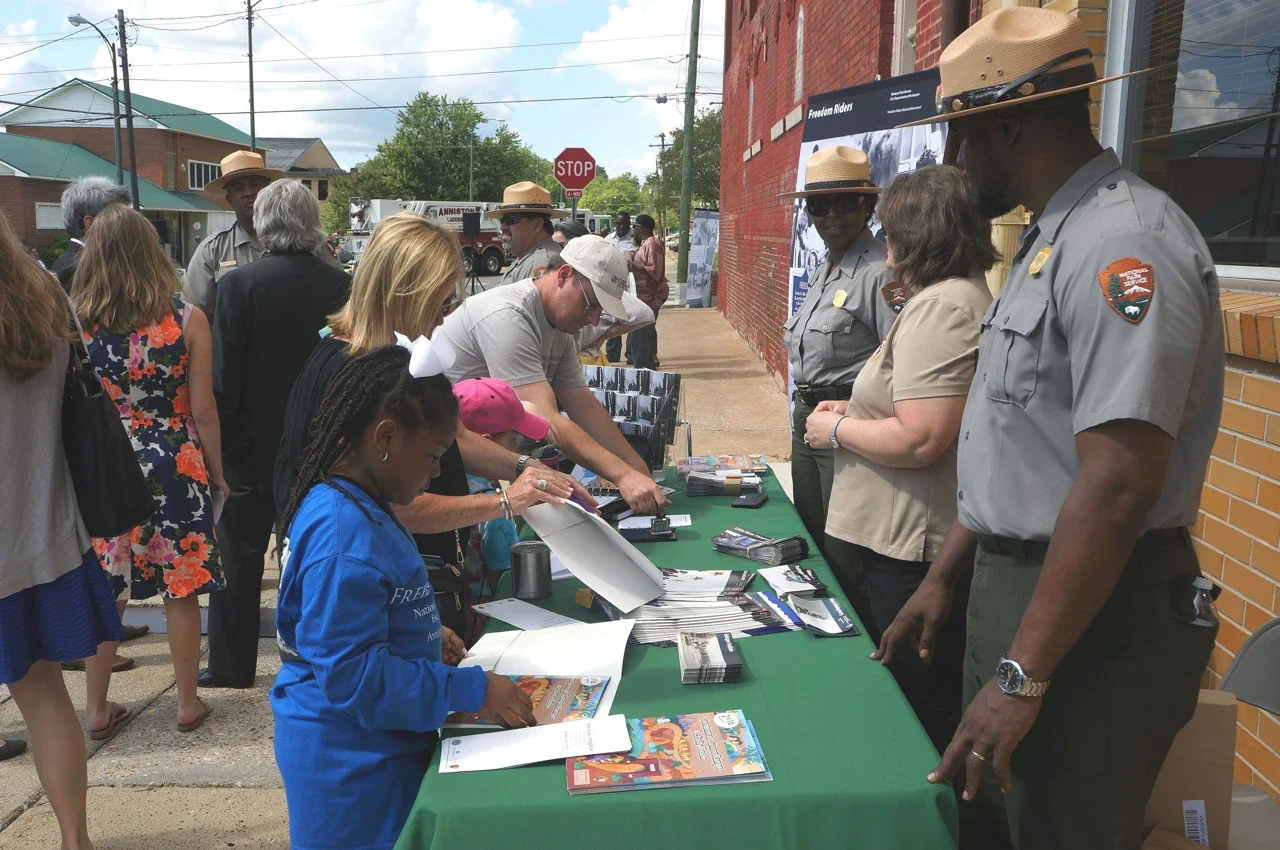
An overnight option in Anniston
Hotel Finial, BW Premier Collection at 1600 Quintard Avenue is a real lodging choice within Anniston. Its brand listing includes daily breakfast and Wi-Fi, with check-in at 3 p.m. and checkout at 11 a.m.; pets are not accepted. Review the room category, accessibility arrangements and cancellation terms before booking. A historic exterior does not establish that all rooms have the same layout or access. Ask directly about parking if arriving by car, or plan the last part of your journey if using public transport. No hotel transfer is promised here. Compare accommodation together with the practical cost of reaching the places you want to visit.
Set a pace that leaves room to reflect
An unhurried morning at the depot, a road journey to the second stop when conditions suit, and a meal back in town make a coherent day. If the interior is closed, you can concentrate on the outdoor interpretation and return for indoor material another time. With two days, leave some free time instead of filling every remaining hour with another appointment. Keep lodging, transport, food and contingency costs as separate budget lines. At the end, ask which person's story or which detail stayed with you. A worthwhile memorial visit depends on attention and reflection more than on the number of images taken.