
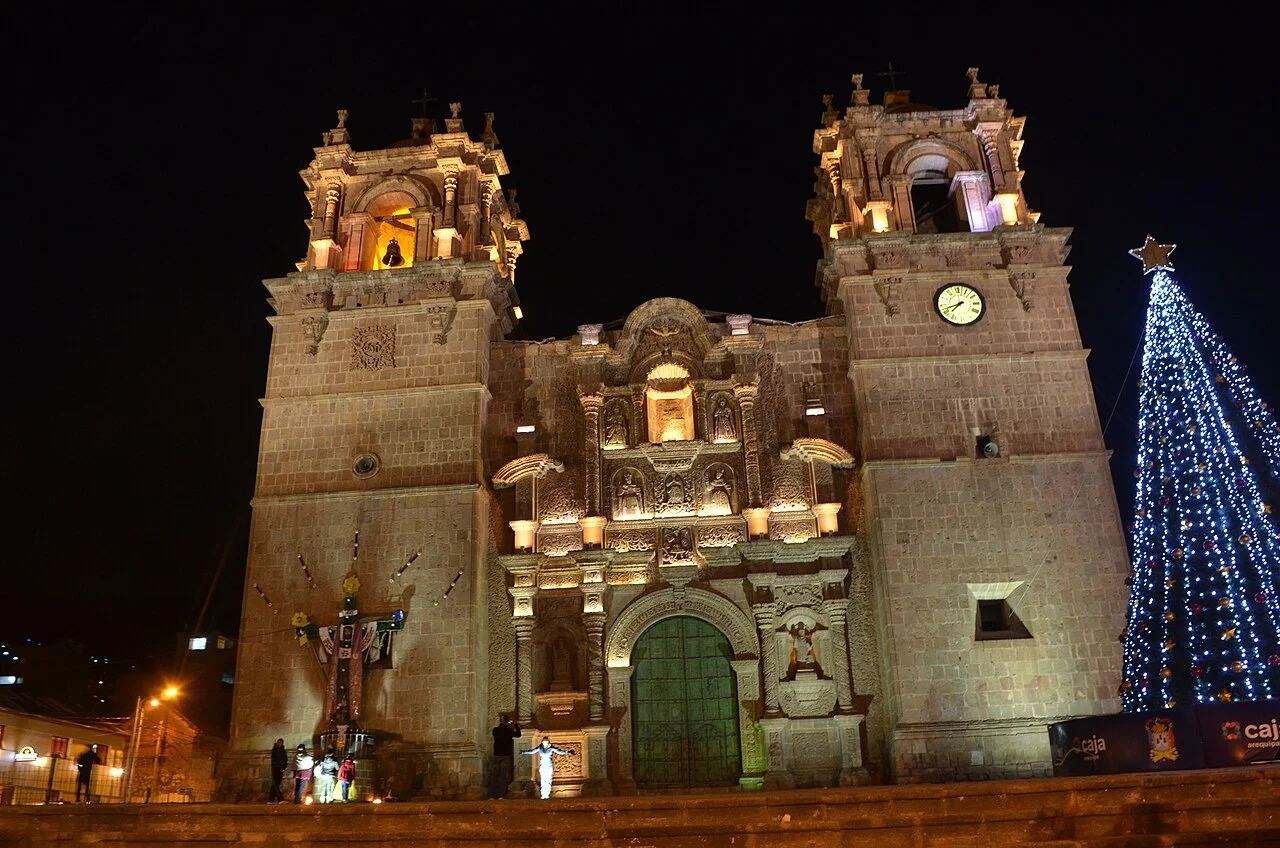
Not everyone arriving in Puno has to make an island boat their first decision. The Tatilmerkezi Stork proposes the city's own rhythm for one night and two calendar days: a historic central facade, a market with different potatoes, an actual Mojsa meal and a view towards the lake from land near the port. The route does not try to complete the Titicaca islands in the same day, nor is it Peru's country itinerary renamed with a city title. Centre and meal form day one's spine, with the port direction and departure connection on day two. If arriving by air, treat Juliaca and Puno as separate places; the city connection follows the flight. Seeing selected urban sections is another visitor preference, not an inadequate version of a day on a boat. The photographs retain their actual dates. Today's shipping services are not invented from an older harbour scene, and a restaurant menu is not used to claim a medical benefit.
Plaza Mayor and the cathedral: understand the centre on day one
Once at the room, resolve the luggage arrangements and give a short central section some time. Puno Cathedral's historic exterior offers a recognisable focus around the square. The December 2017 cover photograph records that date's night appearance; it promises neither the same lighting nor identical decorations on a future visit. The suggested arrival-day outing is a daylight central walk, not an instruction to reproduce the night photograph. Begin with the relationship of the two towers and doorway, then consider how the square helps orient the city. Interior opening hours are not invented from an exterior image. Worship and visitor admission follow their own conditions. When assessing a central room, entrance access, luggage storage and return after dinner matter alongside proximity to the square. An early departure can justify shrinking day two's port section while retaining this small introduction. Several attentive observations can be more rewarding than treating every building around the square as a compulsory stop.
Carlos Dreyer: a conditional culture pause using a dated official inventory
MINCETUR's official inventory identifies Museo Municipal Carlos Dreyer at the corner of Jr. Deustua and Jr. Conde de Lemos, close to the main square. The record's own date is 28 May 2024. Reading that page on 5 October 2026 does not by itself prove every listed time or price remains unchanged today. Accordingly, this guide offers neither a current fixed ticket price nor a guaranteed open door. Match the institution's actual admission arrangements to the date if wanting to enter; otherwise keep the facade and market section. The inventory describes collections concerning the Puno region's archaeological and everyday past. Adding the cultural stop raises a question different from a lake view: which objects help explain the history of life along the shore? Rights in collection photographs have not been assumed; this guide's images do not reproduce museum objects. The entire short programme is not made dependent on the museum opening. It remains a city stay if this optional institutional visit is unavailable.
Central market: potatoes and white chuño are different products
Do not compress the market section into a search for cheap food. The real September 2025 stall photograph shows different potatoes and white chuño; its source identifies the white products as naturally dried potatoes. It is not a restaurant-plate photograph. Observing product shapes, colours and the arrangement for selling gives a concrete starting point for considering meal ingredients. The guide claims neither that every stall opens on the same day nor that each vendor serves a prepared soup. Choosing a short market pause during the central circuit, then planning the meal at a separately verified address, keeps ingredient observation distinct from ordering lunch. Leave sellers' working space clear and consider consent if taking new photographs of people. The chuño scene is not assigned to another city's market or to the supply chain of a particular ingredient at Mojsa. Its value lies in documenting an actual Puno market scene with clear source, photographer and capture date. The image allows a specific observation without inventing a conversation with the vendor.


Mojsa: quinoa soup, trout and a separate cuy choice
Mojsa's own Spanish contact page gives Jr. Lima 635, second floor, and Monday-Sunday noon-9pm. On the 5 October 2026 check, the menu linked from the operator's own site lists quinoa soup, grilled trout with vegetables and potatoes, and Cuy Mojsa with half a roasted cuy and peanut sauce. These choices make an order specific to products and preferences. Choose soup with trout, or approach the cuy dish as a separate main; trying everything in one sitting is unnecessary. The peanut note is retained rather than assuming universal dietary suitability. A second-floor address means access needs should be considered separately from the doorway's street location; no lift is guaranteed. Drinks on the menu are not turned into protection from, or treatment for, altitude illness. Without fixing future prices, the plan establishes a meal focus whose actual menu has been read. The market photograph illustrates a different setting and is not falsely presented as a photograph of these restaurant dishes. Leave time for the chosen meal instead of pushing it into the last minutes of the central circuit.
Avenida El Puerto: turn towards the shore from land on day two
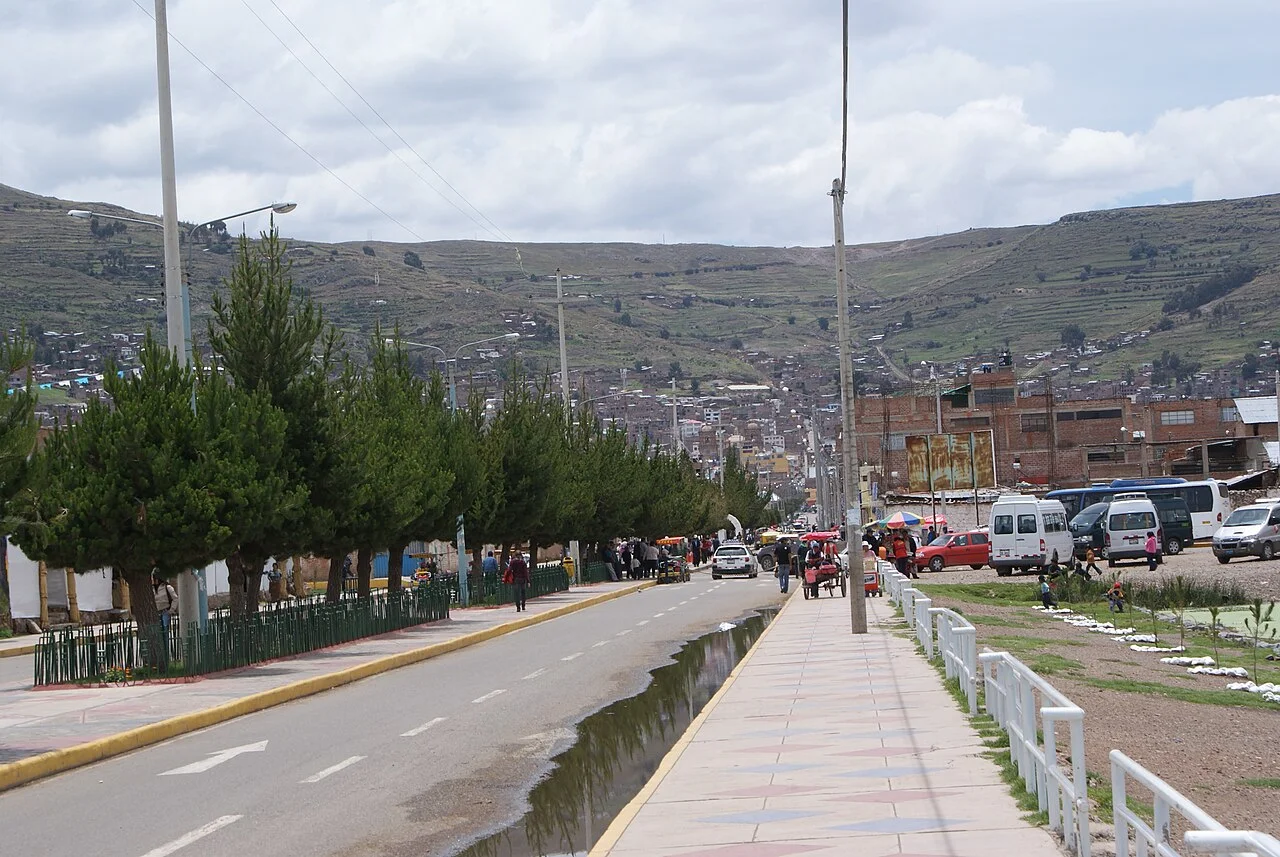
Do not equate the second day's port perspective with an island excursion. The January 2009 Avenida El Puerto photograph shows the relationship of roadway, pavement and the city's slopes. An old image guarantees neither today's junctions and bus stops nor continuous pedestrian access along the whole route. Before setting out towards the port, connect the luggage address with the final departure arrangement. This section's purpose is to see the transition from city to water; buying a long boat journey is unnecessary. A short outing with a selected land-based view can provide a smaller departure-day option. If day two allows very little time, resolve the central departure instead of treating the shore as an unfinished task. Make transport planning concrete through outward and return addresses before choosing a bus or taxi. The road's apparent ease in a photograph does not override traffic and local directions on the actual visit date. Keep enough room in the programme for baggage collection rather than ending at an attractive waterfront point with no return arrangement.

Port and upper street: two different lake perspectives
The September 2006 port image includes part of SS Ollanta at left and BAP Puno ahead. That historical appearance establishes neither a present passenger service nor ticket sales or the possibility of boarding the same vessel. Looking at the port from land and buying an operator's boat service are separate decisions. The March 2010 upper-street photograph provides a different scene of the lake seen among city buildings. It is not a crop of the harbour image; it shows another relationship between elevation and the built city. Reaching that old viewpoint is not made compulsory. Consider whether an uphill address matches actual mobility needs; this guide supplies neither a medical altitude programme nor a promise that everyone adjusts within the same period. The lakeside need not be understood only through activities on the water. Combining port, market and central facades makes Puno's value as a city more visible. Treat the upper-street image as orientation and a historical perspective rather than an obligation to climb before departure.


Juliaca connection, choosing a room and current election advice
PROMPERU's Puno page explains that air arrivals land at Juliaca and then continue overland to Puno. The two places are not presented as one airport-to-city doorway. Separate the onward connection from the flight time and actual accommodation address. No fixed transfer duration or urban bus operating at every hour is promised. A central room may suit the meal and square; a lake-facing address requires a separate decision about returning to the centre. UK FCDO advice for Peru, current on 5 October 2026, notes possible crowds and isolated demonstrations around the 4 October local elections and in following days. Avoid large gatherings and protests, reassessing road conditions for the visit date. The advice is not transformed into a safety guarantee for all of Puno. Day one offers centre, conditional museum and an actual meal; day two allows an optional port perspective from land, followed by baggage collection and departure. The Stork presents the city programme as a small visit with its own purpose, keeping flexible space for the real connection rather than adding an obligatory island outing.

