
Timaru works well as one night divided between two distinct parts of the city. The Stork suggests a first day around Stafford Street with a real meal and historic exteriors, followed by a Queen Street Botanic Gardens pause on the second morning. This is not another South Island city guide with its name changed. The Oxford's Tuesday closure and South Canterbury Museum's 2026 relocation process genuinely alter the order. The suggested arrival is Monday and departure Tuesday: Monday can support the Oxford meal, while Tuesday is better allocated to the gardens. If your dates differ, adapt the order to actual operating days. A centre and a garden are enough without adding an oversized regional tour.
Arrival and room: a practical base near Stafford Street
For a single night, compare central accommodation by its walking connection to Stafford Street, luggage arrangements and early departure procedure. A price comparison alone can conceal gradients or the return after dinner. If a larger room outside the centre suits you better, arrange the meal-to-room transfer separately. Drivers should ask their accommodation about parking rather than assuming every nearby street offers unrestricted free space. No unverified hotel recommendation or guaranteed quiet room is included here. The useful decision is whether the room supports your actual arrival, evening and onward connection.
Keep the regional transport ticket attached to that accommodation plan. The drop-off point, bag allowance and next-day departure need to make sense together in your real reservation. With a late arrival, choose the central meal rather than compressing the gardens and dinner into one short interval. Resolve luggage first so Tuesday morning can contain a manageable outdoor pause. If rain or wind narrows the walking window, remove one of the two city sections. The entire overnight does not depend on a museum being fully open or on fitting every building into a single afternoon.
Stafford and George: a concrete Oxford meal
The Oxford identifies its address as 152 Stafford Street at the corner of George Street. Its weekday pattern begins with coffee at 10:00, lunch at 11:00 and evening service at 17:30; it is closed on Tuesdays and public holidays. A Monday arrival can therefore be organised around an appropriate meal, whereas a Tuesday departure cannot repeat the same business as an open stop. Weekend service follows a separate pattern. Place eating time deliberately around check-in and the remaining walk. A late arrival is not a promise of a table or a final ordering opportunity.
The operator's own current menu names Pork Belly Nasi Goreng and crumbed sole fillets. Their names provide a concrete choice without inventing extra regional ingredients or a recipe the operator has not described. A hot main followed by Golden Syrup Pudding creates an actual seated pause rather than an unsupported instruction to try local food. Prices are not frozen into the future here. Read the operator's own menu for service section, portion and any ingredient needs. That menu belongs to The Oxford, not to the Ale House shown in one of the photographs; these are two different places and must remain separately attributed.
Bluestone exterior: read the Ale House photograph correctly
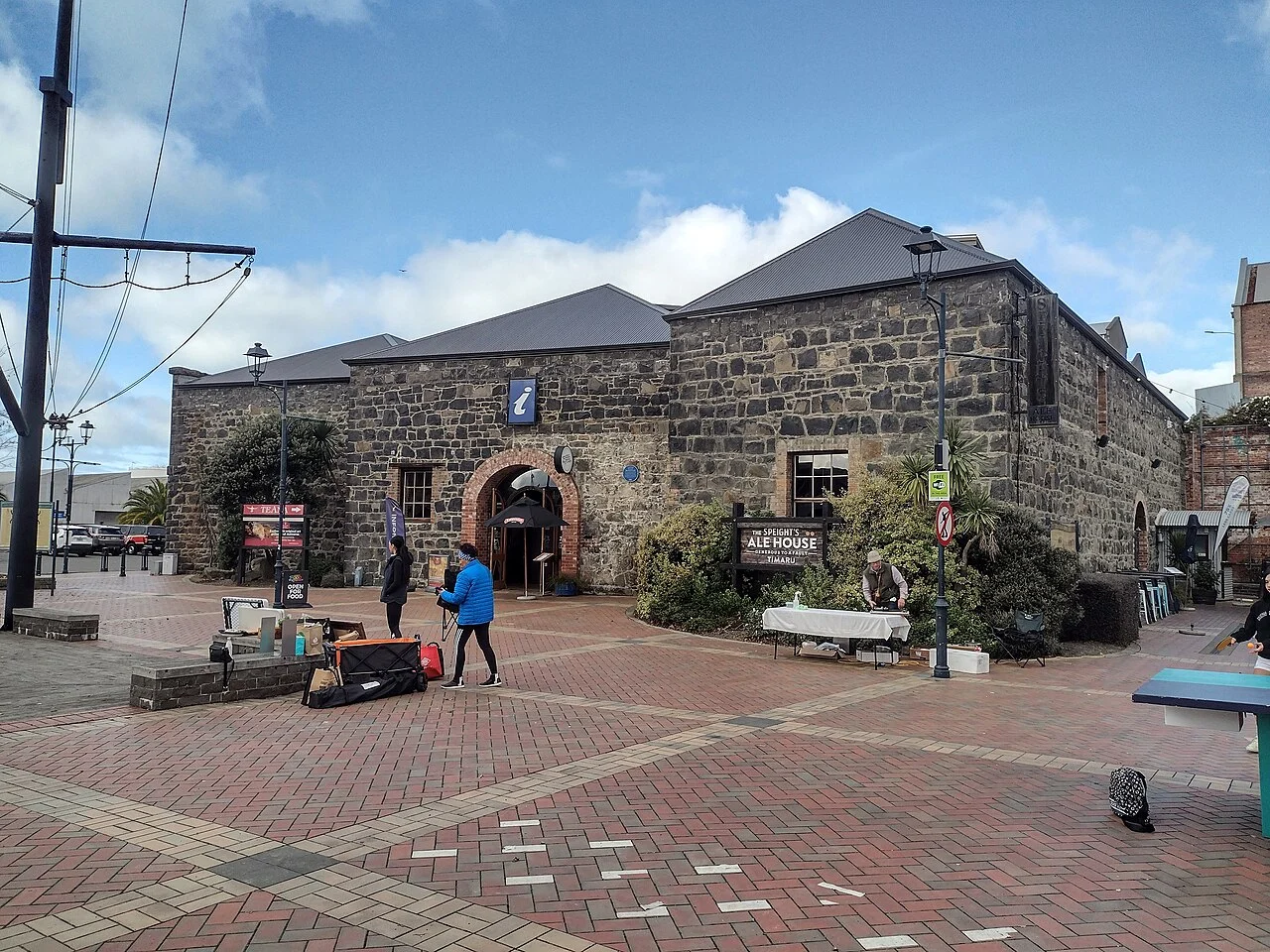
The Ale House source description identifies a building made from local Timaru bluestone. The purpose of this stop is to look at a historic exterior, not to transfer the recommended menu to that building. Seeing stone texture together with window patterns gives a modest central walk a concrete focus. If an entrance is closed or a facade is being worked on, the presence of a photograph does not grant permission to enter. Observation from an accessible public street is different from a claim that a hall, tour or food service is available.
The May 2023 photograph does not establish today's tenant, menu or opening hours. Its creator and licence remain visible, while current meal information comes from the relevant operator's own source. For two people travelling together, balancing an exterior pause with a longer seated meal can be useful. Rather than continuously chasing photographs, you can notice the street's scale and then rest. This approach also makes the central plan easier to share with a slower walker. It asks less of an arrival afternoon than a string of timed appointments across different parts of the city.
Sacred Heart: an exterior architectural pause
The selected Sacred Heart image shows its front exterior in May 2023. It is kept as an outside city stop; worship times, indoor photography permission and a guided visit are not assumed. If you want an interior activity, obtain separate current information from the institution before building it into your schedule. Looking at the whole facade from the street provides a meaningful architectural pause without assuming rights over contemporary artwork or collection objects inside. The photo illustrates the building and its historical capture date, not a complete visitor-service package.
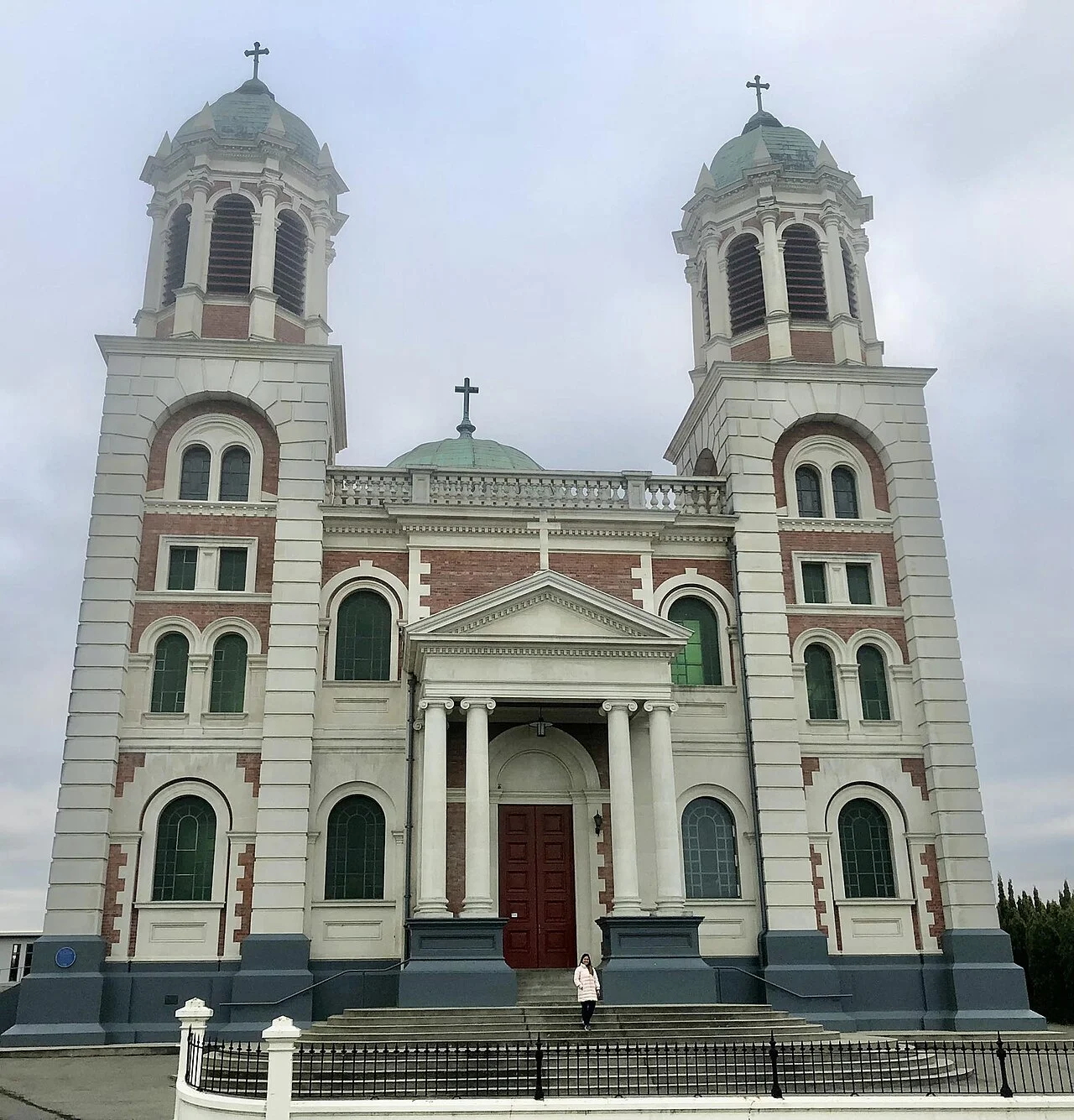

A short route does not need a lengthy history attached to every building. The first day's aim is to understand Stafford's setting, eat a concrete meal and see a few different exteriors. If children or companions lose interest quickly, shorten this stop and move to a rest. Neither the photograph nor this plan guarantees how an individual visit will feel. The useful element is the building's relationship to an ordinary city walk, rather than a claim that access is automatic or that seeing it must involve a ticket, a purchase or an indoor programme.
Customs House: distinguish an archive from the present
The Customs House image is an archival photograph dated approximately 1902. Such an old image says nothing about present-day entry or operations. Its value is the historical appearance of city architecture, and it is not presented as a photograph taken today. Even if you choose an exterior walk nearby, this guide does not promise that the old viewpoint remains available or every architectural detail is unchanged. The approximate date is retained explicitly, rather than being replaced with a false exact capture date.
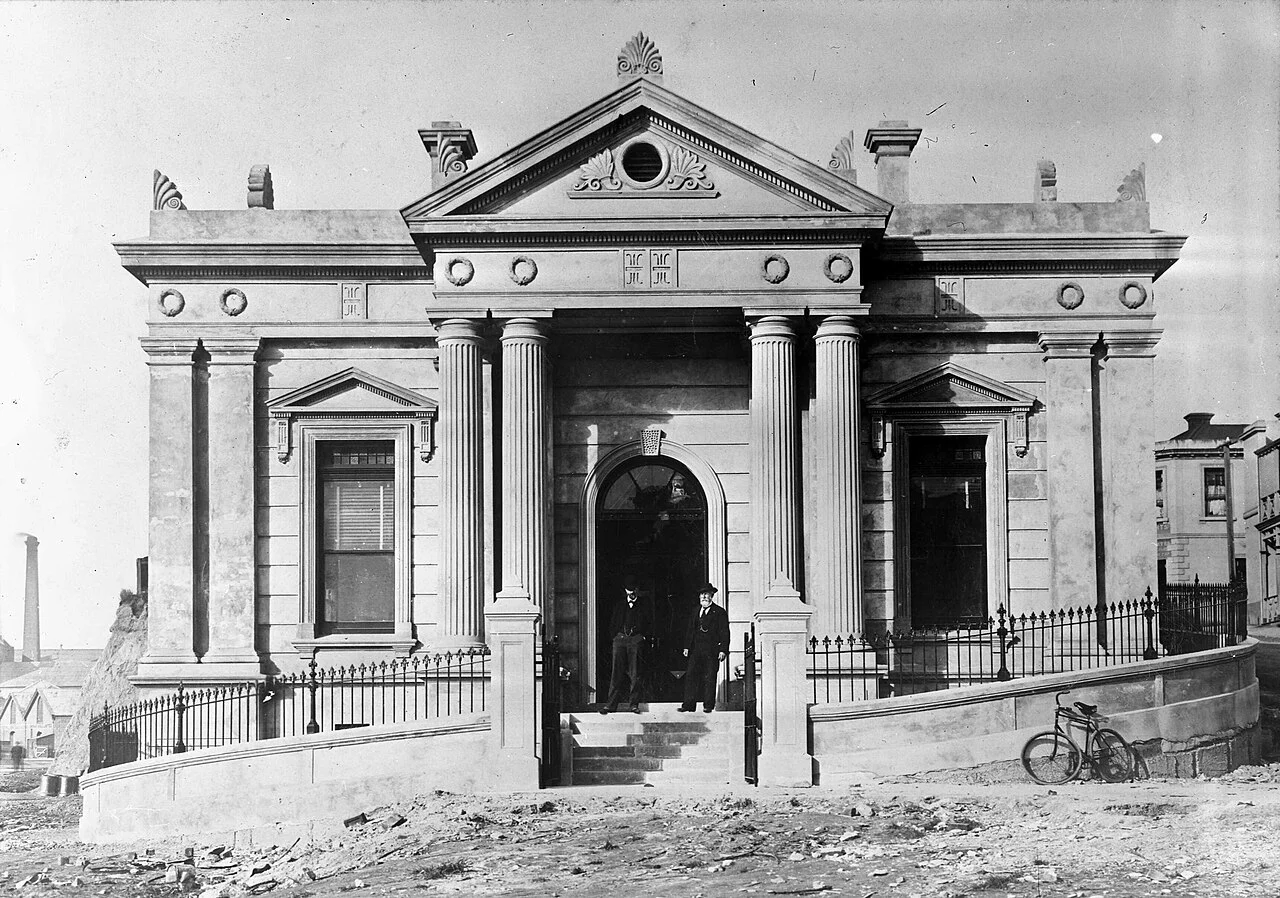

This archival section is a useful reminder of the difference between a current route and an old view. Vehicles, road arrangements, people and doorways visible in the photograph would be unreliable material for modern transport instructions. Instead, use your actual accessible route and treat the historical image as a reading pause. A public building's history and its present service require different evidence. No invented personal visit is used to join them together, and no old photograph is treated as an invitation to enter somewhere that may now have a different use.
Queen Street: different scenes on the second morning
Timaru District Council's Botanic Gardens walking page starts at the Queen Street entrance. Its opening route follows the road left past the conservatory and fernery entrances; a route description does not guarantee today's access to every interior section. Keeping the gardens as a separate visit makes the time remaining before departure easier to see. After entering, choose a modest loop rather than attempting every path. You can take a seated pause and return to the same exit. A more detailed park exploration belongs to a stay with more time.
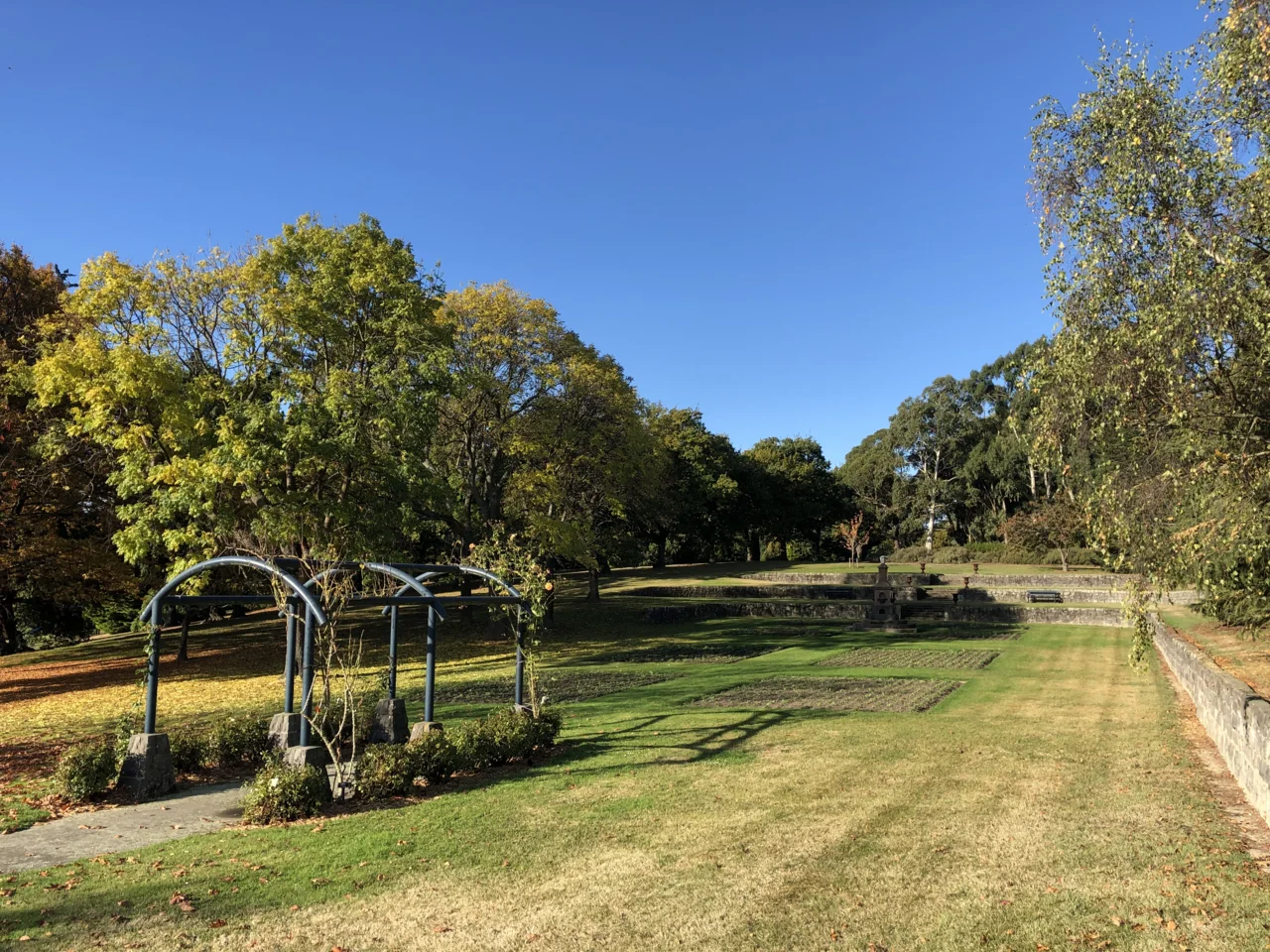

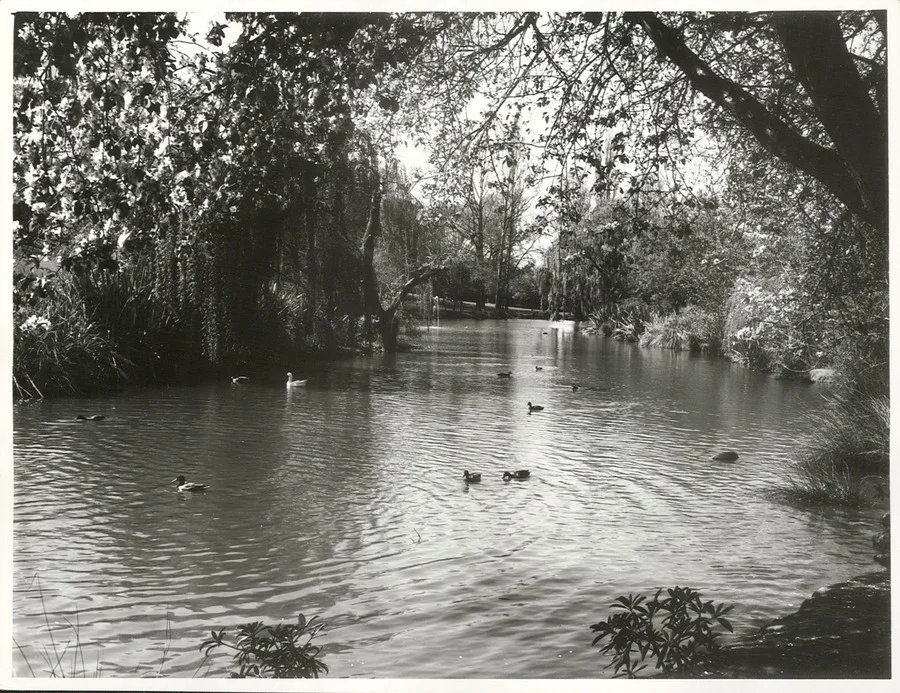
The two selected garden photographs show an archway and lawn composition and a separate archival pond view. They are not crops of the same picture. The April 2019 archway and September 1972 pond photographs do not promise the same present-day appearance, and weather, season and maintenance can change the scene. We do not turn visible plants into unsupported species identifications or claim that they represent products offered to a visitor. To make the garden loop an unhurried pause, resolve your bags, departure time and return from the centre beforehand. The choice of a short loop also allows a straightforward exit if the conditions deteriorate.
Museum relocation: no false rainy-day doorway
South Canterbury Museum's own 2026 notice reports staged closures from 19 July while it prepares to move. The temporary gallery, upstairs galleries and research area are closed during this process. It also states that full closure follows Labour Weekend from 27 October 2026. Visitor information describes free entry for local residents, not a universal admission right for every traveller. An old complete museum tour is therefore not inserted into a Monday or late-October rainy-day plan. A central meal and a modest exterior loop remain more independent alternatives.

At the end of the two-day stay, connect Tuesday morning to the garden, hotel checkout and actual onward transport rather than a museum doorway. If rain becomes heavy, shorten the outdoor section and return; do not replace it with a promised visit to closed galleries. The Stork's small plan finishes clearly: understand the centre on Monday, choose an identified meal at an open business, and leave after an appropriate garden loop on Tuesday. Between longer regional journeys, a short city stay is most useful when its sequence is intelligible, not when every possible address is marked as completed.