
El Jadida: gateways, streets and the Atlantic edge
Give El Jadida a little space in your journey rather than treating it as a brief photograph stop from Casablanca. Tatilmerkezi's Stork suggests two linked but different sessions: a heritage walk through the Portuguese quarter's gateways and streets, followed by the harbour surroundings and a deliberately planned seafood meal elsewhere in town. The route rests on the urban fabric, not on an assumed cistern opening or a theatre performance. A closed interior therefore need not erase the entire visit. Actual barriers, work areas and instructions from people managing a site still determine which passages you can use.
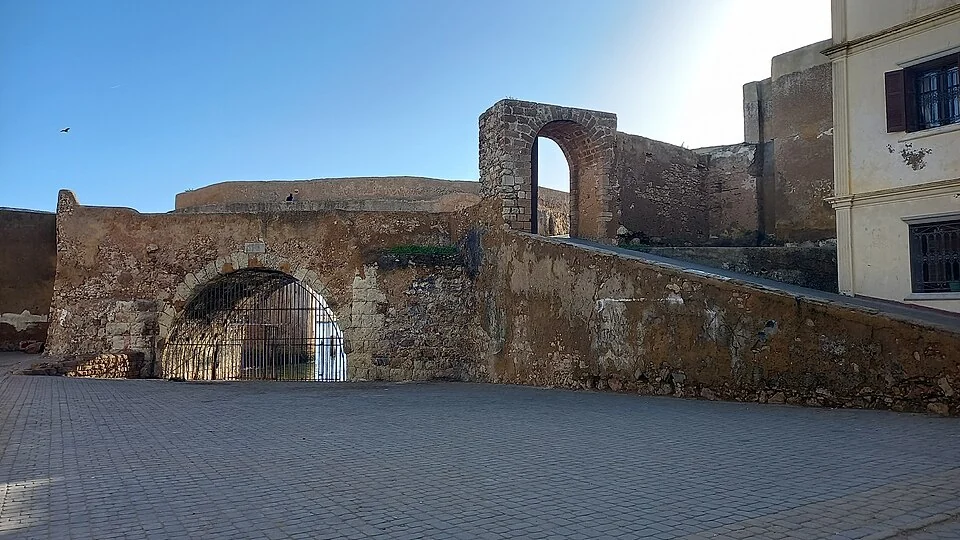
With an overnight stay, leave your luggage first and use the arrival day to understand the old quarter. Give the following day a separate harbour session and enough time for a seated main meal. On a day trip, choose one substantial walk instead of squeezing every named place between two trains. Decide your return connection before extending the afternoon. The cover photograph records a stone archway, sloping ramp and paved courtyard in November 2024. A second image of that very gateway was excluded as a repeated scene. These images help explain scale and layout, but they do not establish today's access, light or visitor numbers.
A compact heritage session around the walls
Mazagan, the historic Portuguese quarter within El Jadida, provides the first focus. The national tourism office presents its ramparts, bastions and old streets as a connected heritage setting. Begin by looking at how the gateway fits together: the lower passage, substantial masonry and rising approach connect defensive architecture with an inhabited town. Continue only along the open route available when you arrive. The purpose is not to climb every bastion, but to spend a short session comparing surfaces, levels and views. Pick an easy point at which to turn back if the slope or paving does not suit your group.
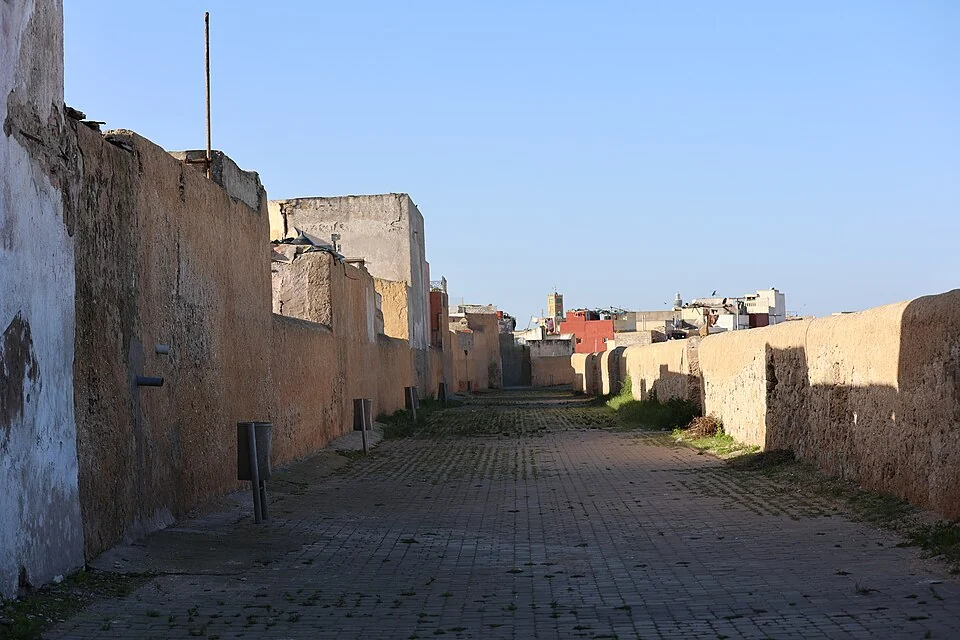

The Portuguese cistern is an important historic feature of the quarter, yet a promotional description of visiting it is not confirmation of admission today. The Culture Ministry describes a restoration and rehabilitation project that includes the cistern without supplying a definite reopening timetable. No ticket price, fixed opening hour or promised reflective interior is therefore included here. Evaluate admission separately if clear information is displayed locally. Otherwise keep the exterior heritage route. The November 2024 wall photograph shows a paved passage beside masonry and an urban skyline beyond. It illustrates a different scene from the gateway courtyard and must not be captioned as the cistern interior or the municipal theatre.
Street level and the Afifi theatre
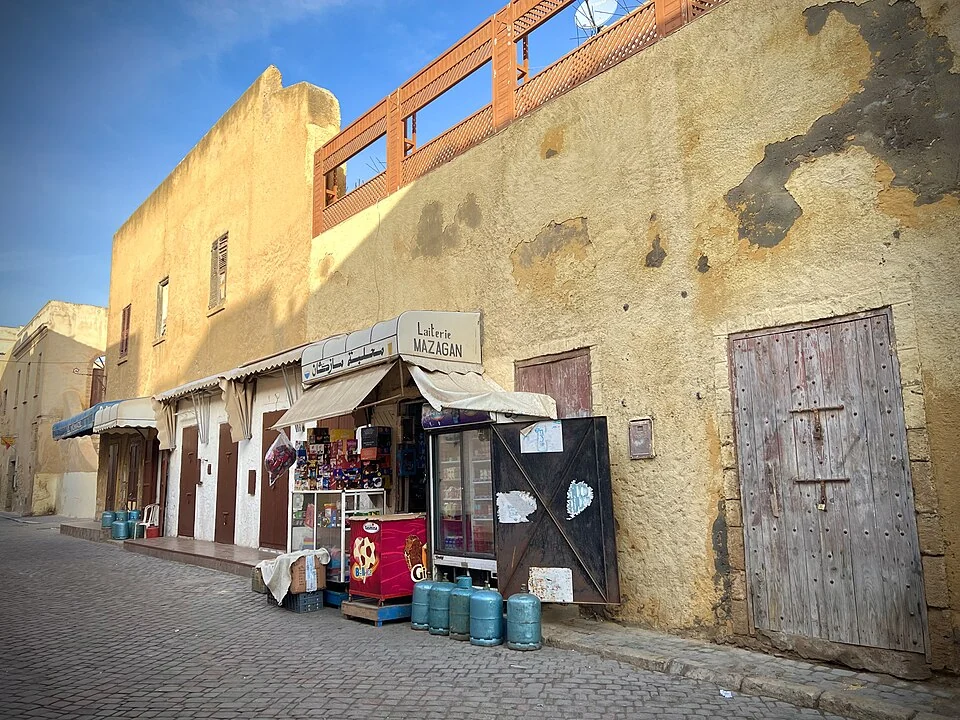
After the gateway and wall session, return your attention to street level. Frontages, thresholds and narrow passages provide a second way of looking at the quarter. Keep entrances and everyday circulation clear when you pause; the neighbourhood is more than a backdrop for a camera. The October 2023 street image includes a Laiterie Mazagan sign and containers beside a shop entrance. It is not evidence of a seafood restaurant, nor does it establish that the business still operates today. Here it explains the change from monumental masonry to smaller street details. Relate your way back to a recognisable main passage rather than relying on a succession of unmarked turns.

Consider the municipal theatre, also associated with the name Mohammed Saïd Afifi, as a separate piece of town architecture. The regional tourism authority describes its earlier role as a dance hall, subsequent conversion to theatre and cultural history under Afifi's direction. That history is not a current performance calendar. The practical information section supplies no present visiting schedule, so neither an interior tour nor an evening ticket is promised. Check its position and any genuinely announced programme before adding the connection to your walk. If a performance is confirmed, arrange the meal and return around it. Without that confirmation, retain a short exterior architecture stop rather than filling the itinerary with an invented event.
Harbour surroundings and a separate seafood meal
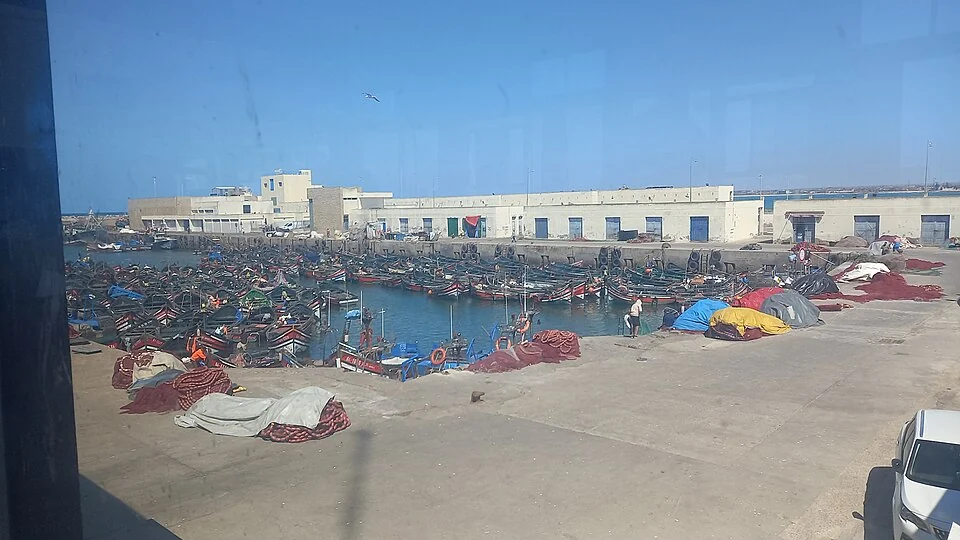
Use the harbour surroundings as a change of scale after the old quarter. Observe from publicly accessible passages and do not assume that every space alongside a boat is a visitor route. The May 2025 photograph shows small fishing boats, waterfront buildings and equipment. Taken through glass, it offers no evidence of today's fish sales, boat trips or passenger services. A pause here after examining stone walls gives the day a different visual rhythm. Leave working routes open and ask before making close photographs of people. Nothing in this itinerary depends on entering a restricted dock or finding a particular vessel in the same position as the photograph.

For a defined main meal, Moul Jbaniya's own menu offers an octopus tagine or a mixed mqila with shrimp, squid and mussels. These provide a specific seafood focus rather than an unnamed suggestion to eat something local. The operator publishes its address as Av. Al Madina Al Mounaoura, El Jadida; do not relocate the restaurant inside the harbour. Allow for a separate journey and check the day's service before setting out. A listed dish is not a guarantee of stock. Ask about portion arrangements and preparation, and clarify what is suitable if you avoid shellfish. Confirm the price, accompanying food and drink before ordering. No supplied photograph depicts a cooked meal, so the harbour image is not presented as a picture of your plate.
Rail arrival and choosing a town base
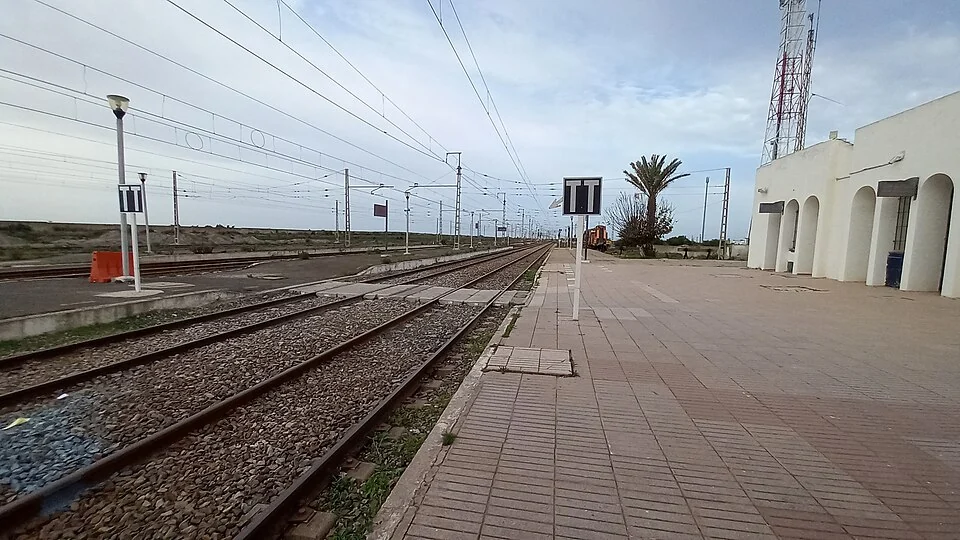
ONCF material identifies the Casa Port–El Jadida rail corridor. An older timetable or a Ramadan announcement should not become an October 2026 departure promise. Select your actual date in the official sales service and check stopping patterns, changes and the return connection. Arrange the station-to-quarter journey as a distinct part of arrival. The November 2024 station photograph shows tracks, platforms and a white building; the absence of a train in that moment does not mean services have stopped. With luggage, moving first to your accommodation or an agreed luggage point may make more sense than starting the full heritage walk immediately at the station.

Compare two town-based accommodation positions. Dar El Malaika publishes 26 rue du Docteur Blanc as its address and describes its suites in the medina setting. Riad Zahrat Al Fajr publishes 7 Av Moulay Ismail and explains the vehicle connection from the station on its own arrival page. These listings establish possible bases, not vacant rooms, verified star ratings or guaranteed quiet. Ask about late arrival, luggage storage, stairs and the room's position before booking. Link that choice to the walks you actually intend to make, including luggage collection if the harbour and meal fall on your departure day. Sources were examined on 6 October 2026. The proposed sequence, dated photographs and unconfirmed interior access remain distinct rather than being combined into a claim that every venue is currently open.