
Shivamogga: two city nights before a hill itinerary
Shivamogga, also encountered as Shimoga, is a Karnataka city. The Tatilmerkezi Stork suggests two nights establishing one full cultural day instead of loading Jog Falls and an entire Western Ghats circuit into a single visit. Calendar day one is arrival, day two combines the palace and permitted urban surroundings, and day three is departure. The palace known by Shivappa Nayaka's name anchors this small historical programme. A wooden hall, exterior garden and old stone collection create distinct viewing interests. Everyday road surroundings and the station connect this cultural session to a real accommodation decision. Forests, elephant camps and distant heritage places described by district sources are not presented as central-city sites. The city can become more than a sleeping stop before a nature journey, provided its actual urban day remains bounded and separate excursions receive separate time.
Shivamogga Town: choose the real arrival and departure
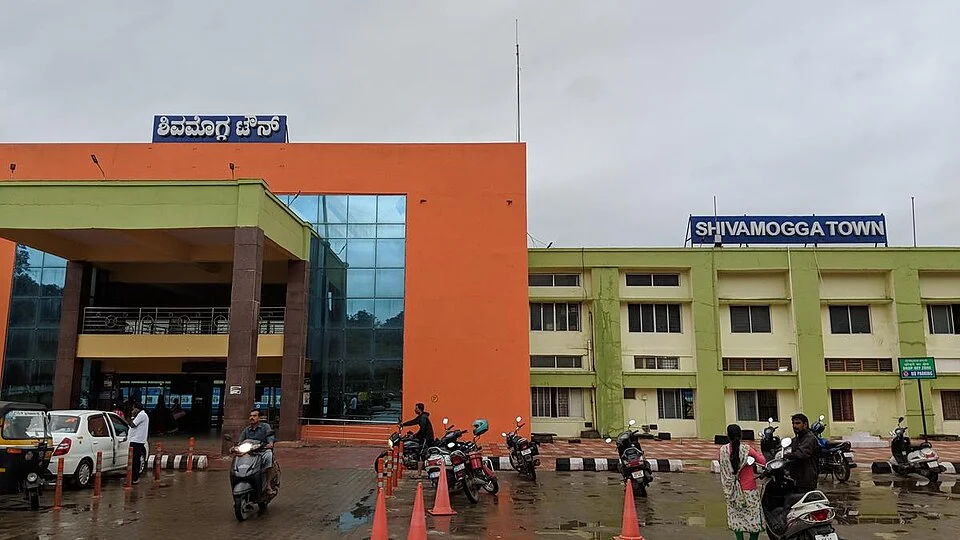
For a rail arrival, the station name, stop and date on the actual booking establish the starting point. The official palace page mentions Shivamogga Town station in the access context without supplying an unchanging connection timetable for every service. The image records the station's 2018 exterior entrance, not an assurance of equivalent present-day platforms or access arrangements. Settle luggage into the room before making the real urban connection to the palace surroundings. Bus passengers likewise need the actual terminal and final road section separately. Air travellers should choose the current flight and terminal connection from real operating information; an older nearest-airport list may not cover all present options. Reception arrangements, baggage and the transport meeting point should be clear for departure morning. Travelling through a city by vehicle does not itself establish safe stopping immediately outside a selected entrance.

The palace exterior: do not compress its name into one story
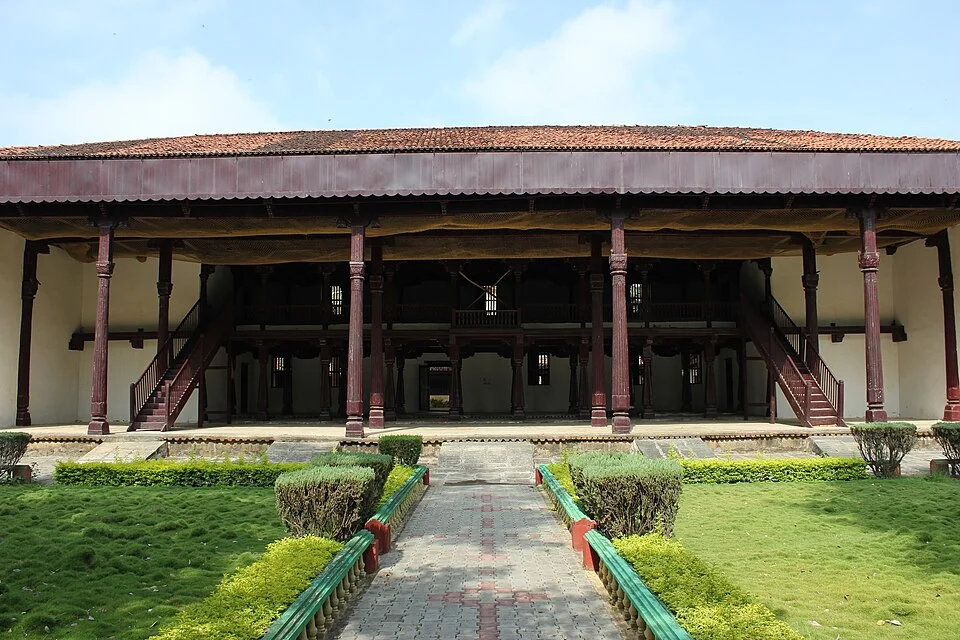
The current state palace page discusses wooden architecture, Keladi connections and the building's museum role. Different official accounts contain differing construction and founder statements, so the guide focuses on the actual architectural visitor interest rather than inventing one definitive building story. The main exterior facade, roofline and garden-facing column sequence provide concrete starting points. Establish that day's admission, ticket and photography rules at the entrance. A published opening time is not a substitute for a current response from the venue. Taking the exterior slowly prepares the visitor for wooden craftsmanship inside. The garden is a separate exterior section of the same complex rather than an equivalent of every urban park. Shorten the exterior look in rain or crowds and choose a permitted hall as the principal cultural session. When using a guide, ask which institutional or historical record supports an interpretation.
The wooden hall: columns and spatial relationships
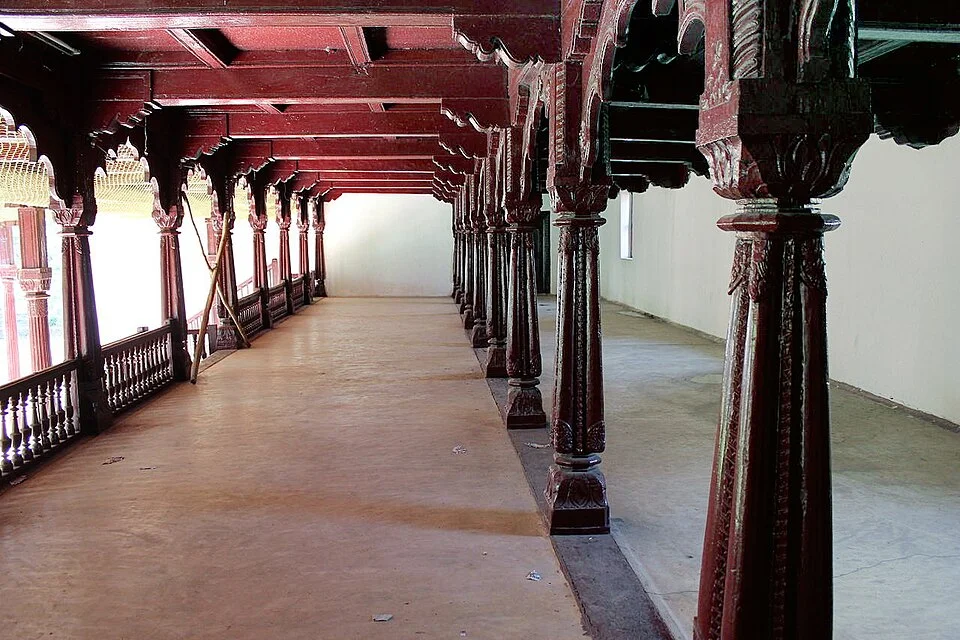
The palace's interior wooden hall is not a crop of the exterior image. Columns, arched connections and the depth of the space supply a distinct architectural scene. State tourism introduces this setting through the Durbar Hall and wooden craftsmanship. Reserve a small viewing session in permitted sections for material, column spacing and the direction of light. Access to upper rooms or every collection gallery is not automatic. The older interior photograph was captured in 2015 and subsequently colour-adjusted; the credit record preserves these details rather than asserting an unchanged present arrangement. Avoid touching protected surfaces, obstructing passage for photography or placing belongings on exhibition objects. Families can use a short architectural look instead of turning the hall into a lengthy silent museum marathon. Keep the exterior garden and a seated eating interval separate, allowing a more comfortable rhythm for the full urban day.

Hero stones: a distinct look at an old object
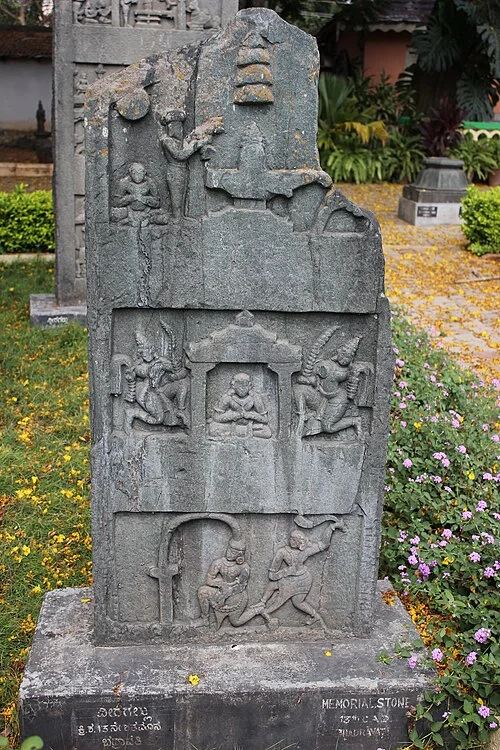
The official palace source explicitly mentions old hero stones and inscriptions in the grounds. The image depicts a separate stone within the complex, identified as thirteenth century in its source. This dating is the photographic file's description, not a new inscription interpretation claimed by the guide. Where a museum label or institutional explanation is available, follow the actual record. The rights situation of an old stone and a modern garden sculpture is not interchangeable; the historical object scene retains its period description here. Touching the stone or climbing on it is not part of the visit. This brief session differs from the wooden hall while remaining within the real timing of the same city cultural day. Not reading every inscription does not make the journey incomplete. Quiet attention to a few details may be more useful than rushing through photographs of many objects.

A Malnad meal and regional appe midi
The official Shivamogga account associates the region with rice cultivation and its Malnad setting. It also names appe midi, a small-mango pickle prepared in Sagar, as a concrete regional flavour. Sagar is a separate settlement, so this is not presented as a product made by every central Shivamogga business. Where available in an actual meal, ask about a small pickle accompaniment and select a rice-based serving from the kitchen's real menu. The state cuisine booklet also places steamed choices such as khara kadabu, rice pockets with spiced lentils within Malnad's regional context. An available khara kadabu dish can supply a different eating decision without a guarantee at every shop. Learn salt, heat and relevant ingredient details for the actual product. Preserve seated time at lunch rather than squeezing food shopping into the museum interval. Current prices, one universally correct recipe and a city best-kitchen ranking are not invented.
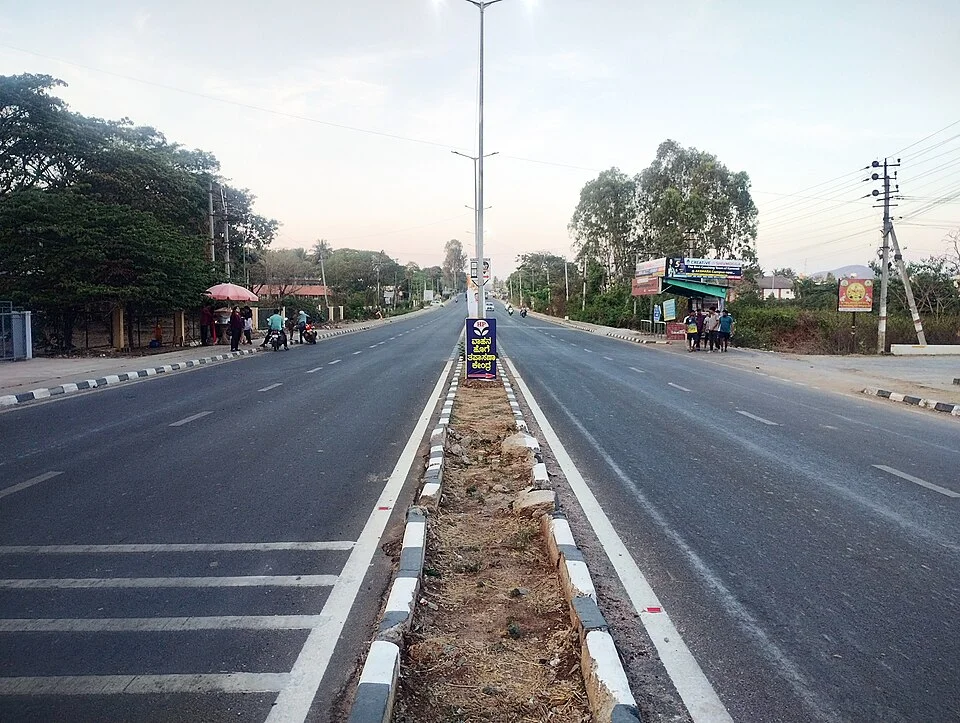
Separate Savalanga road from accommodation surroundings
A 2026 Savalanga road scene demonstrates that Shivamogga consists of more than its palace. A broad vehicle road, however, does not establish uninterrupted pavements or safe access for every visitor. Select a room by evaluating the palace connection, arrival point, meal address and final evening return together. An urban room may simplify everyday needs, whereas an outer road location requires a different final transport calculation. Examine noise, crossing arrangements and vehicle stopping against the actual address. The Savalanga scene is not described as the palace garden entrance or a guaranteed pedestrian corridor. Keep the urban session modest and allow rest before departure morning. Travellers with restricted mobility should ask separately about entrance steps and safe sitting areas. Two nights in the same room reduce the need to move large luggage to another hotel during the full city day.

A time boundary for the Tunga and district nature
Official palace information establishes a Tunga riverside context as well. Where actual access permits, consider a brief urban shoreline interval; a landscape suggestion does not guarantee entering the river or walking its entire bank. Choose a safe city return during unsuitable rain or water conditions. Jog, Sakrebyle, Mattur and other district interests are not concealed within the principal three-calendar-day plan. Readers adding one should establish separate transport and available time. The main day can combine the palace exterior, a permitted wooden hall and old-object viewing, a seated regional meal and a modest urban return. End the evening near the same room and simplify departure morning. Sources were checked on 5 October 2026, while changing admission and transport arrangements should be established for the travel day. The Stork reserves real time for the city's own cultural and everyday needs before an onward regional journey.