

Troyes: timber façades and one full art day
Two nights in Troyes make a useful frame for one complete city day: go from the station to your room on arrival, give the following day to older streets and the modern-art museum, then choose a short final-morning walk around your train. Tatilmerkezi Stork suggests comparing the surface of a building with the surface of a painting, without making shopping a compulsory stop. In the cover image from Rue Émile-Zola, notice timber directions, projecting storeys and the different colours of neighbouring façades. Visiting every house interior is unnecessary. Standing clear of the pedestrian route to compare two fronts can change how you look at the street. Leave residents and businesses room to use their entrances.
Sources were checked on 5 October 2026, a Monday. The museum’s visitor page explicitly lists Monday closure, so put the main museum day on Tuesday or another suitable day. An arrival evening can introduce the city outdoors. The SNCF station name is Troyes; check your actual train date, departure station and return ticket together. A sample online departure does not establish an identical connection every day. Balance getting back to the station with proximity to the older streets when booking accommodation. A historic façade does not guarantee a lift, quiet room or early luggage storage. Ask the property directly about these needs. Two nights can also let you leave luggage in the room rather than take it into a museum visit.
Saint-Urbain: reading light across a stone exterior
The south-east view of Saint-Urbain brings a different scale after the timber houses. Compare the stone supports, window openings and roofline from outside. This photograph dates from 9 May 2014; it documents neither a current service inside nor an open doorway and admission to every part. The tourism office connects the building with the Troyes-born Urban IV. After that historical reference, choose one question for your own observation: does the tall piece of stone or the opening beside it attract more attention? Such a small comparison can introduce a building more calmly than a long chronology. Keep the access route clear while you look, then continue the walk.
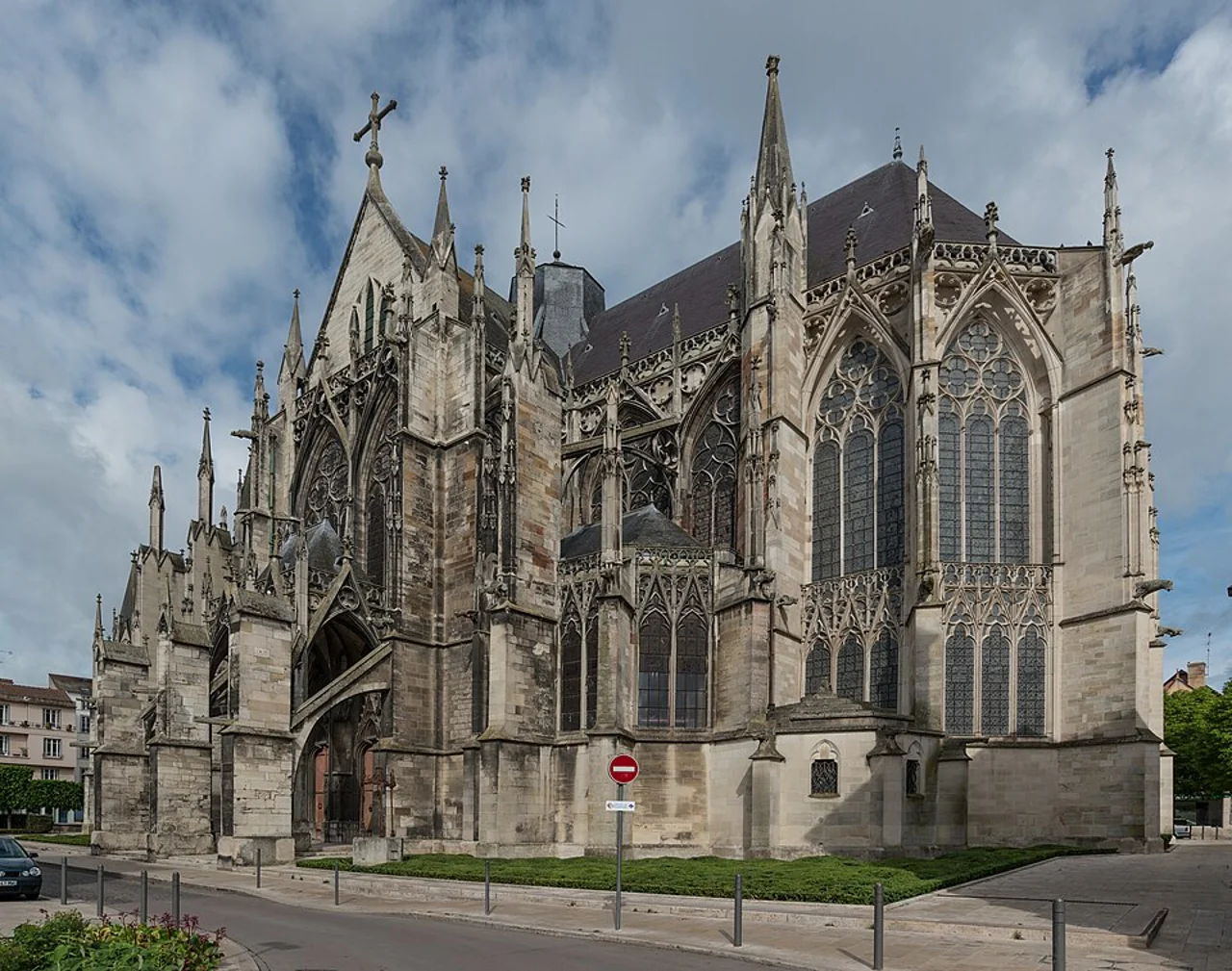

If entry is possible, check the conditions at the door and remain quiet during worship or another use. An inaccessible interior need not disrupt the whole programme. Return towards the central timber streets and think about how stone and wood are used differently within the same city. In rain, avoid turning a doorway into a prolonged stopping place; choose an open business for a rest. With a child, a single arch and the neighbouring window shape can be enough to examine. Ask in advance about an actual step-free entrance if needed. The old photograph’s pavement is no current accessibility inspection. Keep energy for your principal museum rather than add every available interior in succession.
The canal: a different rhythm before the museum
The canal photograph frames water, the walkway, a bridge crossing and buildings opposite as a distinct scene. It advertises neither a boat excursion nor a swimming area. When walking beside it, identify the return direction and the actual bridge you intend to use. Do not interpret the historical image as a weather forecast: shorten the outdoor section around rain on your own day. A bench cannot be assumed available, nor the bank guaranteed continuously level. Keep suitable distance from the water with children or bags. Moving from closely spaced street fronts to the water can offer a change of attention and pace before concentrated time in a gallery.


Fit this interval around your museum entrance and lunch rather than enlarge it into a second lengthy excursion. Follow current signs if works or a closed passage change the route. Do not enter private spaces in search of an unverified shortcut. If returning to the station the same day, choose a section with an uncomplicated way back rather than try to follow every waterway. Photographers can leave the bridge crossing clear; children might compare reflections with the stone buildings above them. This proposes an observation, not a promised weather condition or an invented family encounter. Choose a short break around your own mobility. Moving this outdoor piece to the final morning is a sensible option if you are tired.
Towards the cathedral and Musée d’Art moderne: distinguish entrances
A photograph looking from Rue Émile-Zola towards the cathedral and Place de la Libération places the distant building within a street perspective. It is not an interior image. The cathedral and Musée d’Art moderne have separate entrances; the museum is at 14 Place Saint-Pierre. Its current visitor page lists 10am-6pm and Monday closure. A conflicting automatic ‘open today’ label on its separate homepage makes reconfirming the intended day worthwhile. For Saint-Loup, an institutional notice about temporarily closed archaeology rooms and a tourism brochure mentioning works closure during 2026 describe different scopes. This guide therefore does not add it as a definitely open second collection. Choose the principal museum day with those distinctions in mind.


Inside the modern-art museum, allow time for a selected group of works. The institution connects its collection to Pierre and Denise Lévy’s donation and dates full reopening to 2024. Look first at colour, then at the arrangement of figures in one painting before moving to another. This can be more deliberate than crossing every gallery at the same speed. Select a few pieces around your interests; no personal recollection or unseen exhibition encounter is inserted here. Ask which current ticket covers permanent collection and temporary exhibition. Confirm bag and photography rules at the entrance as well. The five historic outdoor photographs used for this city guide confer no reproduction permission for contemporary museum artworks: observe the separate rules inside.
A concrete meal near Ruelle des Chats and the final morning
Chez Félix’s own ‘CARTE AUTOMNE 2026’ lists Troyes 5A andouillette with fries and mustard sauce, at 5 Ruelle des Chats. This provides a concrete dish around which to consider lunch or dinner. Confirm service on your travel date and availability when booking. Andouillette is an offal-based charcuterie choice, so ask about ingredients and another main course if it is unfamiliar. Do not treat a published menu as a guarantee of unchanged daily prices or composition. Our fifth photograph of an old-town corner shows another historic façade and café frontage, rather than a table or dish at Chez Félix. Read it as evidence of the city walk, not of the proposed meal.


After eating, choose a short return around Ruelle des Chats and examine timber buildings through the different uses of ground and upper floors. Keep moving without close photographs of occupied tables or blocking entrances. Pick one unfinished piece for the last morning: a waterside pause in suitable weather, the older centre if you hurried yesterday, or an institution whose opening is actually confirmed. Allow time for checkout, luggage and your train. This need not claim completion of the whole region. The two nights are designed around timber streets, a basilica exterior, canal, distinct cathedral direction and one principal art visit. Tatilmerkezi Stork’s suggestion is to decide what to observe at each stop rather than enlarge the number of places counted.