
Trujillo does not need an archaeological marathon that tries to fit all of northern Peru into a single day. Tatilmerkezi's Stork proposes two nights around the historic centre, a proper local lunch and, when circumstances allow, a separate coastal pause at Huanchaco. Plaza de Armas provides the starting point; shámbar, cabrito con frejoles and sudado de pescado are useful names for choosing the meal. The coast and Chan Chan are not extensions of the next central street. They require their own time and transport decisions. Keeping that distinction clear lets you enjoy the city without ignoring arrival fatigue or treating an attractive photograph as proof that you can visit the whole region at once.
Two nights and the advisory checked on 4 October 2026
Use the first day for arrival, checking in and a small central loop. The second day holds the principal walk and lunch; Huanchaco needs a separate outward and return journey if you choose it. Keep the third calendar day for departure. At the check on 4 October 2026, FCDO's Peru advice, updated on 2 October, identifies local elections on 4 October and expected crowds around polling stations and electoral institutions. It advises staying away from large gatherings and protests. The safety page also names La Libertad among regions that have seen recent protests and warns that road disruption can develop without notice. This does not mean that every Trujillo road is currently closed. It is a concrete reason to retain flexibility and check your actual connection rather than treating the itinerary as a guarantee of unobstructed travel.
A short loop around Plaza de Armas and the cathedral
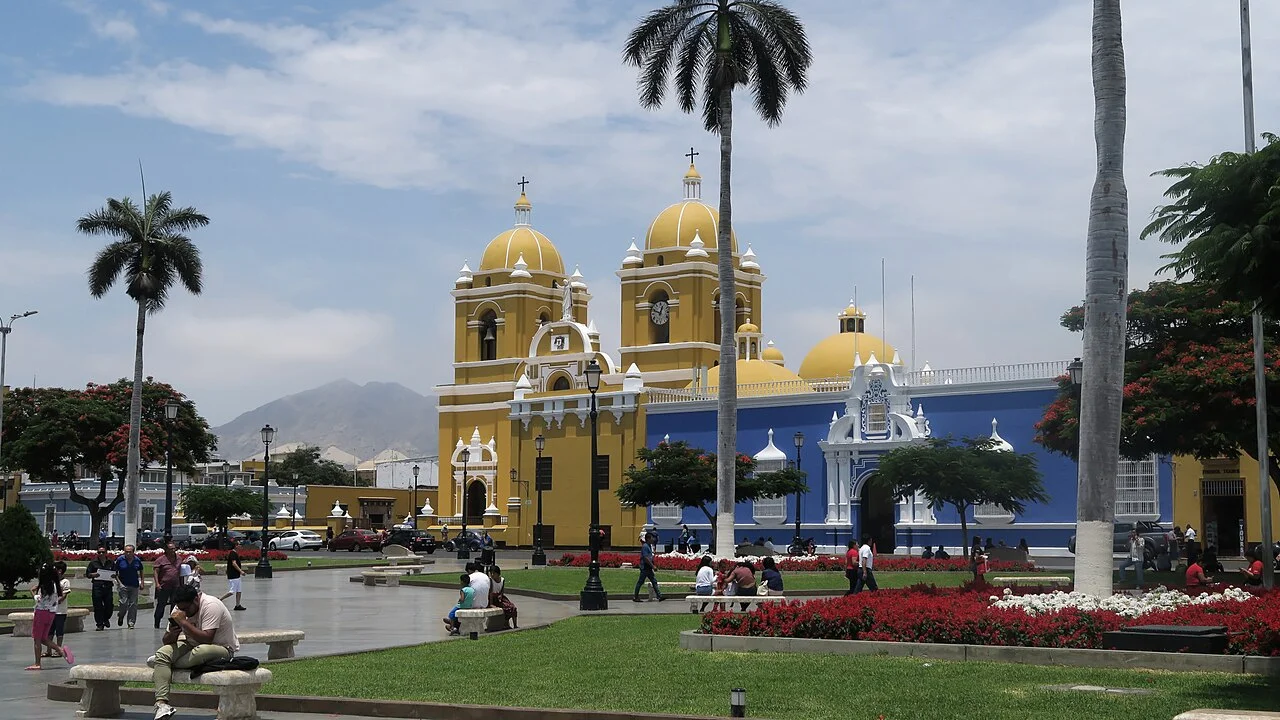
Start around Plaza de Armas and use the cathedral exterior and adjacent streets to understand the centre's scale. The yellow facade, palm shade and coloured building rows provide a clear first impression. If worship or another activity is taking place, do not assume that the entrance is available for sightseeing. Photographing an exterior does not establish permission to reproduce artworks in an indoor collection. The image in this guide shows the broader outdoor setting rather than a copied collection object. Choose a starting and return point near the square, leave luggage at your accommodation, then come back with a lighter bag. That small preparation means the next lunch decision happens in a district you have already begun to understand, instead of becoming another search while carrying everything from the journey.
Around Diego de Almagro: connecting streets with lunch
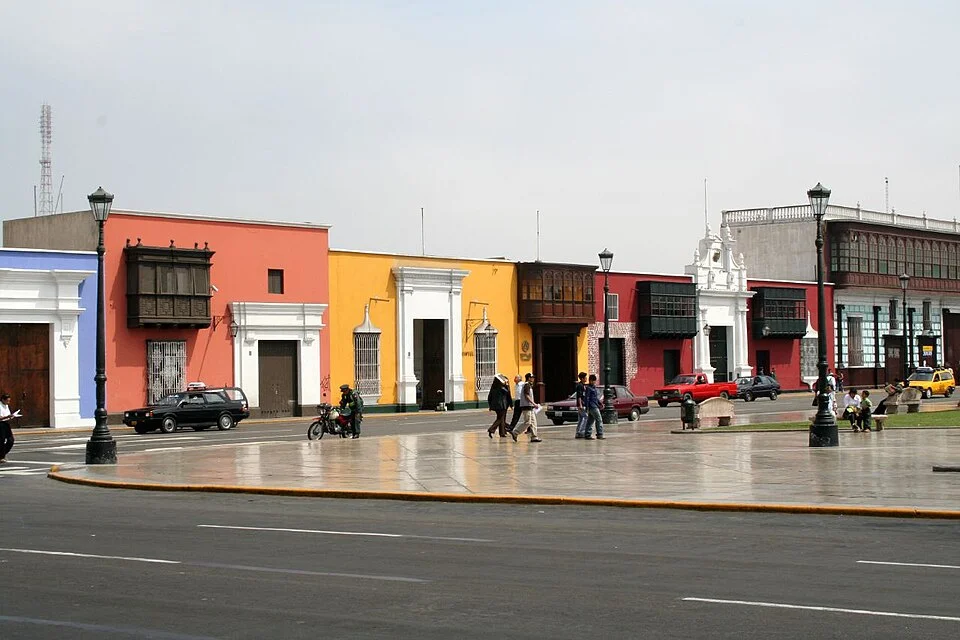
The streets around Diego de Almagro are not an access pass to every historic house. Peru's official tourism information describes neoclassical and baroque houses in the centre; a broad street view helps communicate that setting without needing to enter each facade. Use a coffee pause to divide the short outing before the main meal. An open courtyard or cultural institution still has its own visitor conditions. The July 2007 photograph cannot serve as a present shop directory or traffic plan. Return towards the square or your chosen meal address instead of allowing the walk to expand aimlessly. That keeps a useful portion of the day available for the coast, if you have actually arranged the connection. The objective is a readable historic centre rather than an exhaustive account of every doorway and church.

Lunch choices: shámbar, goat and a northern fish dish
Treat shámbar as a possible centre of the meal rather than a token soup on the side. The official tourism article links it with the northern tradition of legumes and meat and with serving it at the start of the week. That historical custom does not prove that every establishment serves the same recipe on the same current day. If it is unavailable during your stay, the historic-centre tourism page also names cabrito con frejoles and sudado de pescado a la norteña. Goat with beans and a northern fish preparation create different lunch choices. Nor should shámbar automatically be assumed to be meat-free. Two travellers could select separate mains and compare their impressions without ordering every dish at once. These food names are grounded in regional sources; they are not presented as today's menu of a restaurant visible in an old street image.
A Huanchaco meal: a separate outward and return trip
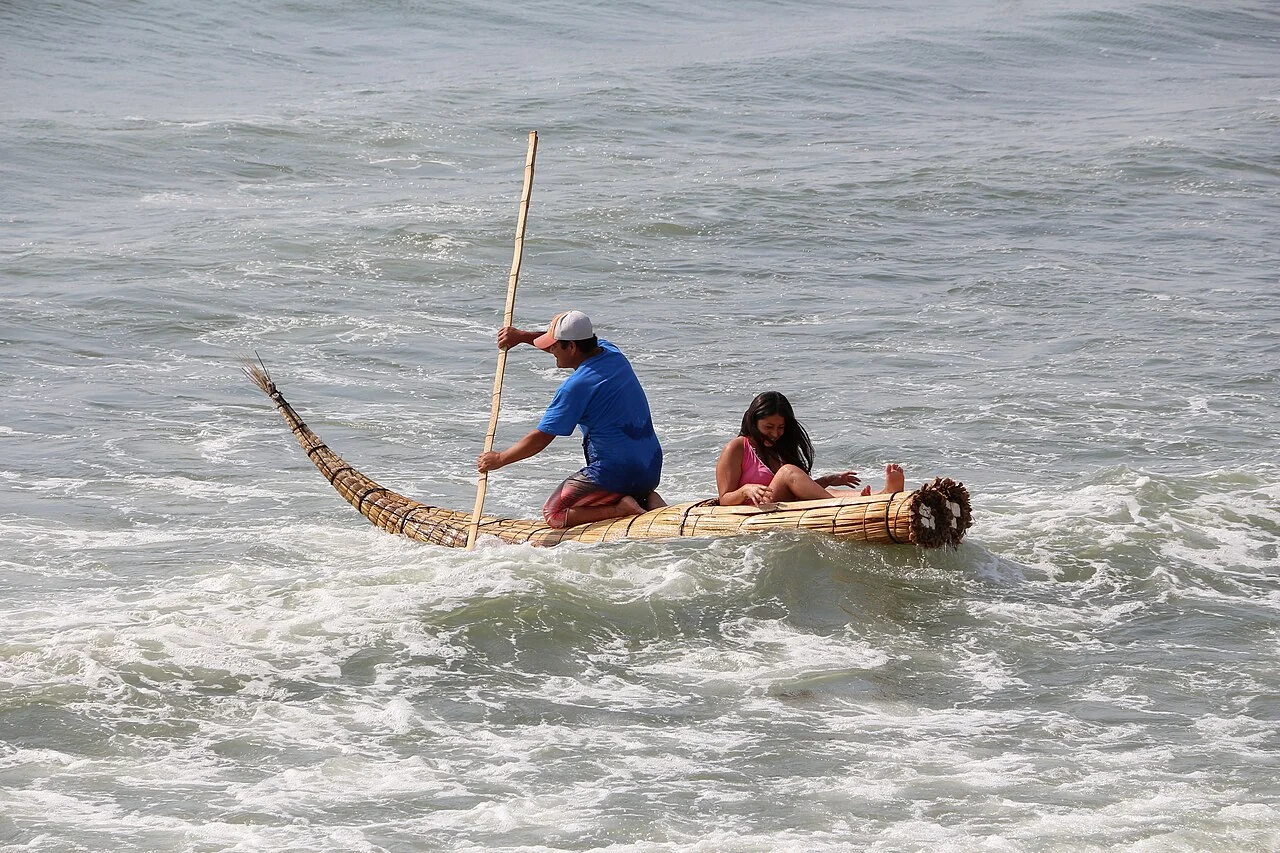
Make Huanchaco the optional coastal section of the city stay. The official page describes a separate coastal settlement associated with traditional totora craft. A central base needs transport in both directions; staying at the coast reverses that calculation for the historic-centre day. If you choose lunch there, ceviche and other seafood choices appear in regional tourism information, but a particular restaurant should not be treated as ready to serve a dish without its own menu and service check. The ocean scene is not a swimming or boat-trip guarantee. Boarding a craft is not an essential part of this short guide: it would be a separate activity requiring current operator, weather and safety decisions. A meal followed by a short observation pause can be enough to make the coastal visit worthwhile without purchasing every possible experience.

Keeping the totora scene separate from a tour advertisement
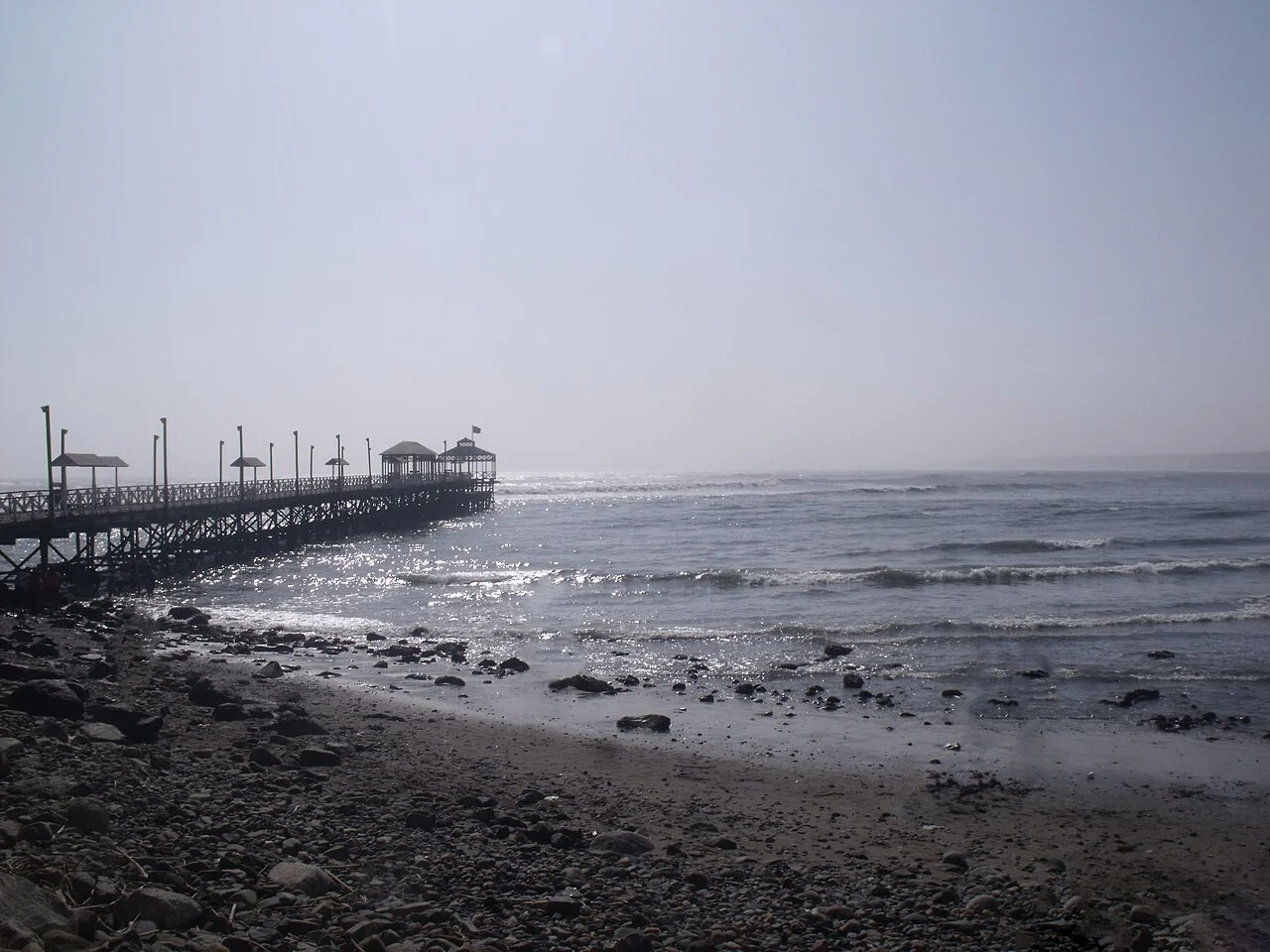
The totora image was made at Huanchaco in November 2014. People appear in the scene, and the photograph's licence does not provide a model release or endorsement of a business. It is used editorially to illustrate the coastal boat tradition, not to prove a current ticket offer, departure time or that the same person is operating a service today. The July 2017 pier image also needs a separate present access check before anyone treats the structure as open. The two photographs are different coastal scenes, not crops of a single picture. During a visit, ask before taking a close portrait and avoid obstructing someone handling a boat or carrying out work. Observation on a short coastal outing and booking an activity are different decisions; the itinerary does not require the latter to count the visit as complete.

Chan Chan: a separate archaeological decision if time allows
The Chan Chan photograph adds a brief context for the region's ancient adobe architecture. It is not described as a structure inside the central street loop. A visit needs separate transport, entry arrangements and time for conservation rules. Completing central lunch, Huanchaco and every archaeological attraction on one day is not promised here. Choose a priority and leave another place for a future trip if that produces a clearer schedule. The corridor image dates from November 2005 and does not establish the present open visitor route or restoration condition. Follow marked paths and avoid touching old surfaces or leaning on walls for photographs. Conflicting fixed altitude figures across language versions, and old entrance prices, are not used as the basis of this guide's travel decision.


Choosing accommodation and planning the airport return
Accommodation in the centre supports the short street loop, lunch and an easier evening return. Huanchaco supports a traveller who wants more coastal time, with a separate journey to the historic district. The airport being in Huanchaco district does not make it walkable from a coastal room. Official tourism information places Capitán FAP Carlos Martínez de Pinillos airport in that district; its approximate flight and taxi times are not copied as current connection guarantees. Arrange transport through a registered service or your accommodation rather than selecting an unverified approach from a stranger. On the last morning, obtain fresh information on road disruption and your flight, then align breakfast and checkout with that connection. The Stork's suggestion is to make two nights meaningful through a central walk, a concrete regional meal and a genuinely feasible coastal pause, rather than inflating the stay with more names than the available hours can support.