
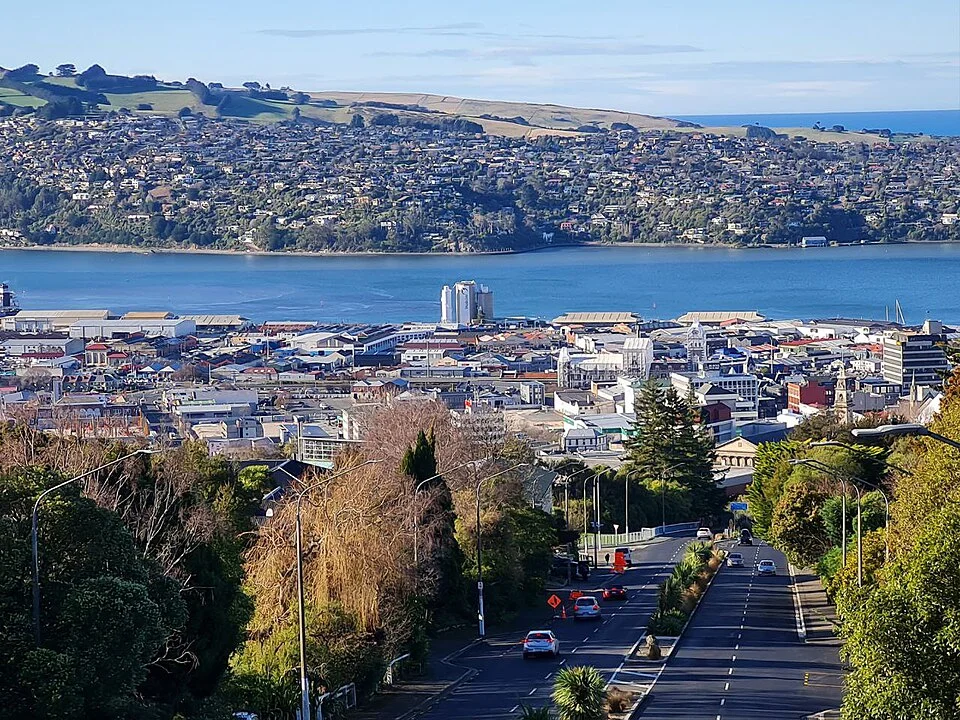
For a two-night city break in Dunedin, start with the calendar: will you be here on Saturday morning? The Tatilmerkezi Stork's plan divides into two practical versions around that question. Otago Farmers Market is a morning for food and observing the city, and a Saturday that falls outside your stay cannot be inserted into the programme. The Octagon, George Street, a museum and a chosen garden section are separate visit decisions that can be arranged on other days. This guide creates a compact urban stay through walks and meals, rather than replacing an Otago Peninsula wildlife trip or an itinerary driving across all New Zealand.
Think of two nights as a first and second day in the city followed by departure on the third morning. If arrival takes up much of your first day, establish whether the second morning actually falls on Saturday before reserving it for the market. Instead of squeezing a museum and a large garden into one short afternoon, give one a longer block and the other a limited visit. Dunedin's slopes can change the meaning of a distance that looks simple on a map. A city photograph taken from high ground does not establish that every accommodation address is reached by a level walk.
Accommodation: the Octagon, George Street or a separate base
Accommodation around the Octagon provides a clear starting point for a first visit centred on short urban walks. An address along George Street may help combine café meals and a shopping pause within the same day. If you consider a location farther north around the garden or university area, look beyond the neighbourhood name: the nearest stop, slopes with luggage, evening food options and whether the room faces the street all belong in the comparison. These are questions for choosing an address, not fixed qualities attributed to every hotel.
We would not change hotels during these two nights. Staying downtown first and at a distant coastal address second adds luggage handling and transfers to a short city programme. If you want a separate coast or peninsula excursion, give that another day and its own transport plan. For this urban stay, breakfast timing, luggage storage and the third morning's airport transfer may be more useful accommodation questions than the view in a promotional photograph. Keep one base and let the two days have different rhythms.
Saturday morning: Otago Farmers Market
The market operator's information checked on 4 October 2026 gives Saturday opening hours of 8am to 12.30pm. That means this itinerary does not postpone the market to the afternoon. Use an early part of the visit for browsing and a later part for a chosen food purchase and a brief sitting break, with flexibility for weather and crowds. You do not need a week's shopping list to enjoy looking at the stalls. For two nights in a hotel, small quantities that you can actually consume are usually the more useful choice.
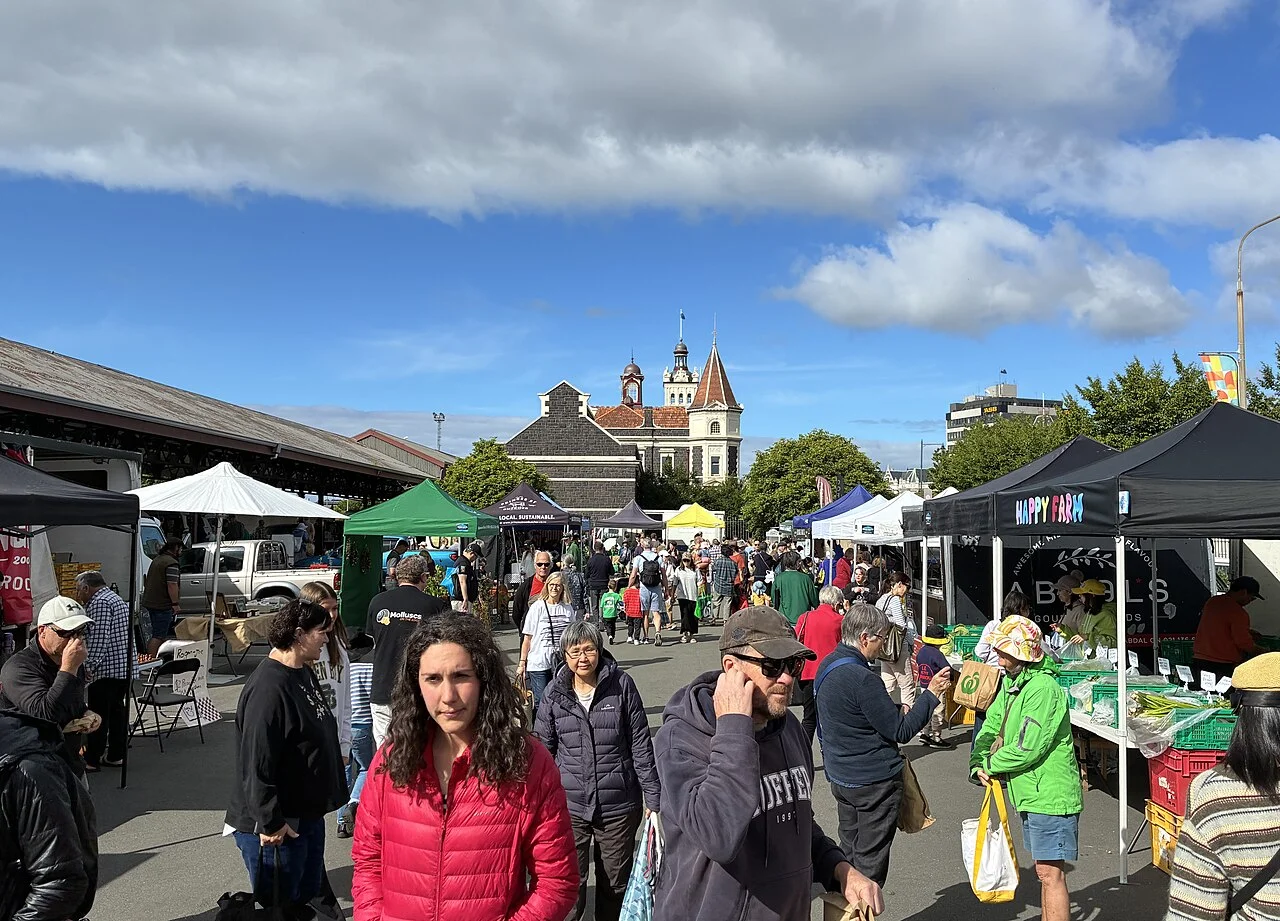

The official vendor directory lists cakes, slices, biscuits and pastries for Beano's Bakery; sourdough bread and sweet pastries for Breads & More; and mānuka, kānuka and wildflower honey for Blueskin Bay Honey. These are concrete ways to build a breakfast or snack choice, not a promise that every listed vendor will attend on your date. Start with bread or a pastry and allow a coffee pause. Consider a jar of honey in relation to what you will use and the arrangements for your next flight, rather than treating every appealing stall as a compulsory purchase.
A local meal: bread, hazelnuts and small purchases
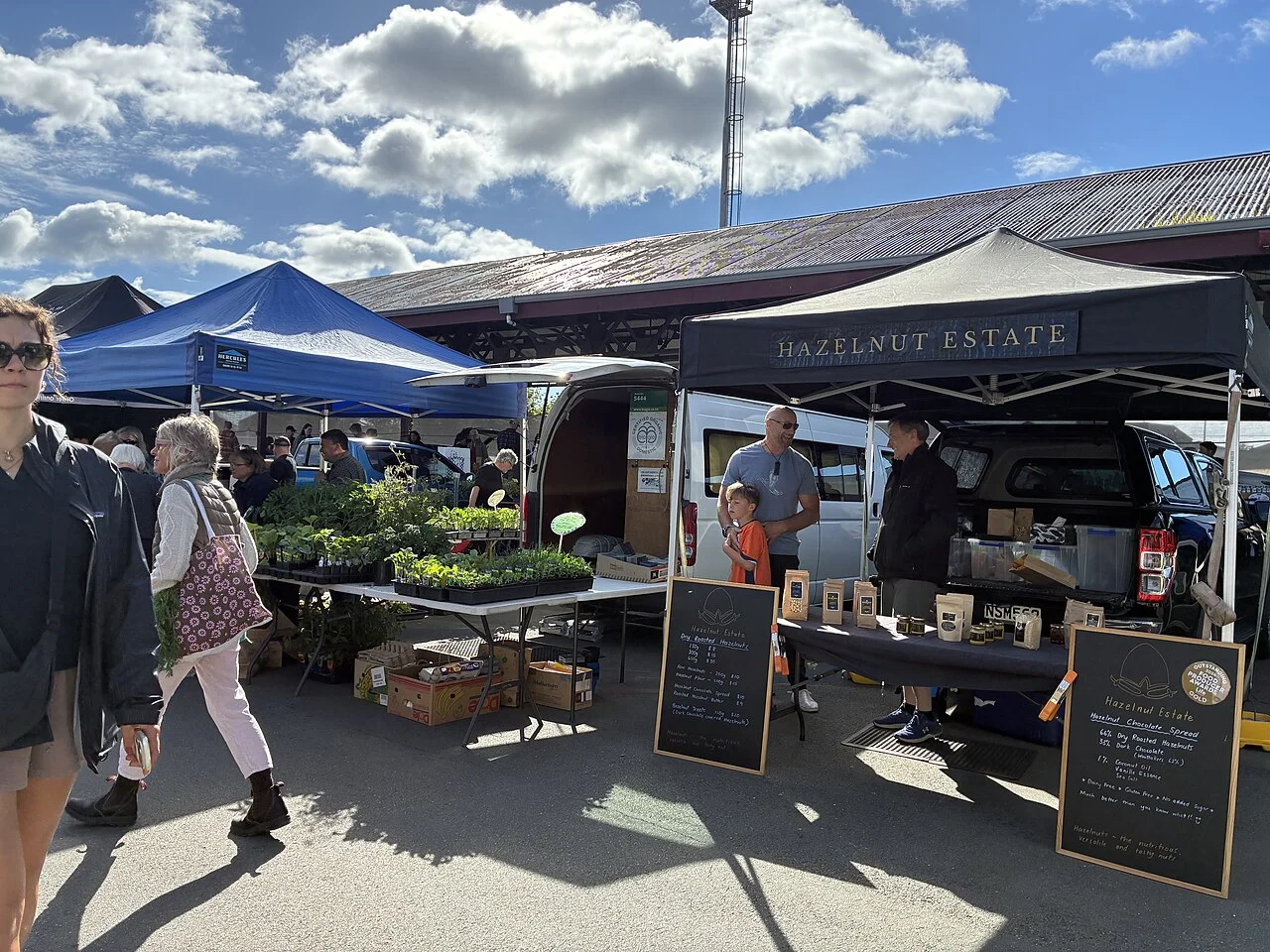
The food part of this city break does not have to consist entirely of restaurant bookings. A pastry breakfast on a market morning, a warm café lunch in the centre and a separate seated dinner meet three different needs. The hazelnut stall photograph records a distinct market scene from 13 December 2025; it is not evidence of current stock or a particular restaurant menu. Identify the product, choose a quantity that you can keep at your accommodation, and consider consuming food before onward international travel rather than automatically carrying purchases across borders.

If your stay does not include Saturday, use a café breakfast near your accommodation instead of looking for a meal outside a closed market. Attach lunch to a George Street or Octagon walk and a hot drink pause to the museum visit. The purpose of this version is to keep eating and walking close together during a short trip, rather than representing the market as open on an invented day. Make choices involving meat, dairy or allergens through the actual menu and preparation information. A local product name does not mean every dish is prepared with identical ingredients.
A central walk and the station area
For the central part of your first full day, use the Octagon as an orientation point, then make a modest out-and-back loop along George Street. Looking at historic architecture does not require going into every building. Viewing streets from public space, pausing at a café and choosing a few shops can create a more balanced introduction than attempting a long walk across the whole city. In rain, shorten the loop. Moving to a museum or returning to your accommodation is a workable change in scale, rather than a failure of the entire plan.
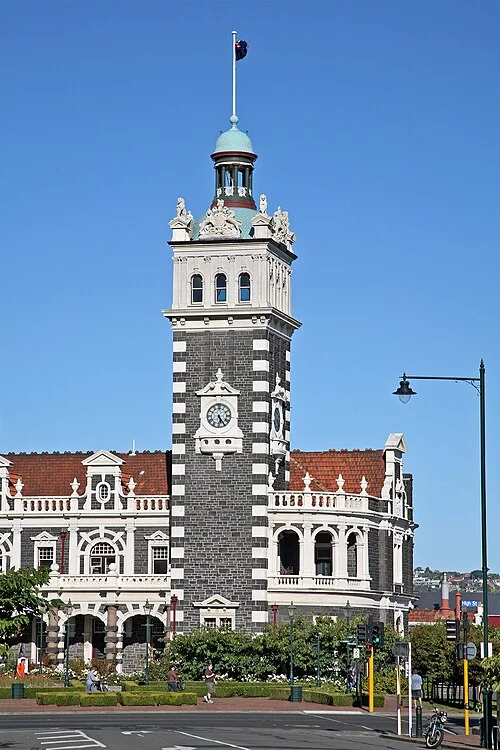

The Railway Station area can be another brief stop. The photograph here shows the clock tower in March 2009; it does not establish a current train timetable, interior access or events schedule. When connecting a market morning with a walk around the station, finish your food purchase and meal first. If you want a tourist train journey, plan it separately through the actual operator's timetable. This two-night city guide does not automatically include a train excursion merely because a station appears in the walking programme or photographs.
Second day: a museum choice and a garden section
The second day's indoor choice could be Tūhura Otago Museum. The current opening-hours page states general opening from 10am to 5pm and closure on Christmas Day; the free-admission category on that same page is for New Zealand residents. We do not extend that category into a universal free-admission promise for international visitors. Check your visitor category and the ticket conditions of any particular experience through the official page, then set aside a museum block suited to your interests rather than treating every gallery and experience as identical.
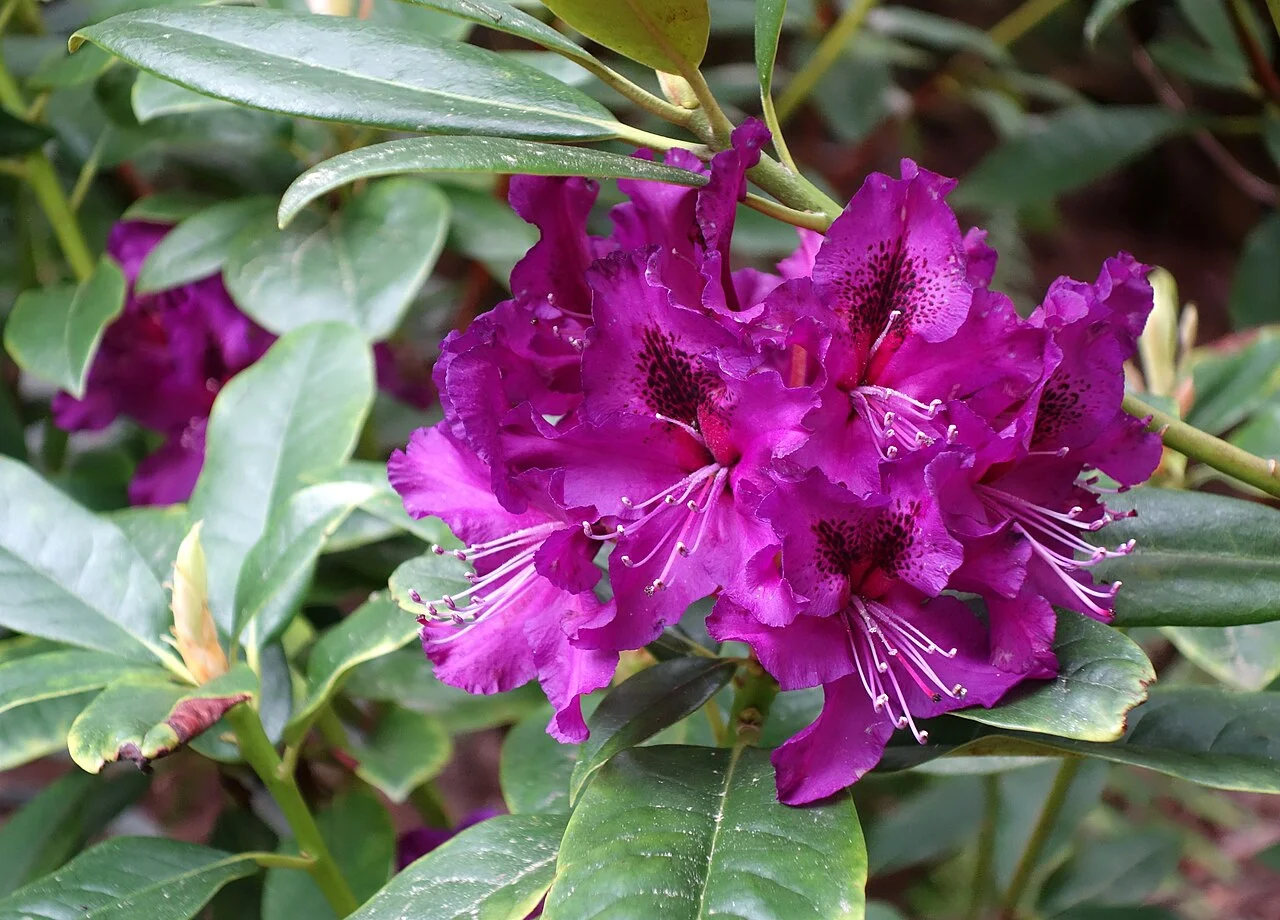

For Dunedin Botanic Garden, choose a section rather than trying to complete the whole site at once. Colourful borders and plant collections in the lower garden can suit a shorter observation visit, while Rhododendron Dell can serve a particular interest in plants. The official collections page describes these as separate areas. The rhododendrons in the photograph were recorded in October 2024; the image does not promise the same display on your date. Arrange a daylight walk around your footwear and the paths actually open. A garden with different surfaces and gradients should not be described as universally step-free.
Transport and departure on the third morning
Orbus provides the official city network, timetables, alerts and Bee Card information. When applying this programme, look at the current journey from your accommodation to the museum or garden and the return leg together. We do not carry a route number from an older visitor map into the guide and guarantee today's frequency. Separating the centre's walking loop from transport to a farther garden stop helps preserve energy for the meals and visits that matter during a short stay. Include waiting and the walk from the stop in your own timing.
Dunedin Airport's official transport page lists licensed taxis, shuttle services and Uber, and recommends booking Supershuttle in advance. We do not present a city bus as a through airport service. For a flight on the third morning, establish the actual pickup location and time for your chosen transfer the previous evening; arrange breakfast at your accommodation or before departure around that decision. Two nights, a Saturday-compatible or market-free meal plan, one museum and a garden section are the Stork's suggested scale for Dunedin. Sources were checked on 4 October 2026, while photograph capture dates are recorded separately in the captions.