

The crucial decision for a first trip to Gabon is which nature extension deserves your time. Libreville can be an arrival and preparation base. Loango offers coastal ecosystems; Lopé connects forest, savannah and cultural history; Lambaréné provides a different introduction through the town and the Ogooué River. Tatilmerkezi Stork suggests selecting one main branch instead of forcing all three into a week. Travel here involves more than joining two points on a map: vehicles, guides, accommodation, park permissions and return arrangements form an interconnected plan. This guide explains how a capital start might support one chosen nature or river extension, without promising wildlife sightings or a particular transport service.
Bring current advice into the movement plan
FCDO advice checked on 4 October 2026 highlights demonstrations, security checks, robbery and risks on isolated beaches or roads after dark. Follow local instructions. Photographing government or military buildings and airports is illegal. Inland roads can deteriorate during rainy periods. Verify vehicle arrangements in advance. This itinerary excludes protest areas, isolated night-time beach walks and unconfirmed park access. If the security or transport assessment changes, the extension must be capable of being postponed. Ask the insurer whether park activities and any necessary evacuation are covered. Decide on the whole journey rather than treating the international flight as the only important booking.
Libreville: use two initial nights for preparation
In Libreville, compare airport transfer arrangements, an operator's meeting point and access to meals before a room's sea view. A business visitor who needs central connections has different priorities from a traveller meeting a forest guide early in the morning. Plan evening meals with a return vehicle rather than assuming a walk back is appropriate. Arrival day can be reserved for recovery and a brief city stop; the following day can confirm the practical programme. Adding a distant transfer immediately after a long flight removes the allowance for delay and fatigue. For children, ask about steps, shade and breaks during the journey. With reduced mobility, request specific information such as vehicle entrance height and access to the room.


One walking focus gives a city day clearer purpose. A brief daytime coastal stop followed by a seated meal may be sufficient; the coast photograph does not establish swimming conditions or recommend a new business. Discuss permission before photographing people or market products. Do not take out a camera around airports or official premises. Rather than attempting shopping, every museum and a night-time coast visit, finish the preparations for the main extension. Required documents, payment arrangements and a contact in the event of communication problems should be clear before leaving the capital.
Loango: one base with guided nature days
If choosing Loango, establish which access point and accommodation base will be used. Coast, lagoon and forest experiences do not necessarily share the same transfer arrangements. Request the vehicle or boat type, luggage arrangements, park permission, meals and guiding for every stage in writing. If an air connection is proposed, ask not just about departure but about an alternative following cancellation. Avoid a substantial promised excursion on arrival day: settling in and a short introduction may be enough. Subsequent days can connect observation stops, shaded rest and meals as the guide judges appropriate. The elephant and calf image is a previous Loango observation, not evidence that elephants will appear on a beach today.


Three park nights leave another daytime opportunity when an initial outing does not produce a sighting. This is not a wildlife-probability calculation; it is a suggested way to keep rest and activities from competing for the same few hours. Follow the guide's distance and stopping instructions. Do not feed animals or pressure a guide to approach them. Before walking, ask about terrain, a rain alternative, equipment and the distance back. Sea and boat activities require their own assessment. Consider a capital night between the extension and international departure instead of joining the transfer chain directly to the flight. A change to the local movement should not automatically force a change to the onward journey.
Lambaréné: a calmer branch around the Ogooué
For Lambaréné, consider two or three nights that connect river views with everyday town life. Keep a walk appropriate to the temperature, road surface and local guide's advice. A town lunch and a quiet riverside pause can occupy the same day. If interested in the historic Albert Schweitzer hospital section or museum interpretation, confirm current visiting arrangements with the institution. An operating healthcare area is not a freely accessible tourist attraction, and patient privacy must be respected. For a boat outing, separately check capacity, life jackets, the weather decision and return communications. You do not need to board a boat simply to appreciate a riverside setting.


The Ogooué panorama includes boats and the riverbank but does not represent a property's accommodation services. When choosing nights in Lambaréné, assess the meeting point and transfer access alongside a waterfront position. Reserve the complete middle day for town and history rather than burdening the next transfer day with an extensive boat excursion. This branch is not presented as a quick stop near Libreville; real transport arrangements need local confirmation. Choose its purpose against that of Loango before trying to include both in a short stay. Listening to a town's story and observing a coastal ecosystem need different kinds of time.
Distinguish Lopé from the coastal birding area
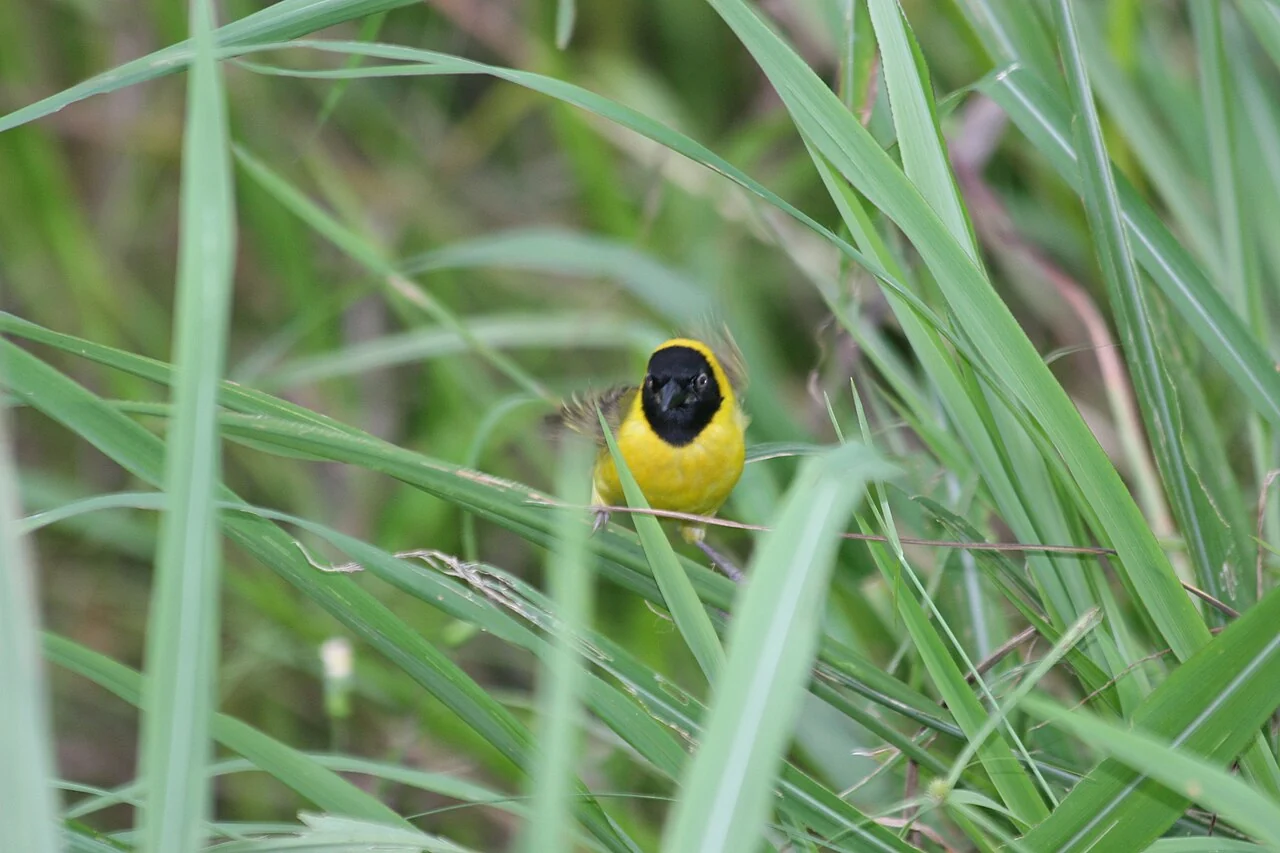
UNESCO's Lopé–Okanda heritage combines a tropical forest and savannah interface with cultural remains. Travellers interested in a nature walk alongside archaeological context may wish to research this alternative. Verify guided access and park permission rather than assuming each heritage location is independently reachable on foot. The Loango weaver image was made at Nkomi Lagoon, north of Omboué, not at Lopé. Its coastal geography belongs to a different context and can accompany discussion of a wider Loango-area route. For bird observation, agree an early outing, quiet waiting and a short distance with a guide. The photographs do not merge two ecosystems into a single place.

Nyembwe and cassava leaves: connect meals with the route
The Libreville airport's destination material describes smoked chicken with nyembwe sauce and cassava-leaf dishes among local preparations. When available on a menu, ask about the palm-based sauce and whether rice, cassava or banana accompanies the nyembwe dish. For cassava leaves, check whether fish is used: a vegetable name alone does not promise a vegetarian meal. A seated hot dinner on the initial capital evening and an arranged packed lunch during a park day meet different needs. Discuss allergies and preferred heat with the kitchen. A dish's appearance in destination material does not establish that any current restaurant serves it every day. Learning about an actual product creates a more meaningful break than leaving every long transfer dependent on a hurried snack.
Allocating an introductory week
An illustrative six-night trip might use two nights in Libreville, three in one selected branch, and a final night back in the capital. Do not divide those three extension nights among Loango, Lambaréné and Lopé: repeated movement would consume the experience itself. With more time, add a second branch through separate accommodation and transport arrangements. Until permission, guides, vehicles and cancellation plans are confirmed, treat the calendar as a proposal rather than a purchased tour. Check entry and health requirements for your nationality with the responsible authorities. Sources were reviewed on 4 October 2026; image capture or upload dates and required visible credits remain in place. The night allocation is an editorial suggestion whose feasibility must be assessed against local conditions.