

Metz: a gateway, a museum and two rivers
Give Metz more than a stop for a single photograph outside the cathedral. Two nights can provide an arrival evening, a following day for the Cour d’Or collection and Porte des Allemands, and a short final-morning return beside the Moselle. The defence structure over the Seille and the Moselle bridges are distinct scenes; organise the visit around those separate waterways. Tatilmerkezi Stork suggests examining where a stone building permits passage on the first day, then how a bridge directs your view towards another frontage. The cover is an actual Porte des Allemands photograph taken on 27 December 2024: round towers, pointed roofs and an arch over the water are visible. It promises neither the weather nor an open entrance on your future date.
Select Metz Ville when looking for the city railway station; SNCF gives its address as 1 Place du Général de Gaulle. A transfer from Lorraine TGV is a separate transport task from walking out of this station. Check arrival and return together for the travel day, without assuming a fixed ticket price or an identical connection every day. Choose accommodation by balancing the return to the station with the older-centre walk you want. Obtain reception times, bag-storage arrangements and room floor from the actual property. Leaving heavy luggage before looking for every frontage can turn the short arrival evening into useful preparation. Rain may justify shortening the riverside section and reserving your energy for the next day's collection.
From the cathedral exterior to the Cour d’Or calendar
The cathedral photograph is described by its source as a capture from 2 May 2003. Stone is lit against a dark sky above other city fronts. That is no evidence of a lighting show repeated every evening. Outdoors, compare the tall window openings, pointed upper structure and smaller scale of the street below. Close reproductions of modern stained glass are excluded from this guide's photographs: looking at the exterior grants no permission to reproduce every work inside. From the Place d’Armes area, look towards Rue du Chanoine Colin to identify the onward route to the museum. Different institutional pages give different walking estimates, so do not use this path as a race against a fixed number of minutes. Allow for your own pace and pauses.


The current institutional address of Musée de La Cour d’Or is 2 Rue du Haut Poirier. Its new official page checked on 5 October 2026 gives Wednesday through Monday admission from 10am to 12:45pm and 2pm to 6pm, Tuesday closure and free access for all visitors throughout the year. Separate public-holiday closures apply. Do not carry an old school brochure's schedule into a new trip. Choose an archaeology or medieval section around your interests and compare two objects through material and use. Keep the museum's lunch break distinct from restaurant service. The institution excludes prams, pushchairs and backpack baby carriers while permitting front carriers; ask reception about available arrangements when visiting with a baby. Plan specific access requirements independently of the fact that admission is free.
Porte des Allemands and the theatre island
A second substantive city focus for the museum day is Porte des Allemands. The tourism office identifies a bridge and double gateway over the Seille at Boulevard Maginot. Its exact 1–31 October 2026 calendar gives Tuesday through Sunday opening from 2pm to 6pm, with no Monday opening listed. With lunch included, a morning collection visit, a meal during actual service and the gateway afterwards form a workable sequence. Both visits need not be lengthy. Check admission for the date when using the courtyard or passage. Examining the tower fronts outdoors and entering a temporary exhibition are separate decisions. Do not apply the later closing time from a summer schedule to October; sunshine in the photograph does not establish identical light at a future time.
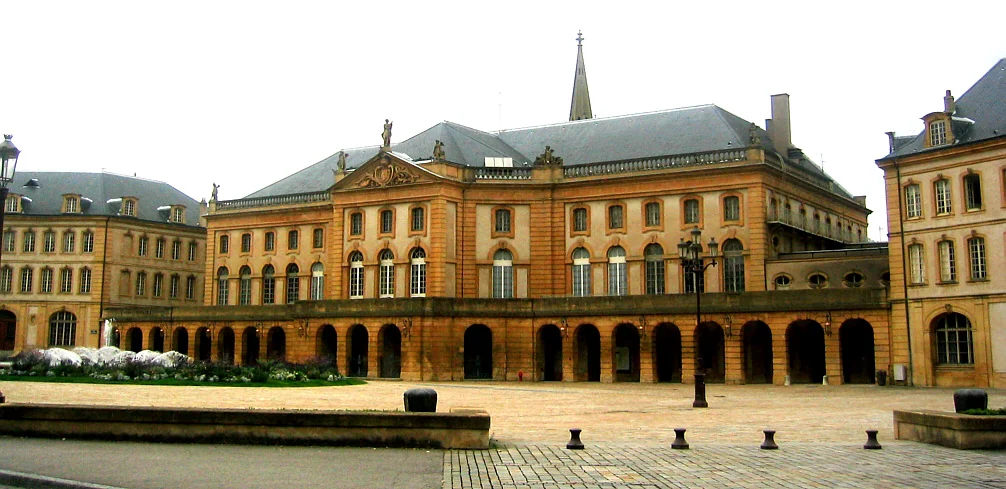

On the Moselle side, the Opéra-Théâtre exterior can become a separate stop. The third image is Andreas Praefcke's 2003 theatre photograph, showing the long frontage, projecting middle and square in front. Attending a performance requires its current ticket and start time; this walk offers no auditorium tour. Moving from the gateway's defensive scale towards a public theatre entrance, compare just two things: the extent of closed surfaces and openings people can approach. If tired, leave this part until the final morning. Seeing cultural institutions need not require missing a proper meal or rushing towards the last train. An itinerary can create room for observation without presenting an invented encounter as something personally experienced.
Moyen-Pont and a concrete main meal
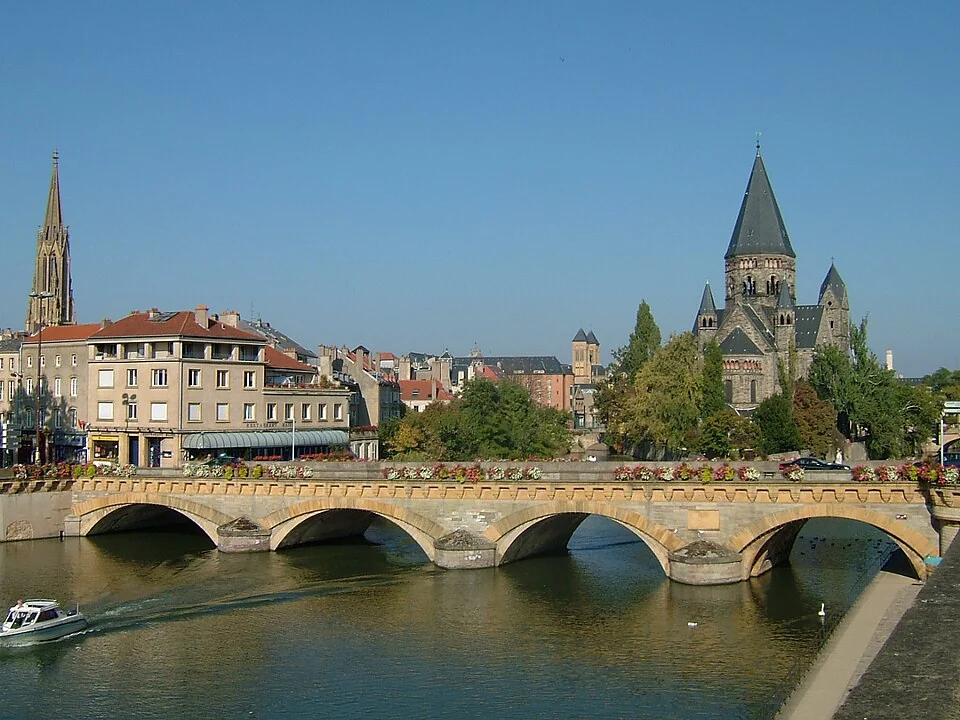
The fourth photograph shows the low arches of Moyen-Pont, water and separate city buildings beyond; its source gives the camera date as 16 October 2005. Do not substitute this Moselle crossing for the towered gateway on the Seille. Looking from the bridge and looking at its arches from the bank provide different viewpoints. Adjust your pace on wet ground rather than assuming every present-day waterside path is available because an old image appears unobstructed. For a short stay, select the relationship between theatre frontage and bridge and remove additional bank detours. Avoid obstructing other people's passage simply to recreate one photograph. Returning through streets you have already observed can make the route less dependent on an unfamiliar shortcut.

For an actual main meal, La Winstub's own menu lists Wadle: roasted pork knuckle served with a potato salad containing bacon, at 2 Rue Dupont des Loges. The operator presents an Alsatian restaurant in Metz; do not describe this plate as a dish invented in the city. Published service is Tuesday through Saturday, noon to 1:15pm and 7pm to 9pm; confirm the narrow lunch window against your museum exit. Ask the kitchen directly if pork or another ingredient is unsuitable. Its separate Baeckeoffe requires ordering seventy-two hours ahead for at least four people, so it is not an impromptu solo lunch. Confirm price and availability when booking. The bridge photograph depicts neither a restaurant table nor the meal, and no supposedly tasted flavours are narrated.
Choose Saint-Pierre-aux-Nonnains and your return
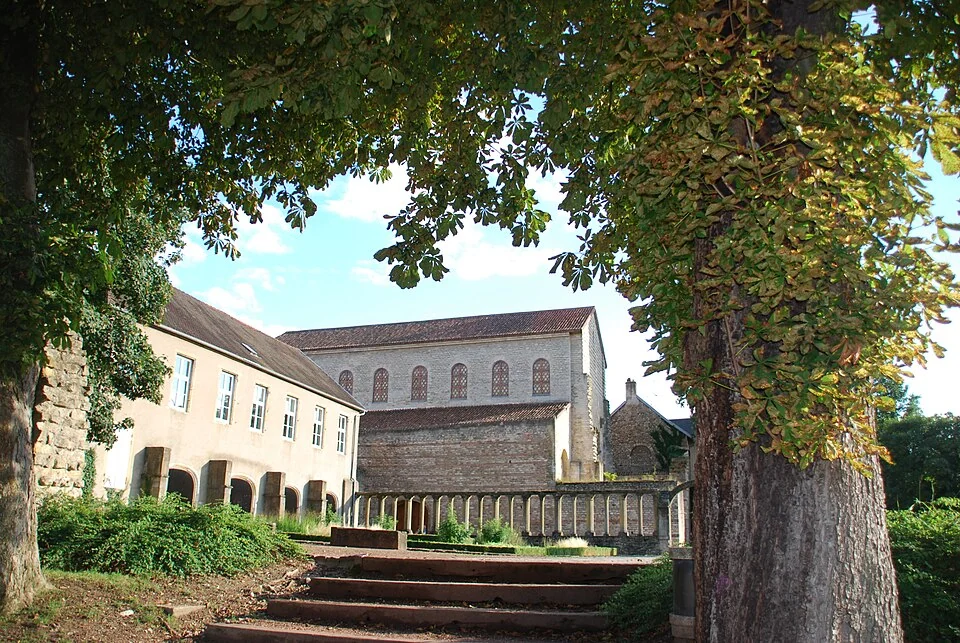
The fifth image shows Saint-Pierre-aux-Nonnains with trees and entrance steps, photographed by Matthias v.d. Elbe on 18 August 2010. The current Tourisme Metz record identifies a historic building now used for culture in the Quartier Citadelle and gives Saturday–Sunday admission from 2pm to 6pm for 26 September 2026–20 June 2027. Do not add the same interior visit to a weekday train departure. A short outdoor observation and an open exhibition room require different conditions. The institution describes access as partial and with assistance: visible steps should not be converted into a promise of easy entry for everyone. Look at the current programme if planning a specific event; this older image represents neither today's exhibition nor a ticket for it.

Before filling the final morning with more stops, establish when bags can be collected and how you will return to the station. A weekend afternoon interior visit needs a genuinely late departure rather than an unspoken afternoon obligation attached to a short morning walk. With children, one comparison between tower and arch at the gateway, or arch and water at the river, can be enough. Remove one of the two riverside sections if movement or rest needs increase. The distinction remains clear between defence and surviving fabric, objects in the museum and public fronts around the Moselle. Without suggesting that the whole Lorraine region has been completed, the guide offers a city-scale framework for a selected visit under real opening conditions and a concrete main meal.