
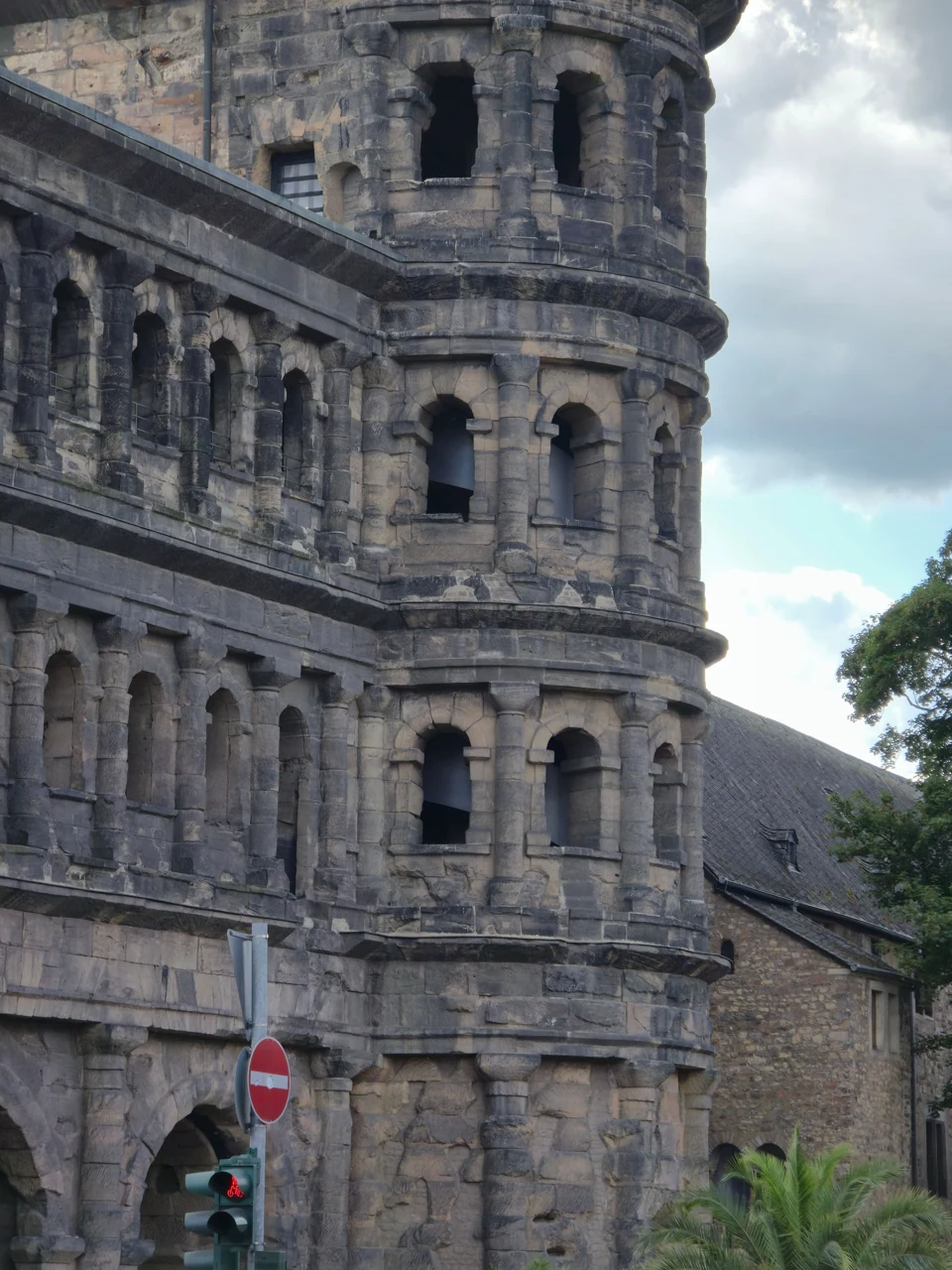
The useful distinction for a day in Trier is between walking the old town and trying to enter every Roman monument. Porta Nigra, Hauptmarkt, the cathedral and Palastgarten form a north-to-south route; the Kaiserthermen add a real archaeological visit. The amphitheatre and Rheinisches Landesmuseum are not attractions to finish in a handful of leftover minutes. This guide selects one or two paid sites for a first-time visitor who wants more than a distant photograph of a Roman gate. A combined card covering several places does not require you to see them all on the same day. Choosing your interests before the ticket protects both your time and the quality of the visit.
Station to Porta Nigra: the first admission choice
The official DB entry for Trier Hauptbahnhof identifies your starting point when arriving by train. Walk towards Porta Nigra to enter the central programme. With luggage, consider leaving it at your hotel first; moving through a stone monument and several outdoor sites is easier without a large bag. Begin by looking at the gate externally before deciding whether its interior is a priority. See more than one face of the structure and think about the passage as a former city boundary rather than stopping at the first familiar photograph angle.
The municipal World Heritage explanation identifies Porta Nigra among Trier's principal Roman structures. In a city that contains much more than a single surviving gateway, it provides context for the later sites. For an interior visit, check current admission, final entry and any guided programme with the operator. The visible historic buildings do not all use one ticket or opening schedule. A group tour also does not automatically provide time for independent exploration; read what is included and how much free time remains.

Hauptmarkt to the cathedral and Liebfrauenkirche
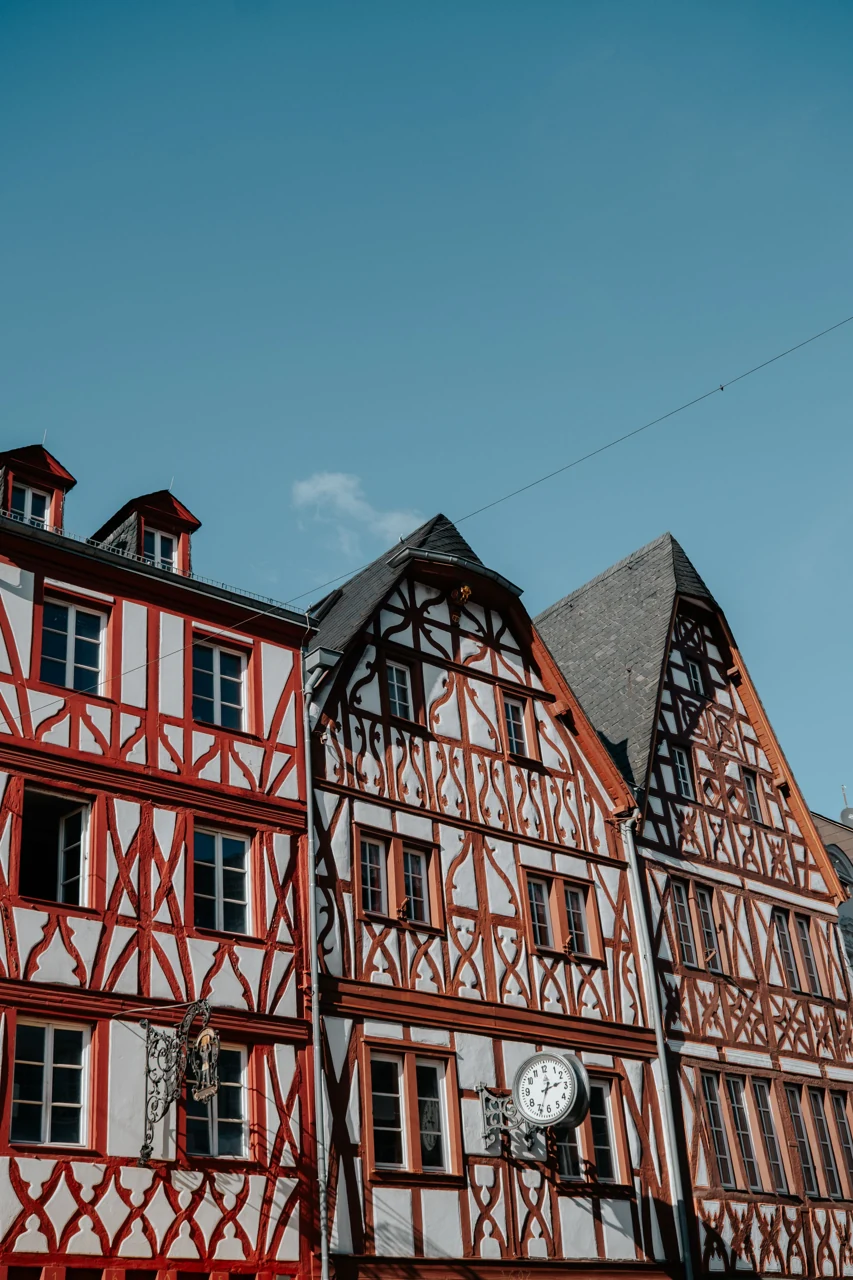
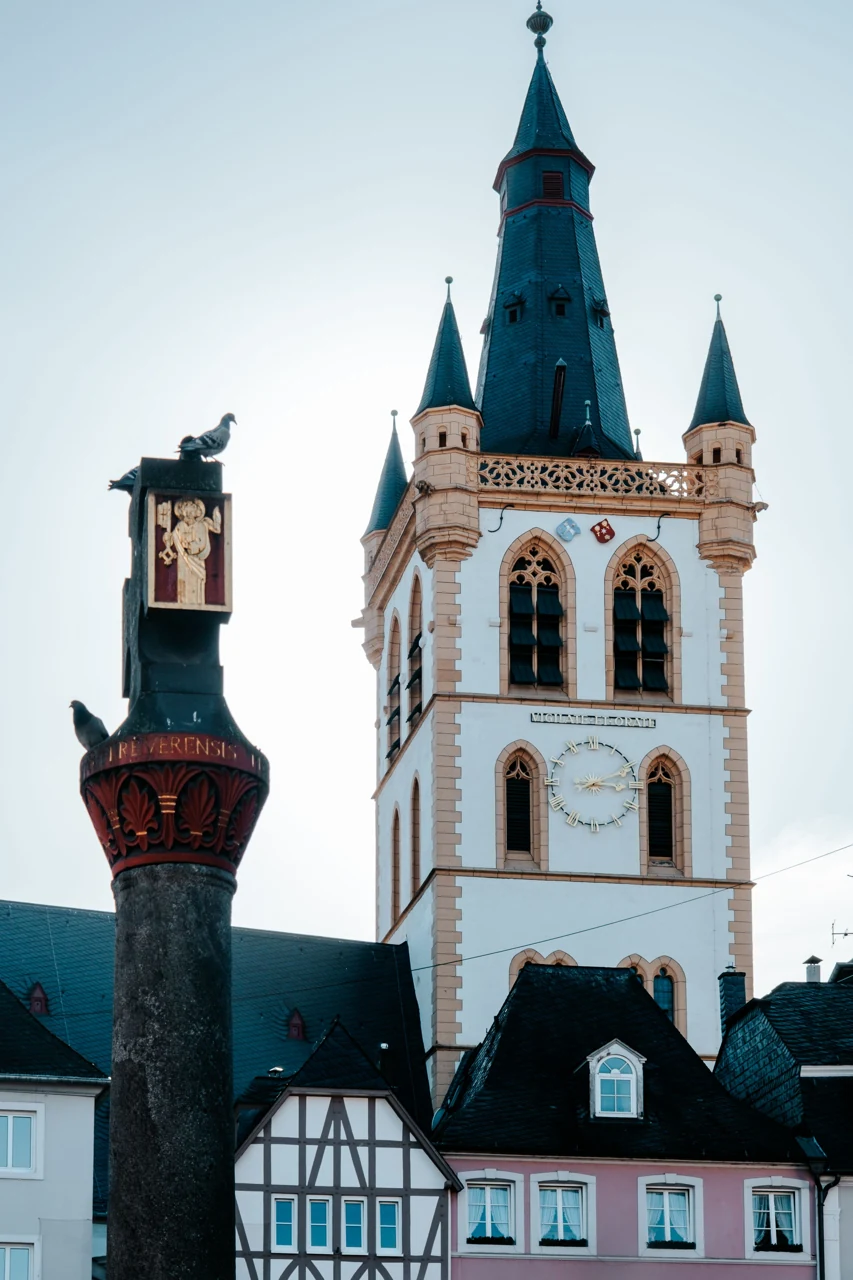
Continue along Simeonstraße to Hauptmarkt. Stop to look at several facades, the fountain surroundings and the connections into smaller streets. Rotes Haus and the St Gangolf surroundings show a different urban scale from the Roman gate. Seeing the square from two approaches may be more useful than trying to squeeze every feature into one panorama. Shopping and outdoor seating are part of the historic centre's present use. Keep entrances and passages clear while taking photographs, then turn towards the cathedral for an indoor pause within the walking day.
The cathedral's own information-office page publishes its contact and visitor arrangements. The opening of Dominformation and access to the cathedral for worship or sightseeing are different things. Follow each building's own arrangements when exploring the neighbouring Liebfrauenkirche area. If interested in the Domschatz, consult the treasury's separate conditions; entering the main church does not guarantee that the treasury display can also be visited. Encountering a service gives a reason to wait quietly or examine the exterior first rather than forcing the planned sequence.
Through Palastgarten to the Kaiserthermen
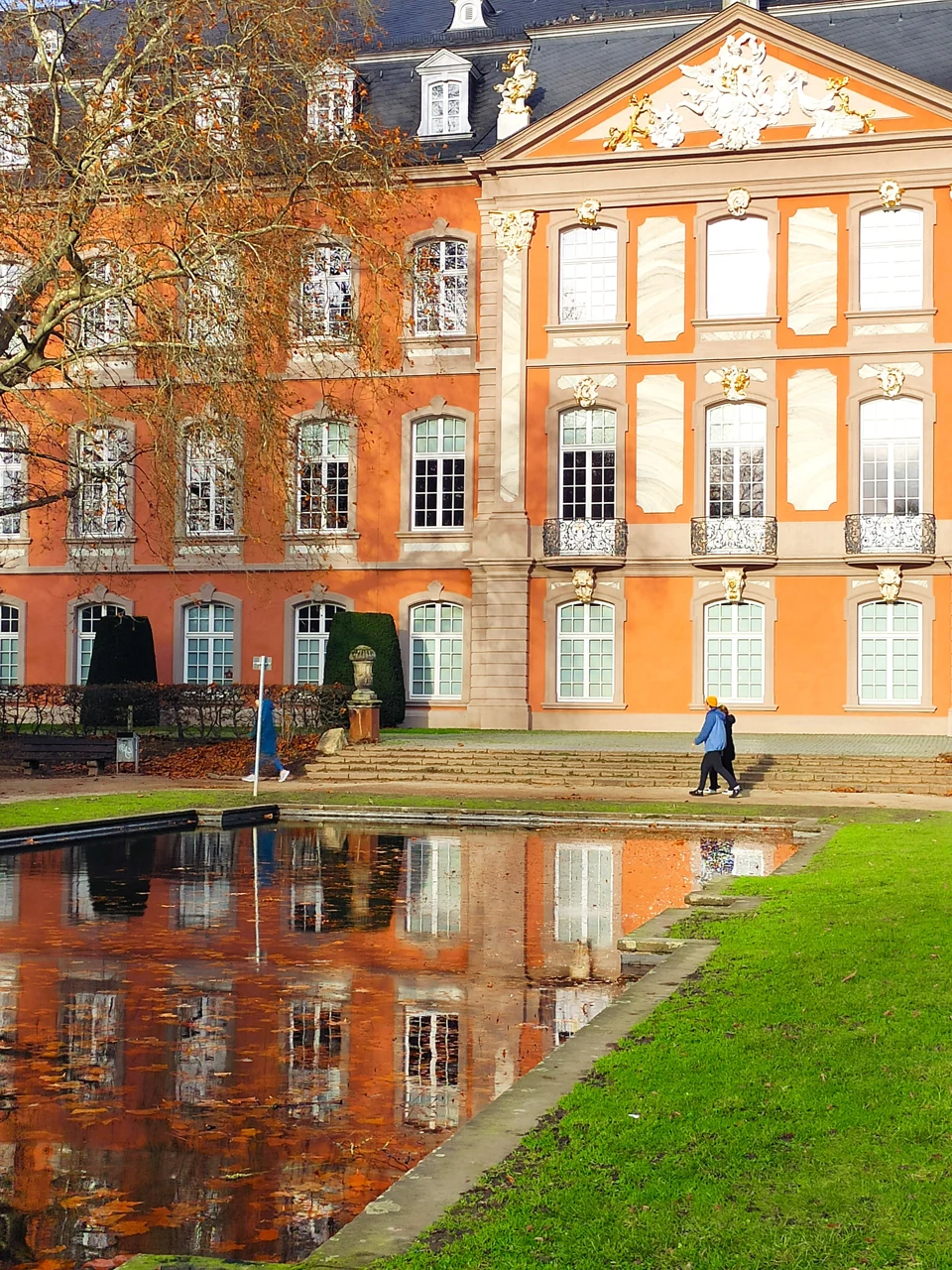
Move from the cathedral surroundings towards Konstantinbasilika and the palace garden to connect the northern gate with the southern Roman sites. The garden provides an outdoor change of rhythm after consecutive interiors. Seeing a palace facade and visiting its rooms are different activities; this walk makes no promise of unrestricted palace-interior admission. Take a short garden pause and assess whether time remains for the archaeological site. Choosing the Kaiserthermen here helps reveal how the large Roman structures extend through the present city rather than existing as one isolated attraction.
The actual Kaiserthermen operator information describes access to original above-ground areas and service passages while phased research and works continue. Arrive expecting archaeological remains, not a working spa or thermal swimming pool. Follow the relationship between the visible ruins and the passages to understand the plan. The operator publishes earlier seasonal closing and a final admission before the site shuts. Spending too long in the garden late in the afternoon while assuming summer opening lasts all year could leave too little time for a meaningful visit.
AntikenCard: coverage is different from available time
The Zentrum der Antike card information describes Premium coverage for Porta Nigra, Kaiserthermen, the amphitheatre, Thermen am Viehmarkt and Rheinisches Landesmuseum. Guided tours and special events are not automatically included. Before buying, list the sites you actually intend to enter and compare their individual admission conditions. A person choosing one monument has different needs from someone spending two days on museums and Roman sites. Owning the card does not turn an exterior photograph walk into a completed interior visit to every structure.
Rheinisches Landesmuseum offers a longer collection experience for someone interested in archaeology and finds. Adding it may justify reducing another indoor stop or using a second day. The amphitheatre is also more than the next square a few steps along the central pedestrian route: allow for the walk, admission and time within the site. Rain might favour a collection visit, with outdoor remains kept for better conditions. When changing the plan, check that the chosen sites are open that day. The objective is to understand the places selected, not simply to use every line printed on a ticket.
A beef main at Brasserie Trier
The current Brasserie Trier operator menu lists Ochsenbrust cooked in root-vegetable broth, with remoulade or horseradish sauce, boiled potatoes and a garden salad. This gives a concrete seated beef main within the route. A meat-free alternative is spinach-and-ricotta dumplings with tomato foam, young spinach, basil and toasted pine nuts. Ricotta means that dish is not vegan. Ask for the operator's allergen-labelled menu when necessary; a short dish description does not explain every ingredient.
If fitting a long lunch before final admission to the Kaiserthermen, recalculate the visiting time first. Completing the archaeological site and then sitting down may remove the pressure of a closing deadline. Different preferences within a group are best addressed through the actual menu. A small salad or soup need not be treated as an adequate main meal for everyone. Recheck the operator page before travelling because dishes and prices can change. Giving a proper meal enough time shapes the pace of a Trier day just as much as deciding between a museum and a Mosel walk.
Park Plaza Trier and an optional Mosel section
The official Park Plaza Trier site confirms the actual central hotel at Nikolaus-Koch-Platz 1. It describes luggage storage on arrival and departure days and the neighbouring Plaza Carrée garage. Confirm the room, parking conditions and any access requirements separately; one reservation does not necessarily include every service. Use the property page for accommodation facts, while relying on archaeological operators for monument history rather than a hotel's brief sightseeing summary. If using local transport, select your journey from current route information for the actual day.
Once the indoor visits are complete, the Mosel riverbank can form a separate outdoor section. It is an additional extension westwards, not an automatic continuation of the Porta Nigra–cathedral–Kaiserthermen line. With limited time before a return train, remaining around the garden and centre still gives a complete day. An overnight stay allows a museum to move to the following morning and leaves the first evening for the river. The distinctive experience of this route is connecting a Roman gate, a living market square, religious buildings and an archaeological site as different historical layers within the same walking city.