

Visakhapatnam: maritime technology and the coast in two days
The Tatilmerkezi Stork connects a submarine museum with coastal views in a city stay in Visakhapatnam, also known as Vizag. Allow four calendar days and three nights, placing two full touring days between arrival and departure. The first concentrates on the Ramakrishna waterfront museum cluster, while the second heads towards Kailasagiri and Rushikonda. The city’s appeal need not depend on swimming: a submarine’s enclosed working spaces and a hill’s broad coastal outlook offer different kinds of visits. Araku Valley and Borra Caves are excluded because they require separately planned time and connections. A meal built around Pesarattu or Chapala Pulusu introduces concrete Andhra dishes into the programme. The aim is to understand maritime history and the city’s setting rather than exhaust every beach on a compulsory checklist.
Divide four calendar days and three nights
Day one covers arrival, the accommodation transfer and a nearby evening meal. Give day two’s main visit to INS Kursura submarine museum, adding the TU-142 aircraft museum after lunch according to your interests and finishing with a modest Ramakrishna waterfront walk. On day three arrange a separate Kailasagiri journey before considering a shorter Rushikonda viewpoint pause if weather and time permit. Day four is the departure transfer. This means two full sightseeing days, not two additional full days extracted from an arrival evening and return morning. A museum closure or unsuitable coastal weather can justify exchanging parts of the schedule. Families can choose one museum for a longer interior visit and observe the other briefly from outside rather than make both compulsory. Keeping the principal blocks clear makes the itinerary adaptable without turning each day into a race across the city.
INS Kursura: give the submarine enough time
Incredible India introduces INS Kursura as a decommissioned submarine transformed into a museum. This preserved vessel on the shore connects maritime history with the practical experience of an enclosed working environment. At the entrance learn the current visitor route; where interior sections are open and suitable for you, follow the sequence slowly through narrow spaces. Readers with limited mobility should not assume every interior is accessible and should confirm arrangements with the institution in advance. Focus on interpretations of the crew’s daily life instead of treating the vessel merely as an exterior photo stop. Current staff determine bag and interior photography arrangements. Avoid fixing the next activity immediately after an assumed exit time, leaving room if a queue or visitor tour takes longer. The exterior photograph records the submarine but does not guarantee today’s access to each compartment.


TU-142: complete the submarine day with aviation
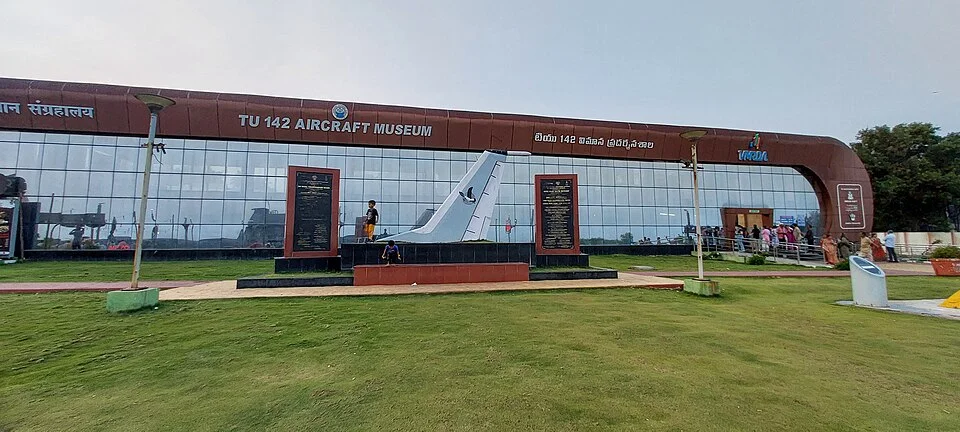
The Visakhapatnam district administration’s gallery identifies the TU-142 aircraft museum among its waterfront visitor sites, while Incredible India describes it as a separate aviation attraction. Adding it after the submarine can suit readers interested in comparing the tasks of different vehicles. Follow the exhibition interpretation and areas currently available; do not assume every cockpit or interior can be entered freely. This guide promises neither a combined ticket for both museums nor identical entry arrangements: establish the actual admission terms on the day. The photograph shows the aircraft museum building and does not represent every current exhibit. A group with limited museum interest can enter one institution and give the other a modest exterior observation. This keeps the later coastal pause enjoyable instead of turning the day into a long sequence of compulsory transport exhibits.

Ramakrishna waterfront: separate walking from water activities
Ramakrishna Beach appears among the city’s coastal landmarks in the official tourism account. A short waterfront walk after museums creates an open-air pause following enclosed visits. Looking at the coast is not automatically a recommendation to swim; follow local warnings, staff directions and actual sea conditions. Do not step beyond barriers or onto wave-washed rocks for a photograph. Shortening the walk in worsening weather does not diminish time already spent meaningfully in the museums. Nor should a dated cover image be read as a promise that the sun or shoreline will reproduce the same composition daily. Arrange the return to accommodation and an appropriate vehicle pickup point before starting, so tired members of the group are not left searching for a new connection at the end of the promenade.
Kailasagiri and Rushikonda: two scales of one coastal day
Begin day three with Kailasagiri’s setting above the city and coastline. This hill is not proposed as an uninterrupted walking extension of the Ramakrishna circuit; its connection and current access deserve separate consideration. If a ropeway or sightseeing train matters to your visit, confirm the operating service with its provider rather than infer current availability from an older photograph. After sufficient time at the hill, consider a shorter viewpoint pause towards Rushikonda. A lengthy beach day is unnecessary to appreciate the curve of the shore and neighbouring hills. For a water activity, separately establish what is permitted that day and the provider’s conditions. Rain, strong wind or a closure is a reason to simplify the programme rather than force both hill and shore visits. The Rushikonda image records a distant coastal view and supplies no right of entry to private buildings or every section of the beach.



An Andhra meal: Pesarattu or Chapala Pulusu
Incredible India names Pesarattu, Gongura Pachadi and Chapala Pulusu in its account of Visakhapatnam’s food. Consider the first as a green-gram dosa and the last as a fish curry. They supply specific Andhra choices, not a claim that these dishes exist exclusively in this city. For lunch on the submarine day, a reader choosing Chapala Pulusu can decide after checking the real menu, portion and fish used. A vegetarian visitor can consider Pesarattu while confirming the sauces and accompanying items. Gongura Pachadi adds a sour-leaf accompaniment, with heat and other ingredients differing between kitchens. Do not assume a particular restaurant maintains the same daily menu or that every fish displayed near the coast was caught that day. Placing lunch near the visit cluster preserves more time than crossing the whole city solely for a meal and keeps the day’s transport demands proportionate.
Accommodation, luggage and a shorter alternative
When choosing accommodation, balance the Ramakrishna museum day with the northern coastal day. A waterfront address can make a sea view convenient without guaranteeing a walkable route to every museum or to Rushikonda. For an early train or flight, separately compare the transfer to the actual departure point. The official tourism channel introduces air, rail and APSRTC bus connections; use the relevant operator’s date-specific information for current services and stops. The luggage arrival transfer may require a different arrangement from a sightseeing journey. With only one full city day, retain INS Kursura, a modest Ramakrishna walk and a local meal rather than add both the hill and Rushikonda at the last minute. Sources were checked on 4 October 2026. Reconfirm admission, accessibility, weather and everyday transport before travel, then match the plan to conditions instead of relying on an inflexible route.