
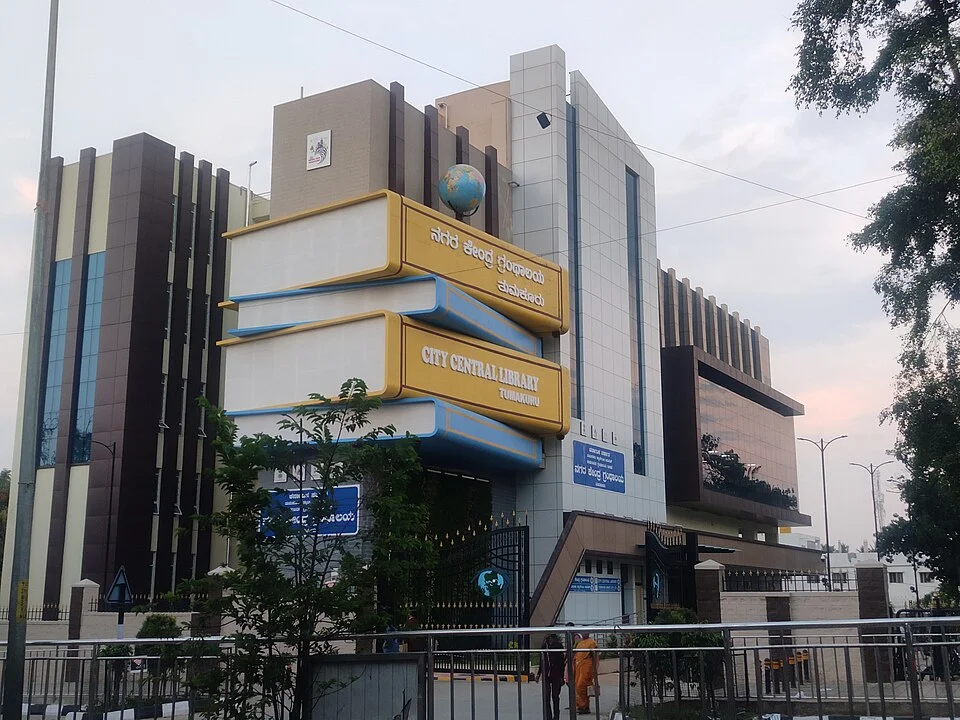
A quiet urban day in Tumakuru, a city of learning
Tumakuru is a Karnataka city also encountered under the older name Tumkur. The Tatilmerkezi Stork concentrates on reading, education and public streets rather than listing every hill across the district. A genuine City Central Library facade, the surroundings of Town Hall Circle and a separate educational building offer ways to consider city life beyond a monument list. This is neither a student-enrolment programme nor the sale of a campus tour: it is a small urban session for a visitor staying two nights, subject to actual admission. Arrival evening, a main city day and departure morning provide one full sightseeing day. Madhugiri or Devarayanadurga does not automatically fit inside that time. Short public exterior looks and a genuine seated lunch provide an appropriate rhythm for seeing working and learning institutions quietly. Pictures belong to particular older dates and do not establish identical traffic, building use or admission today.
Finding the correct arrival through both city names
State tourism identifies Tumakuru station as a connection with towns in Karnataka; the actual stop for a selected train must come from the ticket. When matching a Tumkur address with the newer Tumakuru name, use the property's real entrance location. Road arrivals from Bengaluru need a separate final connection between the actual bus drop-off point and the room. Air travel requires a road journey after the Bengaluru airport on the real ticket. No fixed service count or unchanging driving duration is invented. Instead of attempting institution visits with luggage on arrival day, room check-in, a light meal and confirmation of the first address for the following day may be sufficient. A real vehicle meeting point reachable from the door matters for late arrival or early departure. Establishing the final station or bus-stand connection on the first evening helps preserve the quieter pace of the main day.

Library architecture and the routine of reading
The source photograph clearly shows the library facade with a City Central Library sign in Tumakuru. The district's current libraries page describes reading services and user rules in the area. Learn the particular entrance's admission arrangements first rather than converting general published office hours into a guarantee for every service in that building. If admitted to read, respect registration and silence. The district source specifically describes recording entry, placing belongings in the assigned area and not eating inside. Lunch is therefore planned at an actual outside business rather than at a library desk. Borrowing books and reading briefly on site are different procedures; membership-based services are not assumed an automatic visitor entitlement. Where a section is closed or busy, an exterior architectural look is sufficient. Considering facade scale and reading function together connects the institution with city life without treating it merely as a hurried photographic stop.
Town Hall Circle and everyday urban movement
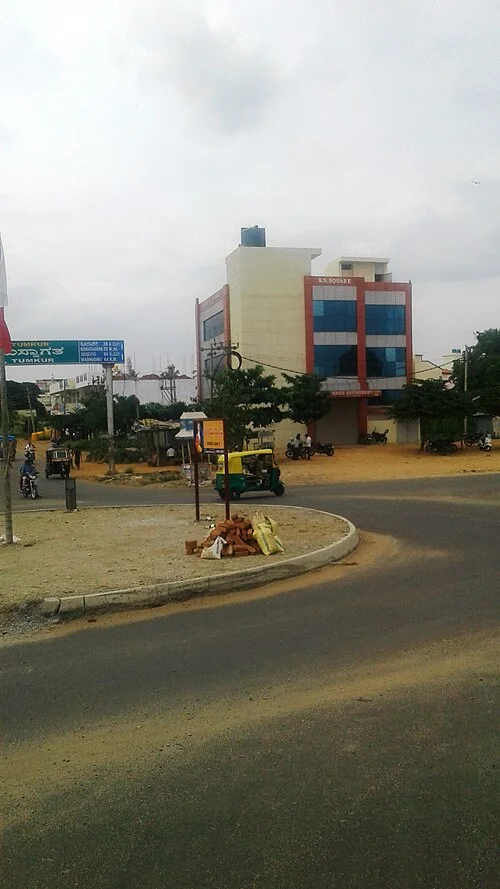
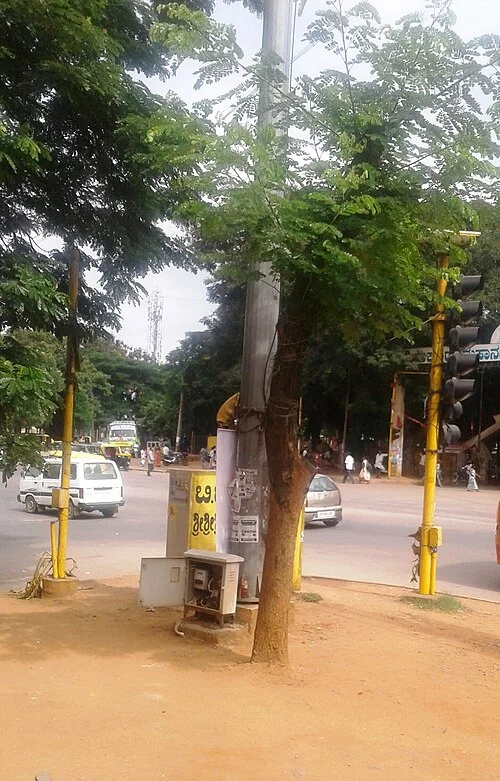
The Town Hall Circle photograph shows trees, roadside ground and junction surroundings. It is not described as the hall's interior or its complete historic facade. This named city location offers a separate exterior session for everyday movement after an institutional visit. Choose pedestrian crossings according to real traffic arrangements: nearby map points do not guarantee a continuous pavement. If coming here from the library, establish the meeting point and return address separately. The other Tumakuru junction photograph provides a sense of urban navigation without promising that present business signs or roadworks remain unchanged. A short shaded stopping point, where available, can reduce time spent standing. The roadside is a functioning place for residents, not simply sightseeing decoration. Select an appropriate public position for a look rather than obstructing traffic or stepping in front of moving vehicles to take a photograph.

The educational setting identified by the source
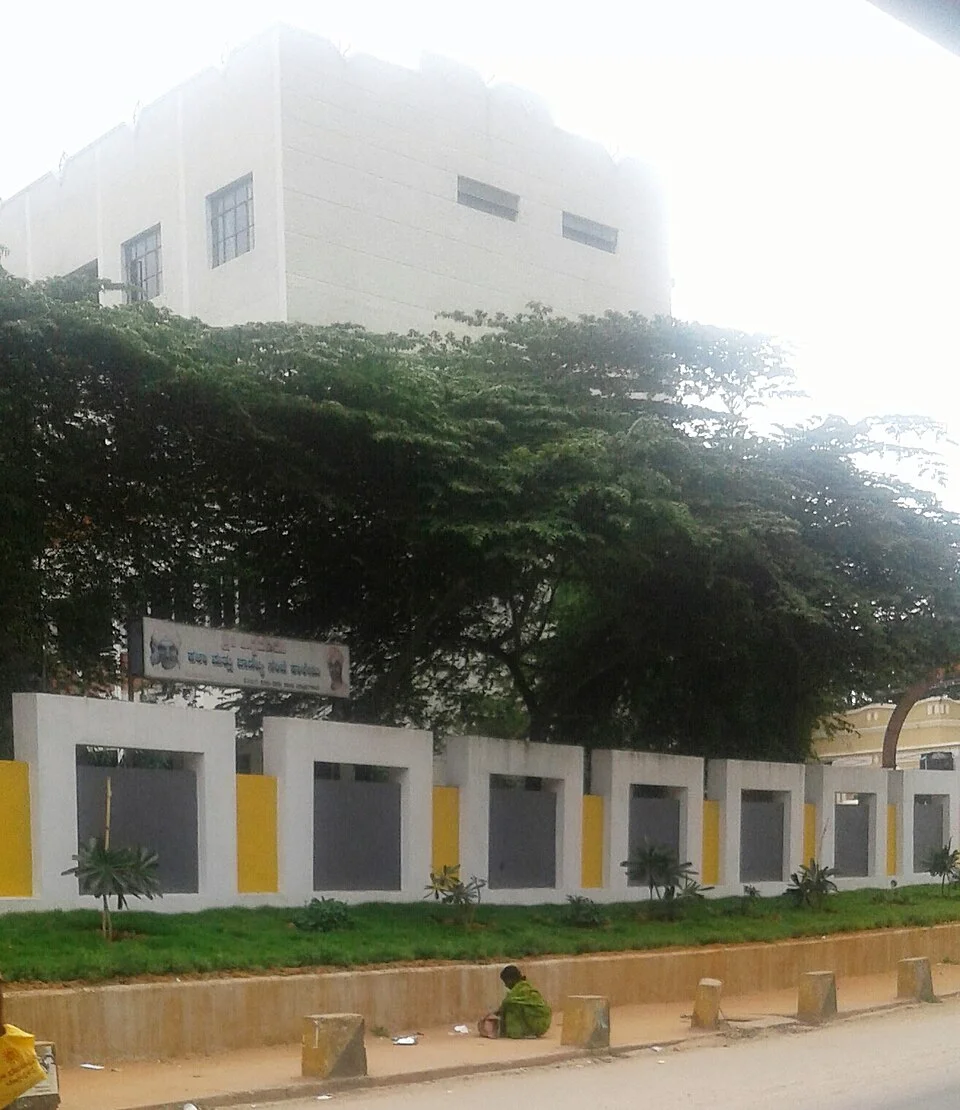
The source identifies the educational building as Siddaganga College. This establishes the setting in that picture; it is not renamed as the campus of a different engineering institution or an open public museum. While an educational institution continues its actual work, an appropriate exterior look may be sufficient to consider learning in the city. Any campus entry requires discussion of permission and visit purpose: a picture is not admission. State material connects the broader Siddaganga tradition around Tumakuru with education and social service, without making every differently named building one institution.

A separate urban dargah entrance
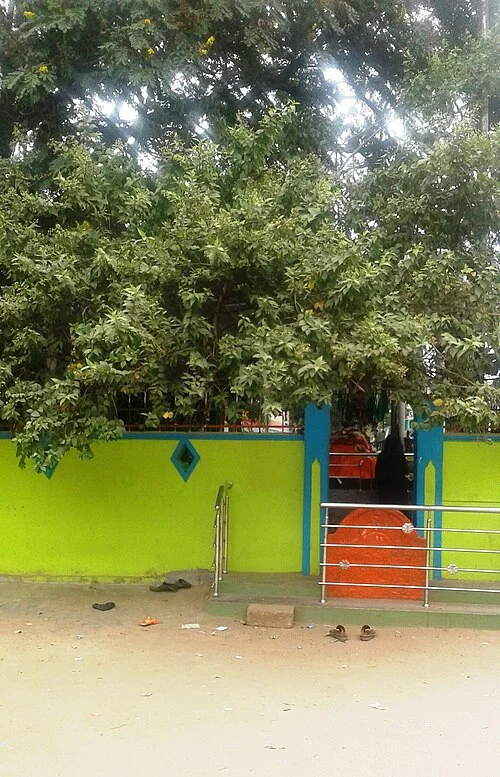
A tree-lined dargah entrance supplies another living religious setting. No particular saint or institutional identity is invented where the image source does not provide one. Learn worship behaviour and footwear arrangements locally, and establish permission separately for interiors or identifiable people. These short exterior sessions differ functionally from the public reading session rather than repeating it under different names.

A concrete South Karnataka meal with ragi mudde
The state cuisine booklet names ragi mudde as a preparation associated with southern Karnataka. The Tumakuru introduction also relates ragi- and jowar-based food to regional grain use. A concrete regional meal example is steamed finger-millet ragi mudde balls with bas saaru and palya. The state booklet describes a spiced, strained broth made with pulses, beans and leafy greens, with the remaining solids tempered into the dry preparation called palya. When seeking the meal in town, ask which accompaniment the business actually serves that day; this regional example is not a claim about a particular restaurant's current menu. The dish is not described as originating exclusively in Tumakuru, and an unidentified accompaniment is not assumed meat-free or meat-based. Discuss the contents and individual ingredient restrictions for the plate actually served. A seated meal between working-institution visits is the programme's practical rest interval. Keeping lunch separate from library rules avoids carrying food to a reading desk or relying on an imagined cafe inside a cultural institution. No current price or business ranking is supplied. Photographs remain five real city settings rather than being supplemented with a meal photographed elsewhere. The named grain preparation supplies a regional culinary connection while the actual business and menu remain a separate decision.
Accommodation criteria and a separate district hill day
Central accommodation and the station area prioritise different needs. A central room may simplify the return after reading and lunch, whereas a station-side option can serve luggage and the booked departure. Actual night noise, entrance steps, luggage storage and the vehicle meeting point complete the decision. Two nights in the same room reduce suitcase handling during the main city day. Do not count the final morning as another full sightseeing day: check-out and transport require time. For Madhugiri Fort, Devarayanadurga hills or Namada Chilume, establish a separate district day with its own route, admission and return connection. High rocky settings are not automatic extensions of every urban street session. Sources were checked on 5 October 2026 and older capture dates remain visible in credits. The Stork selects Tumakuru through learning, a public institution, everyday roads and a genuine grain-based meal without guaranteeing access across the entire district.