
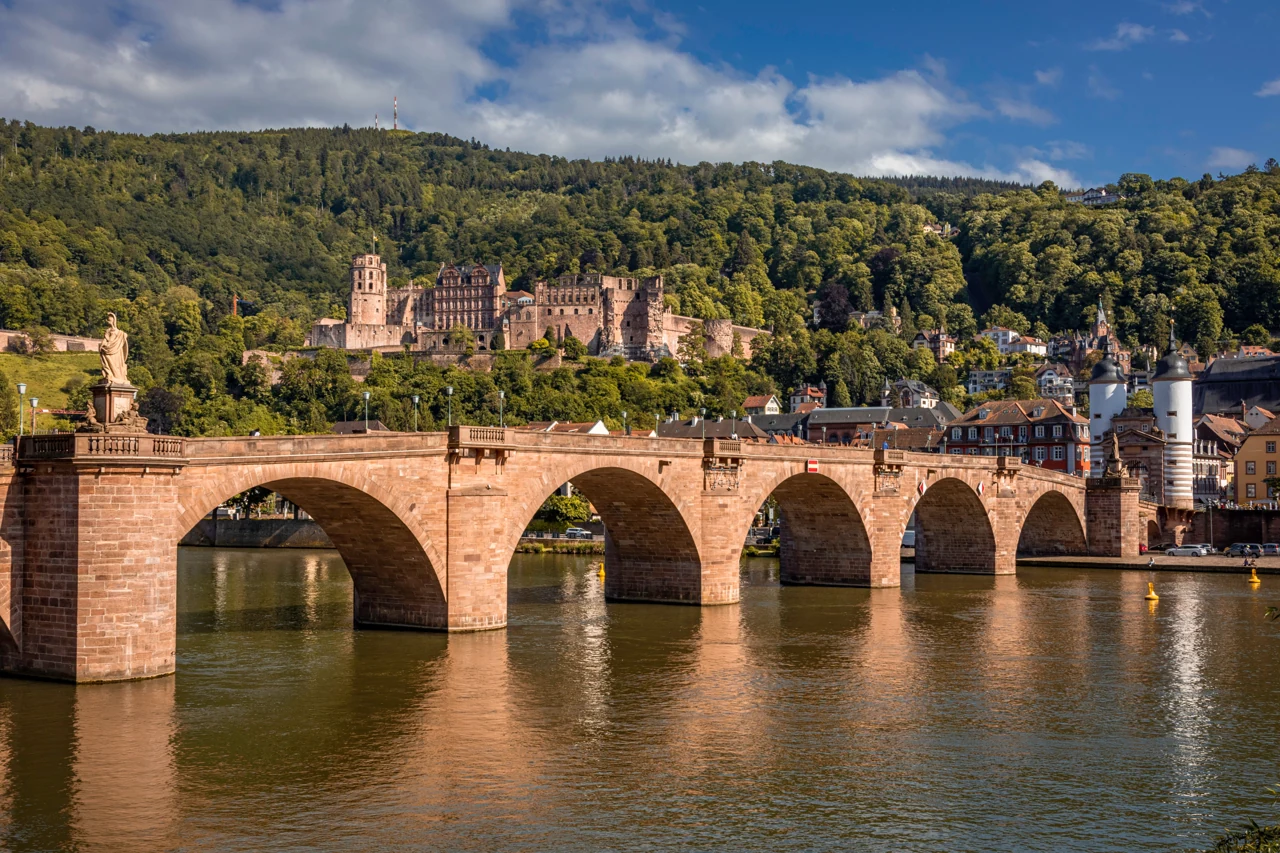
The important decision on a day in Heidelberg is whether you really need to climb both sides of the valley. The old town, Alte Brücke and the Neckar riverbank connect in one walking programme, while Schloss Heidelberg on the southern slope and the Philosophenweg on the northern side involve separate ascents. This guide builds a first visit around one hillside, a proper castle visit, the bridge and a seated main meal. The opposite hillside is an additional choice when time and energy permit. Two viewpoints that look close on a map are not necessarily consecutive parts of a level walk. The river and roofscape can also be understood from bridge level, without reaching every elevated viewpoint in one day.
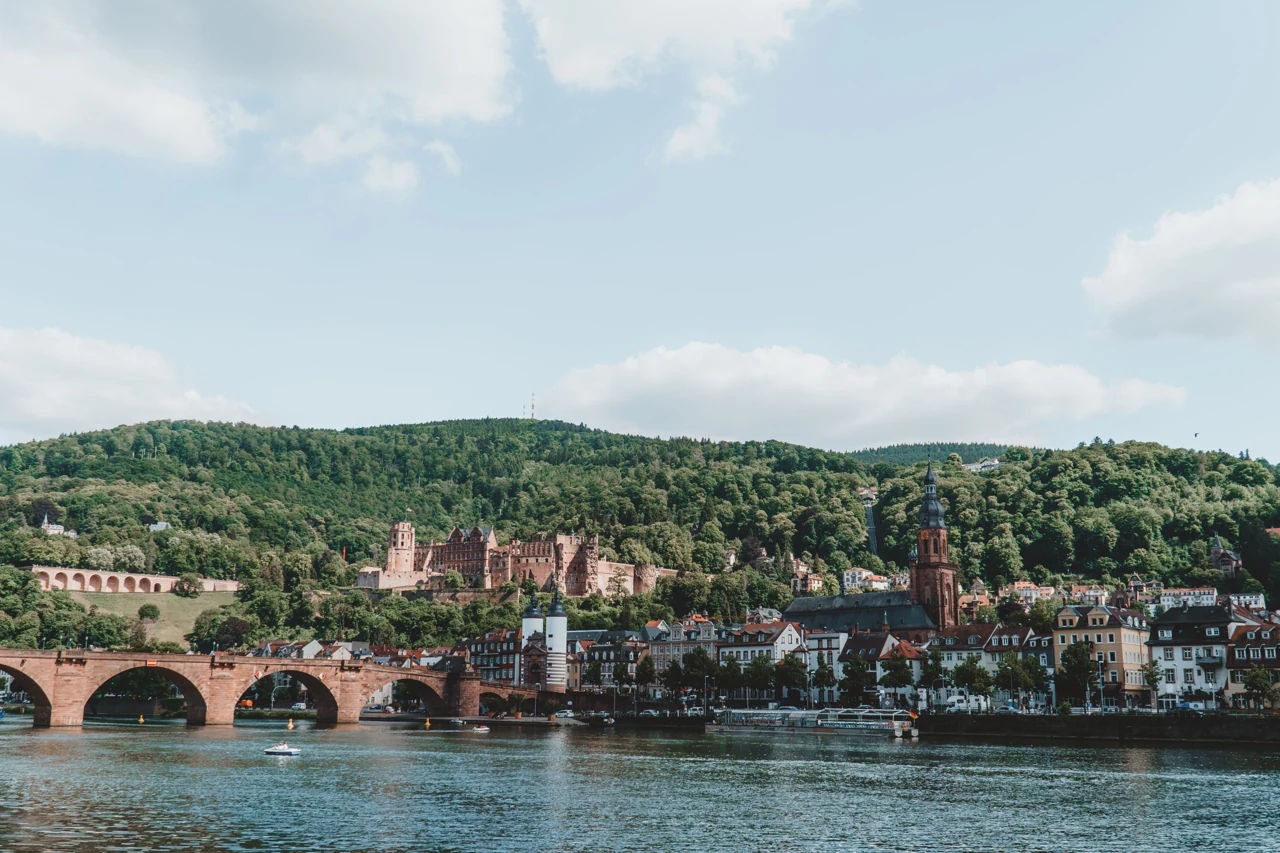
From Hauptbahnhof to the old-town programme
The official DB page for Heidelberg Hauptbahnhof identifies the arrival station for your mainline journey. It is not immediately beside the old-town core containing Marktplatz and the Old Bridge. Decide first whether you want a long initial walk with luggage. If using local transport, choose your connection from the current departure information rather than assuming a particular route always uses the same stop. With an old-town hotel, ask about luggage storage before setting out. A short gap between trains may suit a river-and-centre visit more comfortably than a castle excursion.
The official tourist information service has locations around the main station, Bismarckplatz and Neckarmünzplatz; check the opening information for the branch you intend to use. Approaching from the western end of the centre, follow Hauptstraße towards Marktplatz to learn the scale of the town gradually. Brief looks into side streets make the dense rooftops you later see from above more meaningful. Around Marktplatz, decide the sequence of the next sections: castle admission first, then lunch and the bridge. Reserving the indoor visit early in the day reduces the chance of arriving after its last admission.
Kornmarkt to Schloss Heidelberg: what the ticket covers
Kornmarkt is a natural place to begin the castle section, either by walking uphill or taking the lower funicular. The Bergbahn operator's tariff page distinguishes the lower Kornmarkt–Schloss–Molkenkur route from the upper railway to Königstuhl. Its Schlossticket includes the castle courtyard, the large-barrel area and the German Pharmacy Museum. Continuing to Königstuhl involves the upper line and a different ticket scope. Do not assume your ordinary local public-transport ticket covers this attraction. A visit concerned chiefly with the castle does not automatically require a trip to the mountain summit.
The castle operator's admission information explains that interior rooms can only be visited on a guided tour. Courtyard entry is not permission to explore every room independently. The museum, ticket office and courtyard can have different final-admission times, and the garden is a different kind of visit from the ticketed areas. If a particular collection or guided tour matters to you, settle that time first and keep the panorama stop flexible. Short maintenance notices can affect passage through the site, so consult the current operator information before heading uphill.

Give the castle more than one panorama photograph
Once above the town, spend time at several scales: architectural sections around the courtyard, the city seen from the terrace and the broader garden walk. The ruin-like appearance does not make every part of the visit freely accessible outdoors; your chosen ticket and tour conditions still apply. Rather than taking one photograph and immediately descending, observe how the bridge and the streets connect below. That gives the afternoon walk a useful sense of direction. Cloud does not automatically make the visit pointless. Even when distant hills disappear, close stonework and the courtyard remain worth examining.
If considering Molkenkur or Königstuhl afterwards, count the additional journey, stops and return as a separate use of time. Castle, centre and bridge already form a substantial first-day itinerary. When members of a group walk at different speeds, agree a meeting place so that some can enjoy gardens and views while others join a guided interior visit. Return to the old town with enough time for a main meal. Reaching the castle is neither equivalent to exploring the entire mountain nor an obligation to do so. Keeping the upper railway optional helps the day remain comfortable instead of turning every attraction into a compulsory extension.
A real main meal at the Kulturbrauerei
The Heidelberger Kulturbrauerei's own menu lists Sauerbraten von der Ochsenbacke with red cabbage and homemade Spätzle. This beef-cheek main gives a concrete seated meal after the castle walk. A meat-free option on the same menu is Käsespätzle with fried onions, Gruyère and salad; the cheese means it is not vegan. The menu attaches stock and pre-order conditions to certain oven dishes, so the presence of an item is not a guarantee that it will be ready when you arrive. Ask about availability when reserving, particularly if one dish is central to your plans.
Following lunch with the bridge section removes pressure to climb another hillside immediately after a substantial meal. The brewery name alone should not leave the food choice vague: use the actual ingredients and accompaniments to choose your order. Travelling companions need not all select the same meat dish; look through the menu together. Recheck the current prices and possible changes before travelling. If the castle takes longer than expected, confirm whether a later lunch suits that day's kitchen service rather than treating uninterrupted food availability as certain.
Alte Brücke and the decision at the opposite bank
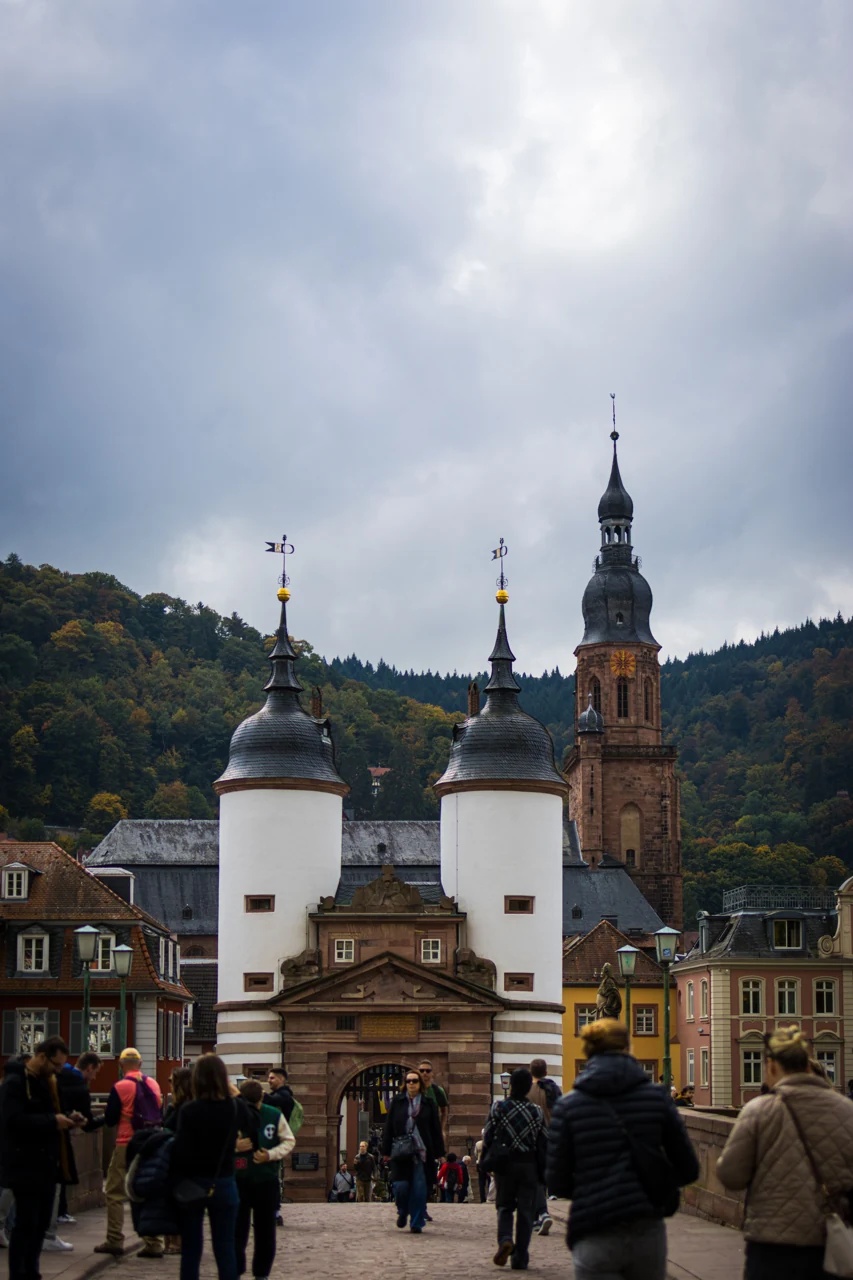
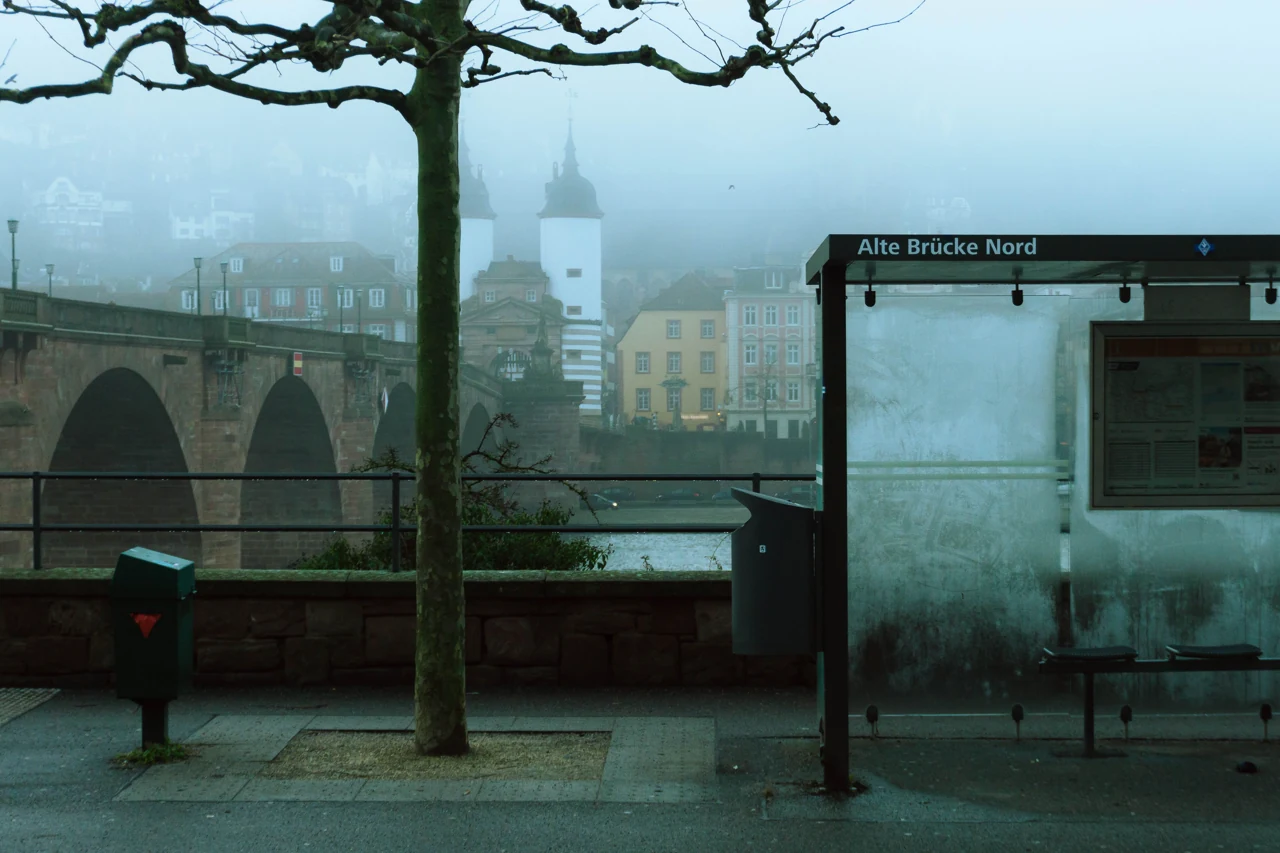
After lunch, head from the Marktplatz surroundings towards Alte Brücke. The official Heidelberg attractions portal identifies the bridge, castle and old town as principal sights. A view from the bridge and a view back towards the town from the opposite bank are different experiences. Changing position by a few steps alters the relationship between the gate, river and hillside castle. Stop without blocking people crossing. On reaching the other bank, decide again between remaining at river level and heading higher towards the Philosophenweg.
If choosing the Philosophenweg, treat the ascent on this side as the day's second climb. Do not extend the walk so far that wet paving or fading light forces a rushed return. A visitor interested mainly in the old-town silhouette can have a complete experience from the riverside. With a longer stay, putting the castle on the first day and the northern slope on the next allows different light and less concentrated climbing. Both hillsides can be visited consecutively, but that need not be the default with children, heavy bags or an early train. A quieter final riverside walk may be a better ending after an already full day.
The Kulturbrauerei hotel and the value of an overnight stay
The actual Kulturbrauerei hotel occupies an old-town location below the castle and near the Old Bridge. Having food and accommodation within the same business does not mean that booking one automatically reserves the other. Confirm the room, restaurant table and luggage arrangements separately. Drivers should ask the hotel about the final approach and parking conditions; a pedestrian sightseeing route is not a vehicle-access instruction. An overnight stay makes it easier to separate an early castle visit from an evening walk by the river.
For a day trip, returning to Hauptbahnhof is part of the programme, not a small detail to consider only after the last photograph. Allow time to travel back from the river or old town and check the current departure information. Heidelberg works well when the castle you see at a distance becomes connected to streets you actually walk. A first visit that includes the castle's chosen admission areas, the river from the bridge and a real regional main meal can feel more complete than rapidly ticking off every point on both hillsides.