

For a first day in Ulm, treat the Minster tower as a separate activity to choose, rather than a summit that every visitor must reach. Münsterplatz, the Rathaus, the Blau channels through the fishermen's quarter and the Danube bank form a coherent central walk. The climb requires energy, suitable weather and current access; understanding the rest of Ulm does not depend on ascending the stairs. This guide suits a visitor arriving by train, exploring the square in the morning and descending towards the water later. Keep Ulm and Neu-Ulm distinct when looking up addresses: the two riverbanks are connected, but the location of a hotel or event still matters.

From Ulm Hbf to Münsterplatz
Start with the official Ulm Hauptbahnhof information. Leave enough time between arrival and a timed attraction for getting off the platform, handling luggage and finding your bearings. Check current station services and your return train before walking away. The Minster's own visitor information describes an approximately one-kilometre walk from the main station. Without a suitcase, that approach lets the building gradually become part of the city rather than appearing as an isolated photograph. On reaching Münsterplatz, look at the facade from a distance before checking admission and ticket arrangements.
If your bags are heavy, consider leaving them at your actual accommodation first. A short visit benefits from completing the Minster area before dispersing into shops and side streets. The broad square and the narrow lanes later in the route have very different scales. Establishing the landmark's direction early makes the return simpler. In uncertain weather, check the opening of an indoor alternative instead of assuming every museum is available that day. This central plan does not require a tram journey, though luggage or mobility needs may make one useful; read the current ticket and stop information if you choose it.
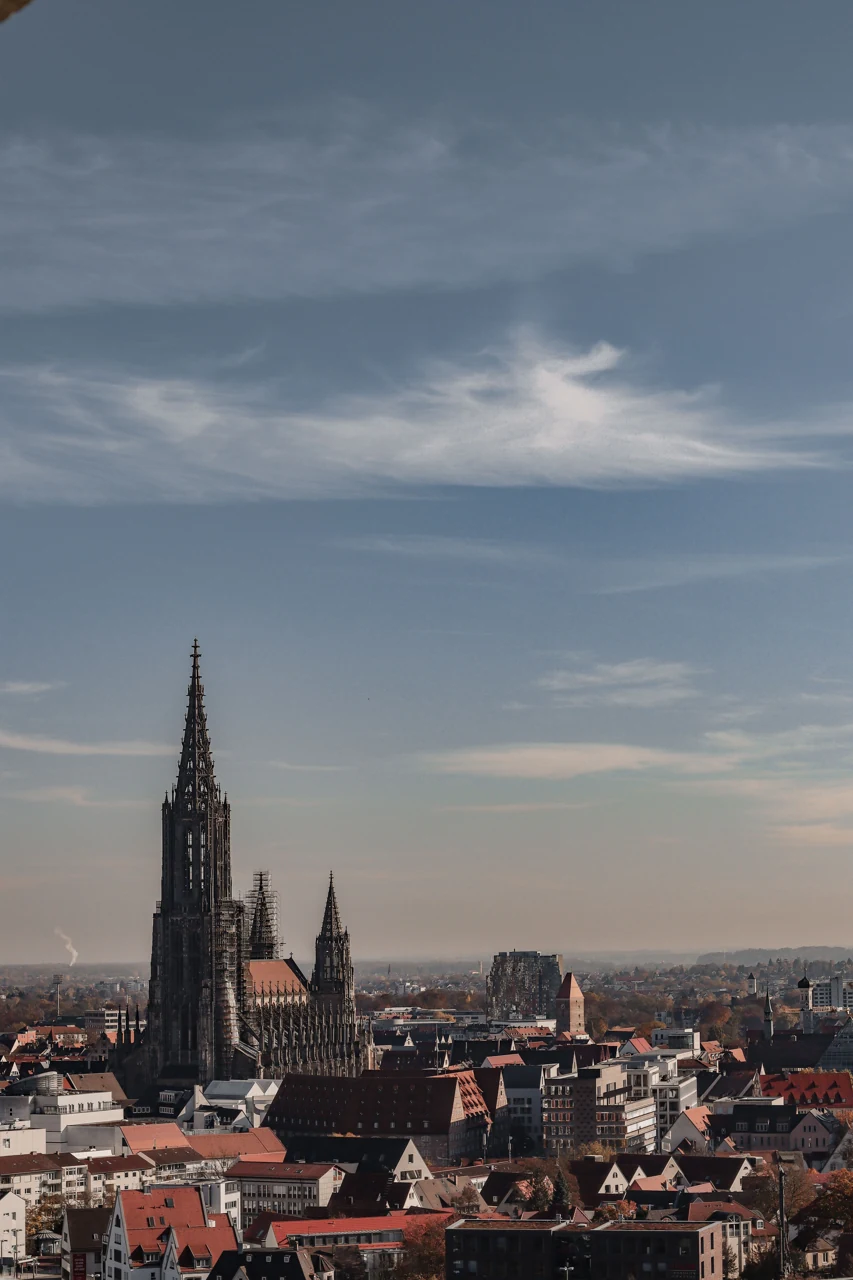
The Minster: church interior and tower are different visits
The Minster's own visitor page currently describes access to the second tower platform and a significantly obstructed view from the first. Icy conditions can close the upper level. The official tourism listing also notes a partial closure of the main nave during renovation. Do not assume that the highest viewpoint described in an old guide is accessible today. A look inside the church, time examining the exterior and a paid tower ascent are separate experiences. Ask which level is open and what admission conditions apply before buying a ticket.
Include the stairs in your energy budget for the whole day. If the ascent would force you to hurry through the fishermen's quarter, leave it for another visit. Respect worship and staff directions in the interior. The tower's relationship with the surrounding city can be as interesting as its height: the view from the square and the distant appearance beside the Blau offer different perspectives. Reducing Ulm to a height record misses this changing urban setting. Current access information is more useful for planning than an older account of reaching every possible platform.
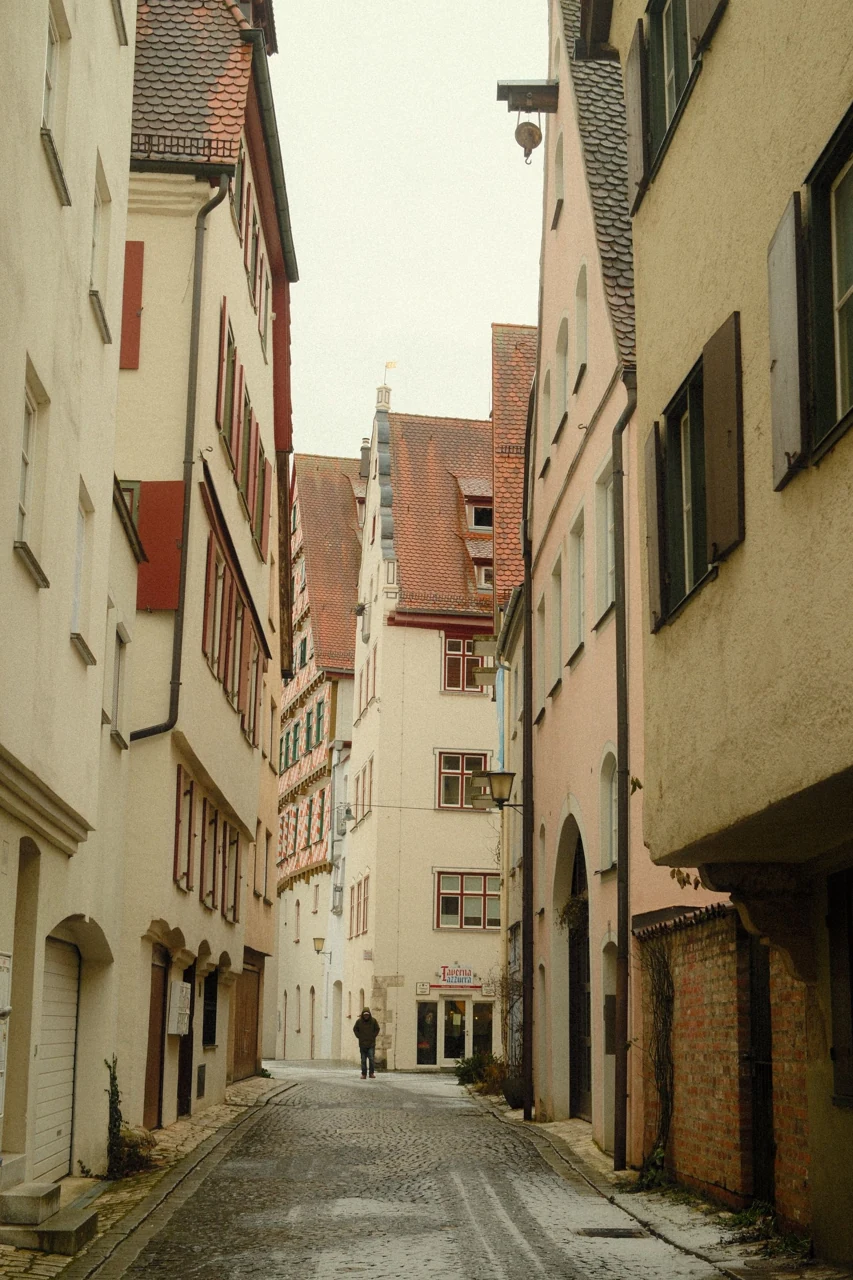
The Rathaus and the Blau channels
Walk from Münsterplatz towards the Rathaus. The city's official account highlights its astronomical clock as a distinctive feature. Allow one pause for the whole facade and another for examining the clock's signs. Observe the surroundings of a working civic building rather than assuming it operates like a museum whose rooms can all be entered. Continue into the smaller lanes south of Neue Straße and the fishermen's and tanners' quarter. Its association with boatmen, fishermen and tanners explains why the water channels are more than decorative scenery.
Follow the relationship between narrow bridges, timber-framed facades and houses close to the Blau. Step aside for photographs so residents and other pedestrians can pass. Seeing the Schiefes Haus does not require entering the hotel's private interior. After a short exterior stop, crossing towards another channel creates a more varied walk than repeatedly photographing the same facade. Slow down on wet bridge surfaces and stone paving. A district that looks small on a map can become a substantial part of the day when you examine these details instead of moving straight through it.
Use the Danube bank for a wider city view
Leaving the quarter for the Danube replaces confined streets with open water. Choose the river direction with your eventual return towards the Rathaus and station in mind, or add a short bridge crossing if time permits. If you reach Neu-Ulm, establish which bridge you will use to return rather than extending the walk indefinitely as your evening train approaches. Looking towards the city wall and Metzgerturm places the morning's landmarks within a broader waterfront. It is a different way to read the same centre, with buildings appearing as part of a continuous river-facing town.
You do not need to fill the entire afternoon with distance along the water. Strong wind may favour returning to sheltered lanes; pleasant conditions may make a seated pause the best use of time. Keep walking and cycling routes clear when stopping for photographs. A boat excursion would require separate research into an actual operator's season and departures. The core route here relies on walking along the riverbank. Seeing a vessel on the water does not establish that it offers a scheduled transport service you can board immediately.
A full meal at Barfüßer and a realistic museum alternative
The Ulm Barfüßer Hausbrauerei is at Neue Straße87–89. Its currently linked main menu lists Brauhaus Maultaschen with dark-beer sauce, softened onions and potato salad. This provides a proper main meal within the centre. If beer sauce does not suit your preferences, ask about another dish before ordering. The mushroom-cream and bread-dumpling option contains dairy and should not automatically be considered vegan. Distinguish the changing weekday lunch offer from the regular menu, and confirm a table and your selected dish at a busy time.
For an indoor alternative, read the current Museum Ulm announcements. The principal building at Marktplatz is closed during renovation, so an older normal-admission description may send you to the wrong door. If seeing the Lion Man is a specific purpose of your trip, check its actual exhibition location and dates for your visit. A temporary display, a presentation in another institution and the main museum's reopening are different events. Keeping these distinctions clear avoids building the late afternoon around an admission slot that does not exist.
An overnight stay at the Schiefes Haus
Hotel Schiefes Haus, in the historic building at Schwörhausgasse6, is a real accommodation option. Its operator explicitly states that there is no elevator and no air conditioning. The room categories also reflect a practical difference: southern rooms facing the Blau have more pronounced sloping floors, while northern rooms are relatively level. Choose with room position, stairs and warm-weather needs in mind rather than booking solely because the building is famous. Looking at the exterior and spending a night inside require different decisions.
An overnight visit allows the square, Rathaus and waterside centre to form a complete first day, leaving the tower for the following morning if conditions are suitable. Arrange luggage and arrival with the business before navigating the narrow lanes late in the evening. A satisfying Ulm visit is not measured by the number of steps climbed. Connecting the orientation of the large square with the Blau's small crossings and the Danube's open bank reveals several scales of the city within the same trip.